20 Everyday Materials and Ideas for Open-Ended Art and Play
There’s something so magical about everyday materials.
Not fancy craft kits. Not perfectly coordinated activities. Just simple bits and pieces gathered over time — scraps, buttons, paper, lids, yarn, stickers, and tiny treasures waiting to become something new.
These are the kinds of materials we keep in our art cabinet at all times because they invite children to create freely. One day they become a garden. The next day they become a storybook, a pretend bakery, or a tiny world built across the dining table.
Open-ended materials encourage experimentation, creativity, storytelling, and play without pressure or instructions. There’s no “right way” to use them — and that’s exactly the point.
What Are Open-Ended Materials?
Open-ended materials are items children can use in many different ways during art and play.
Instead of focusing on a finished product, these materials encourage:
imagination
problem solving
sensory exploration
storytelling
independent creativity
Many of the best materials are inexpensive, recycled, or already sitting around your home and even backyard!
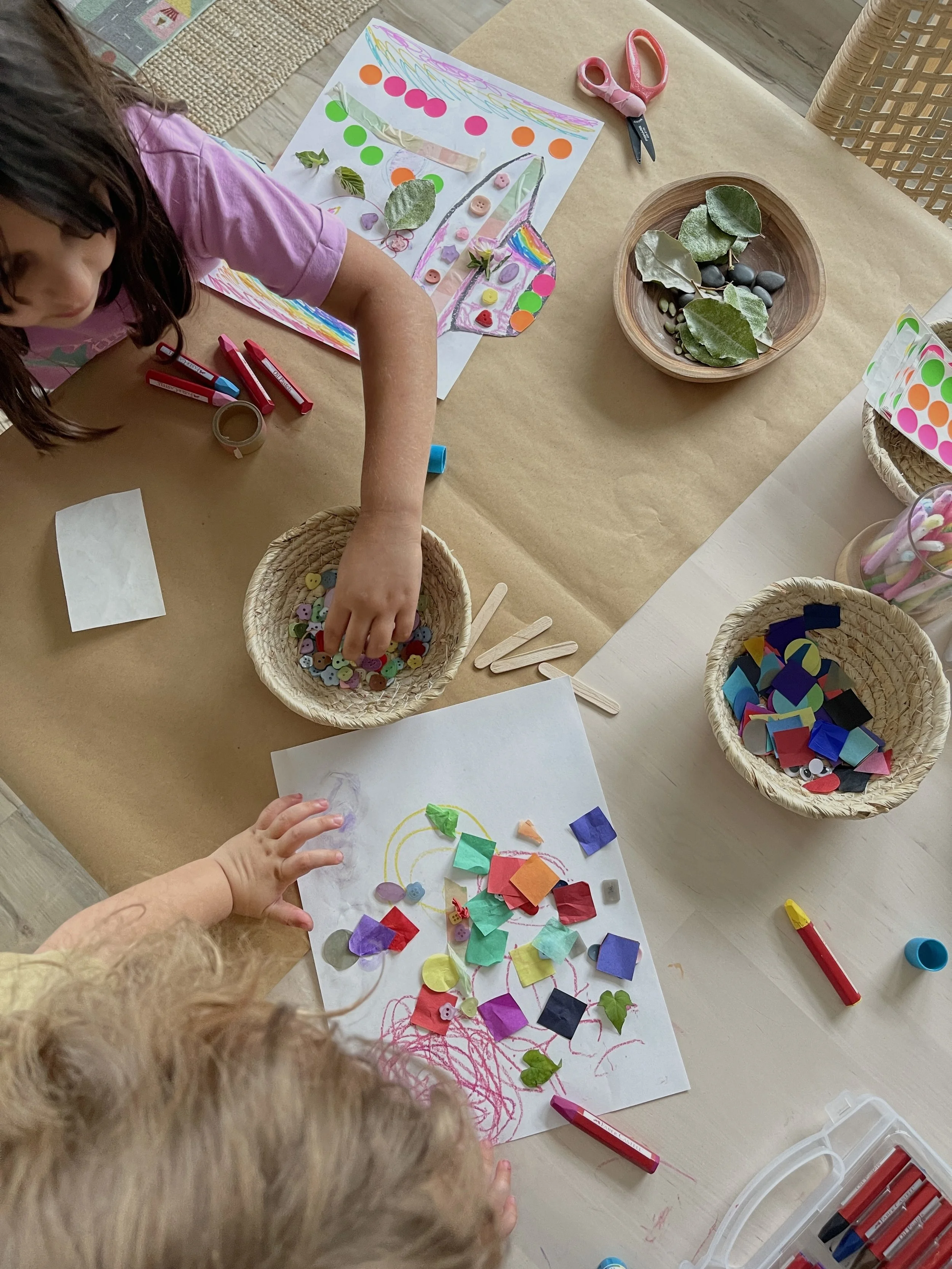
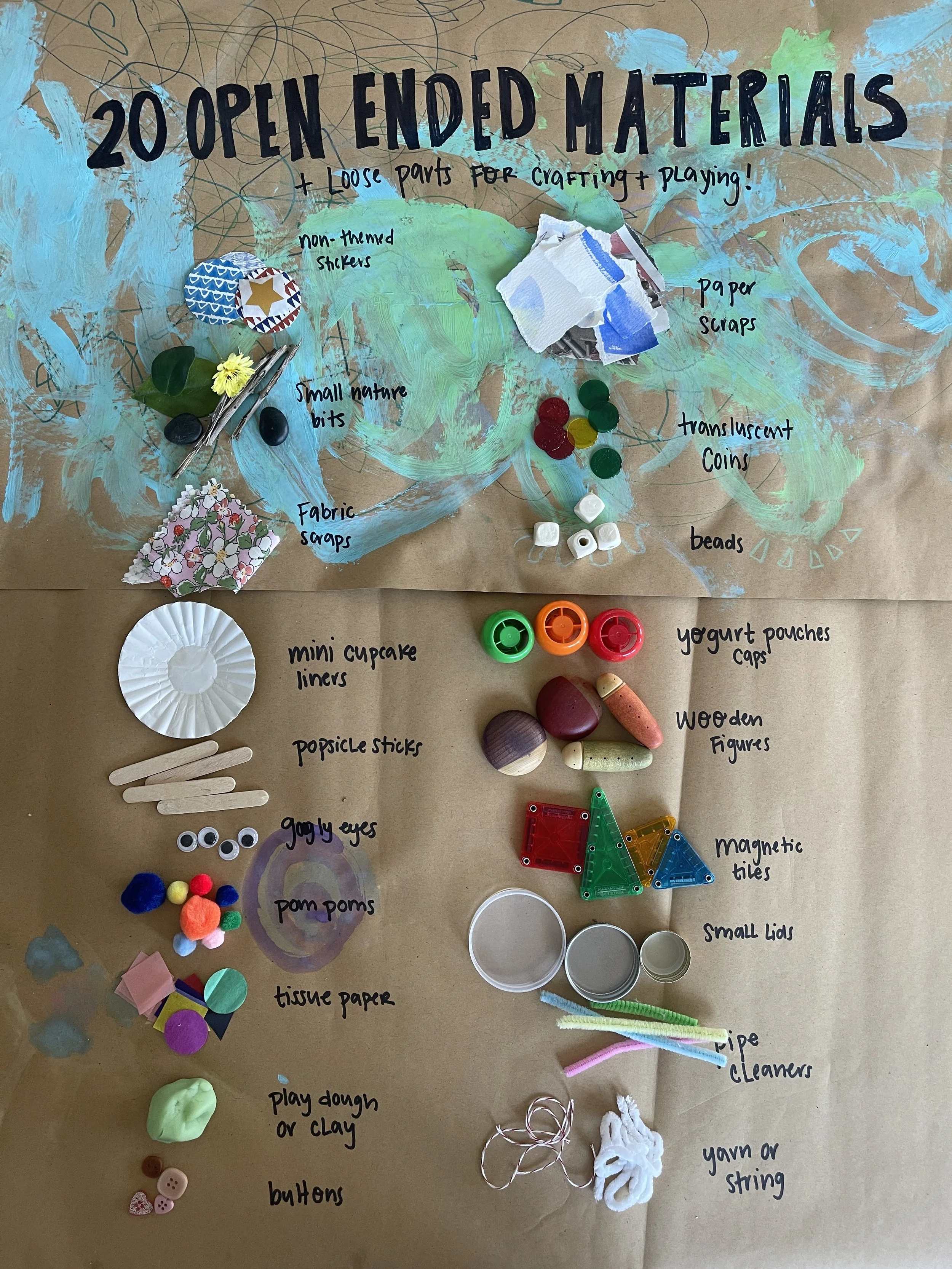
20 Everyday Materials We Love for Open-Ended Art & Play
1. Paper Scraps
One of our most-used materials. We save watercolor leftovers, painted papers, magazine cutouts, tissue paper, cardstock, and packaging scraps for collage and storytelling.
2. Fabric Scraps
Small pieces of fabric instantly add texture and creativity to invitations to create. They’re perfect for layering, costumes, tiny worlds, and mixed media art.
3. Buttons
Buttons are wonderful for loose parts play, pattern making, pretend baking, counting, and collage work.
4. Pipe Cleaners
Children can twist, bend, connect, sculpt, and build with them endlessly.
5. Popsicle Sticks
Perfect for building, constructing, stamping paint, or turning into puppets and characters.
6. Pom Poms
Soft textures always draw children in. Pom poms become flowers, clouds, soup ingredients, monster eyes — anything they imagine.
7. Tissue Paper Shapes
We love pre-cut circles, squares, and triangles for collage invitations and color exploration.
8. Googly Eyes
A tiny material that instantly sparks storytelling and character creation.
9. Mini Cupcake Liners
These are surprisingly versatile — flowers, jellyfish, suns, mushrooms, pretend treats, and layered collage elements.
10. Stickers
Especially non-themed stickers that can work across many different setups and creative invitations.
11. Small Nature Finds
Leaves, flowers, sticks, stones, seed pods, shells, feathers — nature always adds richness to art and play.
12. Wooden Figures
These often become people, animals, treasures, or storytelling pieces inside imaginative worlds.
13. Magnetic Tiles
Not just for building towers — they work beautifully alongside loose parts and small world setups.
14. Yogurt Pouch Caps
Simple recycled materials can become paint stamps, wheels, pretend food, or building pieces.
15. Small Lids & Containers
Perfect for sorting, filling, scooping, stacking, and sensory play.
16. Translucent Coins
These add color, light play, sorting opportunities, and beautiful details to creations.
17. Beads
Wonderful for threading, patterns, sensory bins, and collage work.
18. Yarn & String
Used for wrapping, tying, weaving, hanging, and connecting materials together.
19. Tiny Treasures
The small bits children naturally collect and love — gems, sequins, charms, corks, and found objects.
20. Play Dough or Clay
One of the easiest ways to invite open-ended creativity. We constantly use dough alongside loose parts and collage materials.
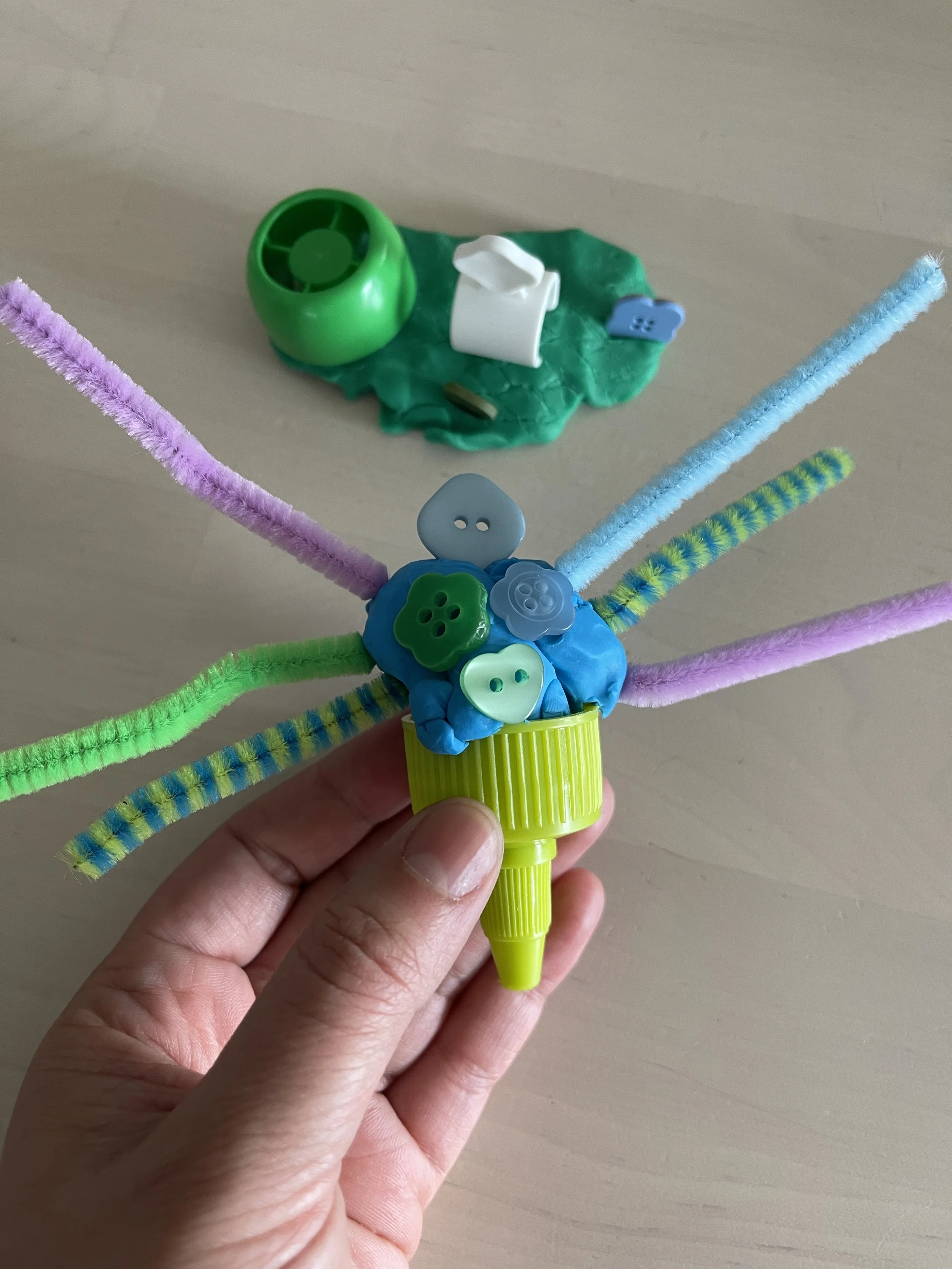
a “piggy spaceship” made of buttons, pipe cleaners, twist cap, and clay.
How We Use These Materials
Most days, we simply place a few materials onto the table and see where creativity leads.
Sometimes we create:
collage invitations
storytelling setups
sensory art trays
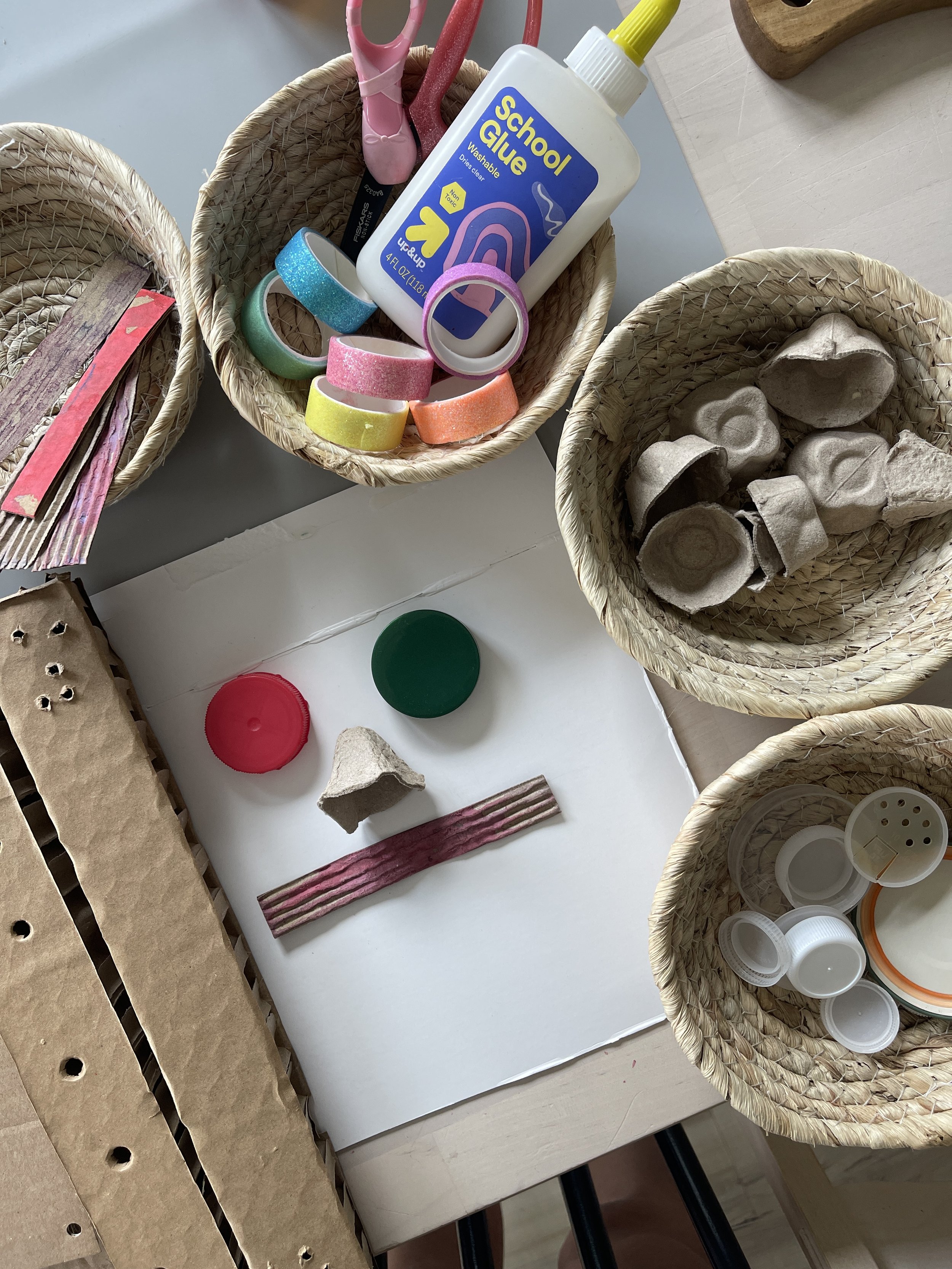
loose parts faces
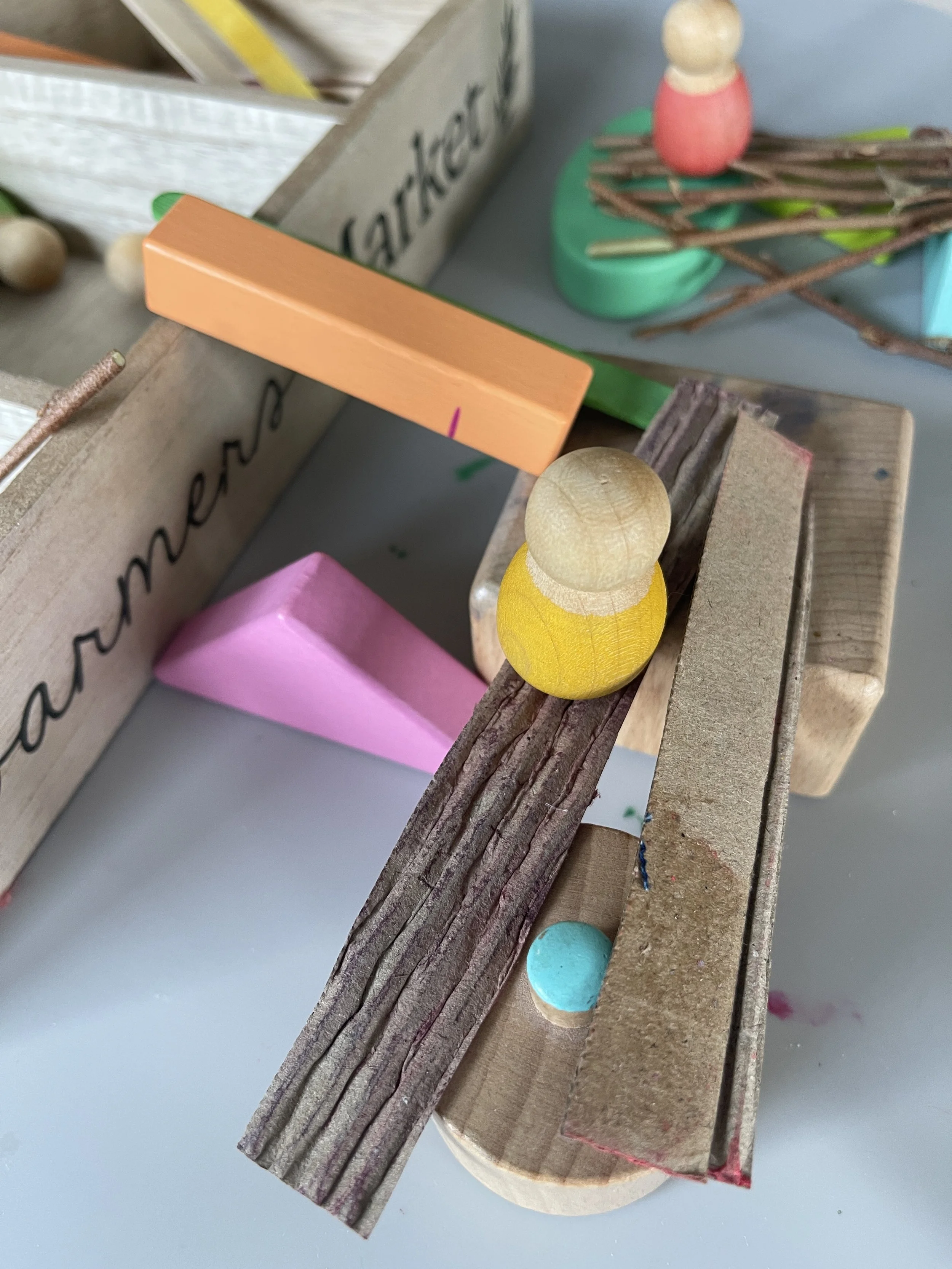
small worlds
nature-inspired art
process art explorations
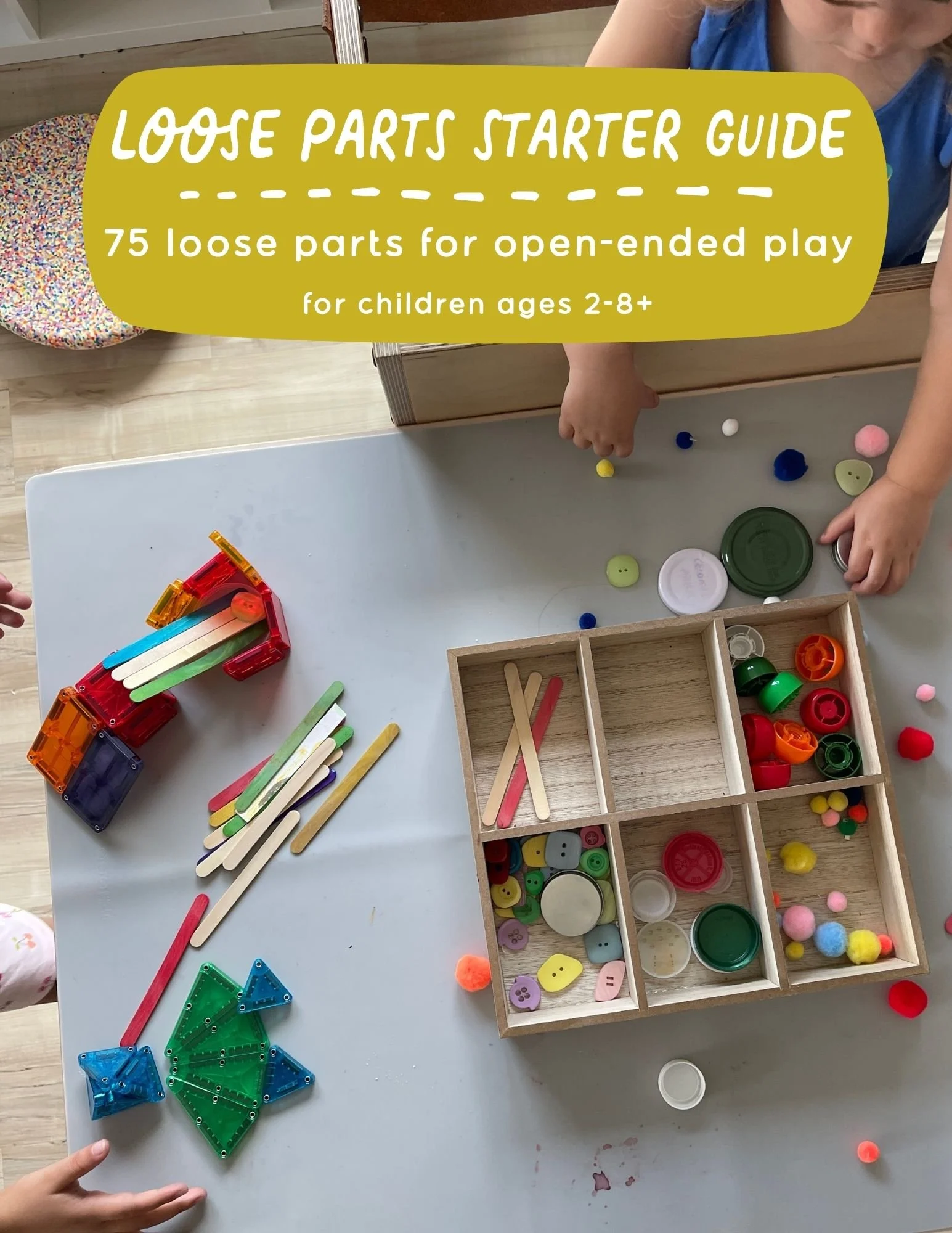
ready for more?
I created a free Loose Parts Starter Guide with over 75 loose parts categorized and simplified for creating and playing. It’s full of photos from our play and creations so you can grab our ideas and inspiration 🙌🏼