6 Simple Art Set Ups You Can Start At Home Today
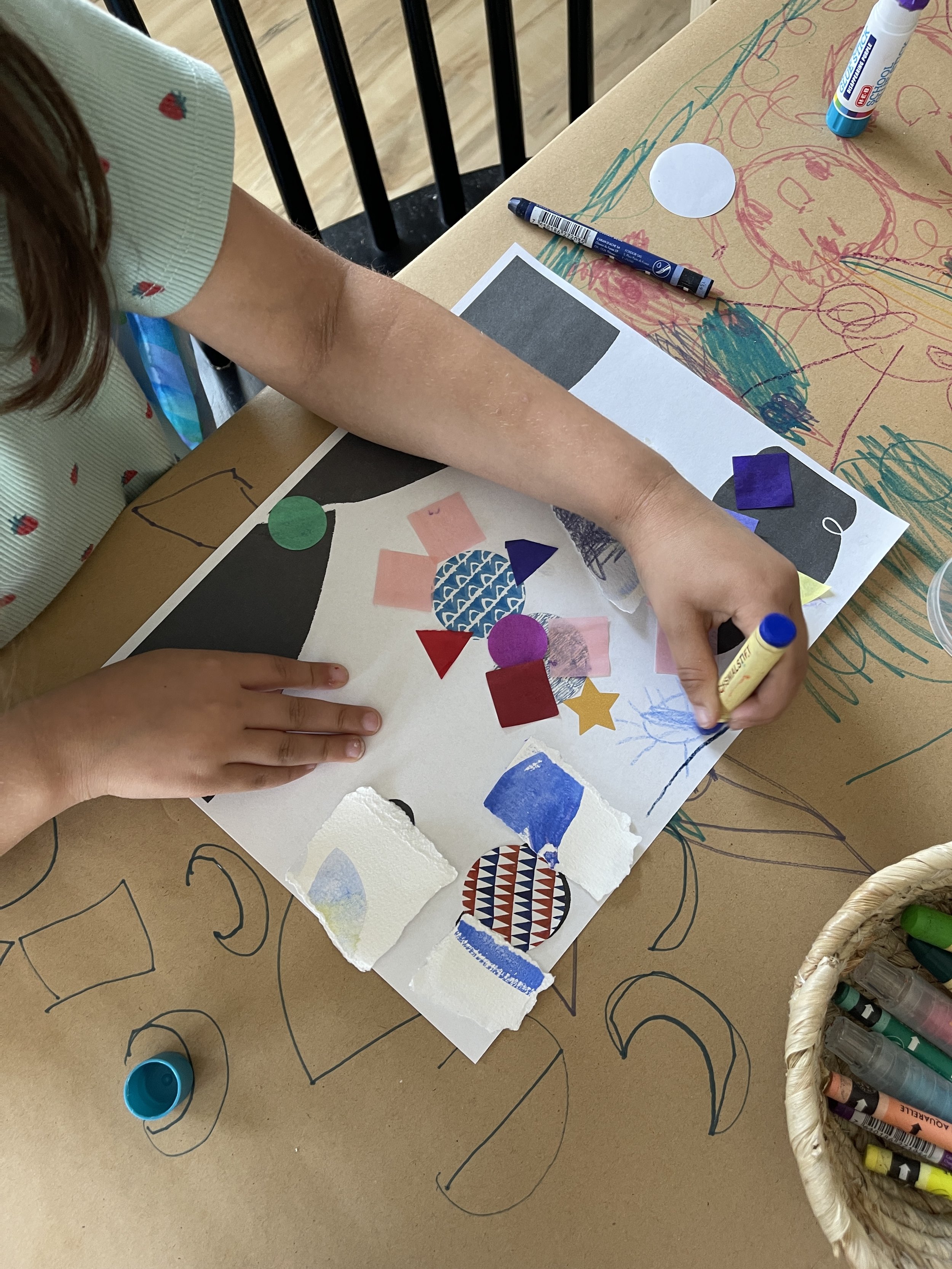
There’s a quiet moment I keep coming back to.
The sound of crayons on paper. The sunlight hitting our messy and long dining art table. My daughters completely absorbed in creating something of their own.
No screens. No noise. Just imagination.
This is the heart behind what I call raising crayon kids. And the heart behind this post.
I wanted to write it because before we started on this journey of homeschooling and incorporating art projects into our everyday home life, I had very little idea where to start. So I began small and simple. And it has actually been the best. As my girls have gotten older and more familiar with materials, we have been able to expand into other art tools, materials, and I have been able to learn more about sensory play, process art, crafting with different ages, and more.
so, Who are crayon kids?
I had this idea of “raising crayon kids” when I began our art-filled journey. I saw that my oldest daughter loved to join me when I made art on my iPad, journaling, gouache painting, and anything that involved creating with my hands. I set out a few crayons on what I call our “dining art table” and she took off. I also set up sensory bins outside with nature and she became obsessed. Now I have two daughters and as we have experimented and played, I realized that I wanted to press into raising children who:
create instead of consume
explore instead of scroll
use their hands, imagination, and curiosity
It doesn’t mean no screens ever.
It just means we’re intentionally making space for creativity to grow.
In a world full of fast entertainment and busyness, I wanted something slower for my kids. It’s the reason why I quit my job when my daughter turned one, and we moved out of state with a vision to prioritize family time.
how i approach a screen-free, creative childhood
I purposely create opportunities for my daughters to:
build focus
encourage independence
support imagination
And honestly? It doesn’t have to be complicated.
I know there are many activity ideas, curriculums, and toy companies that will tell you, you need to do and buy all the things in order to raise creative kids. I have found through 20+ years of working with children and raising my own, that children are naturally creative. They need virtually nothing to make a game or a piece of art.
Here’s a little piece of our how we have done it in our house through the years.
Our Simple Art Setups
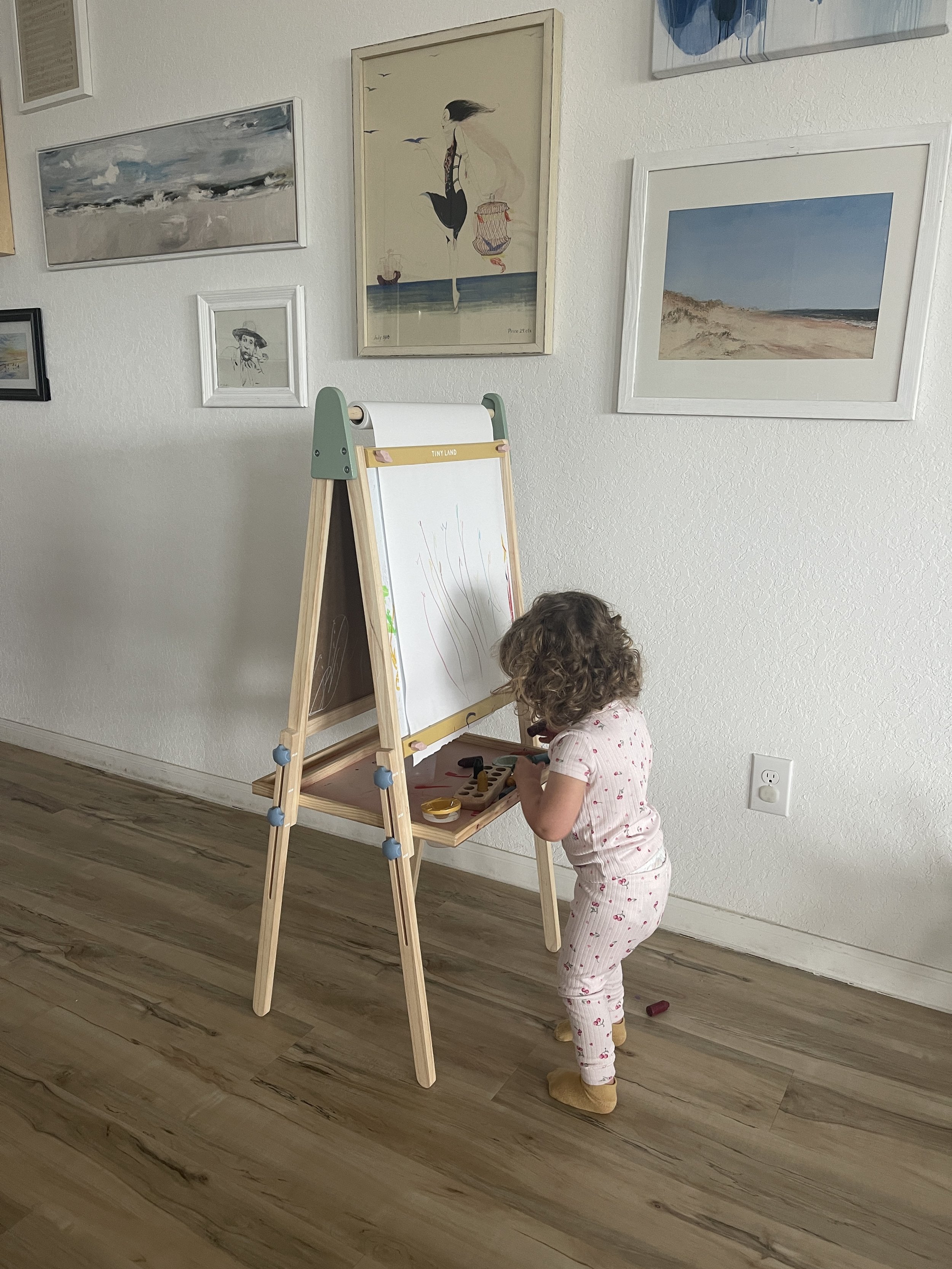
1.An easel with 2 drawing tools
We have a roll of paper and chunky crayons set out for my 2-year-old. On the other side, is an erasable marker surface which I set out 3 dry-erase markers for her to use independently. When she is done, we put the lids back on and put away. This easel stands in our dining room wall with lots of art for some beautiful inspiration.
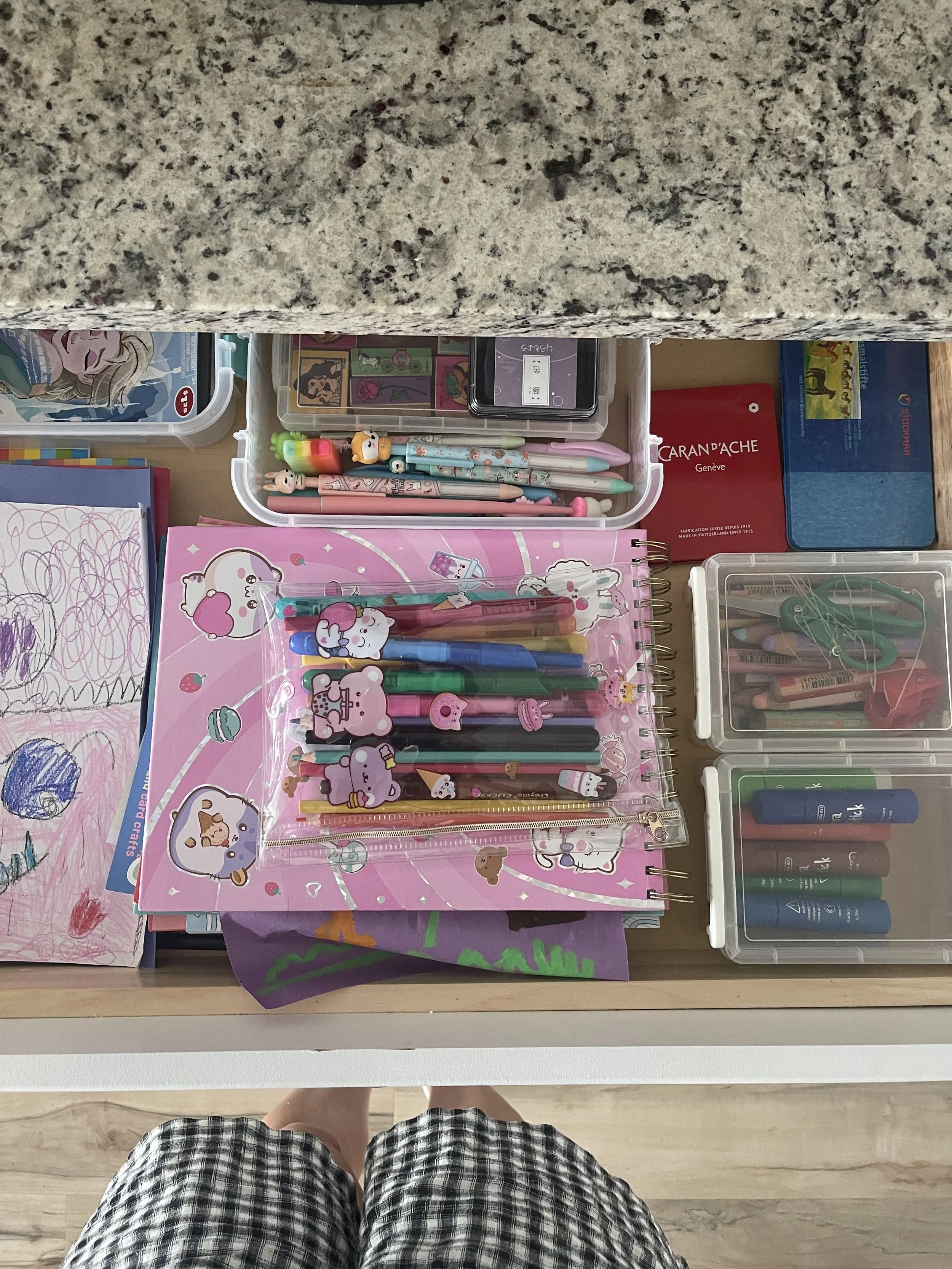
2.Drawer with paper and 3-5 art supplies
We have added copy paper, construction paper, a small sketchbook, crayons, tempera sticks, scissors, markers, color pencils, and stamps to ours. This is great for older children who can quickly and neatly access their supplies. We introduced this art drawer when my daughter was 5 years old.
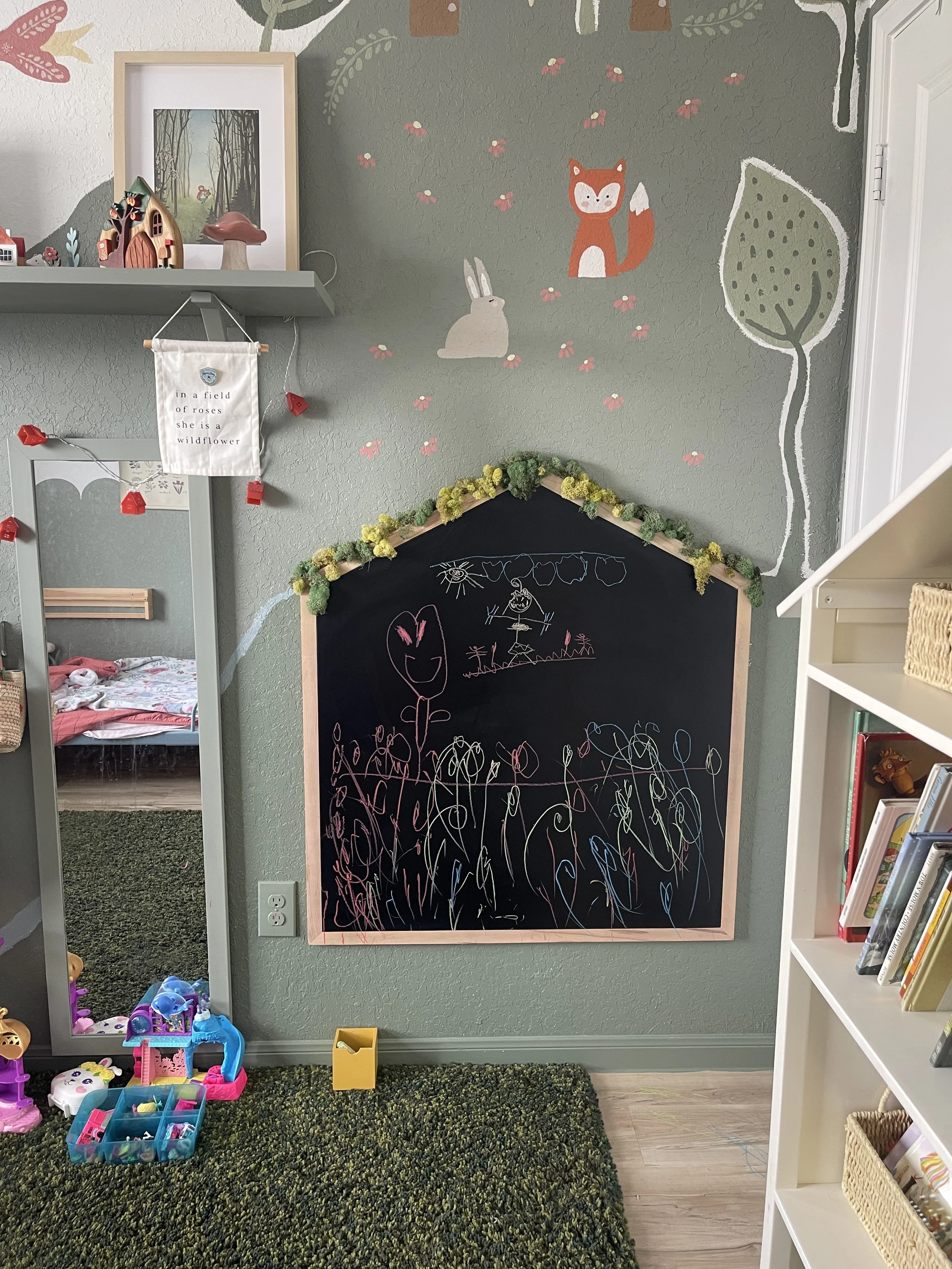
3.Large chalkboard with dust-free chalks
We have added a chalkboard and dust-free chalks to my 6-year-old’s room where she can display her art and practice her drawing during her independent quiet time. Having a large and open surface for children to create in is so appealing. She can also collaborate on artwork with her cousins and sister, which is another huge benefit.
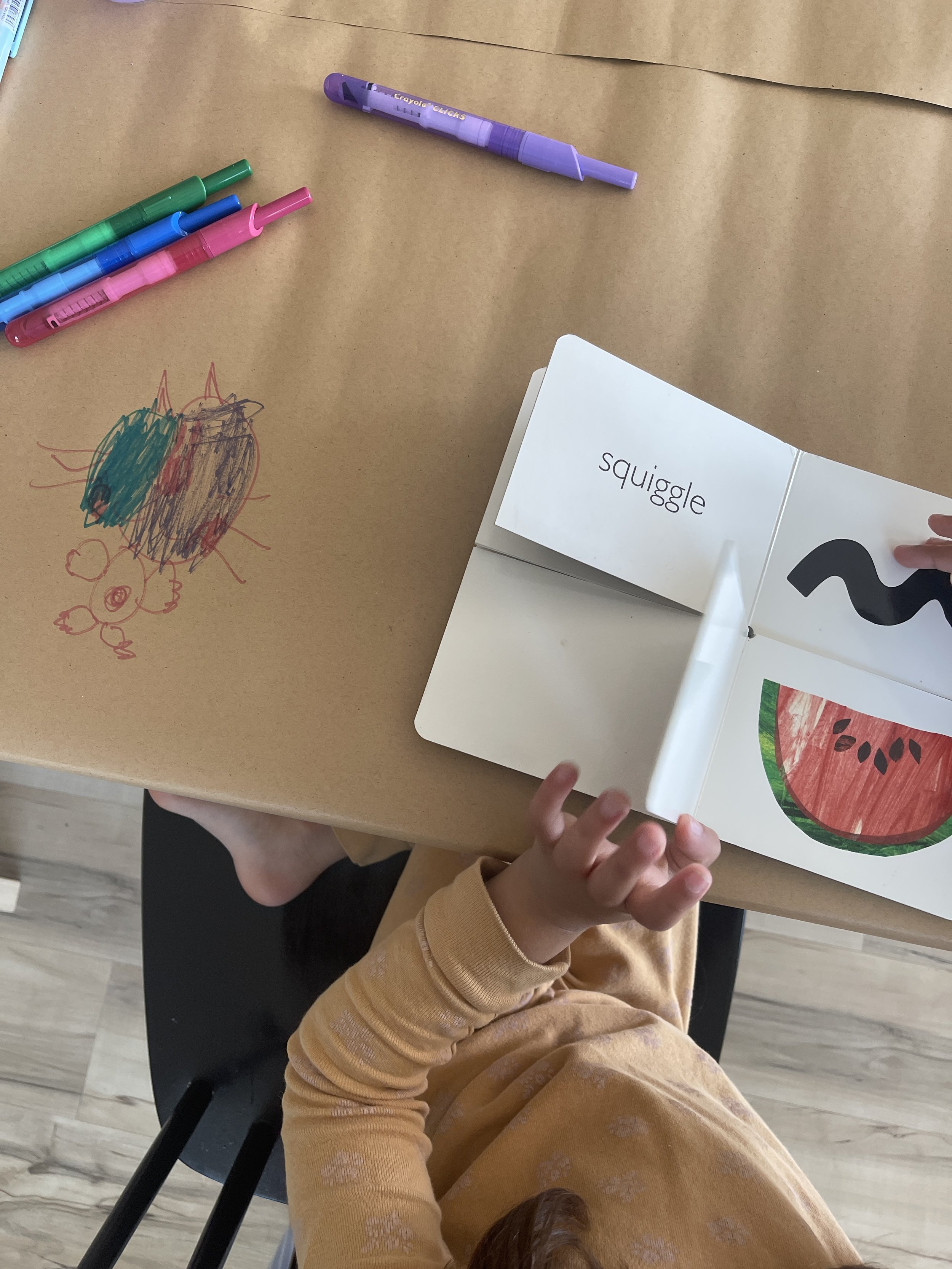
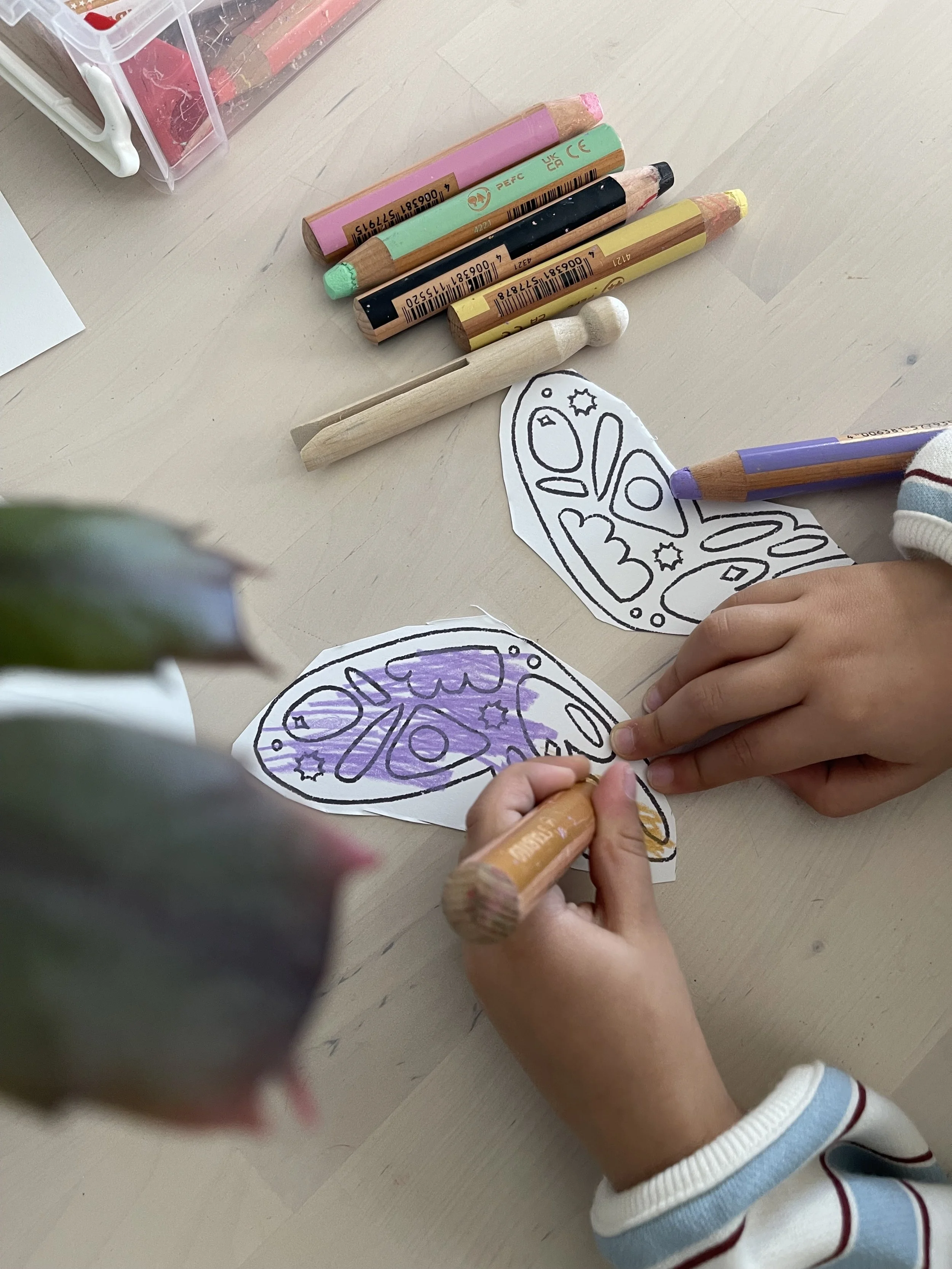
4.A dining art table
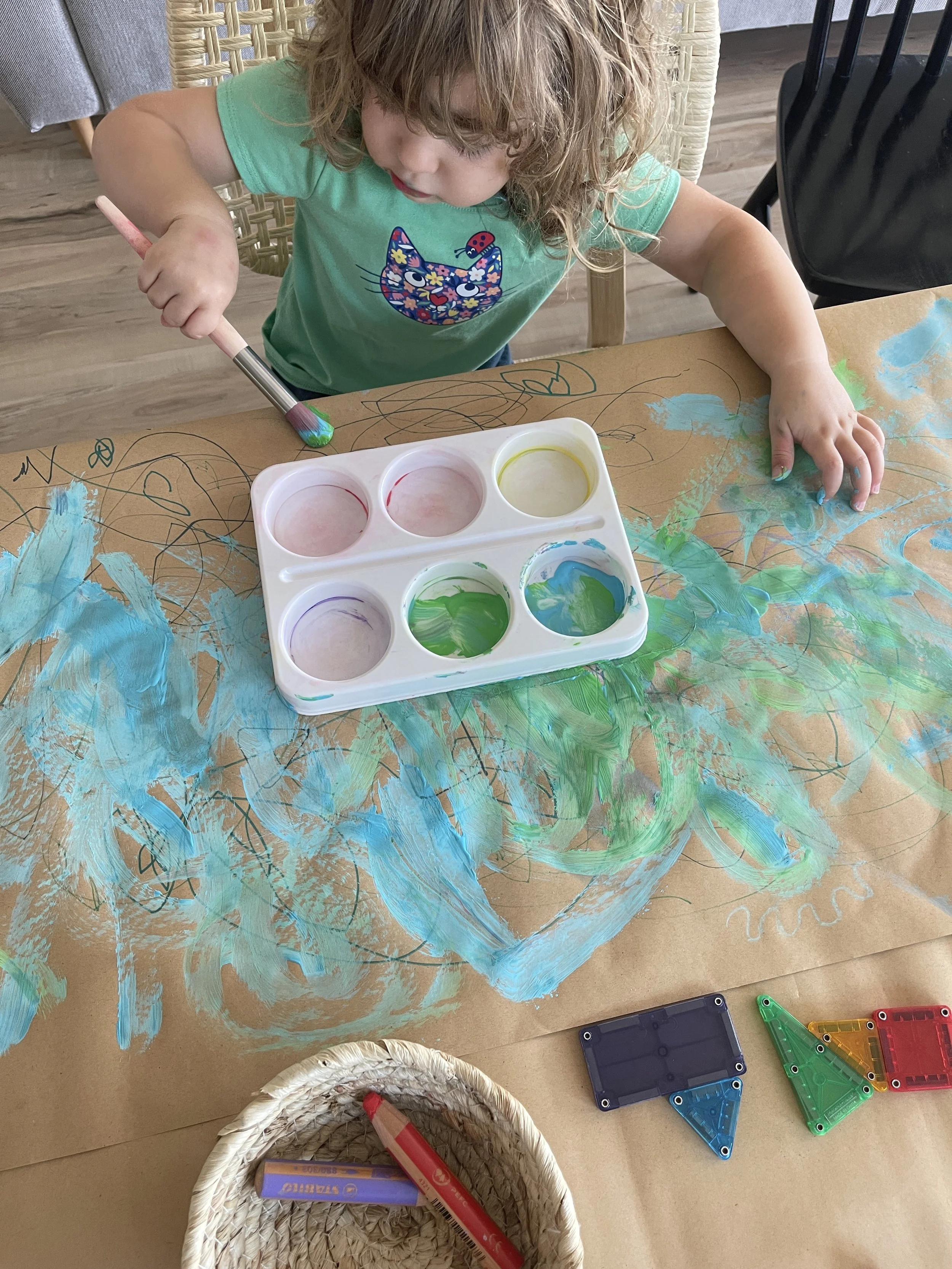
This is a fun way to create for the whole family. How we approach this is by setting out 2-3 art tools at a time in shallow baskets, a clear box, or a caddy. Some examples:
markers, an art book, and kraft paper roll
crayons and a craft or printable activity
pencil, paint, water, paint brush, towel, butcher paper and a few loose parts (like these mini magnetic tiles for shape reference and inspiration).
Three important things about having a dining art table:
Embrace the creativity and chaos. Sometimes our dining room has clay, tools, my laptop, and we have to shove it all aside to have dinner. It gets cleaned up and put away at the end of the day and everyone is happy.
Splat mats and butcher paper are your besties. They can protect your table and make great create and play surfaces. So great for your piece of mind.
Thrifting a cute basket, wooden caddy with compartments, or a nice tray to hold all materials together and then transfer will help with clean up, organization, and invitation to create in the future.
5.Outdoor finger Paints and Cardboard
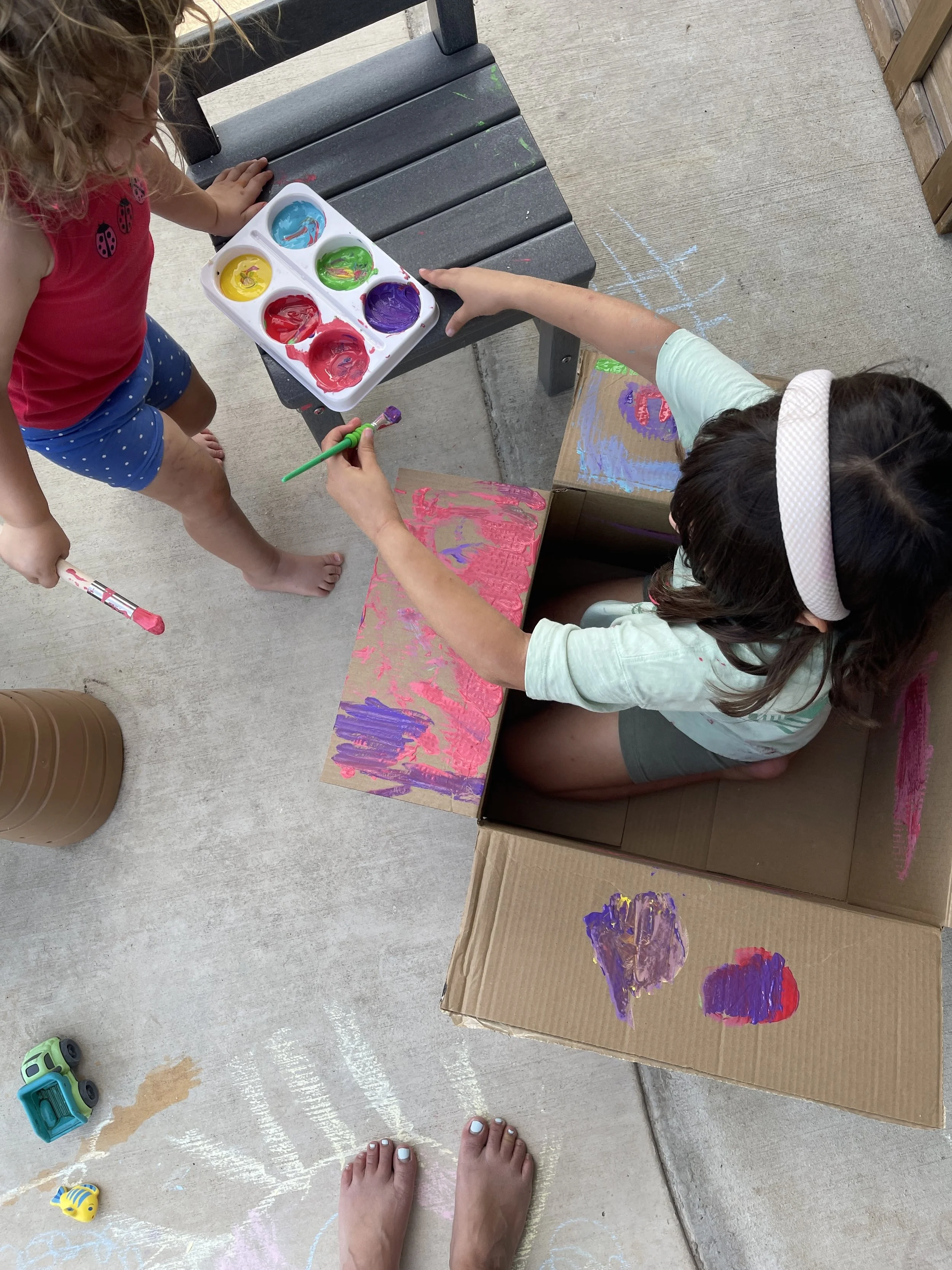
I always keep large cardboard boxes, so my girls can paint in large areas and get inside. This provides so many opportunities for imagination! My girls have made spaceships, a garden, a classroom, a car, to name a few. I also dress them in their “paint clothes” because it is a fun and messy activity.
Little kids can do this with their fingers, but having chunky paint brushes which absorb a lot of finger paint is also great. We also have a tray with compartments for the paints. No water is necessary, since we have found the paints get mixed in the cardboard anyway.
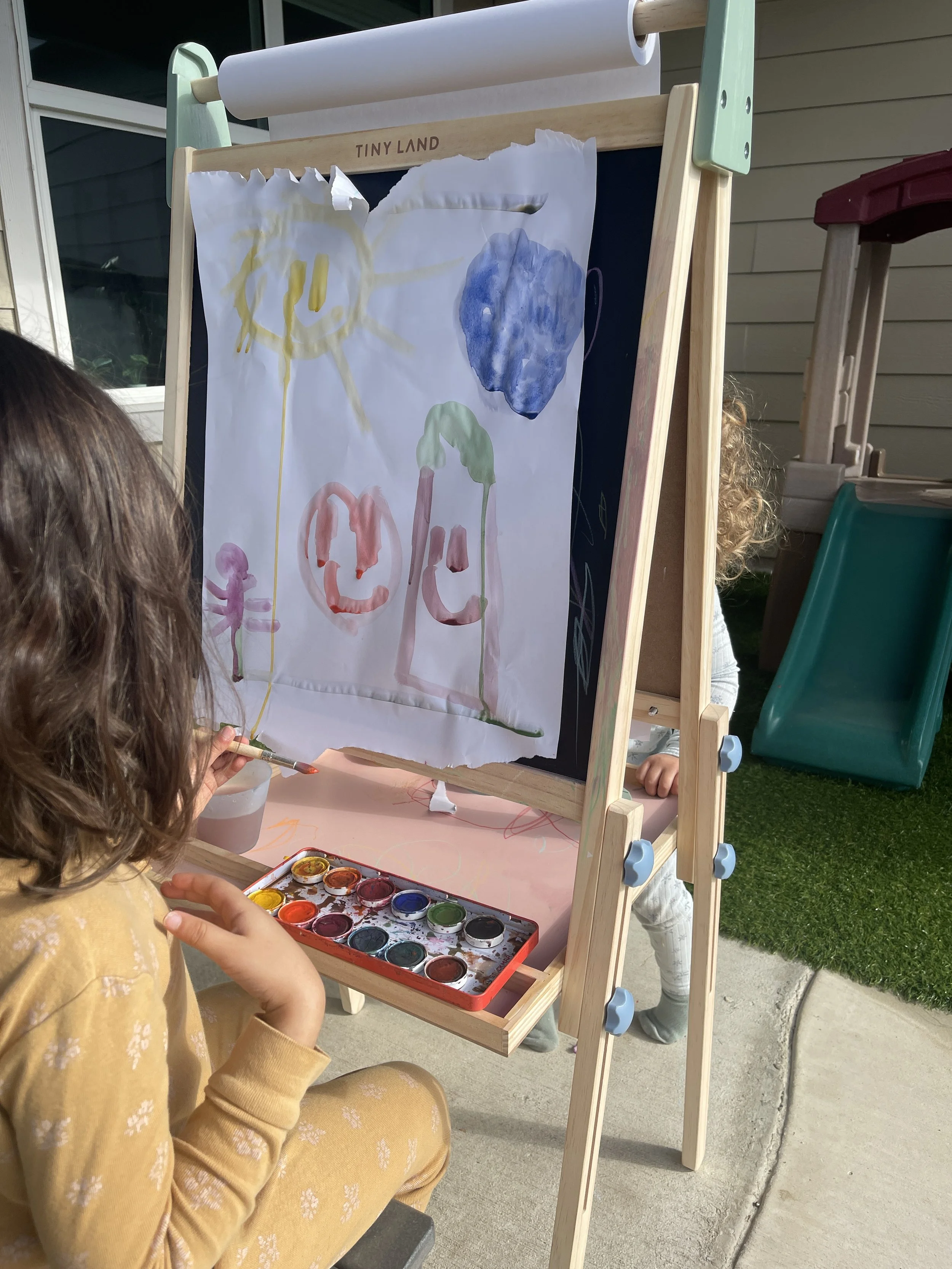
6.outdoor easel with watercolors
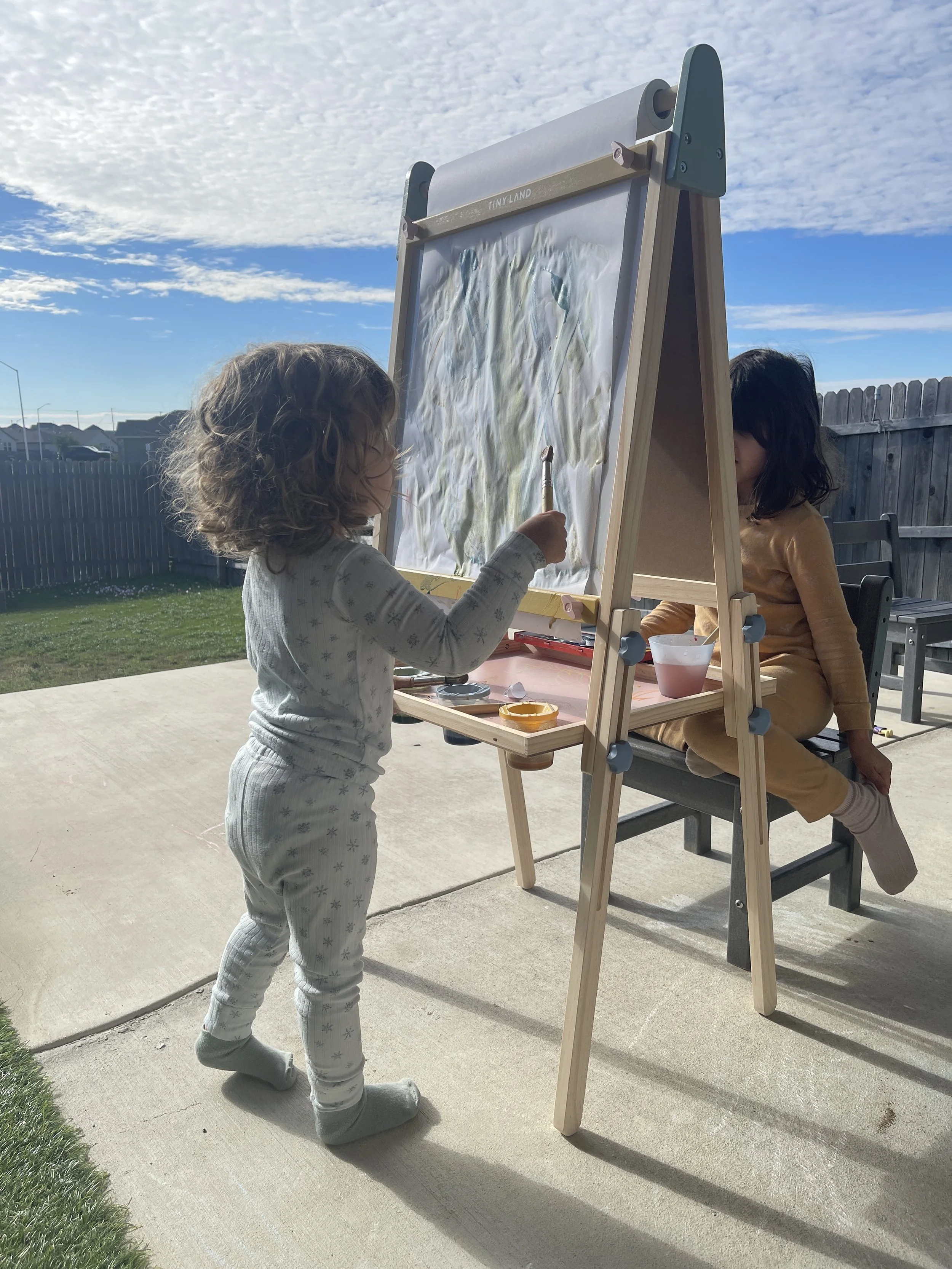
Whether it’s liquid watercolors or pan temperas, having a cup of water and brush for creating on an easel is a very stress-free and open-ended way to create at home. Older kids can draw nature and younger kids benefit from the calm, sensory enrichment from the outdoors.
What makes these setups work?
Everything is easy to reach and clean up after
No complicated setup
Kids can start independently
That independence is HUGE. Letting kids create freely is key in promoting and expanding their creativity.
As a former preschool educator, one of my biggest shifts was letting go of the outcome.
Instead of giving directions like: “paint a flower like this”
I began to set out a few intentional materials and invitations and said things like: “what do you want to make?”
This is called process art—and it’s where creativity actually grows. The focus is more on material exploration, rather than the symbolic representation of a piece of art. Process art is perfect and age appropriate for children ages 0-5 who are still developing their cognitive and fine motor skills.
What Kids Are Actually Learning Through Art
It might look simple…and messy 🤭 but so much is happening:
Fine motor skills (holding brushes and tools, placing materials on paper, pinching, etc.)
Problem solving (how they are going to use the materials presented)
Creativity + imagination (putting together what and how they are going to carry out what is in their minds)
Focus + attention span
Self-expression (rooted in Social Emotional Learning, this is huge for little ones who cannot verbalize their emotions, so having a tangible piece of work helps them express their emotions in a constructive way).
And most importantly:
Confidence in their own ideas. I love watching kids display their art proudly because they love what they accomplished!
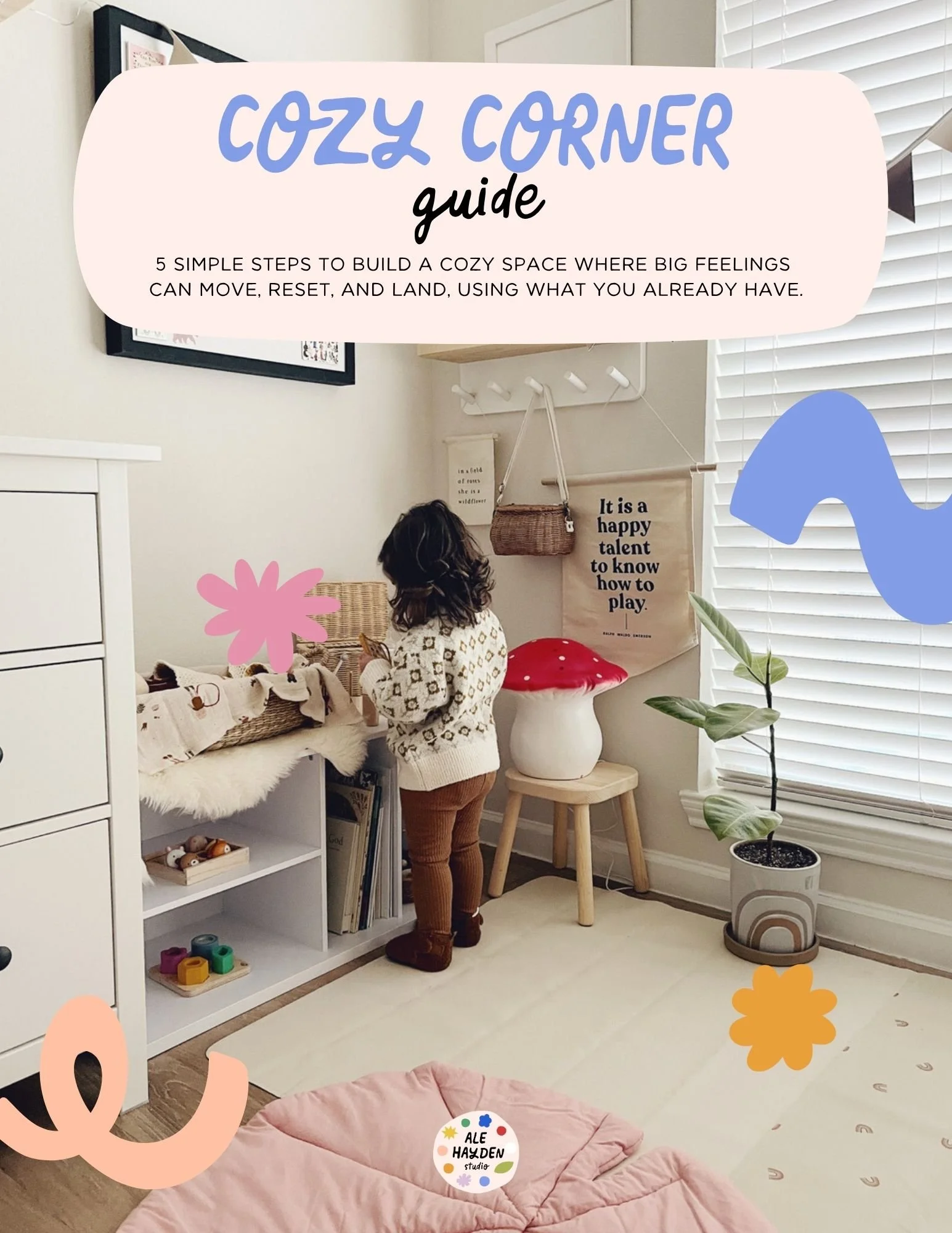
Are you building intentional play spaces for your children?If you are looking to build a calm corner, a small slice of peace in your child’s play space, so you can drink your coffee (or matcha) warm, then this cozy corner guide is for you. It walks you through the 5 steps I use to build a space that is cozy and loved by children. Rooted in child development and functional design 🌱