How to Start a Calm Corner Your Toddler Will Actually Use
If you've saved a dozen calm corner ideas on Pinterest but haven't actually set one up yet, you're in good company. Most parents get stuck in the same place: gaining the confidence on how to actually start.
Here's the good news. Starting a calm corner at home is much simpler than those perfectly styled pins make it look, and you don't need to buy a thing to begin.
What is a calm corner, really?
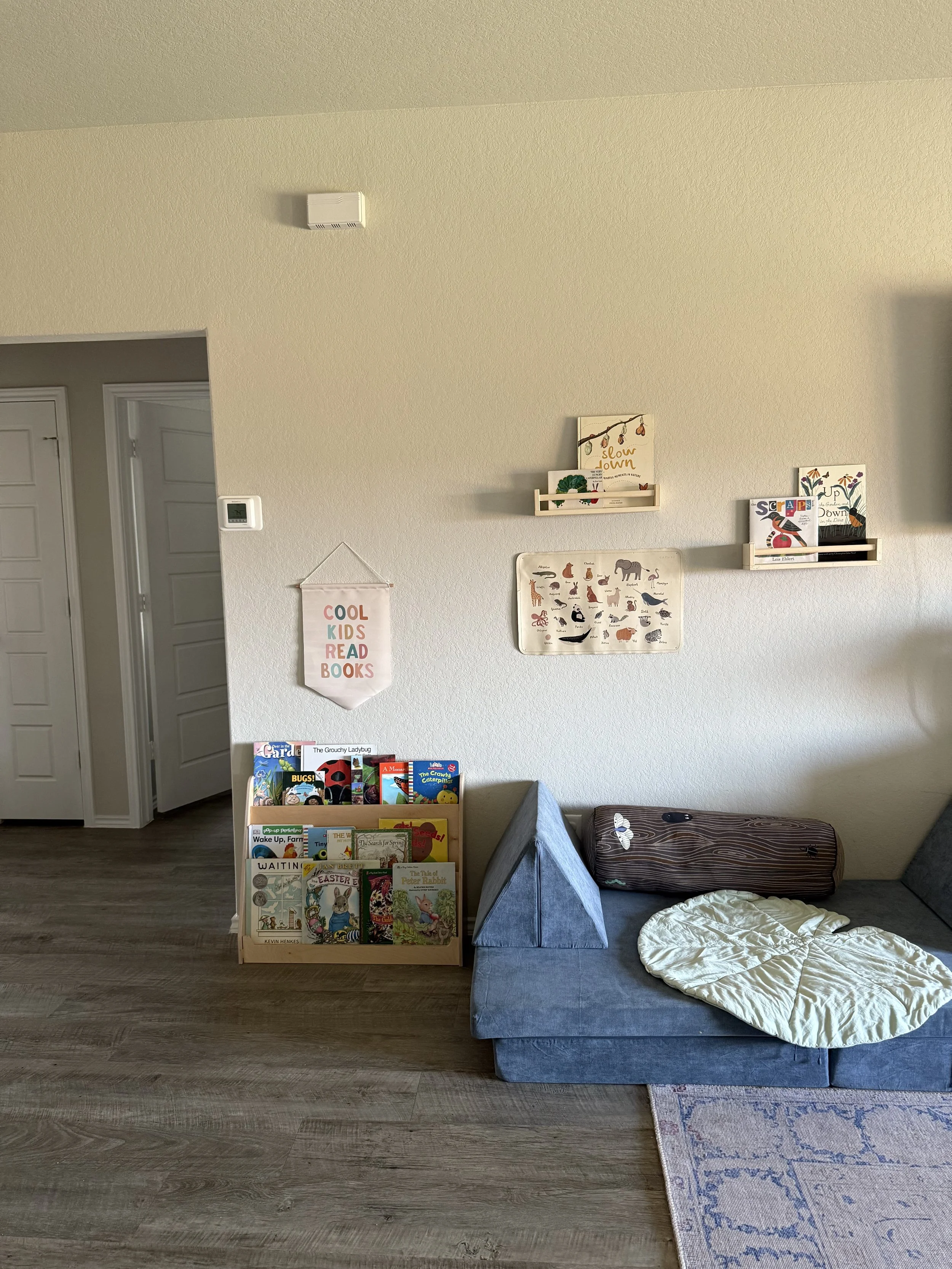
A calm corner is a small, cozy space where a child can go when feelings get big. It's a place to move, reset, and come back to connection.
As a former behavior interventionist, one thing I learned is that children don't calm down by sitting still. Big feelings live in the body, so a calm corner that asks a flooded toddler to sit quietly and take deep breaths is asking for the one thing they can't do yet. The best calm corners make room for the feeling instead of shutting it down.
That's why I think of mine less as a "calm down corner" and more as a “cozy corner” where security is key. You may have also heard the term “regulation station.” They serve the same function.
How to start a calm corner in 4 simple moves
1. Decide what it's for (and what it's not)Before you move a single pillow, get clear on this: a calm corner is not a time-out spot. A child is never sent there as a consequence. It's a safe place they can choose, and one you can go to with them.
If this is the only thing you get right, you're already ahead of most calm corners on Pinterest.
2. Choose a spot close to real life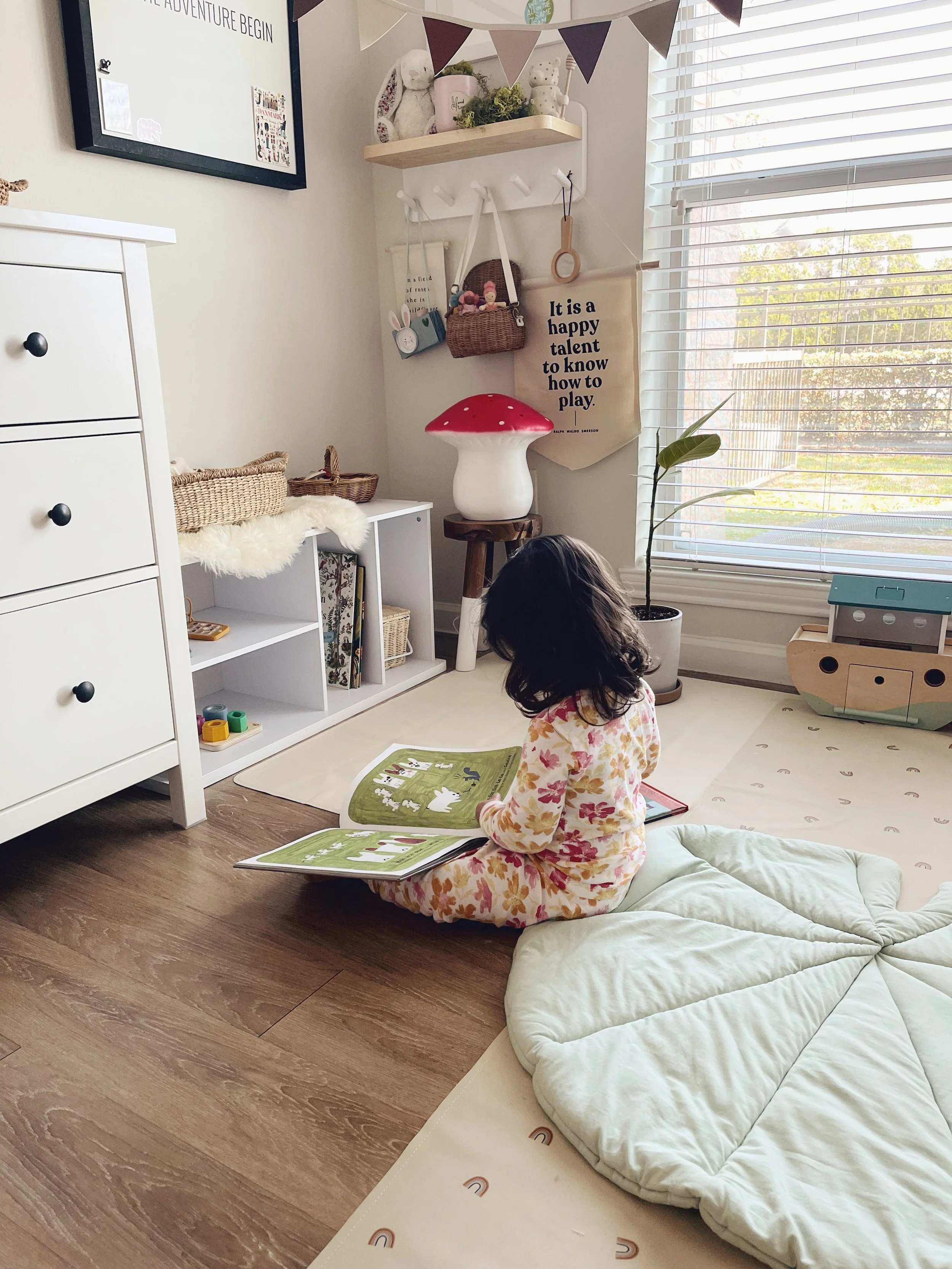
Children reach for regulation when it's near and where hard moments happen. A living room corner, the end of a hallway, or a spot near the kitchen all work well. I have ours in my daughter’s bedroom because she actually prefers to move away from anyone. Though that is actually rare for a toddler, she will grab books and sit when overwhelmed and overstimulated.
In a family-centered home, it should blend into your space instead of taking it over.
3. Clear the walls first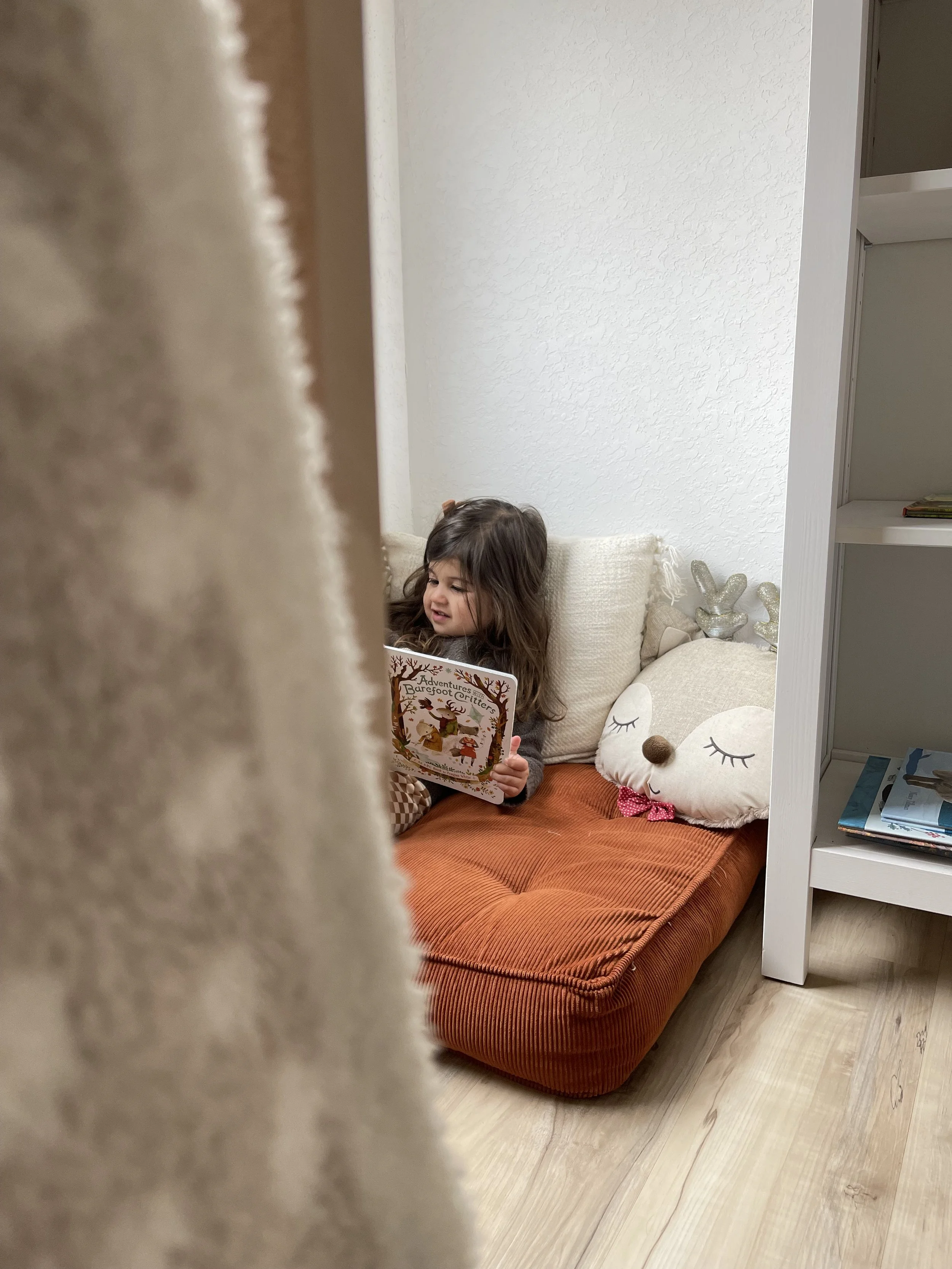
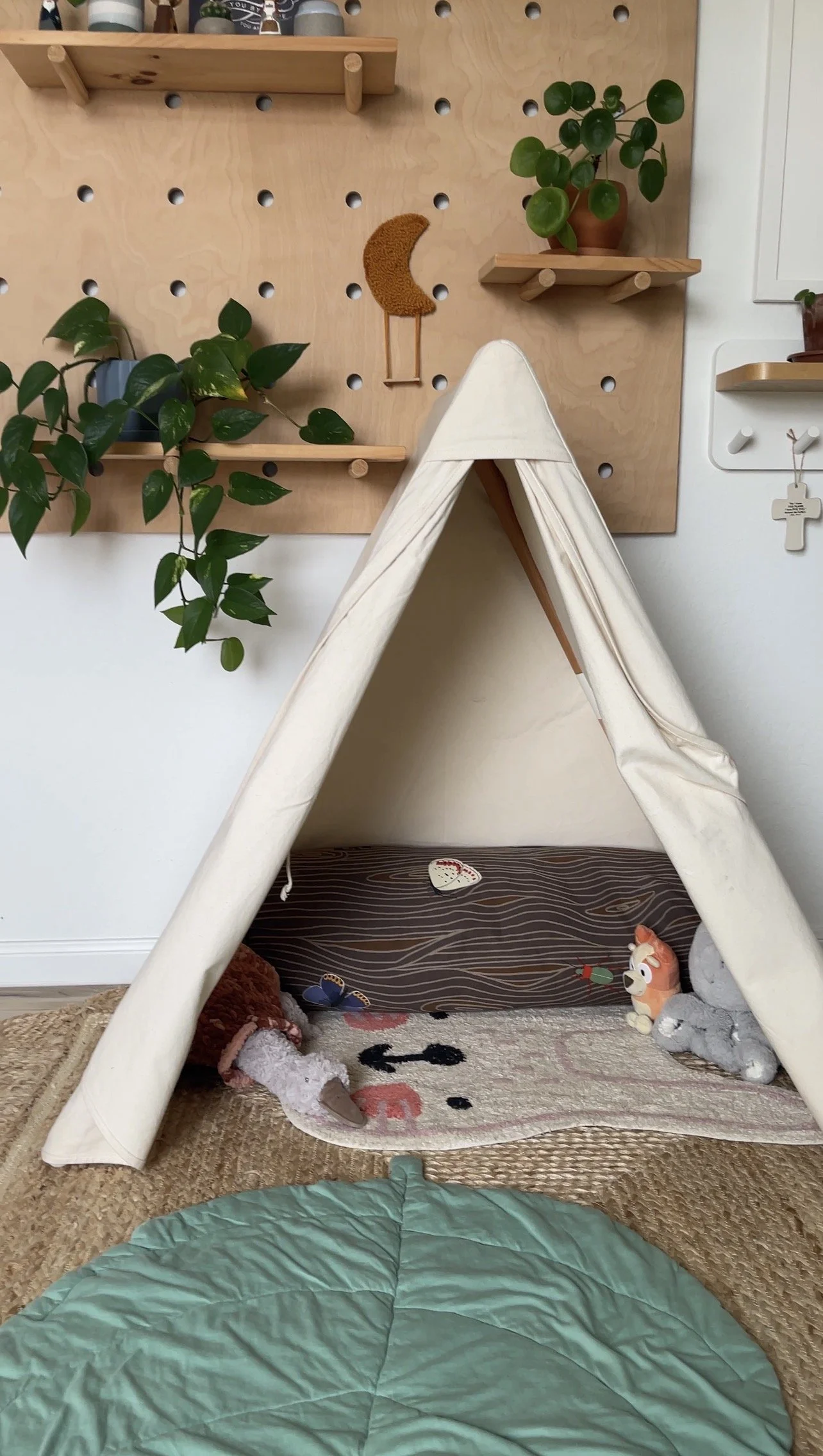
Before you add anything, take away. Skip the feelings posters, breathing charts, and rules. For a child who's already overwhelmed, a busy wall is just more input. A soft, simple, slightly tucked-in spot will do more than any printable.
4. Introduce it on a good day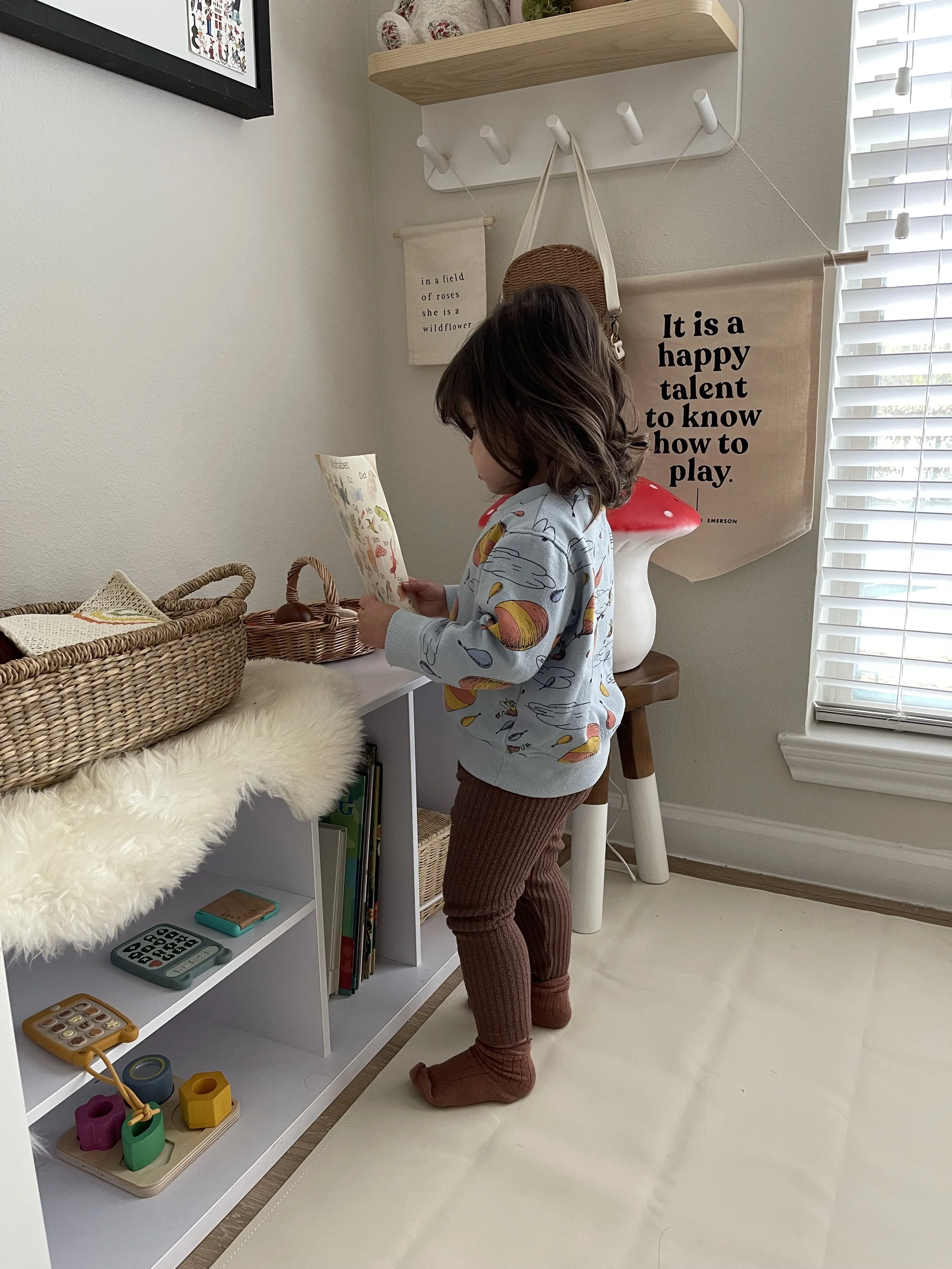
This is the step everyone skips. Show your child the calm corner when everyone's happy. Read books there, snuggle there, and make it a favorite spot first.
Then when a hard moment comes, it already feels safe and familiar. My own girls use ours for quiet alone time in the middle of the day, not just for meltdowns, and that's how I know it's working.
Calm corner FAQs
What age is a calm corner for?
Calm corners work beautifully for toddlers and preschoolers, usually starting around age 2. Older children use them too; the space just grows with them.
Is a calm corner the same as a time-out?
No. A time-out separates a child as a consequence. A calm corner is a space they're invited into (often with you) to feel safe and reset.
What if my toddler won't use the calm corner?
That's completely normal at first. Keep using it together on good days, and don't send them there when they're having a meltdown. Children use spaces they already love.
Ready to set up yours?
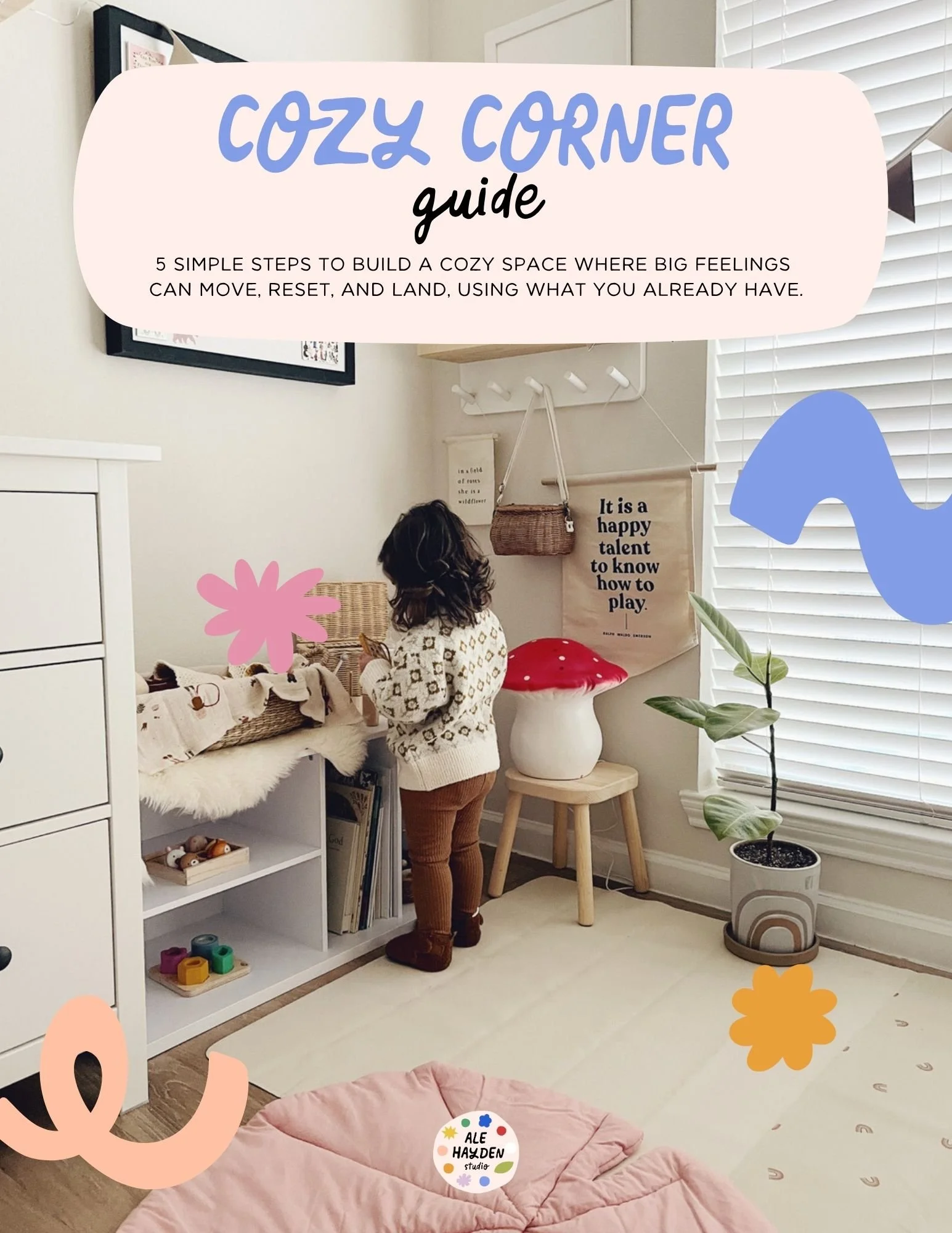
Now that you know how to start, the next question is what goes in your calm corner based on your child’s age, and what do you actually say to your child when they’re becoming distressed, overwhelmed, or dysregulated. That's exactly what I walk you through in my free guide.
The Cozy Corner Guide gives you 5 SIMPLE STEPS TO BUILD a cozy space where big feelings can move, reset, and land, using what you already have.