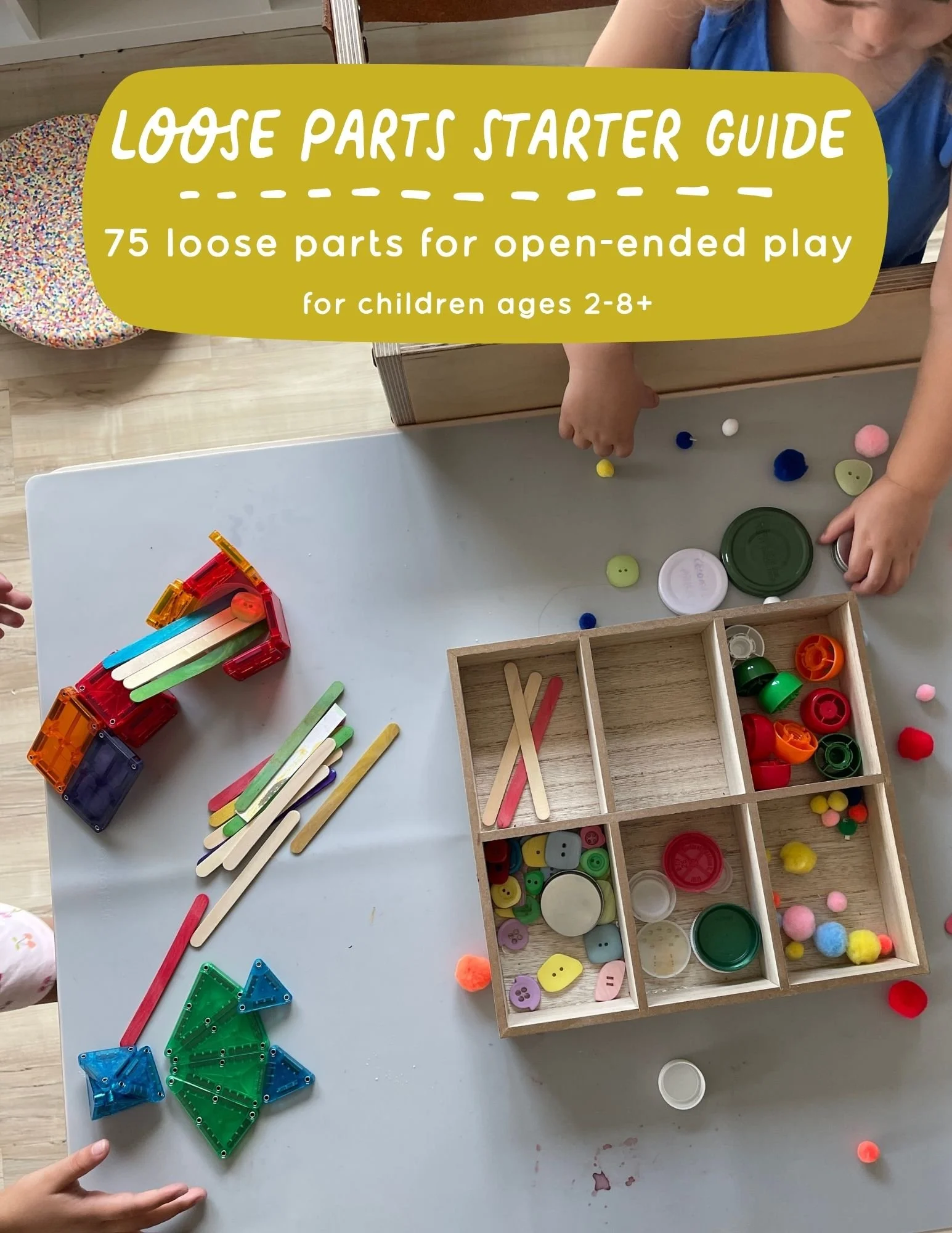
How to Set Up a Cozy Tinker Table for Preschoolers (Ages 3-6)
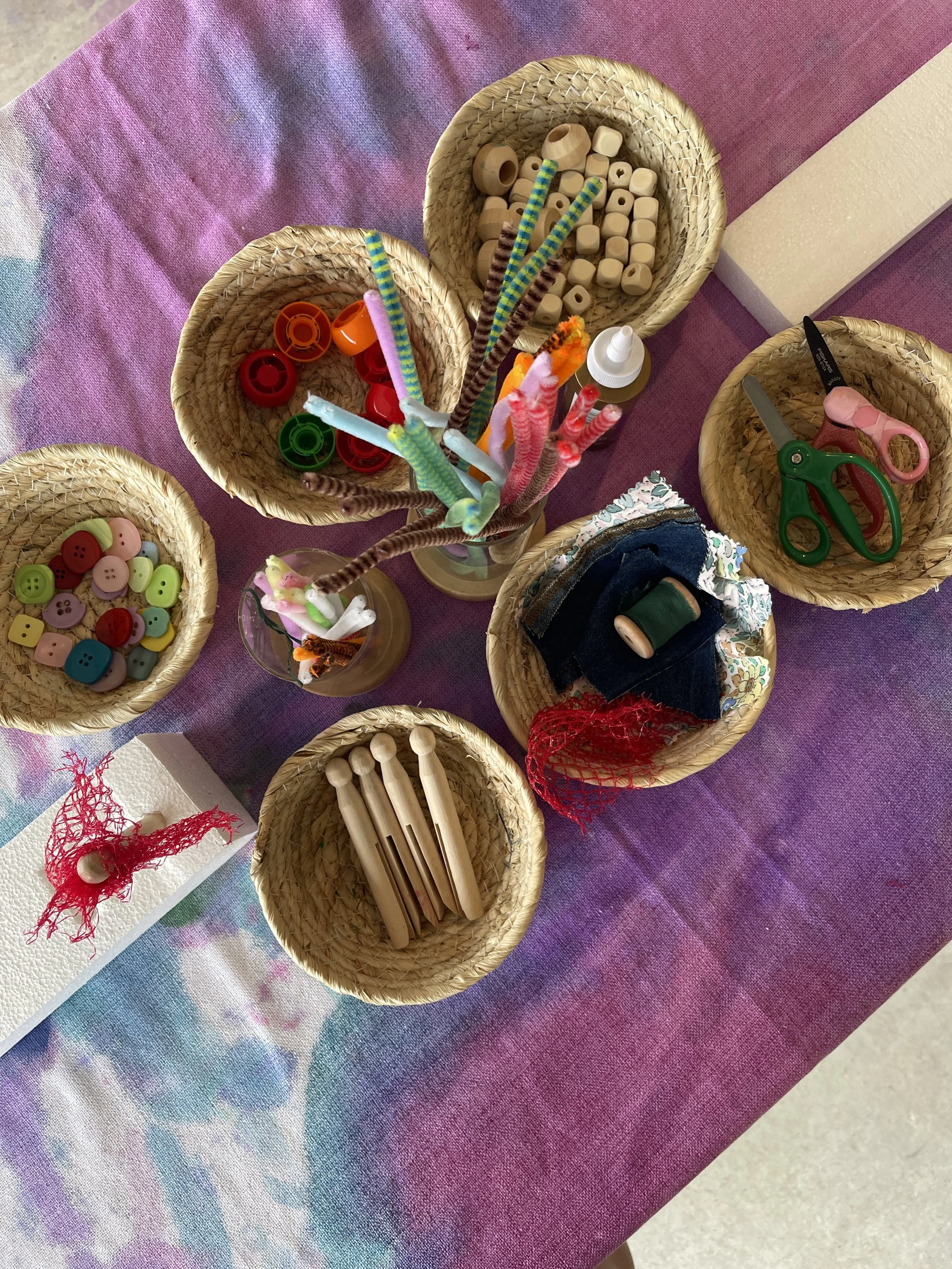
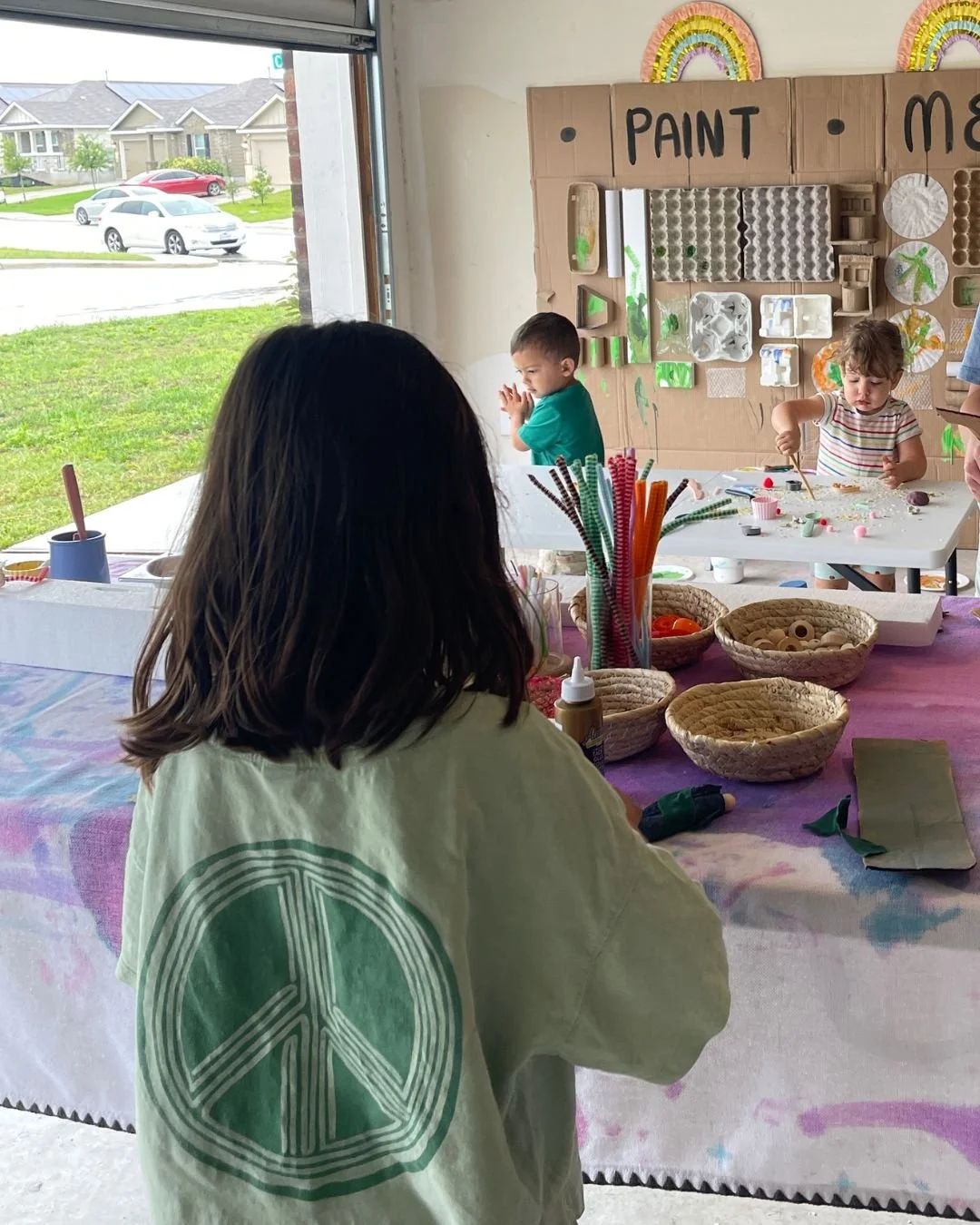
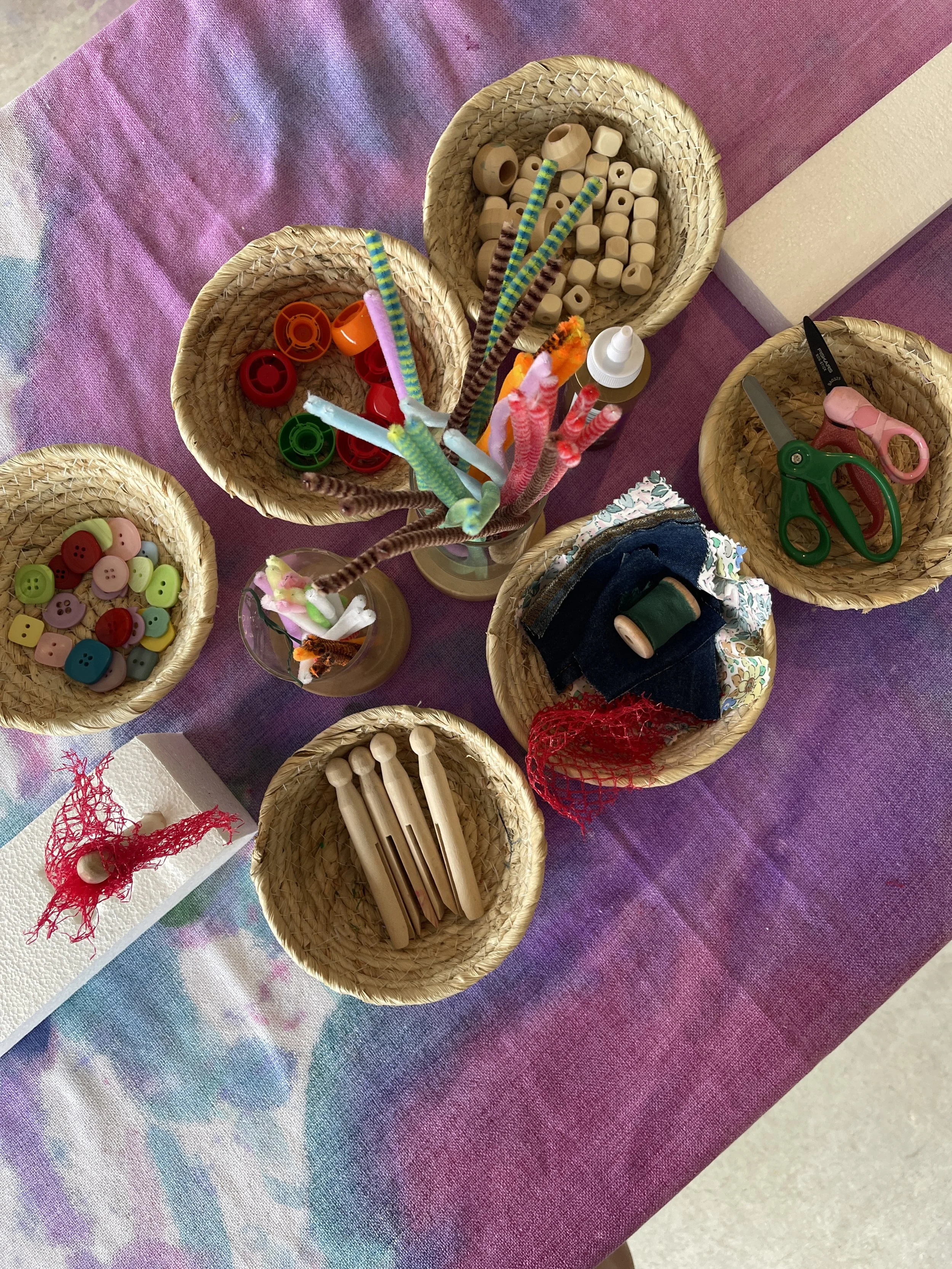
If you follow along on Instagram, you’ve probably caught glimpses of our art play dates. This one activity I’ve really wanted to highlight because it’s just a smash hit with a wide age range. Here we have little wicker baskets full of wooden beads, pipe cleaners, denim scraps, and clothespins, spread across a table dressed in a purple tie-dye cloth (which the children also made on a collaborative painting project, saving that one for later!)
What started as "let's put out some loose parts" turned into kids dressing up peg people, building tiny worlds out of small recyclables, and inventing their own board game on the spot! I love kids imagination. I honestly could’ve never come up with that one.
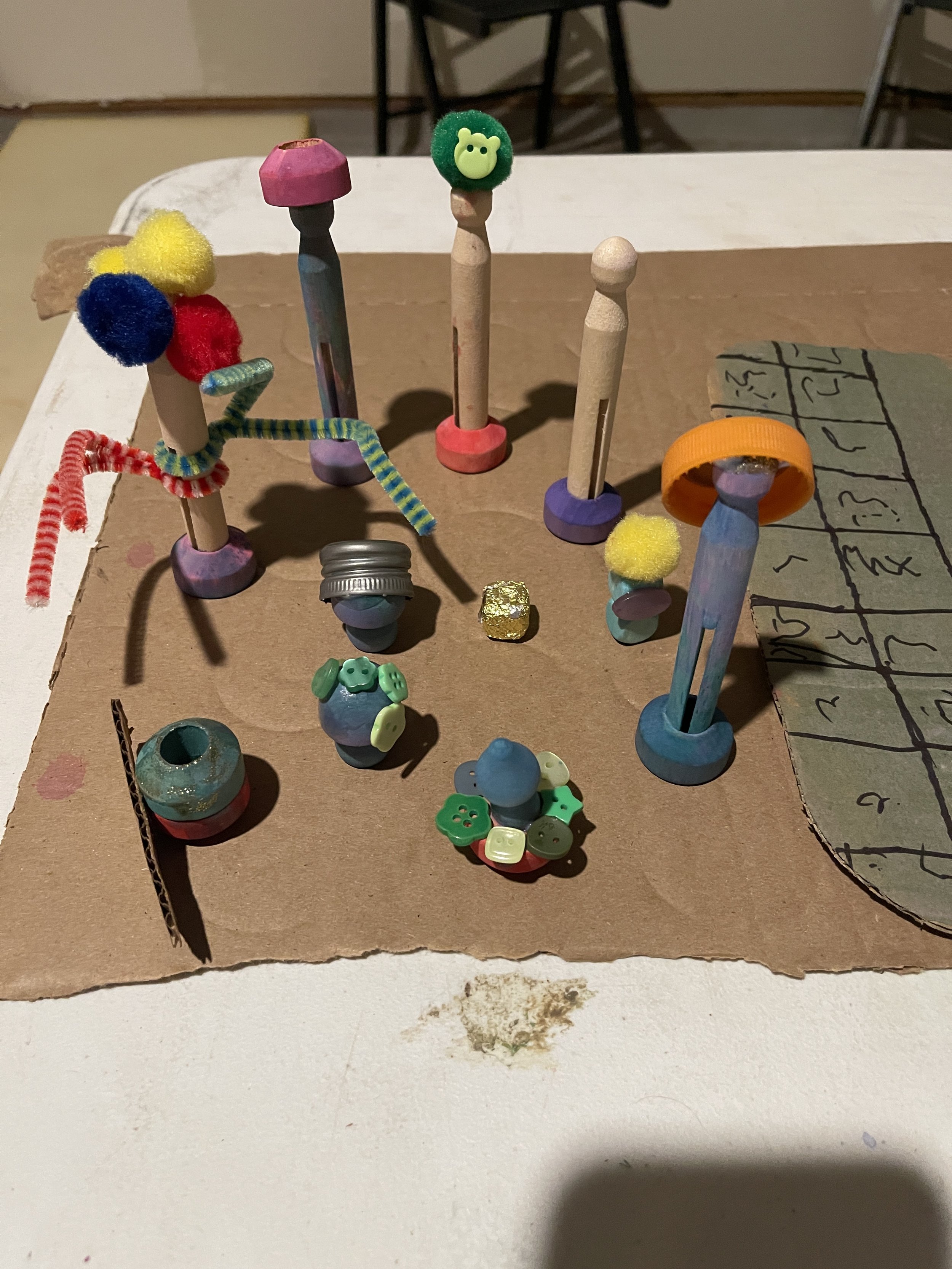
None of that was in the plan. And that's exactly the point.
As mentioned before, this is one of my favorite setups to pull out for mixed-age groups because it asks almost nothing of you to prep, and almost everything of the kids in the best way — their ideas, their hands, their pace. Here's how I put it together, and why it works.
first, raid your recyclables-no, seriously.
Almost everything on this table came from somewhere else first — egg cartons, denim scraps, bottle caps, plastic lids, foam packaging corners. Nothing here is a "craft kit." That's not an accident, and it's not just a budget thing (though, let's be honest, that helps too).
Recyled materials don't come with instructions built in. A wooden bead doesn't tell a kid what it's supposed to be. A scrap of denim doesn't come with a diagram. That blank-slate quality is what lets a kid decide a bottle cap is a shield, a plate, or a hat — and change their mind three times in the same afternoon. Materials with an obvious "right way" to use them (think character-branded craft kits) actually shut down that kind of thinking, because the end result is already decided for them.
There's also something quietly good about showing kids that "trash" has more life in it. Egg cartons and packaging scraps becoming a paint-me wall or a cardboard game board is a small, repeated lesson in resourcefulness — you don't need to buy something new to make something wonderful.
Creative Problem Solving and Fine Motor Skills, Built In
Nobody handed these kids a board game to play. They made one — which meant deciding what the pieces would be, how they'd move, what the rules were. That's creative problem solving in its purest form: no worksheet telling them the "correct" answer, just a pile of materials and a question they had to answer for themselves.
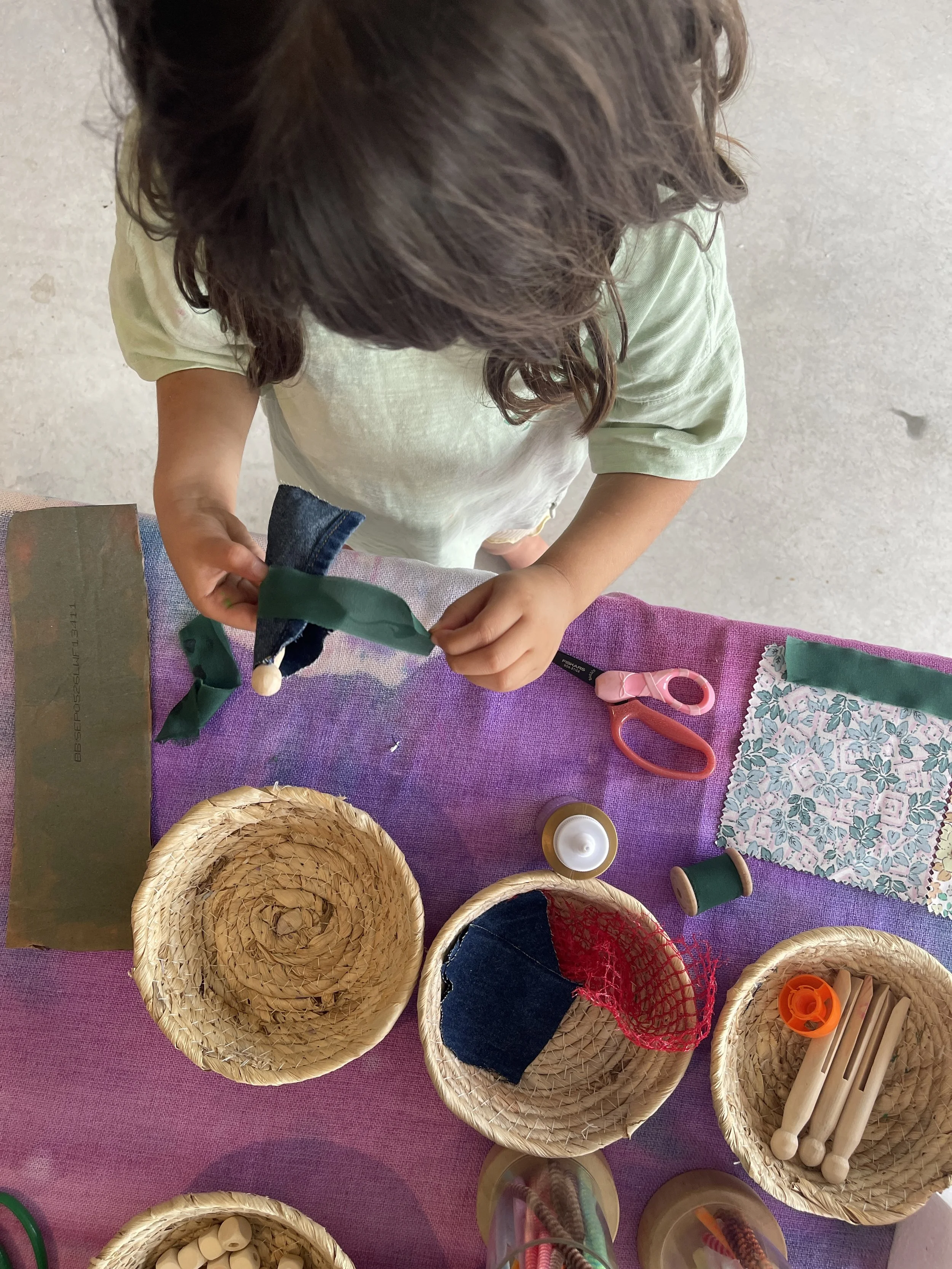
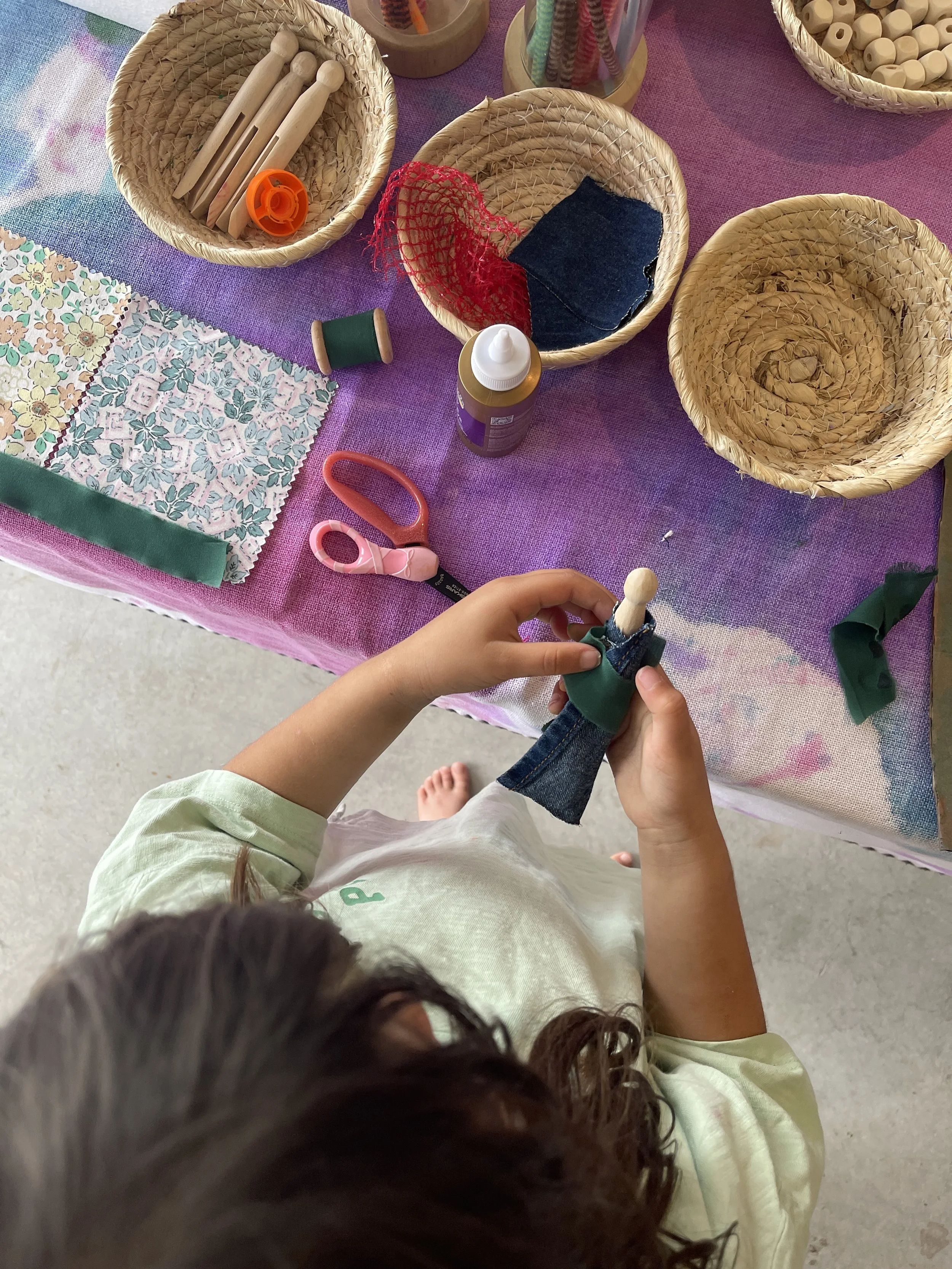
The fine motor work is happening quietly the whole time, too. Threading a pipe cleaner through a wooden bead. Wrapping fabric around a clothespin and getting it to actually stay. Snipping felt with kid scissors. These are the exact small-hand skills that show up later in handwriting and self-care tasks — but here, they're just what it takes to get the denim jacket to fit the peg doll right. The kids aren't practicing a skill. They're solving a problem they set for themselves, and the skill comes along for free.
Making It Work for Multiple Ages
This is the piece that makes a tinker table worth setting up for a group instead of one-on-one: the same basket of wooden beads can be a stacking-and-sorting activity for a three-year-old and a bead-necklace-for-my-peg-doll project for a six-year-old. Nobody needs a different setup.
A few things that help it flex across ages without you having to plan multiple activities:
Keep materials in small, separate baskets rather than one big bin — it's easier for a younger kid to see their choices and easier for an older kid to combine across baskets for a bigger idea.
Have a mix of "instant win" materials (big pom poms, buttons, anything satisfying to just handle and sort) alongside "build something" materials (clothespins, wooden peg dolls, fabric scraps) so there's an entry point at every skill level.
Let older kids' projects sit out and be seen. Younger siblings copy what they see, and that's often where the real stretch happens — not from anything you set up, but from watching a sibling figure it out first.
Materials and Tools You'll Need
You don't need to buy a thing to pull this off — most of this list is stuff you're probably already saving (or can start saving this week). Here's how we organized ours:
Loose parts (the building blocks):
Wooden beads (assorted shapes and sizes)
Pipe cleaners (assorted colors)
Buttons (large and small)
Bottle caps and plastic lids
Fabric scraps (denim, quilting cotton, felt)
Small spools of ribbon or thread
Produce netting
Recycled "canvas" pieces (for building and displaying):
Cardboard scraps (cereal boxes, shipping boxes, produce boxes)
PE foam blocks from packaging (anything you can poke really!)
Tools:
Kid-safe scissors (a couple pairs, so no one has to wait)
Tacky glue or a glue bottle with a controlled tip
Small wicker baskets or bowls, one material per basket
Setup extras:
A tablecloth (a painted or well-loved one adds to the cozy factor)
A note on quantities: less variety, more depth works better than one of everything. Two or three baskets of loose parts plus a couple of canvas materials is plenty for a table of four to six kids — it keeps choices manageable without overwhelming anyone.
Making It Inviting
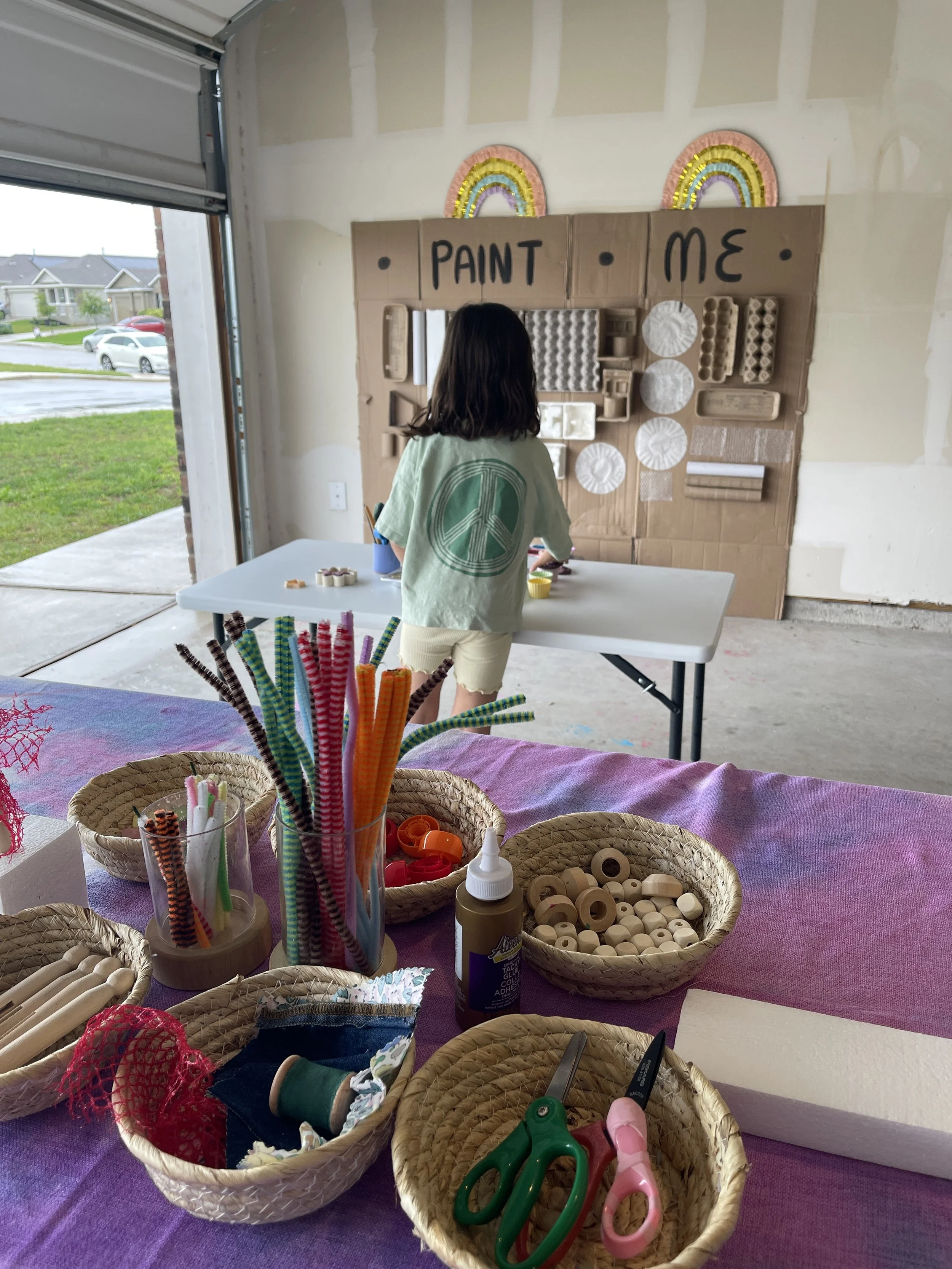
The materials do a lot of the work, but the setup itself matters too. A tablecloth (even a painted, well-loved one) instantly signals "this is a special space" in a way a bare table doesn't. Little woven baskets instead of plastic bins make the whole thing feel more like a shelf you'd want to dig through than a toy box you'd dump out.
At the end of the day, the "win" here isn't a finished product. It's a kid completely absorbed in wrapping fabric around a clothespin for the fourth time because the first three didn't look right to them. That's the whole goal — give them the materials, get out of the way, and let them build whatever's in their head.
free loose parts guide!
〰️
free loose parts guide! 〰️
If you're standing in your kitchen right now wondering what "loose parts" even means for your house, I made something for exactly that moment. The Loose Parts Starter Guide walks you through what to gather, how to set it out, and how to get started today — no special trip to the craft store required. Grab it below and set up your own version of this table this week.