10 Toddler Painting Activities Using 3 Supplies or Less (With Stuff You Already Have)
If you've got a cardboard boxes, a junk drawer with bottle caps and other recyclables, plus washable paint, you already have everything you need for an entire week of process art. No supply list to screenshot, no crazy craft run required — just what's already sitting in your recycling bin.
These ten ideas each use three materials (paint counts as one!) and turn everyday stuff — egg cartons, nature, toilet paper rolls, cardboard, bubble wrap — into open-ended painting tools. They're all screen-free, mess-embracing, and built for little hands still figuring out what a paintbrush is even for.
A few of these might look familiar if you follow along on Pinterest. A few might be brand new. Either way, consider this your permission slip to raid the recycling bin before it goes out to the curb!
1. Seashell Painting
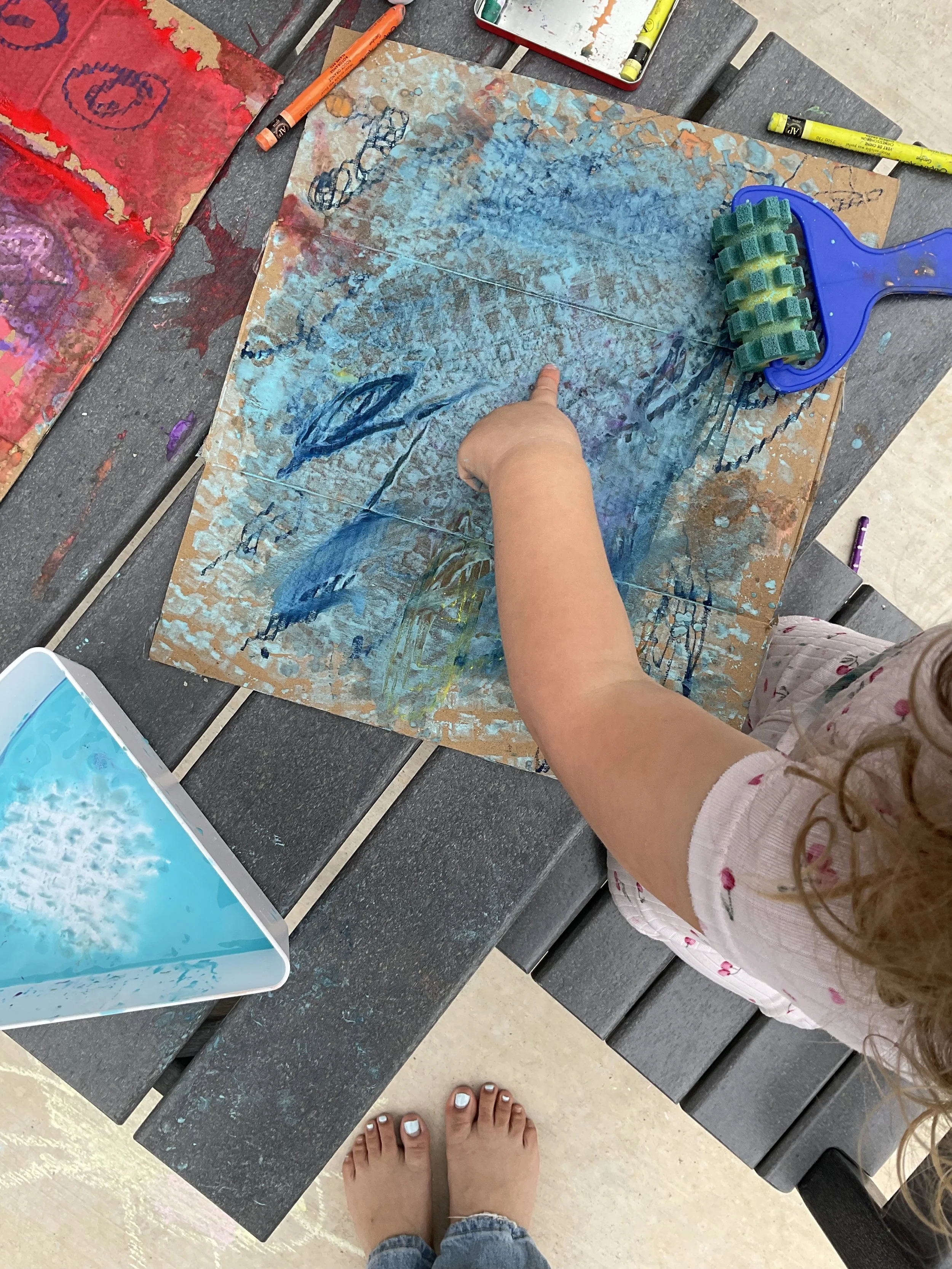
Materials: Washable paint diluted in jars with water, brushes, seashells, watercolor paper or napkins (optional)
The ridges are fun for toddlers to explore just enough paint and drag the paintbrush across and paint the inside. The natural shape makes it an easy first "tool" for little fingers to grip and practice fine motor skills too. This one's a great next step after finger painting — same sensory freedom, slightly more control. Younger toddlers will also dip their shells in a jar, which is totally fun to explore the color that comes out!
Tip: If you have beach shells from a family trip, this doubles as a sweet way to revisit a memory together.
2. Roller Brush Painting
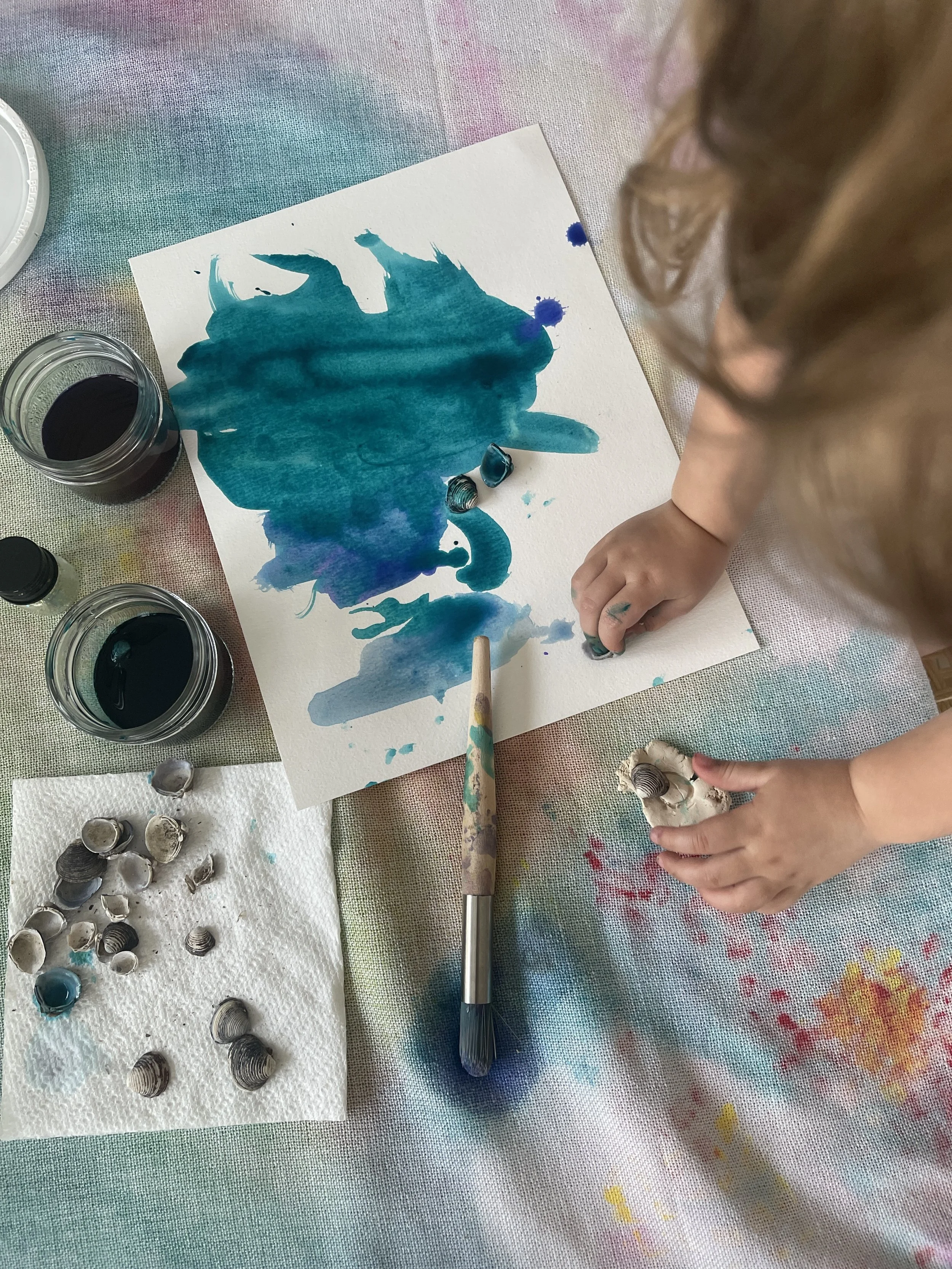
Materials: Washable paint in plates or shallow trays, foam roller, cardboard.
Mini foam paint rollers (the kind from the craft aisle, a few dollars for a pack) are one of the most satisfying tools to hand a toddler. The motion is big and full-body, the coverage is fast, and there's very little room for "wrong." Great for a child who gets frustrated holding a skinny brush.
Tip: Cardboard holds up to heavier paint layers better than paper — this is a good one to move outside for a large canvas experience.
3. Yarn Painting
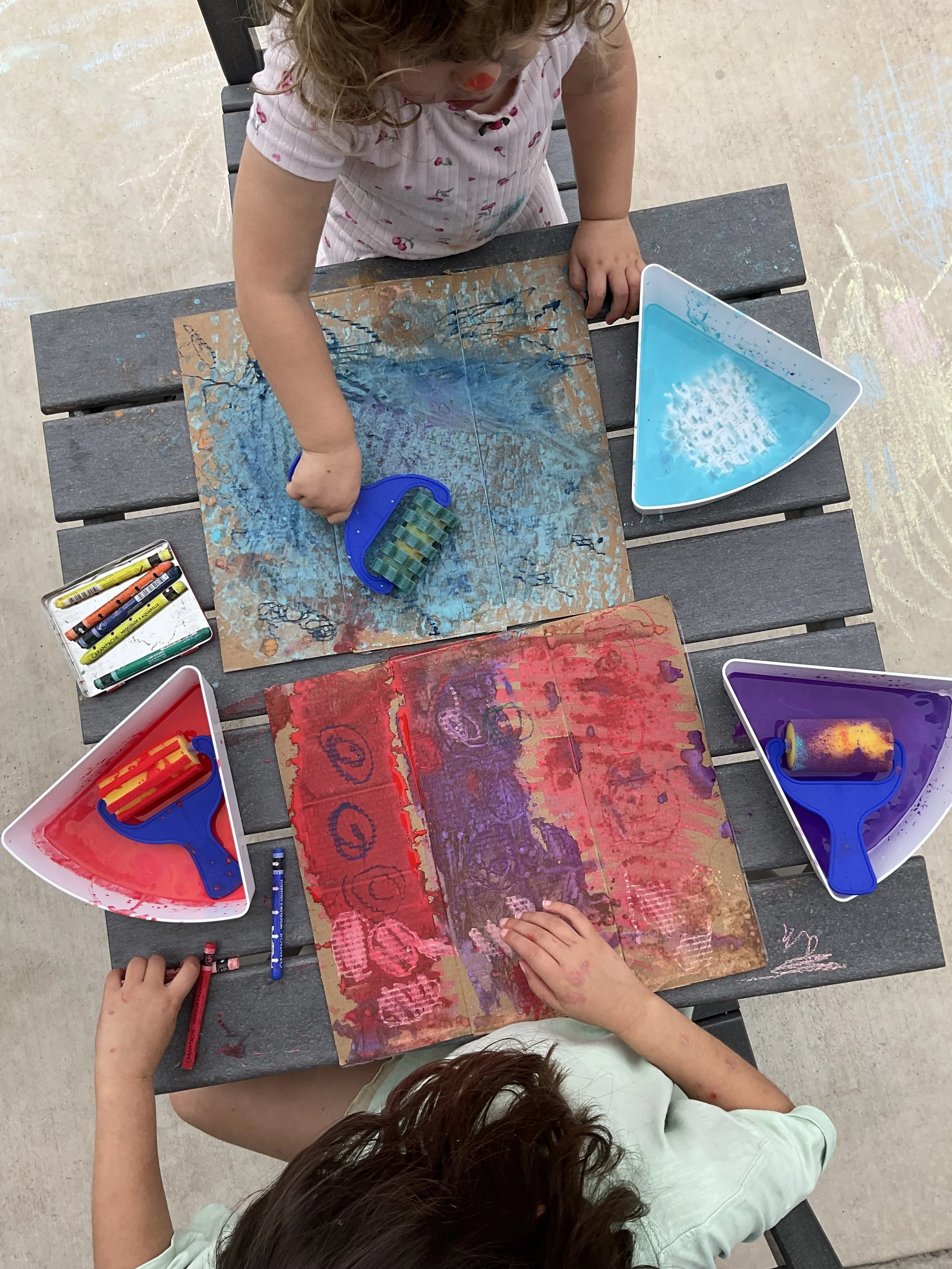
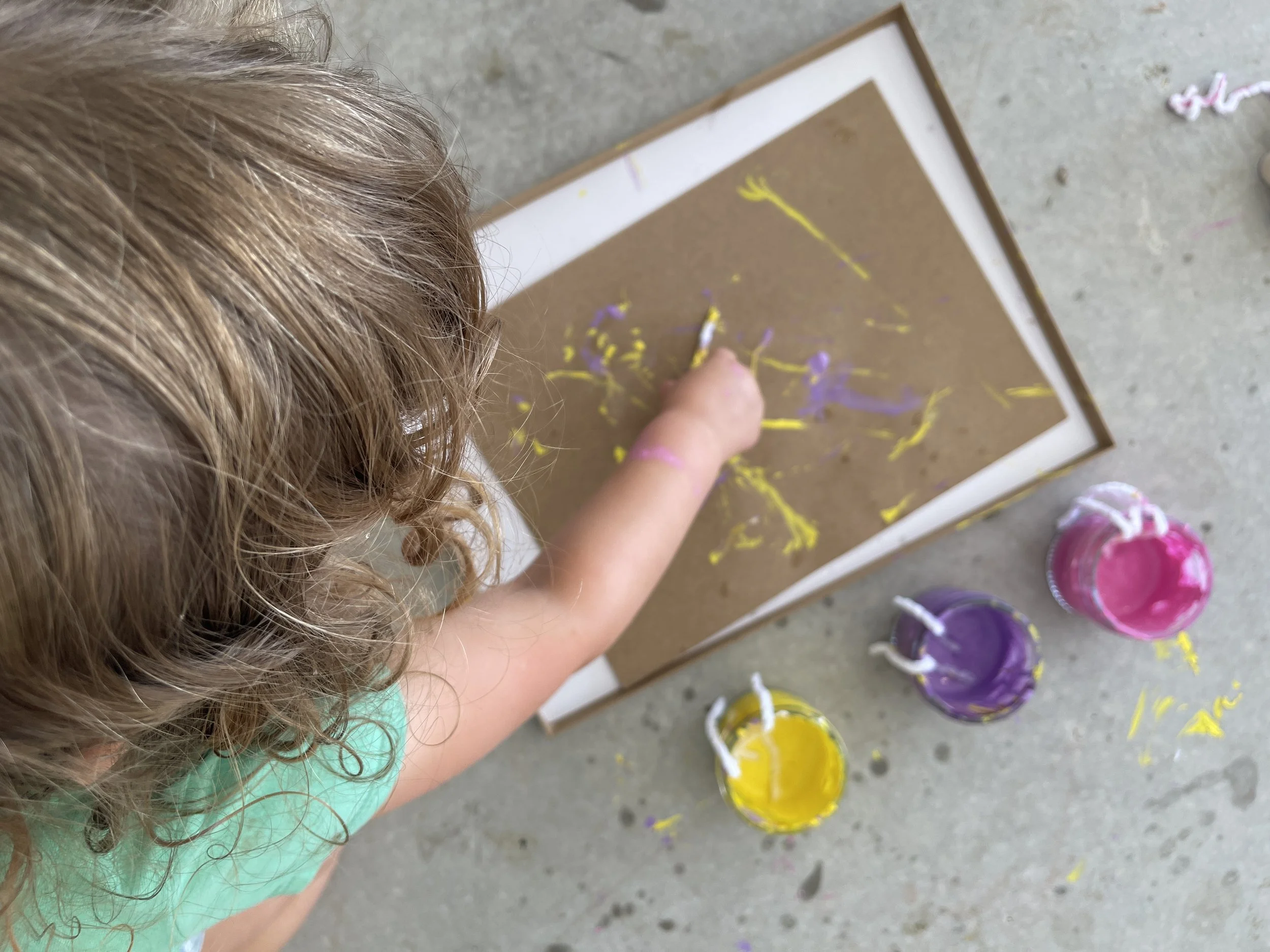
Materials: Washable paint in jars, yarn, paper
Dip a length of yarn in paint, lay it across the paper, and drag or pull it through. The lines it leaves are looser and squigglier than anything a brush makes, which is exactly the appeal — it's a totally different mark-making experience for a toddler who's used to a paintbrush shape.
Tip: Cut a few short strands so children are not holding a long and awkward paint-soaked string the whole time.
4. Egg Carton Painting
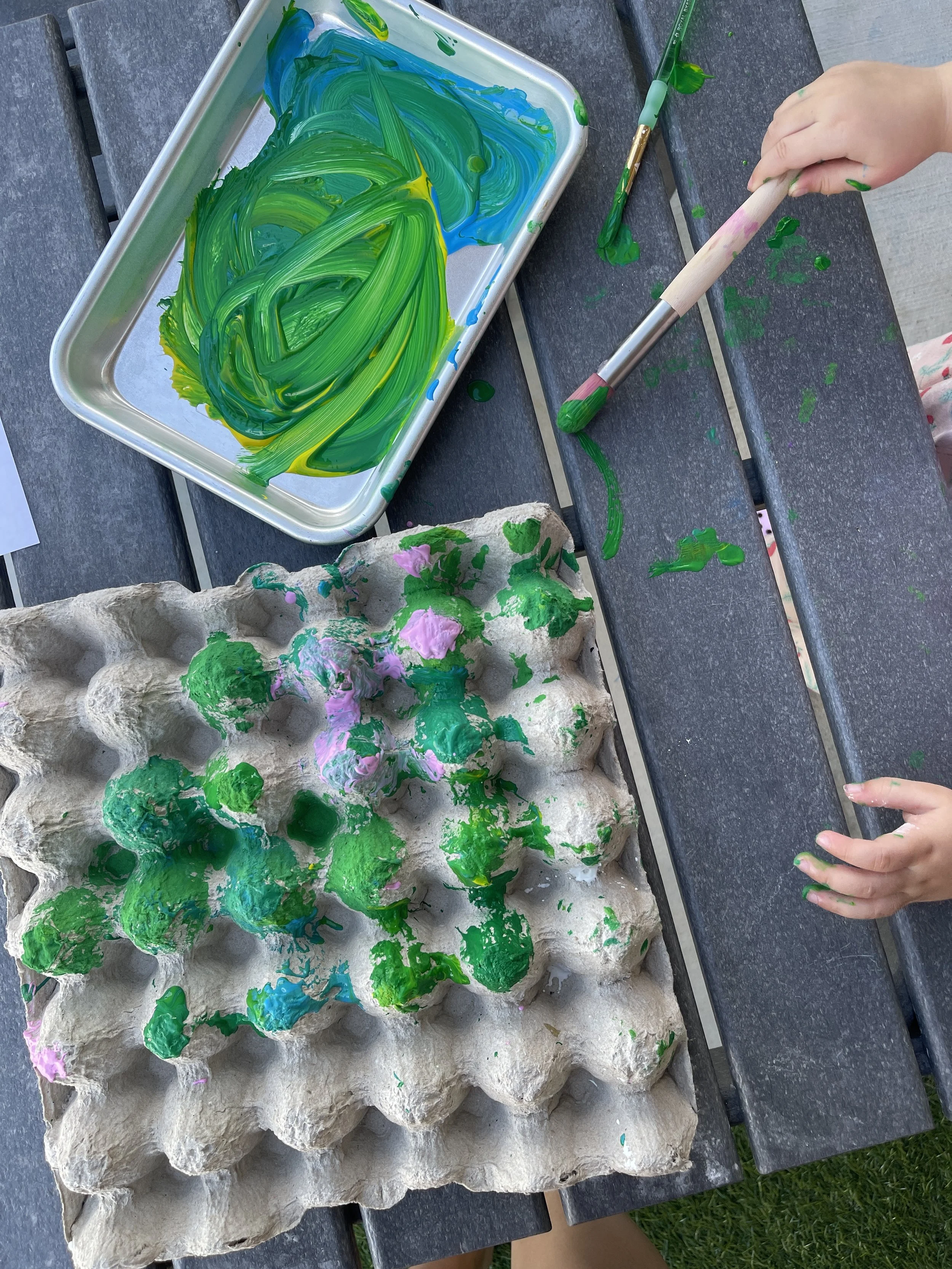
Materials: Washable paint in a tray, paper egg carton, paintbrush
An empty egg carton becomes a built-in paint palette and a stamping tool in one. Let your toddler mix colors in the cups, then flip it over and press the bumpy underside onto paper for a totally different texture. Two activities, one piece of art.
Tip: This is a great one to save and reuse for play since kids like decorating little nooks and homes for their figurines and small toys.
5. Black and White Painting (Cornstarch Paint)
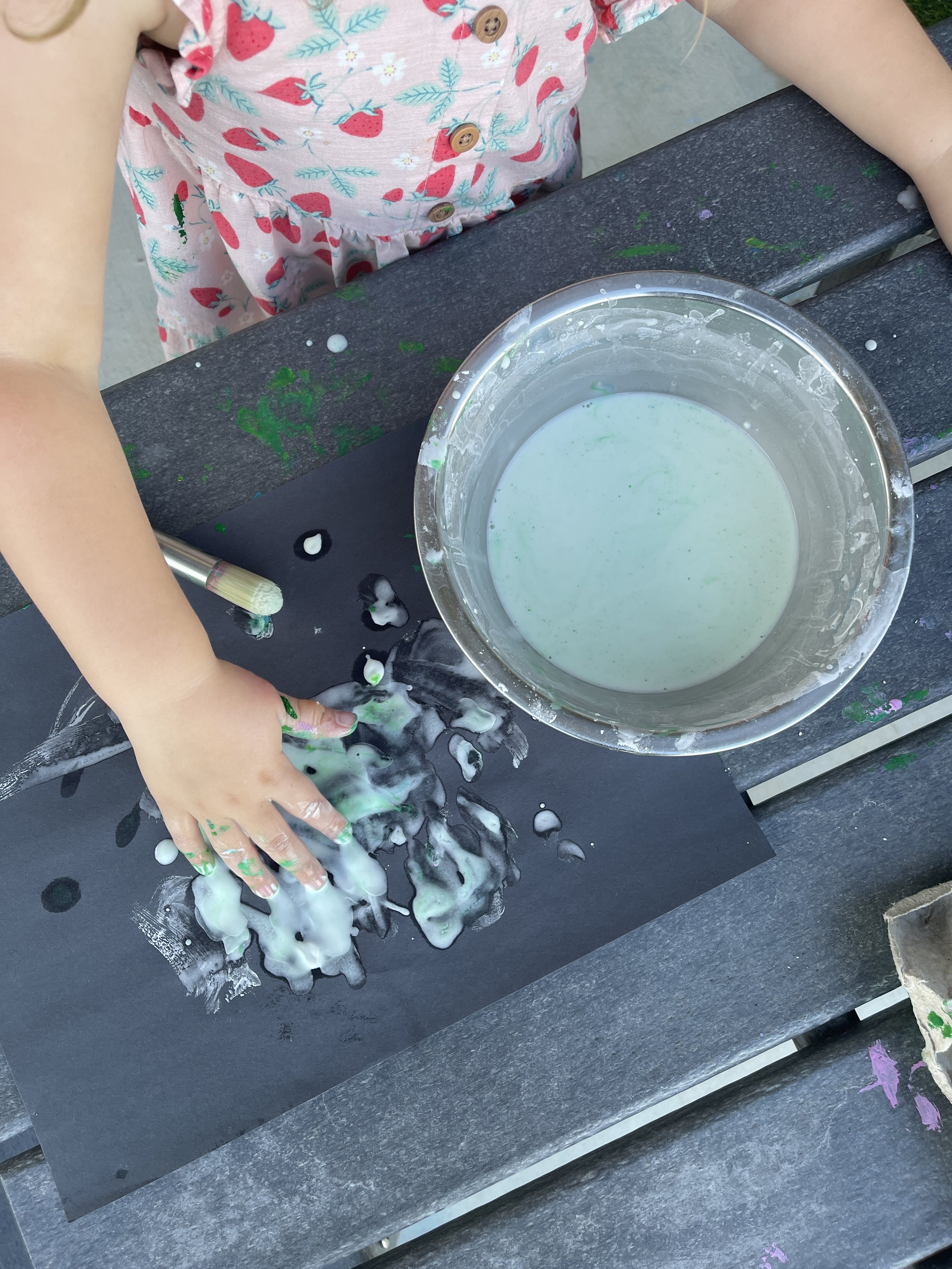
Materials: Cornstarch, water, black paper, paintbrush (optional)
This is the one that surprises people. Mix cornstarch and water into a thin, milky paint, spread it on black paper, and let it dry. Instead of drying shiny like regular paint, it dries matte and slightly textured — almost chalky — which makes for a genuinely different sensory and visual experience than anything else on this list!
Tip: It's runnier than washable paint, so this one's best on a tray or a table you don't mind getting a little drippy.
6. Bubble Wrap Painting
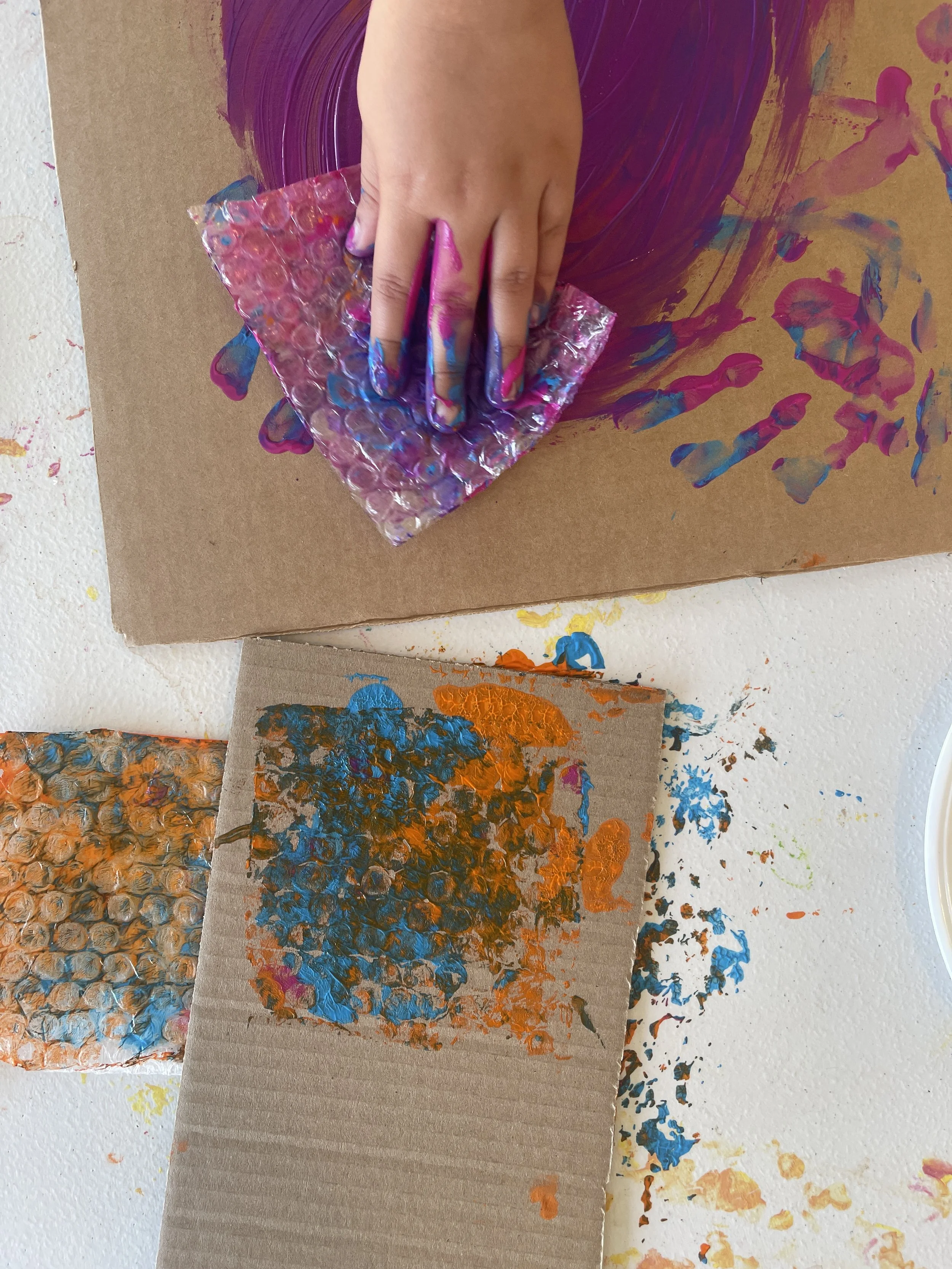
Materials: Washable paint, bubble wrap, cardboard or paper
Paint directly onto a piece of bubble wrap, then press it onto paper (or press paper onto it) for a stamped, dotted texture toddlers love to poke and prod even before the paint goes on. Bonus: if you've got leftover bubble wrap from a package, this is a zero-cost activity.
Tip: Let them paint the bubble wrap itself first as its own sensory step — the process of loading it up is half the fun.
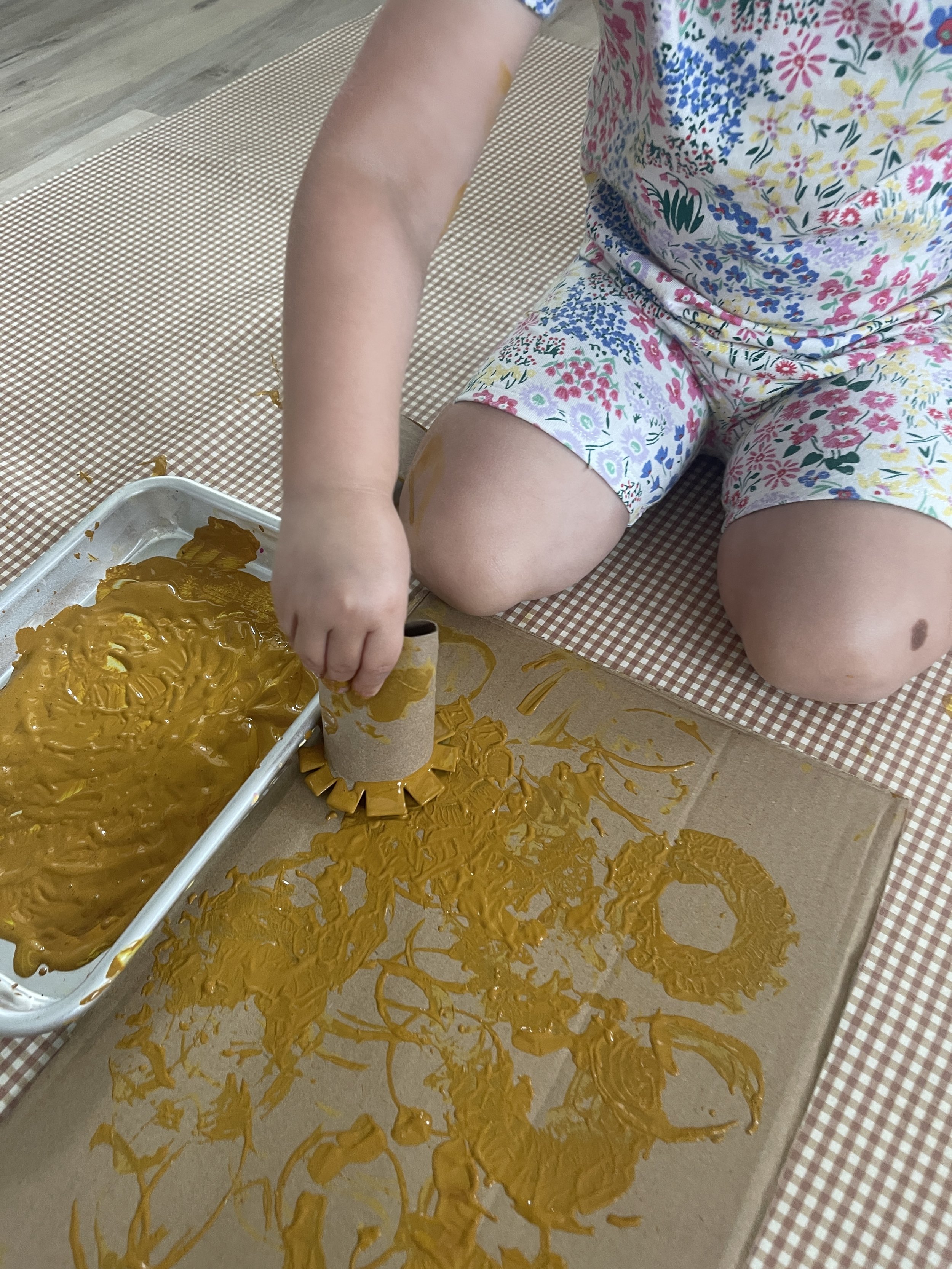
7. Toilet Roll stamp Painting
Materials: Washable paint on a tray, toilet paper roll, paper or cardboard
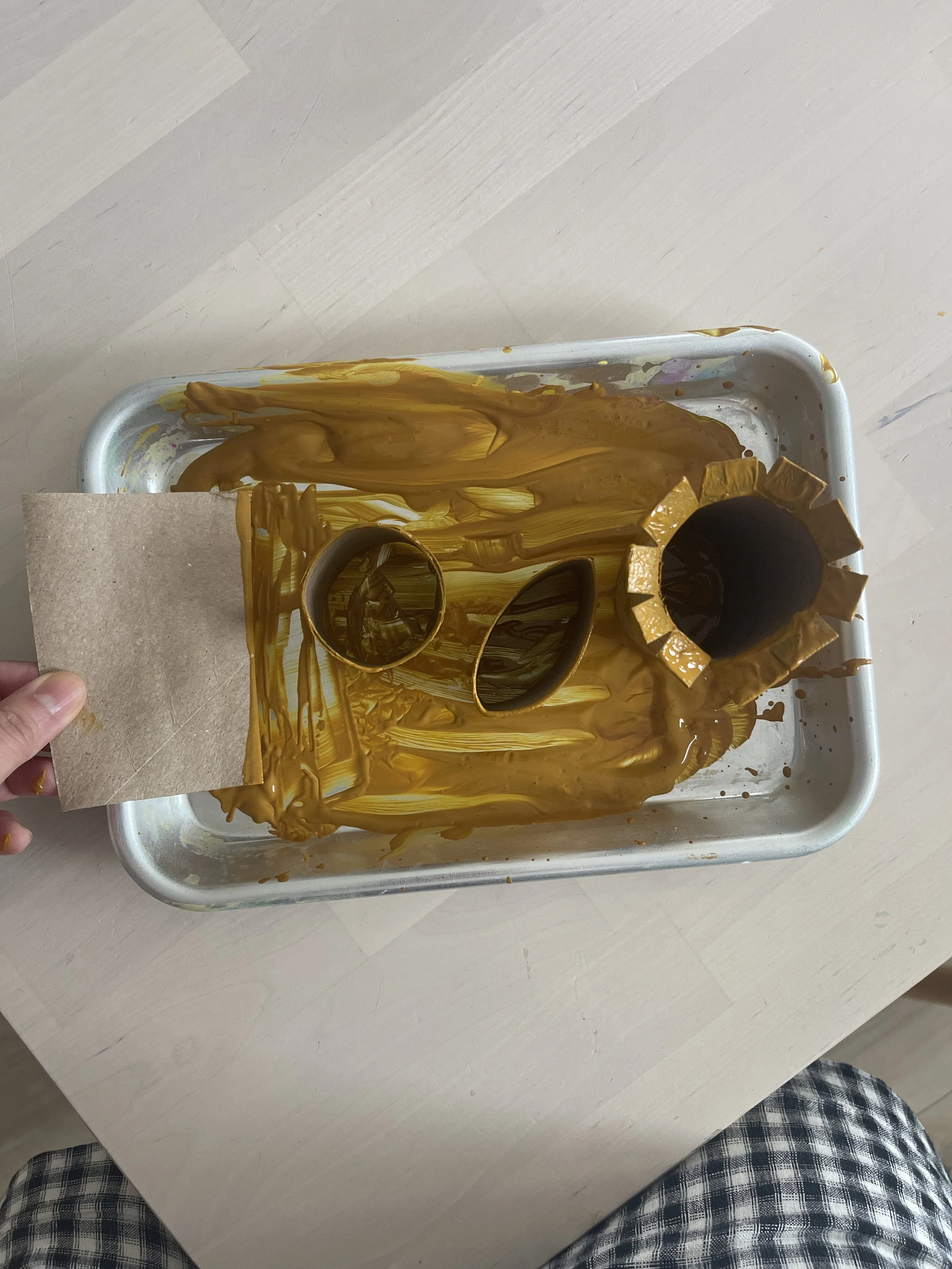
Flatten and cut 2 toilet rolls in half (the shorter length is easier for toddlers). Make each one into a simple shape — a heart, an oval, a diamond, a flower — and it turns into a reusable stamp. It's a low-effort way to introduce simple shapes without ever picking up a worksheet.
Tip: Cut small notches around one end (like the sunflower shape in the photo) for a more textured stamped edge. You can also cut a toilet roll in half so it becomes a flat scraper tool (like in the photo also).
8. Recycled Cap Paint Stamps
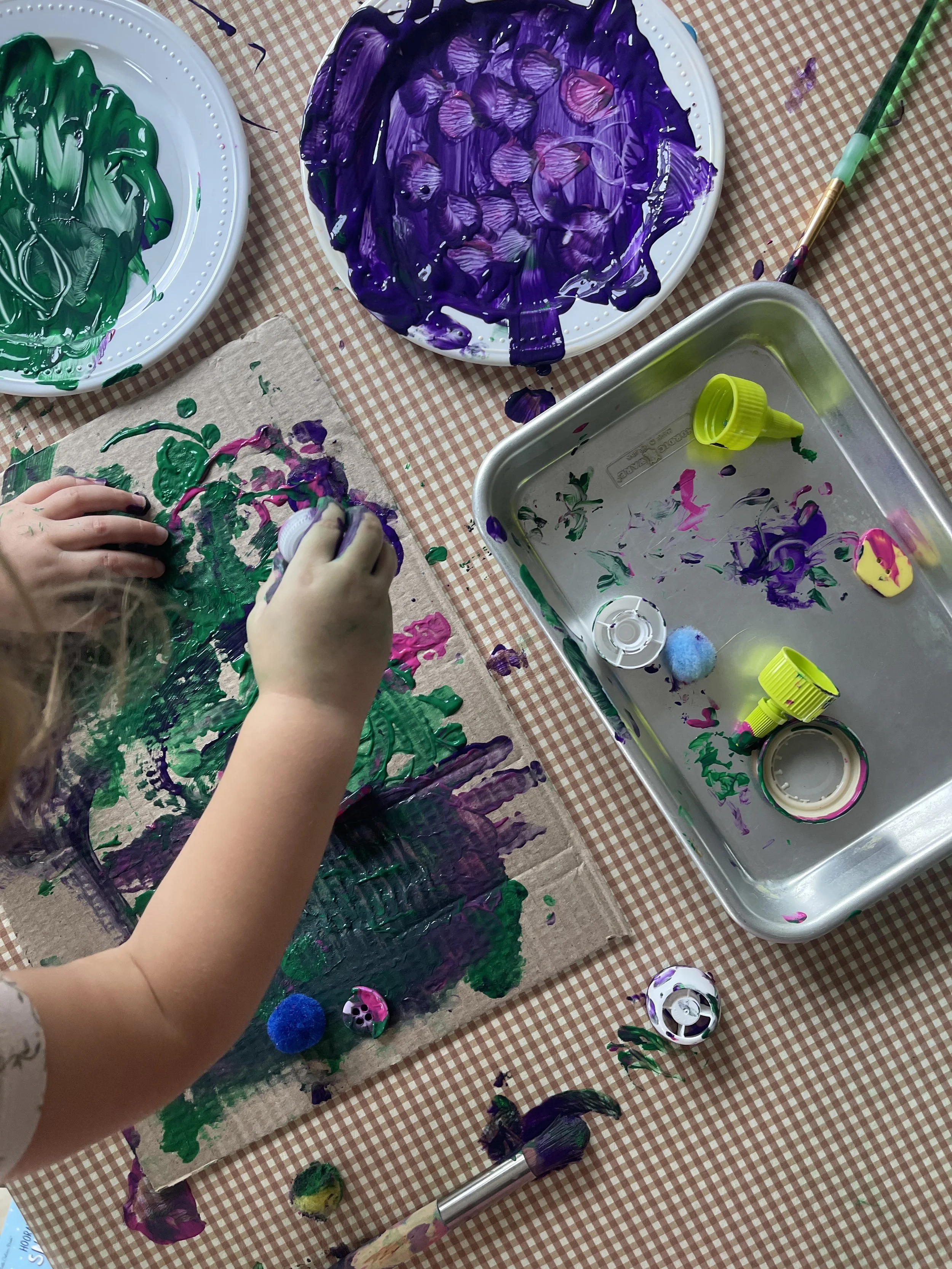
Materials: Washable paint, plates or shallow trays, bottle caps or lids, cardboard
Bottle caps, jar lids, even pom-poms and buttons from a craft bin all make surprisingly satisfying paint stamps. Different sizes make different-sized dots and circles, which is a nice, low-key intro to comparing shapes and sizes through play instead of a flashcard.
Tip: Set out a small tray of mismatched caps and let your toddler sort through which ones they want to use — the choosing is part of the activity.
9. Cardboard Box Painting
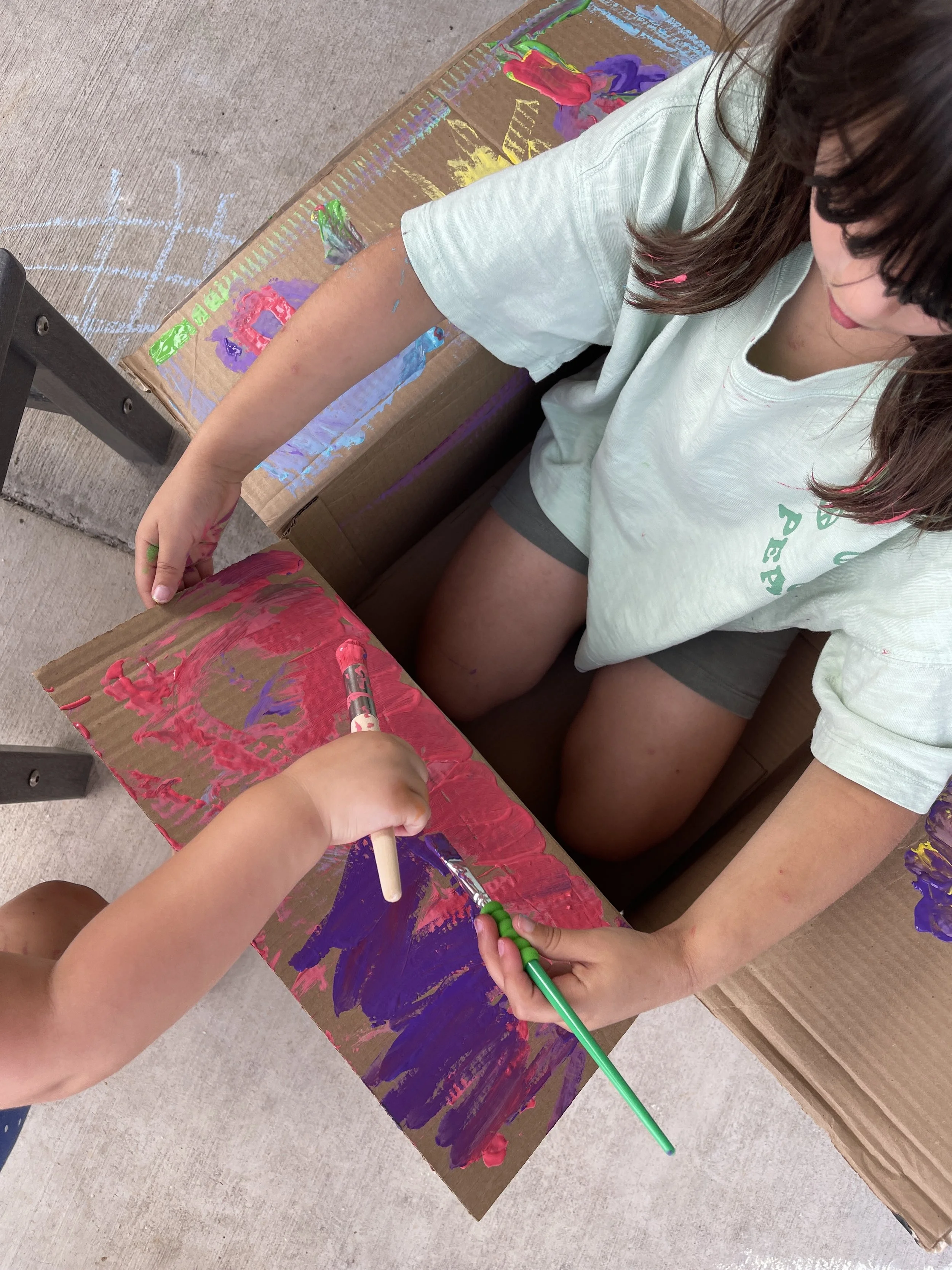
Materials: Washable paint, a large cardboard box, paintbrush
An old delivery box (or even better, one big enough to sit inside) turns painting into a full-body, three-dimensional experience instead of something confined to a flat sheet of paper. It's an easy way to make painting feel like an event without adding a single new supply.
Tip: This is a great activity to let run over a few days — box painting is rarely a one-sitting project, and that's part of the appeal.
10. Squeeze Bottle Painting
Materials: Washable paint (thinned with a little water), squeeze bottle, fabric or paper
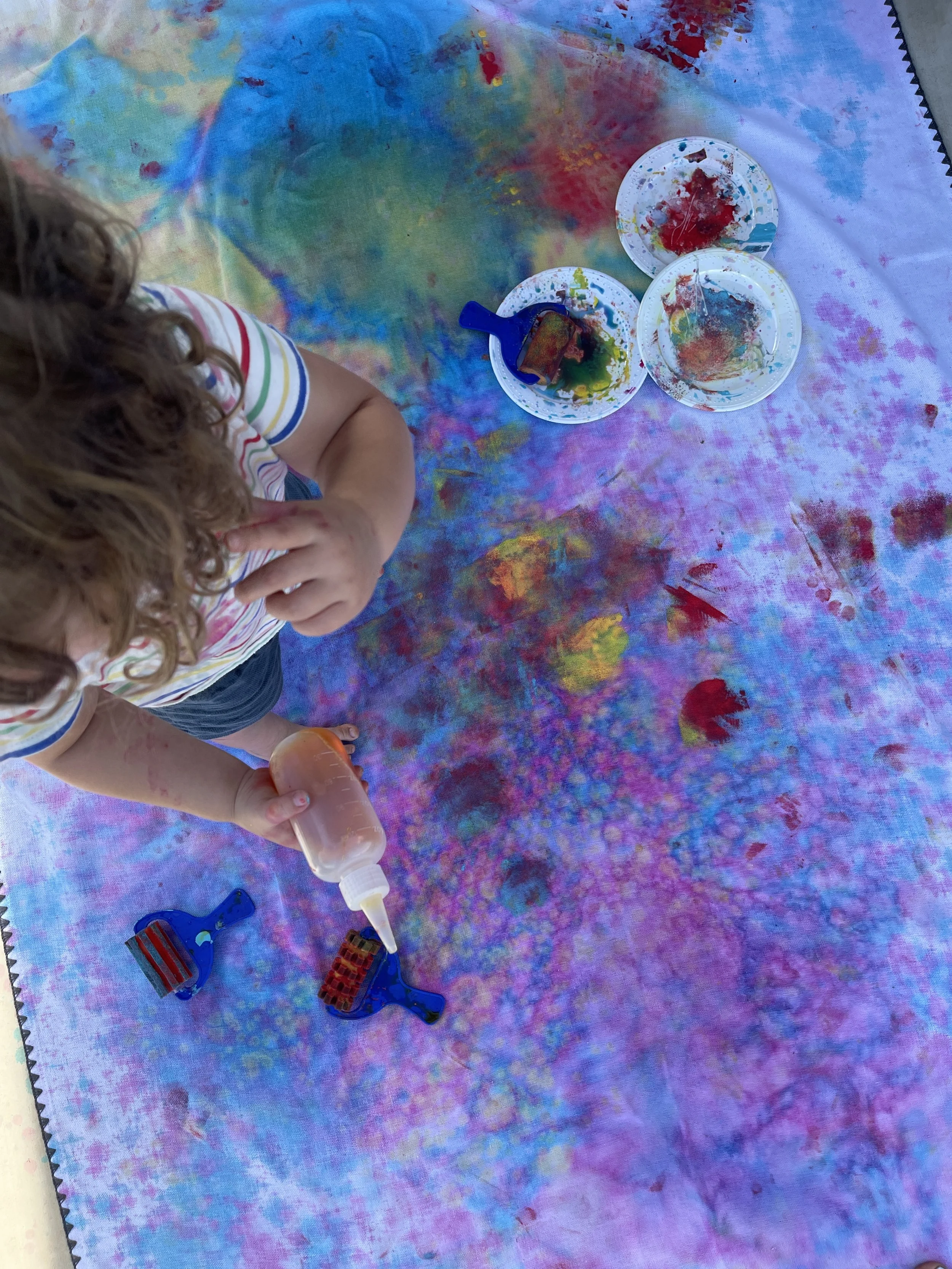
Fill an empty squeeze bottle with thinned paint and let your toddler squeeze it directly onto fabric or paper. It's a fantastic fine motor workout disguised as a painting activity, and the tie-dye-like blending on fabric is genuinely beautiful when it's done!
Tip: This one's especially fun on a messy collaborative project with children outside. Just look at what we created on an old curtain below!
A Few Notes Before You Start
You don't need all materials at once. Pick two or three that match what's already in your recycling bin this week.
Washable paint is doing a lot of the heavy lifting here — it's the one material that shows up in almost every activity, so it's worth having three good bottles on hand.
These are all open-ended. There's no "right" way for any of these to turn out, which is exactly the point — the process is the activity, not the finished piece.
From my years running a preschool class and art workshops, the activities that get repeated aren't the ones with the most steps — they're the ones with the least friction to set up. That's really the whole idea behind this list.
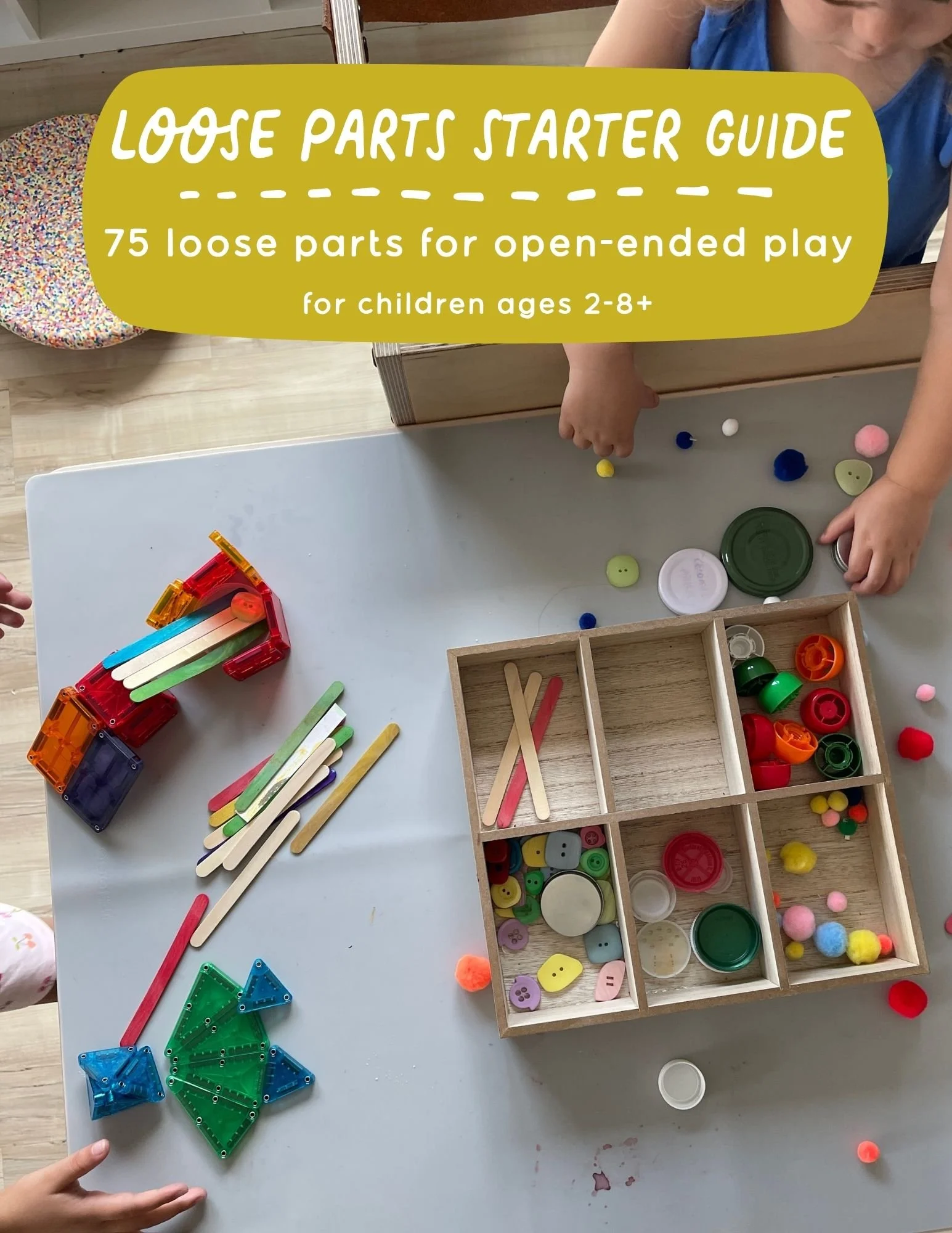
Want more ideas like this dropped straight into your inbox? Grab my Loose Parts Starter Guide for a few more open-ended, low-prep ideas and over 75 materials you can start using today with what you already have. 🎨