Our Mindful Toy Rotation Method (A Proven System for Longer, Deeper Play)
Before we get into it, I want to give you a gentle disclosure: Toy rotation isn’t about having fewer toys—it’s about using them more intentionally.
I have found that when children, especially toddlers, see fewer options, they play longer and with more focus. Many parents, myself included, also see their children use their imagination in very creative ways! Children feel less overwhelmed by visual clutter and have the ability to rediscover “old” toys with renewed excitement, so it makes sense that their creativity would grow right?
For us as parents, it means: easier clean-up, a calmer-looking space, and watching toys actually getting used. Praise!
Toy rotation also supports children’s natural ability to learn, because it can reflect your child’s current interests and developmental stage. You can adapt your toy rotation as skills change (fine motor, pretend play, problem-solving for example). Your space can also stay functional without constant buying or purging.
We have adopted a mindful approach to toy rotation, as it aligns with a sustainable, flexible home–where the environment grows with our children, not against them.
Our Mindful Approach to Toy Rotation
When my oldest daughter turned 4 we faded toy rotation, since we found she didn’t need new toys being reintroduced. Basically, her skills and concentration grew, so she didn’t need toys being rotated. However, about a year ago we started it up again. This was when my youngest turned 2 and it’s still proving to be very effective as we have started our little homeschool preschool with my nephew. Although I am tempted to buy or have a closet full of toys, I have found in the long run, that doesn’t fit our lifestyle and home space. So we have settled happily into what I like to call a “Mindful Toy Rotation.” Which in essence is a biweekly toy rotation with different toy categories in our play areas.
Here is what happens in a month, so you get the idea:
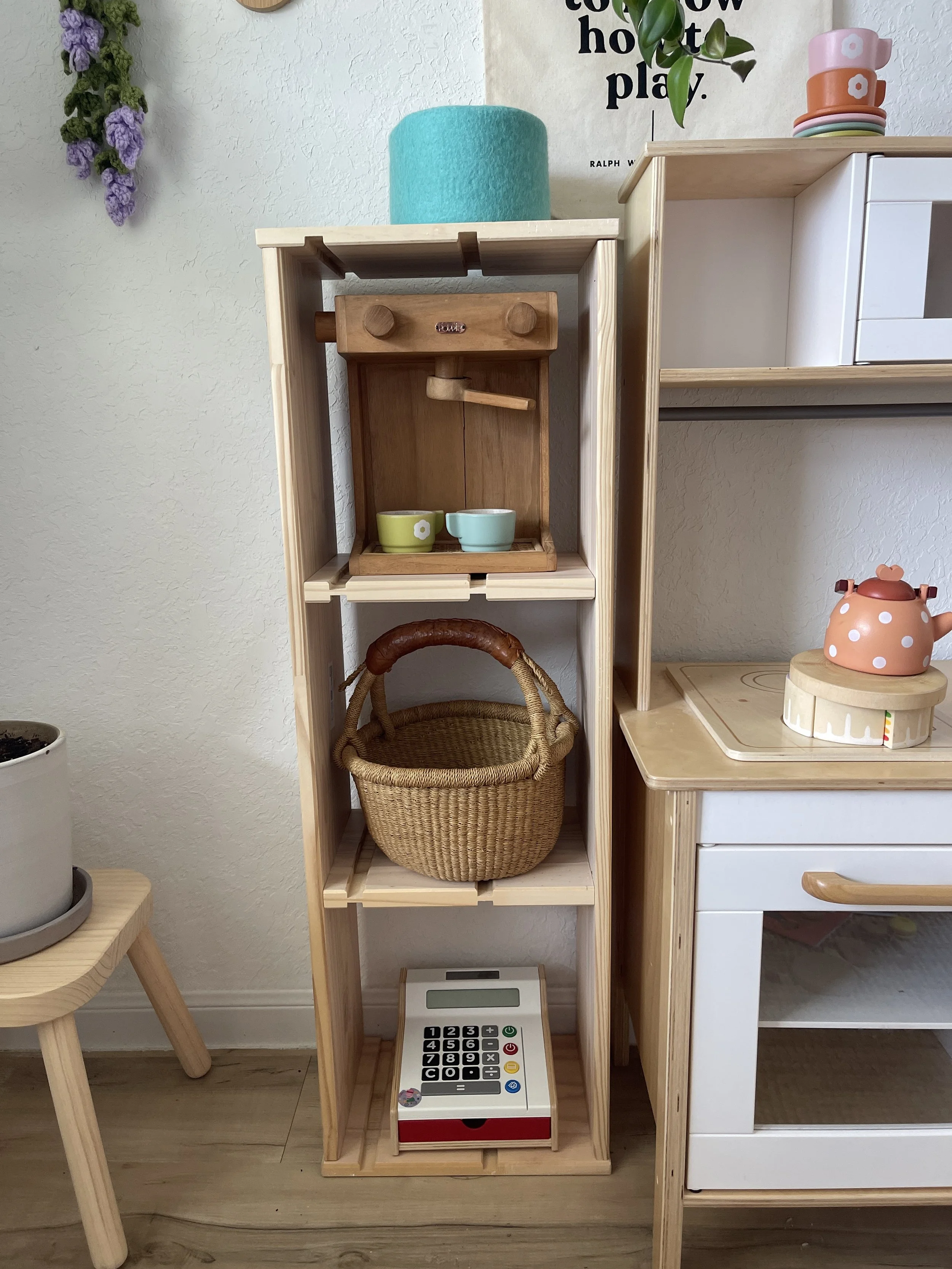
Week 1: Animal Farm set up on our play shelf along with instruments, figurines and loose parts for imaginative play. Pretend play desserts and utensils for the play kitchen along with 3-4 dress up clothes in a basket. A kinetic sand set up with loose parts and small cars on the sensory table. Magnetic tiles, Legos, and cars in the building and construction area bins.
Week 3: Dollhouse, furniture, and figurines for imaginative play, along with other instruments and puzzles on the play shelf. Pretend play veggies, fruits, pots and utensils for the play kitchen with another 3-4 dress up clothes and toys. A dry pasta set up for the sensory table with tools and loose parts. Acrylic rainbow cubes, wooden blocks, and a train set for building and construction area bins.
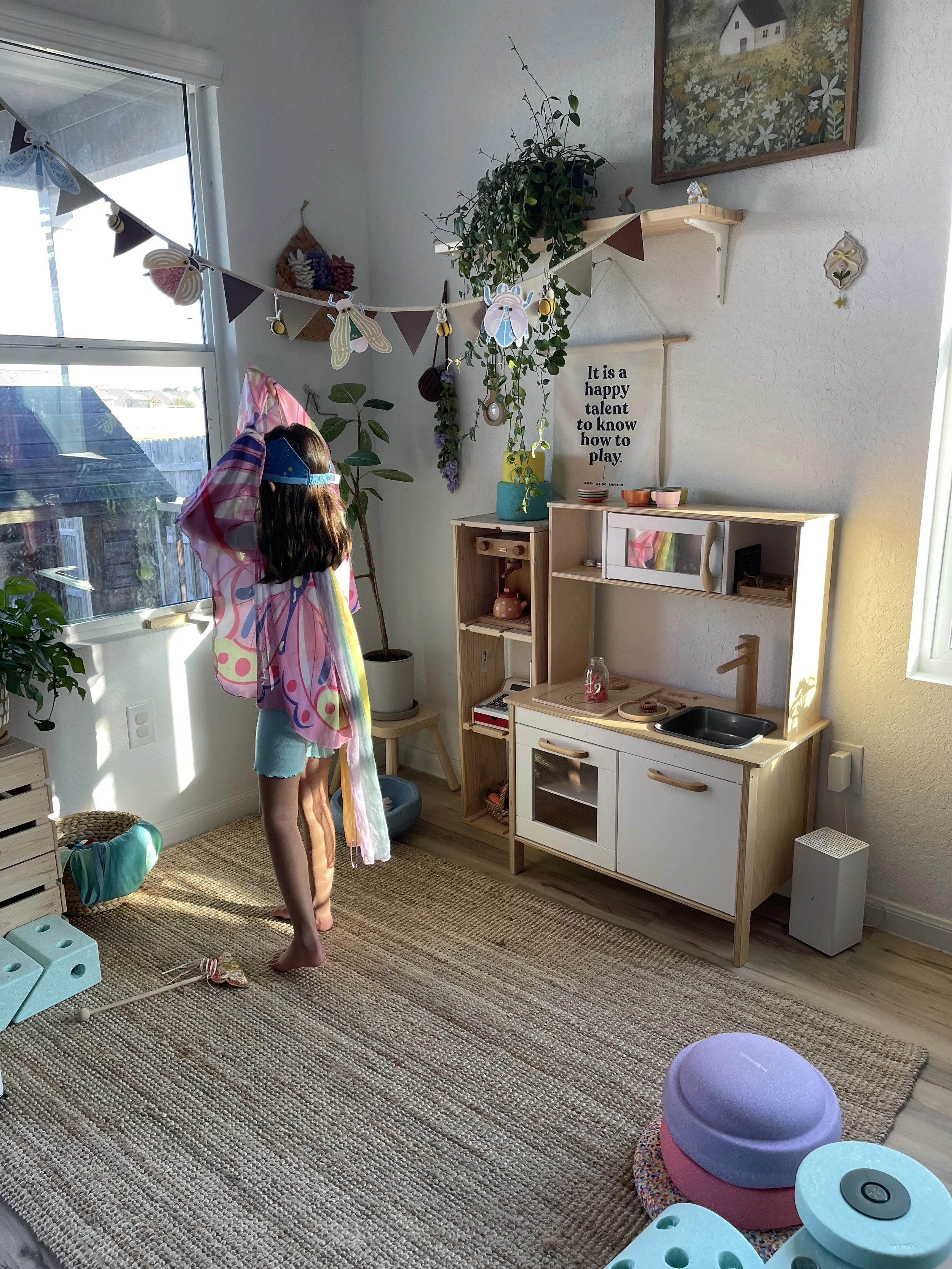
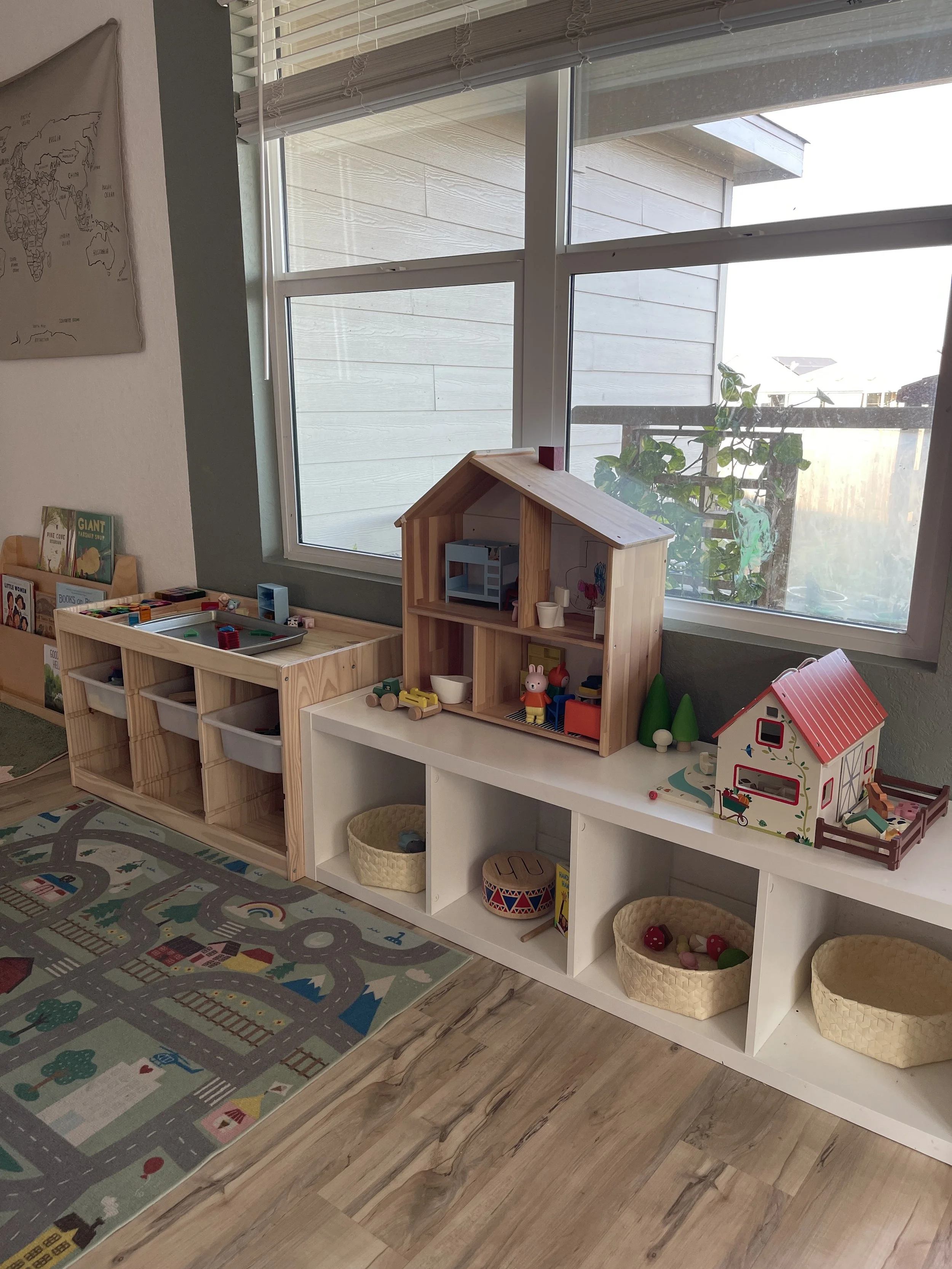
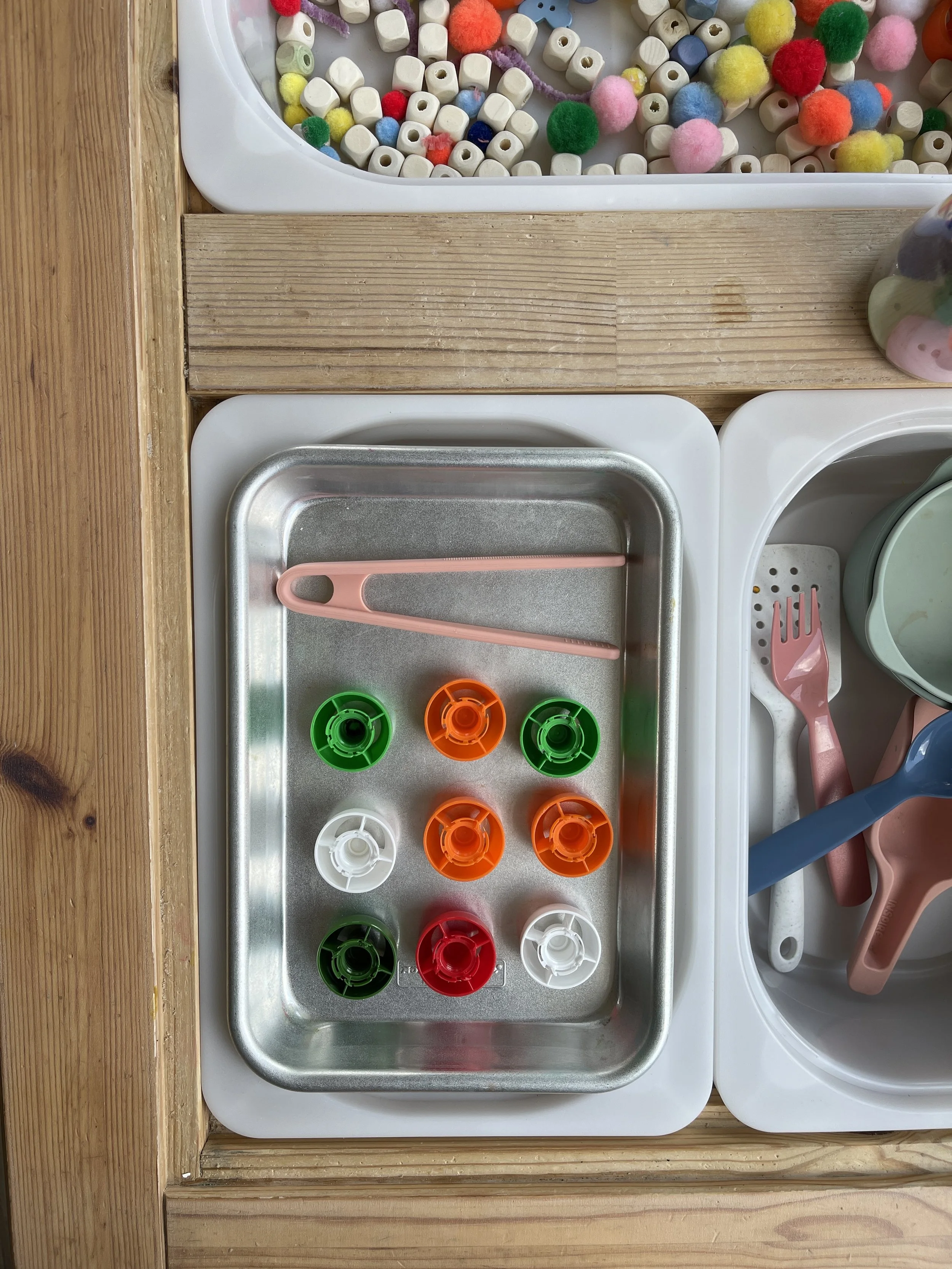
That’s about 80 percent of the toys we own rotated back and forth. Every toy gets played with for 2 weeks out of the month. By the time the two weeks are up, new toys are reintroduced and still feel fresh. I may add a few extra loose parts throughout our play spaces, and we do process art and sensory play set ups throughout the week too for homeschool preschool or to connect and add some extra learning.
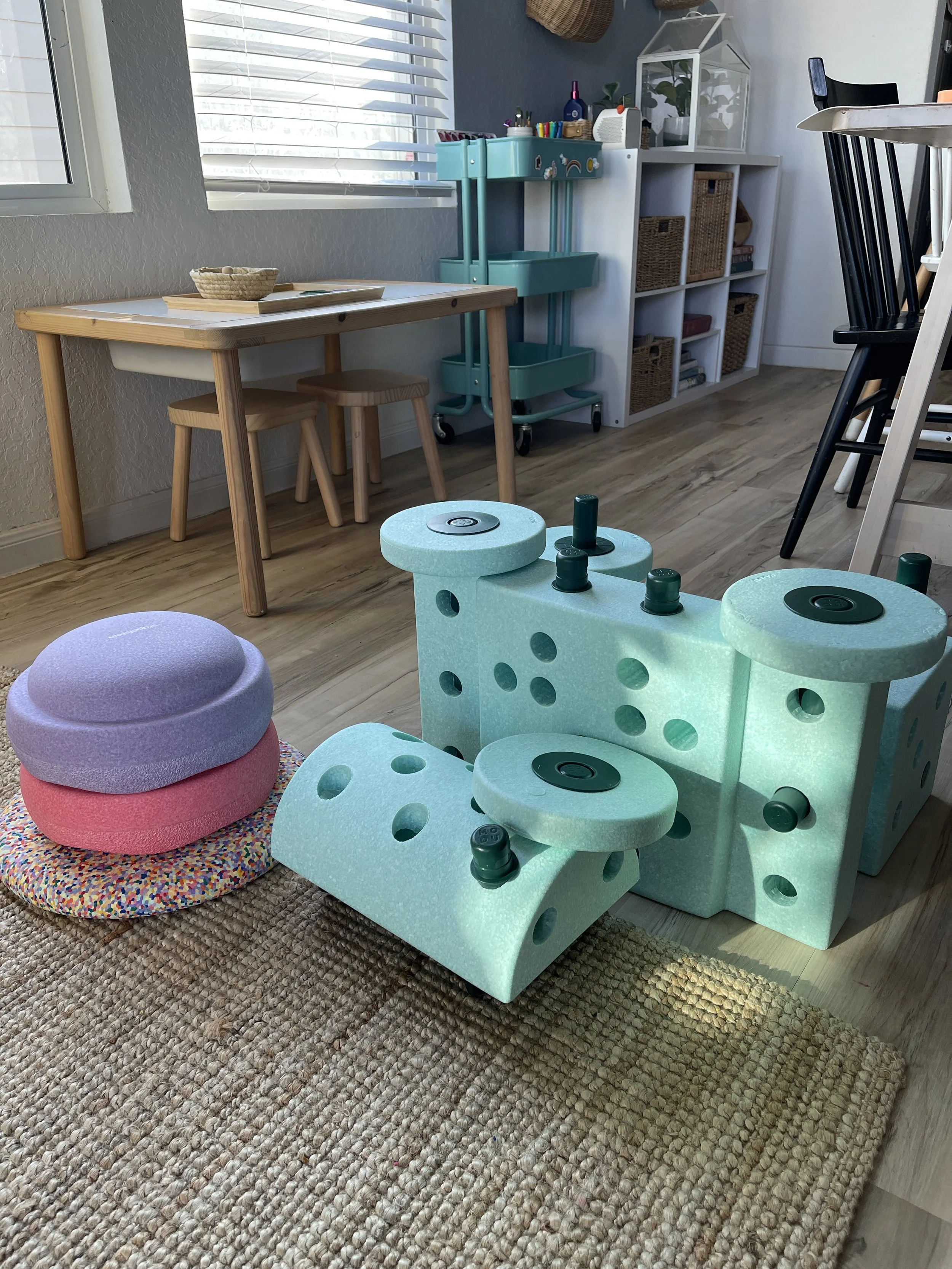
The other 20 percent of the toys we have are outdoor toys, or are used for physical play inside the house like our Stapelsteins and Modu Blocks, or our art easel.
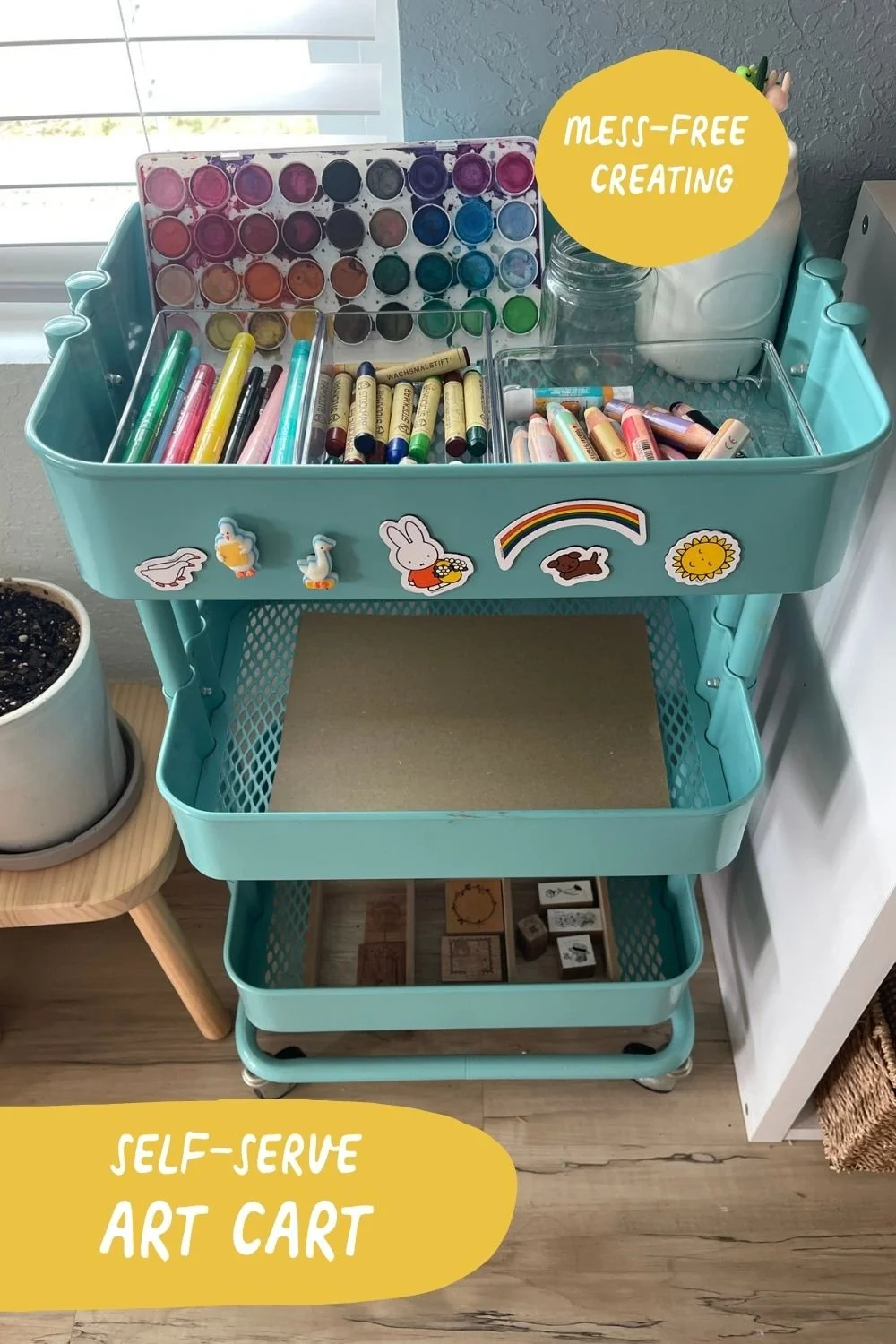
Our self-serve art cart, which you can read about here is also part of a rotation.
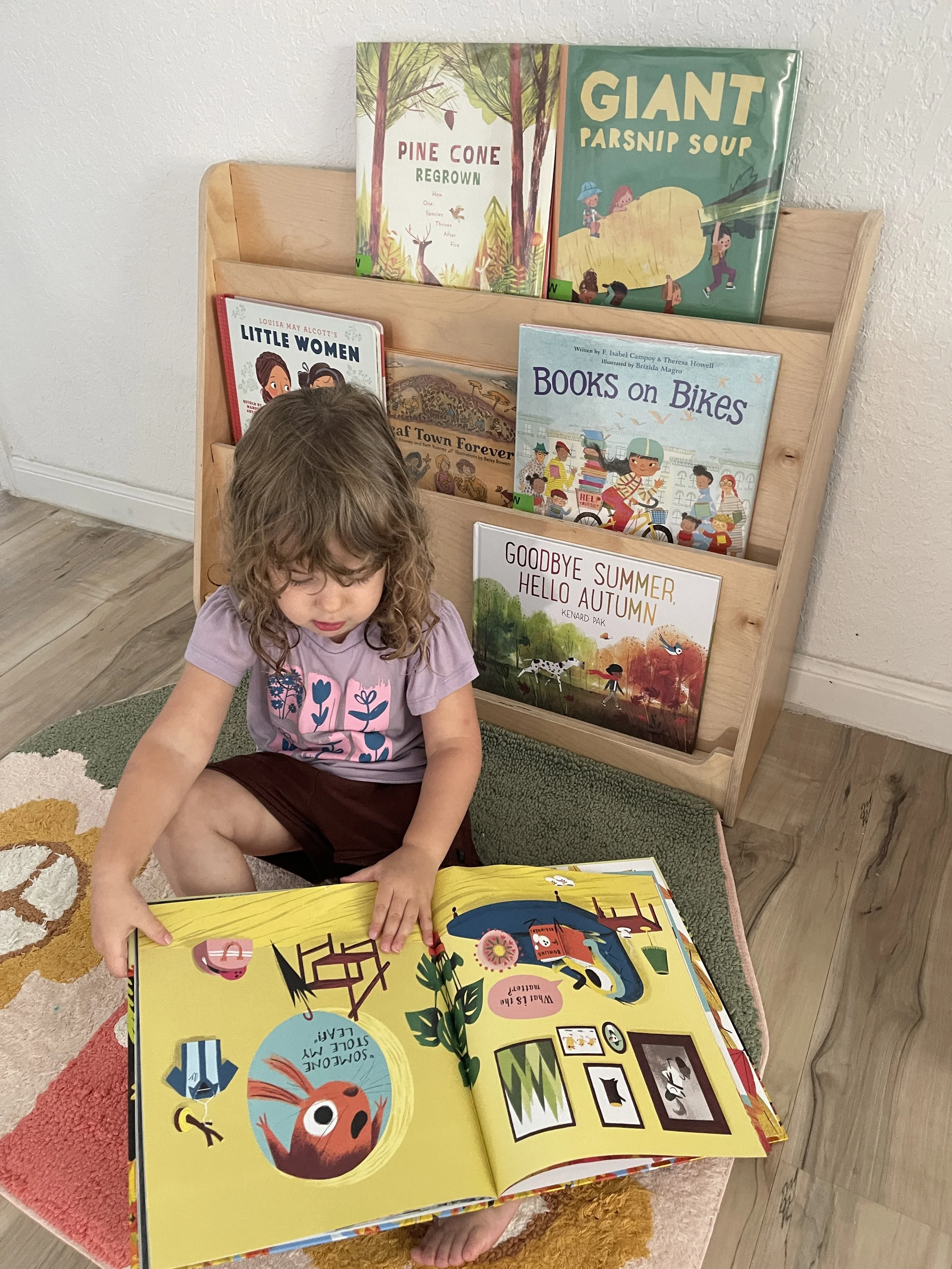
And our open bookshelf also gets rotated monthly or bi-weekly if we go to the library more often.
How you can start toy rotation (simply and realistically).
1. Choose 8–10 toys to display at one time
Include a mix: 2-3 things for building, 2-3 things for playing pretend, 2-3 open ended toys, 1 physical play toy, 1 simple art set up (like a basket with crayons, stickers, and paper) and 1 sensory bin if you have access to sensory supplies.
2. Store the rest out of sight
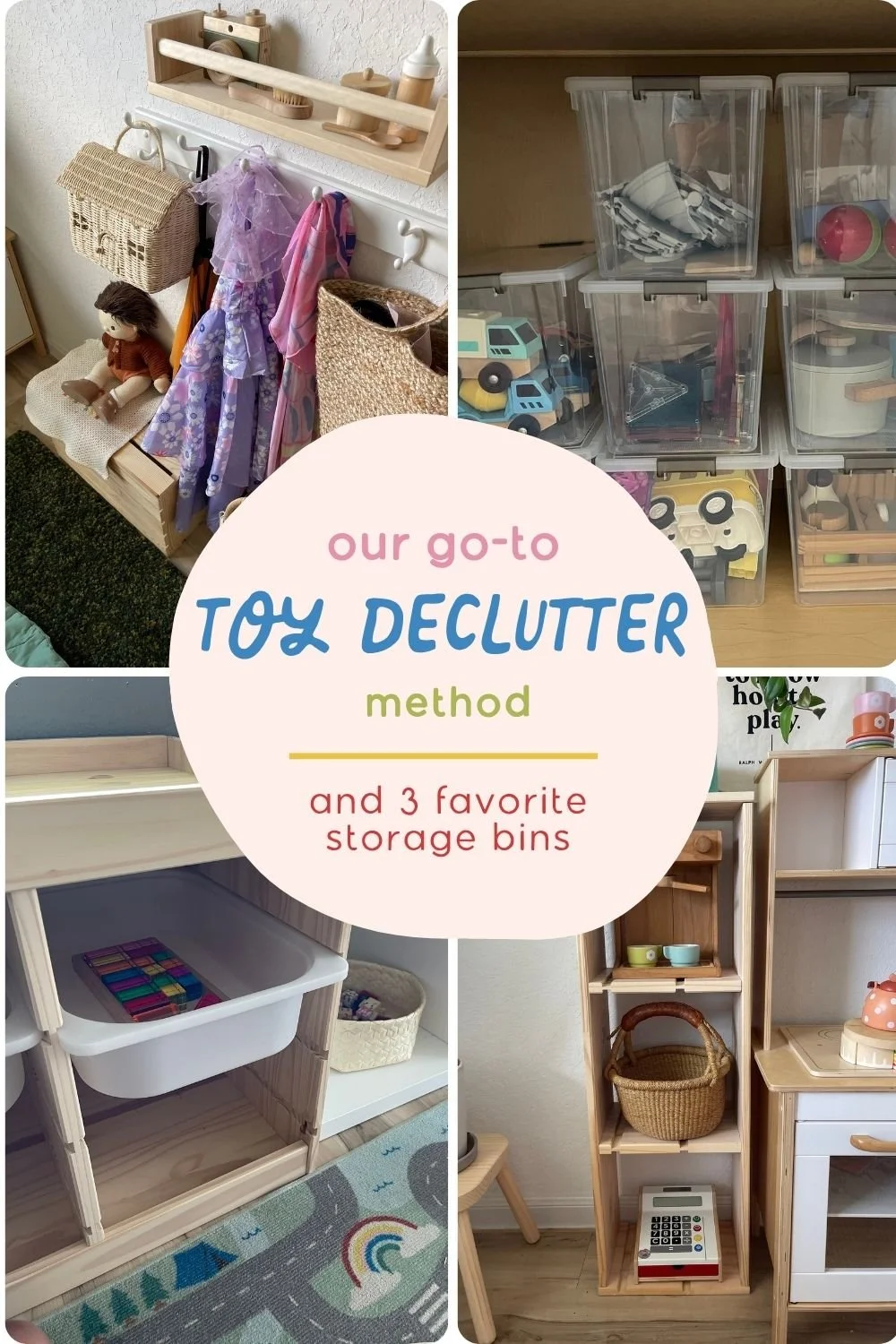
Use bins, closets, or high shelves. Out of view matters. Here are some storage bins which have helped me immensely.
3. Rotate every 2 weeks
Or sooner if interest fades. There’s no “right” schedule and you can adjust according to your child’s interest.
HELPFUL TIP: When introducing a new open-ended toy, like magnetic tiles, for the first time, do not be discouraged if they glance at it or lose interest quickly. This is normal. Children need time to feel confident when using a new tool a.k.a a toy. Especially children between the ages of 1-3 years. Open ended toys require concentration and lots of areas of the brain are working hard and making connections. Why you ask? Because they are toys that do very little for the child. Meaning, it is up to the child to move, sort, place, build, use their imagination, etc with that toy. This is why we actually like open-ended toys. We have found that the less the toy does, the more children will do in the long run! This does incredible things for their confidence, problem solving skills, fine motor skills, creativity, and so much more.
4. Follow your child’s cues
Like I hinted at in the previous paragraph, rotate based on engagement, not a calendar. If you have multiple children, you want to pay attention when it is something they are all interacting with, This is a winning toy. For our family, these are open-ended toys like books, magnetic tiles, pegdolls, and stepping stones. They really grow with children, you will get tons of use out of them, and kids will make all sorts of play with them. You can check out our favorite open-ended toys here.
A gentle reminder: Toy rotation isn’t about restriction—it’s about creation. Just like a well-designed room feels better with space to breathe, a thoughtfully edited playroom invites children to play more deeply, confidently, and independently.
Decluttering + Toy Rotation = Balance
Decluttering clears out what is no longer needed, while toy rotation keeps what remains feeling fresh. Together, they create a playroom that feels intentional, creative, and supportive of independent play. If you skipped my decluttering post, with the method we use and our 3 favorite storage bins, you can read that here!
Want more on creating a cozy play area that supports emotional regulation?
Download my FREE guide here! 👇🏽