

Mess-Free, Independent Art Cart Ideas for Toddlers and Preschoolers
If you've ever handed your toddler a paint brush and then spent the next ten minutes hovering like a lifeguard, you already know the problem I'm solving here 😆
You want your kid to be able to walk up, choose something, and make — without asking permission, without you setting up first, and without ending up with washable paint on the wall you just repainted. That's the whole idea behind an art cart. Not a Pinterest-perfect craft station. A system your kid can actually use on their own.
This is something I lean on constantly from my years running a preschool class, art play dates, and an in-home daycare — kids create more, and more confidently, when the materials are organized by what decision they're making, not just dumped in a bin labeled "art stuff." So that's how I built mine.
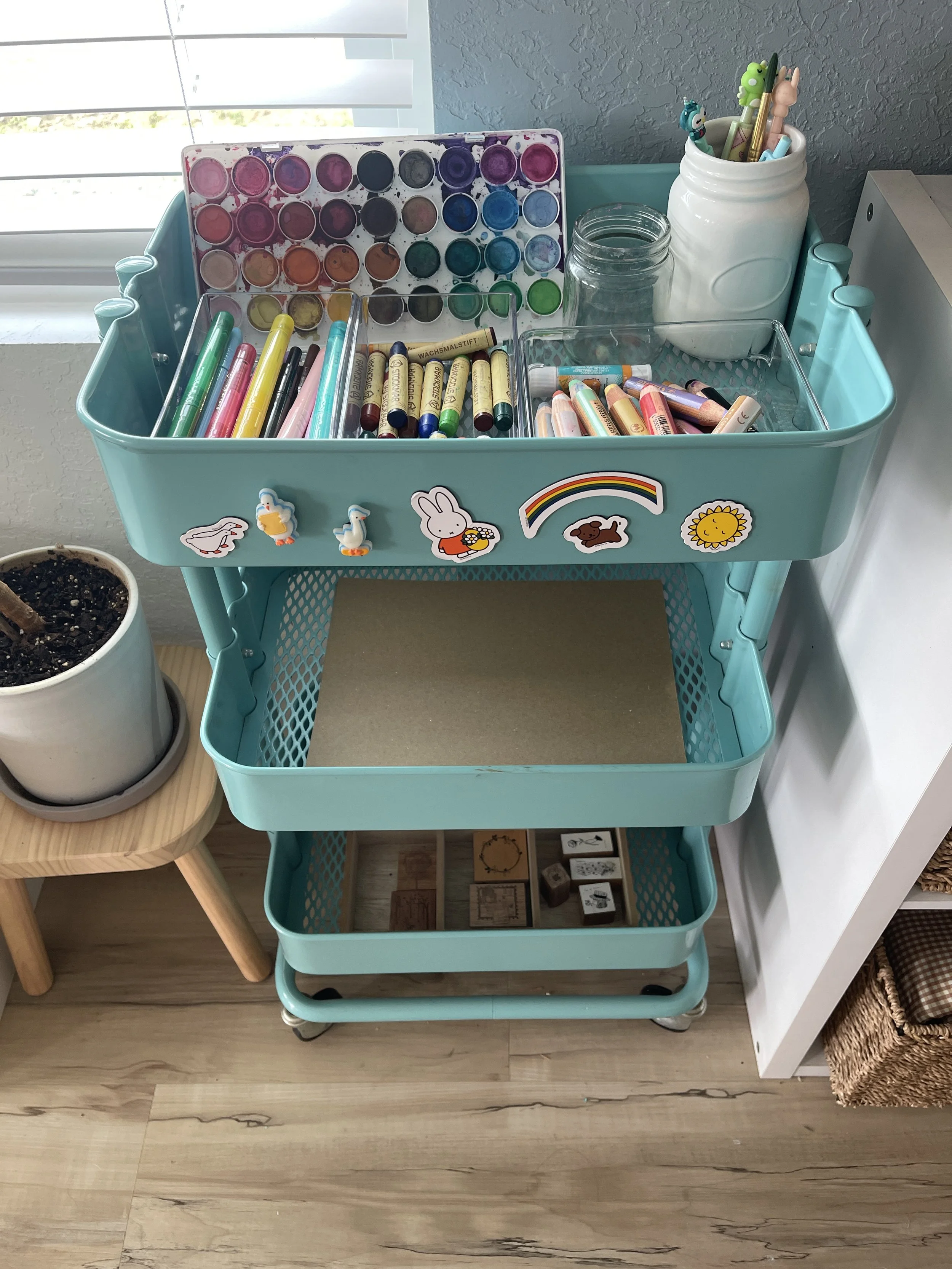
Here's exactly how it's set up, tier by tier.
Why a Rolling Cart (Not a Bin, Not a Shelf)
A cart rolls to wherever the light and the table are — the kitchen island, the back patio, next to the easel. But the bigger reason is the tiers themselves. Each level of the cart isn't just "more storage," it's a different layer of the creative process: make a mark, choose a surface, finish it off. That structure is what makes independent use actually work, even for a two- or three-year-old.
Simple materials. Meaningful learning. That's really all this is.
The 3-Tier Breakdown
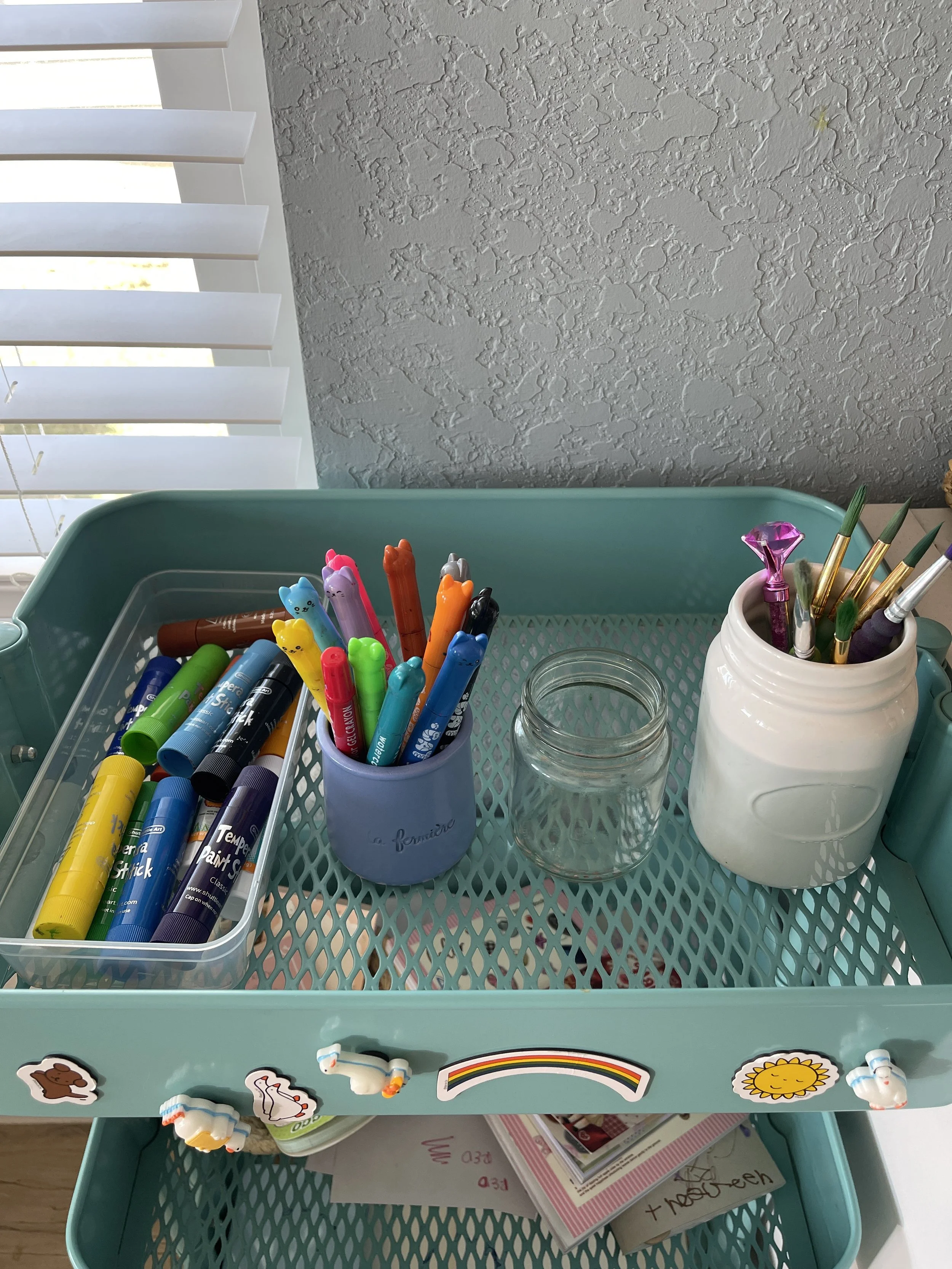
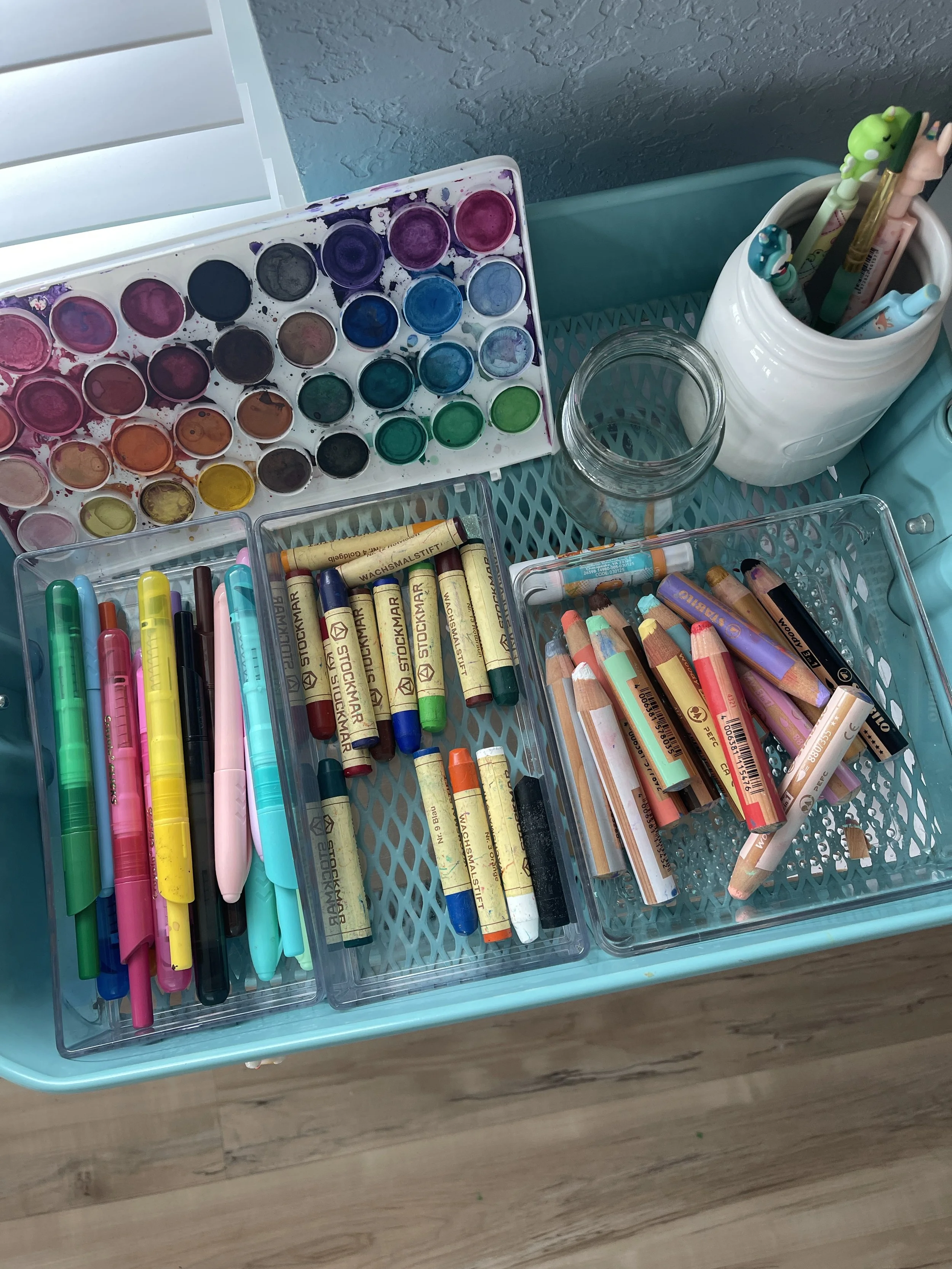
Tier 1: Mark-Making + GlueWhatever sits here is the first thing little hands reach for, so it needs to be the easiest. On mine, we rotate every month or so what goes in here. It’s important to know that children need time to “master” an art tool. Building that confidence takes time and practice, so leave these tools out for awhile and observe.
This is what we rotate in our top tier:
Watercolor palette and water cup (already loaded and ready — older children can reach for this themselves after practicing a few times).
Another jar with brushes and pens for the older kids.
Trays with washable clickable markers, crayons, chunky colored pencils, watercolor gel crayons, oil pastels and tempera sticks.
A couple of glue sticks.
Nothing here needs a lid removed by a grown-up, nothing needs to be mixed, and nothing that stains a table or can’t be easily wiped off. That's the whole test for what earns a spot on Tier 1.
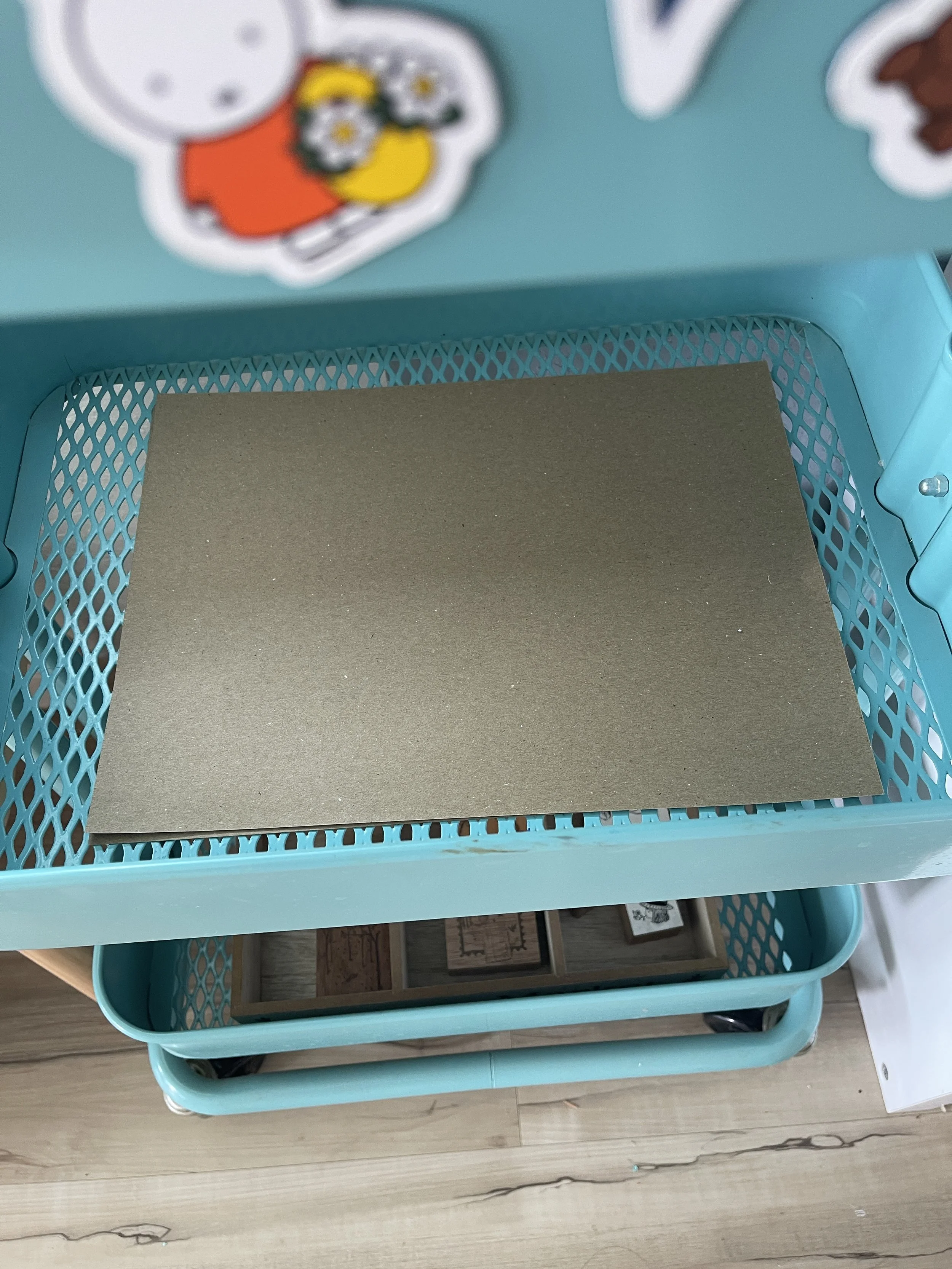
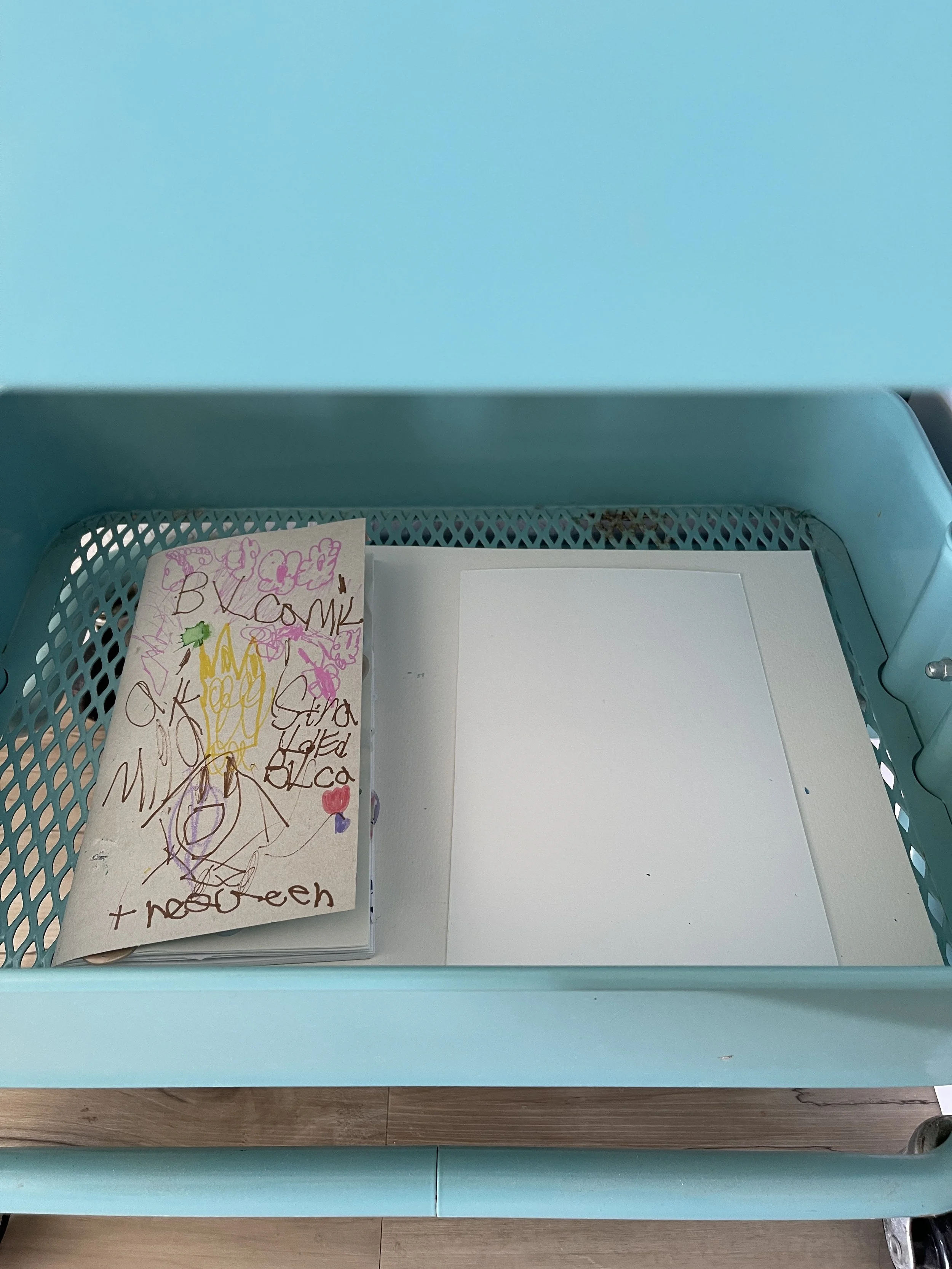
Tier 2: Paper + JournalsThis is the blank canvas layer — and it's what makes Tier 1 actually usable without a parent handing over paper first.
Loose sheets of copy paper, kraft paper, construction paper, watercolor paper, recycled cardboard squares and whatever you have at hand. We currently have — this is the good part — a little handmade journal, fully covered in scribbled comics and a kid's own handwriting. That's not staged. That's what "independent making" is supposed to look like when it's working! Messy, real, and entirely their own idea.
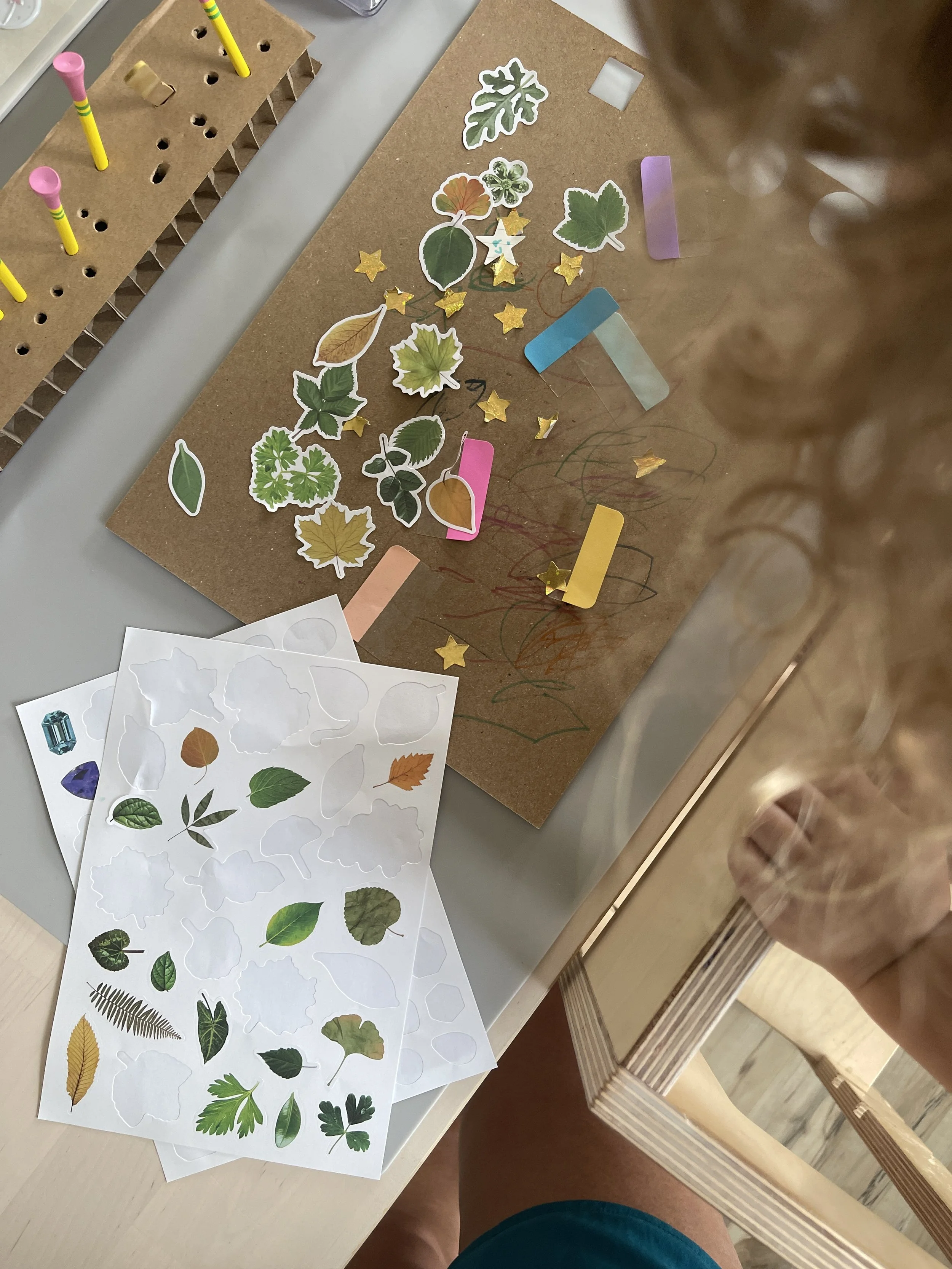
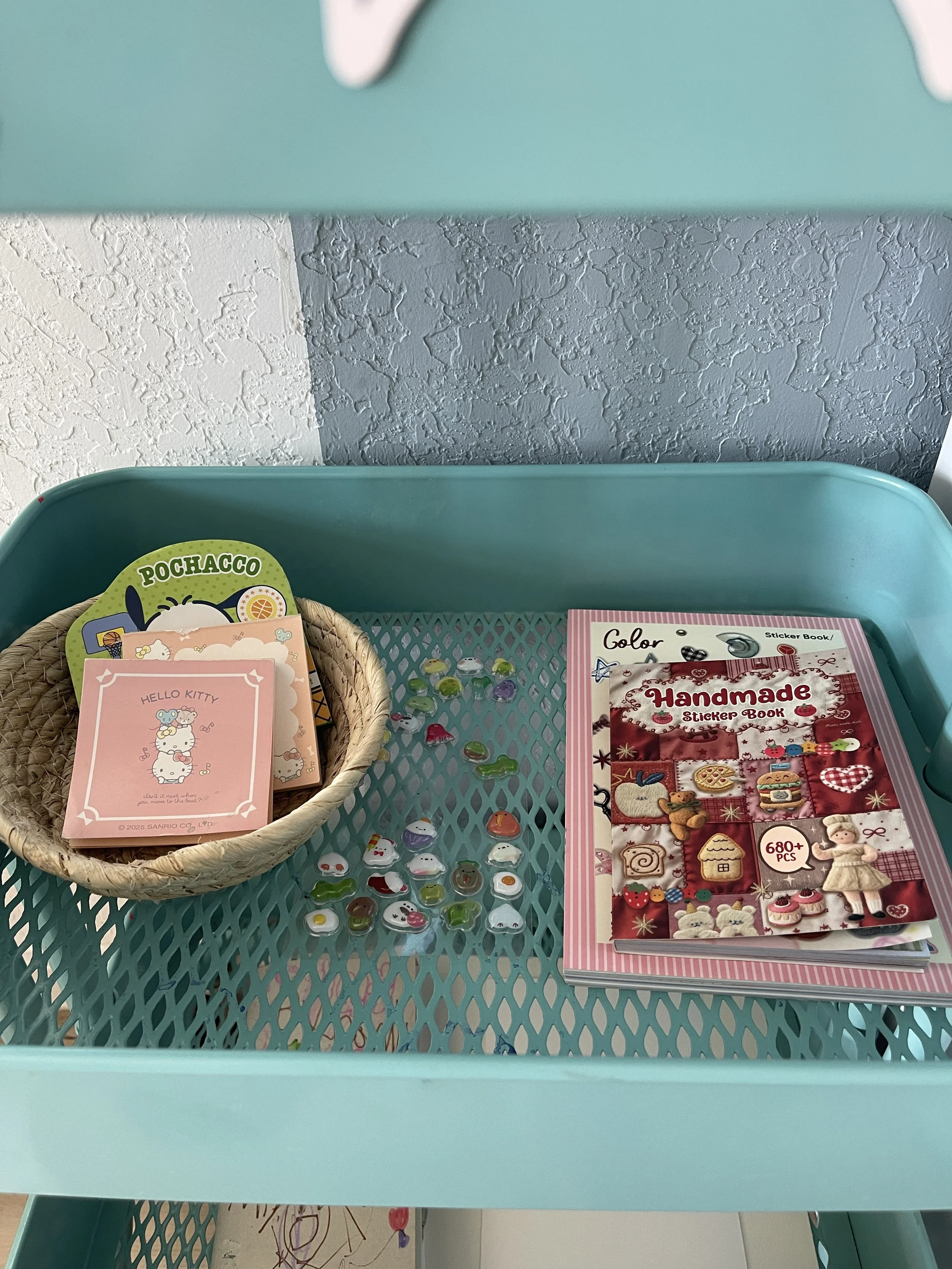
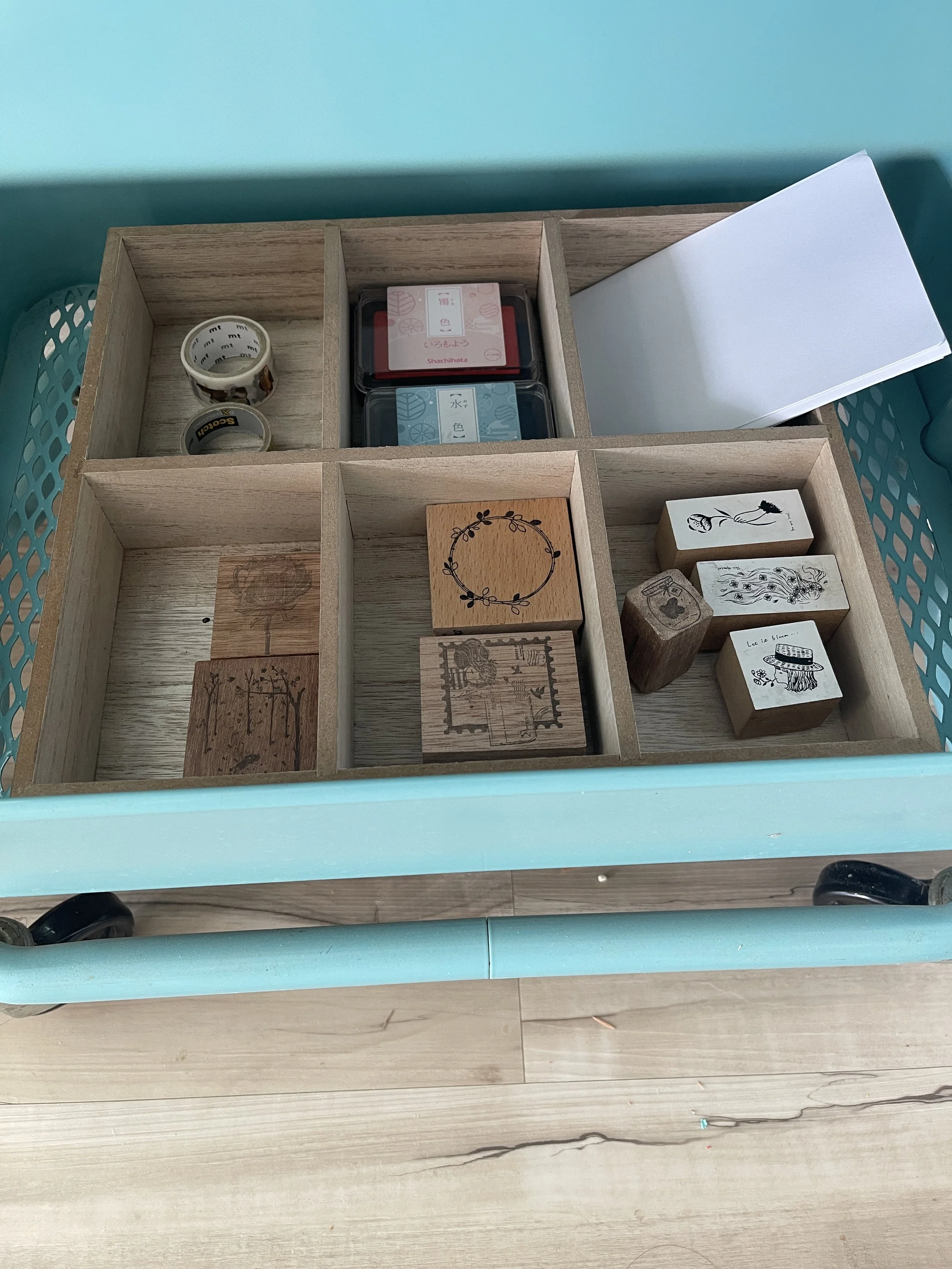
Tier 3: Stamps, Sticker Books + Paper EphemeraThis bottom tier is where a plain marker drawing turns into a whole little piece. Stamps and ink pads, sticker books, washi tape, scrap paper from previously painted art, tissue paper, and other paper ephemera. This is the process-art layer — the one that invites a kid to keep going instead of calling a drawing "done" after a few minutes.
For toddlers this is the stage where they might need a little help peeling off stickers, they need to be shown how to use a stamp and ink pad, and glue stick also. This is totally ok! As mentioned before, it’s normal and expected to need practice and exposure to materials before fully immersing ourselves in a creative activity.
Multiple Cart Set Ups. One System.
This is the part I want you to take from this: you don't need my exact supply list. You need the structure. If you've got markers, some paper, and literally anything to stamp or stick with, you can build this today with what's already in your house.
Keeping It Mess-Free and Actually Independent
A few final things that make the difference between "cute cart" and "cart that gets used without me":
Everything has a home. Small baskets or trays, not loose piles — a kid can put something back exactly where it came from.
Low-mess tools live within reach. The stuff that needs the least supervision sits at eye level; anything messier stays off the cart. My toddler can handle watercolors, but in your home or classroom this might be different. You know your children best.
Rotate the contents seasonally. You don't need to buy more — swap what's out every few weeks and it feels brand new.
No "ask first" tier. If it's on the cart, it's fair game. That's what makes it independent play instead of another thing you're managing.
raising creative kids
〰️
raising creative kids 〰️
Grab my free Loose Parts Starter Guide for a library of over 75 everyday materials you probably already have, and learn to use them across building, process art, and sensory play. It's the same philosophy behind this cart: minimal set ups for hours of child-led creativity.