

10 Essential Design Tips for Setting Up an In-Home Daycare
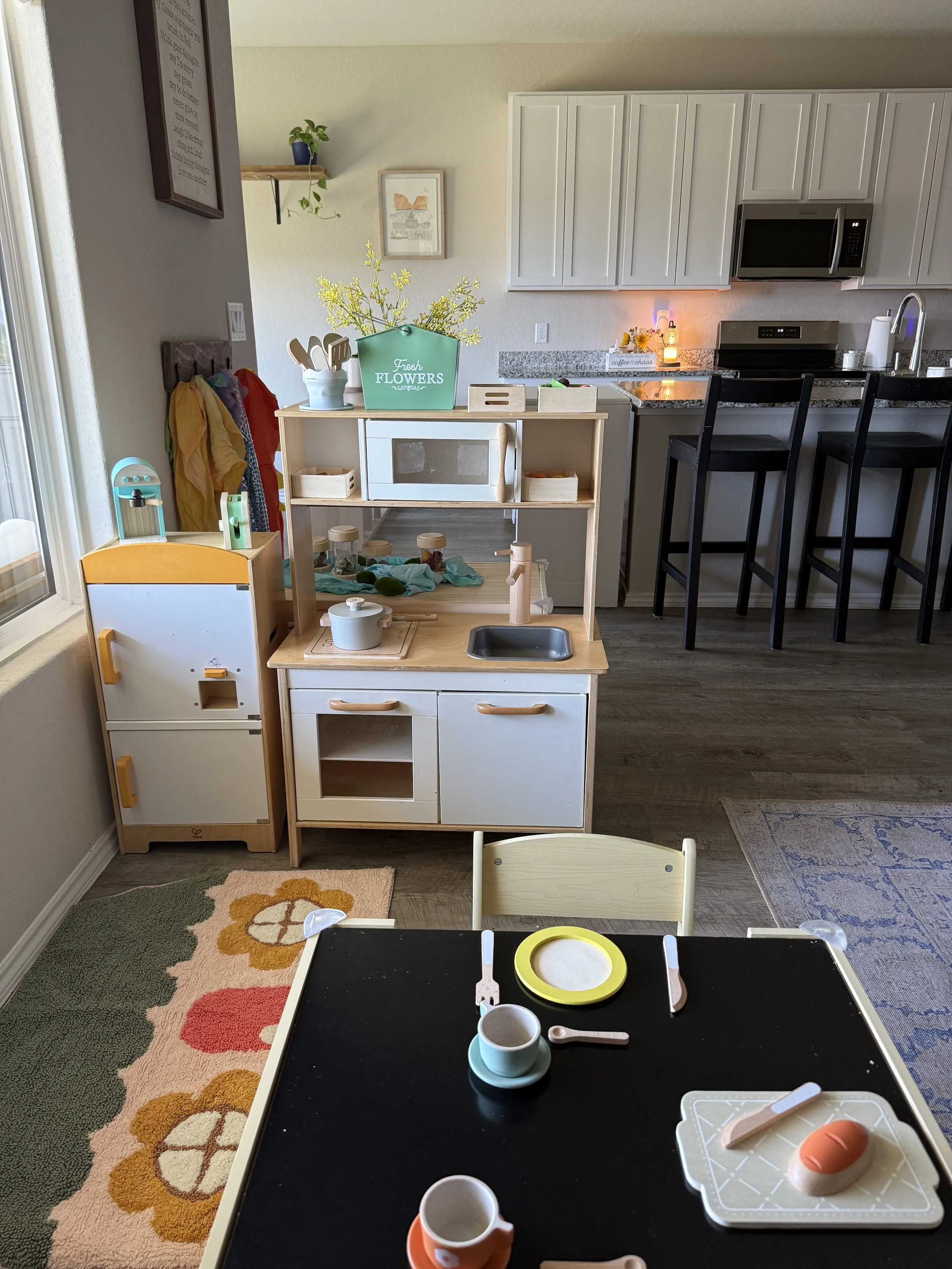
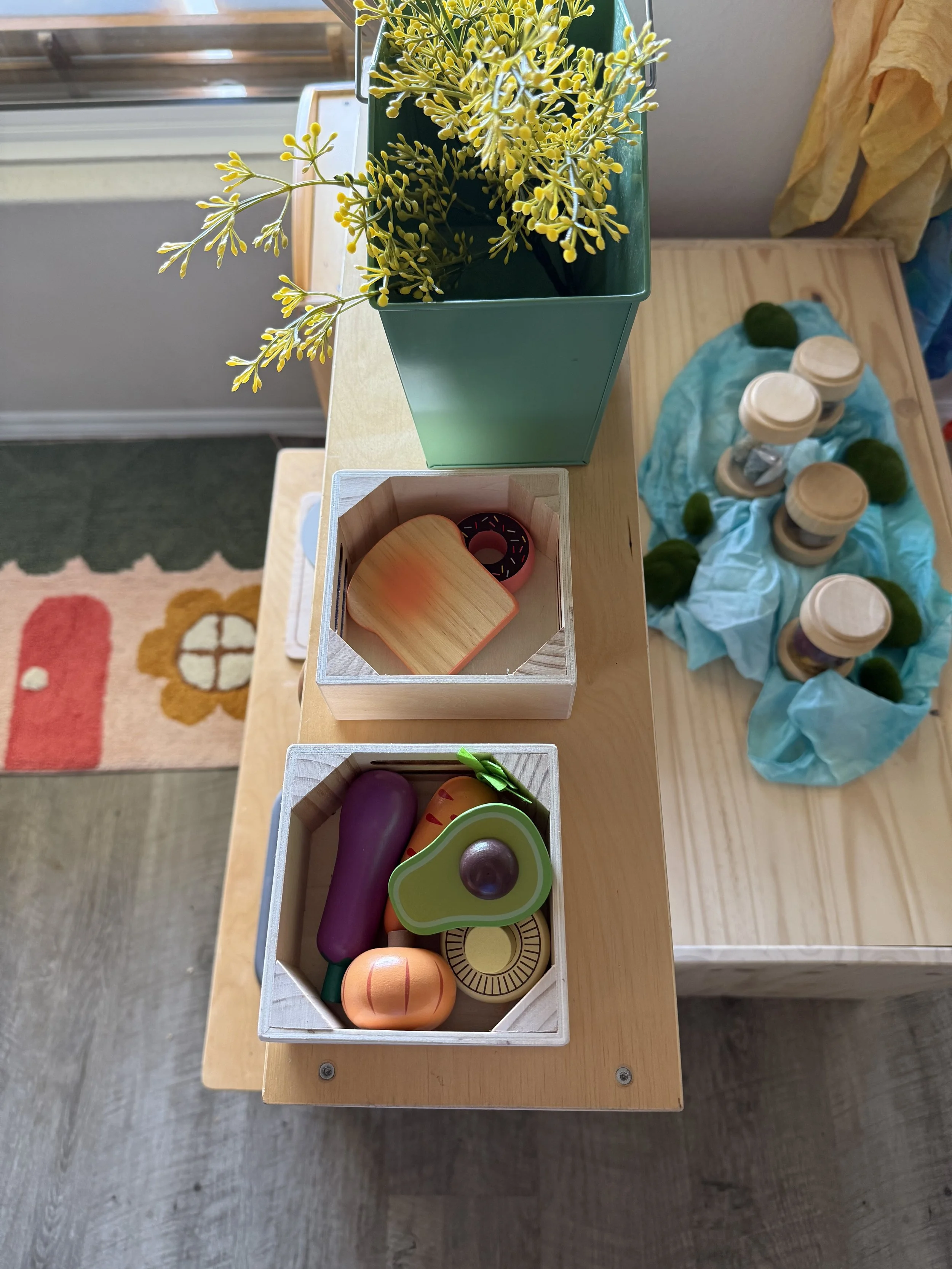
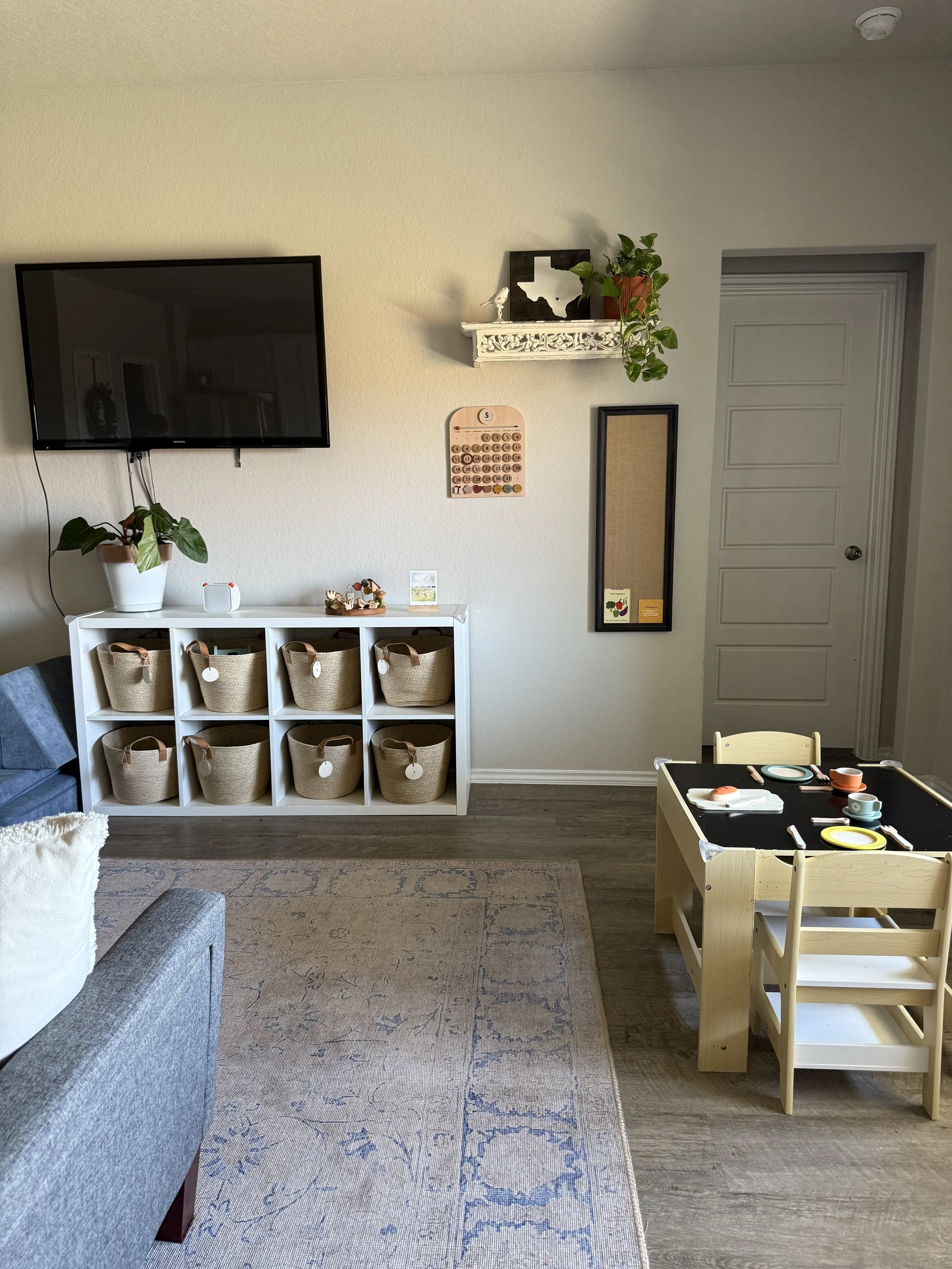
About a year ago, my mom, my sister, and I took on the challenge of designing a full in-home daycare space — indoor and outdoor — from the ground up. I'm talking play kitchen and art table in the main living area, an IKEA Trofast storage island doing double duty as a sensory station, a chalkboard wall with a thrifted growth chart tucked right into the dining nook, cubby storage with baskets kids could reach, and a backyard playscape visible right out the window so the whole thing felt connected, indoors and out.
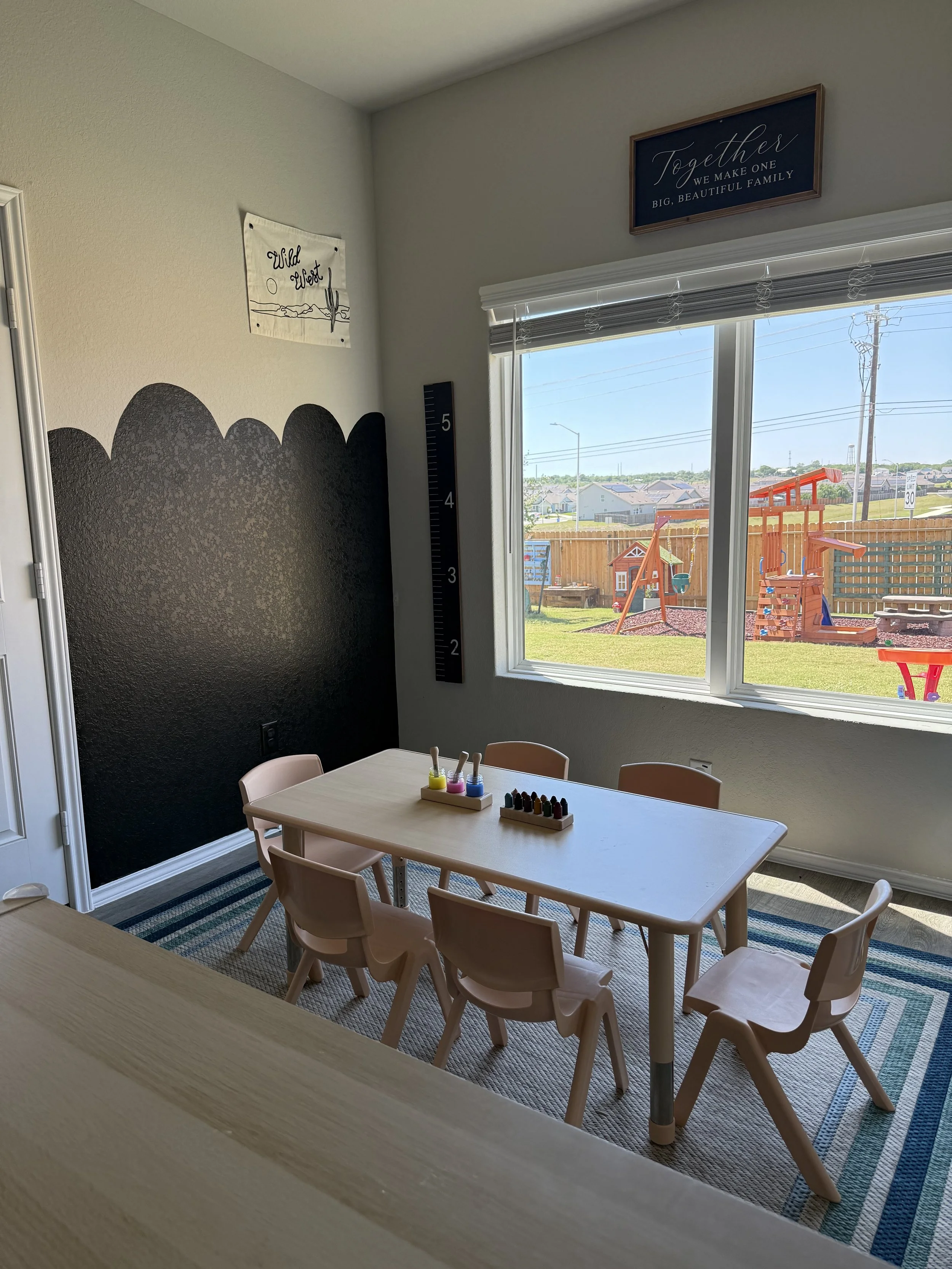
It took a lot of trial and error (and more furniture rearranging than I'd like to admit) to land on a layout that actually worked for a whole range of ages, in a normal family home, without it looking or feeling like a preschool exploded in the living room.
So I put together the 10 things I think about most when I'm designing (or redesigning) a daycare space. Whether you're setting one up from scratch or just trying to make your current setup breathe a little easier, I hope these help.
1. Less is more
With less square footage and kids of all different ages sharing it, you have to get intentional about what comes in and what stays out. Not everything needs a spot in the room just because you own it. Ask yourself: is this getting played with, or is it just taking up space? If it's the latter, it can live in a closet (or leave the house entirely).
2. Sort toys and materials by your play-based areas
If it can't be categorized, it doesn't belong — at least not out on the floor. Once you've set up your play areas (think: building, sensory, art, dramatic play), everything you keep out should have an obvious home in one of them. This isn't just about tidiness. Kids read the room, literally — clear categories help them understand what kind of play is happening where.
3. Get creative with your displays
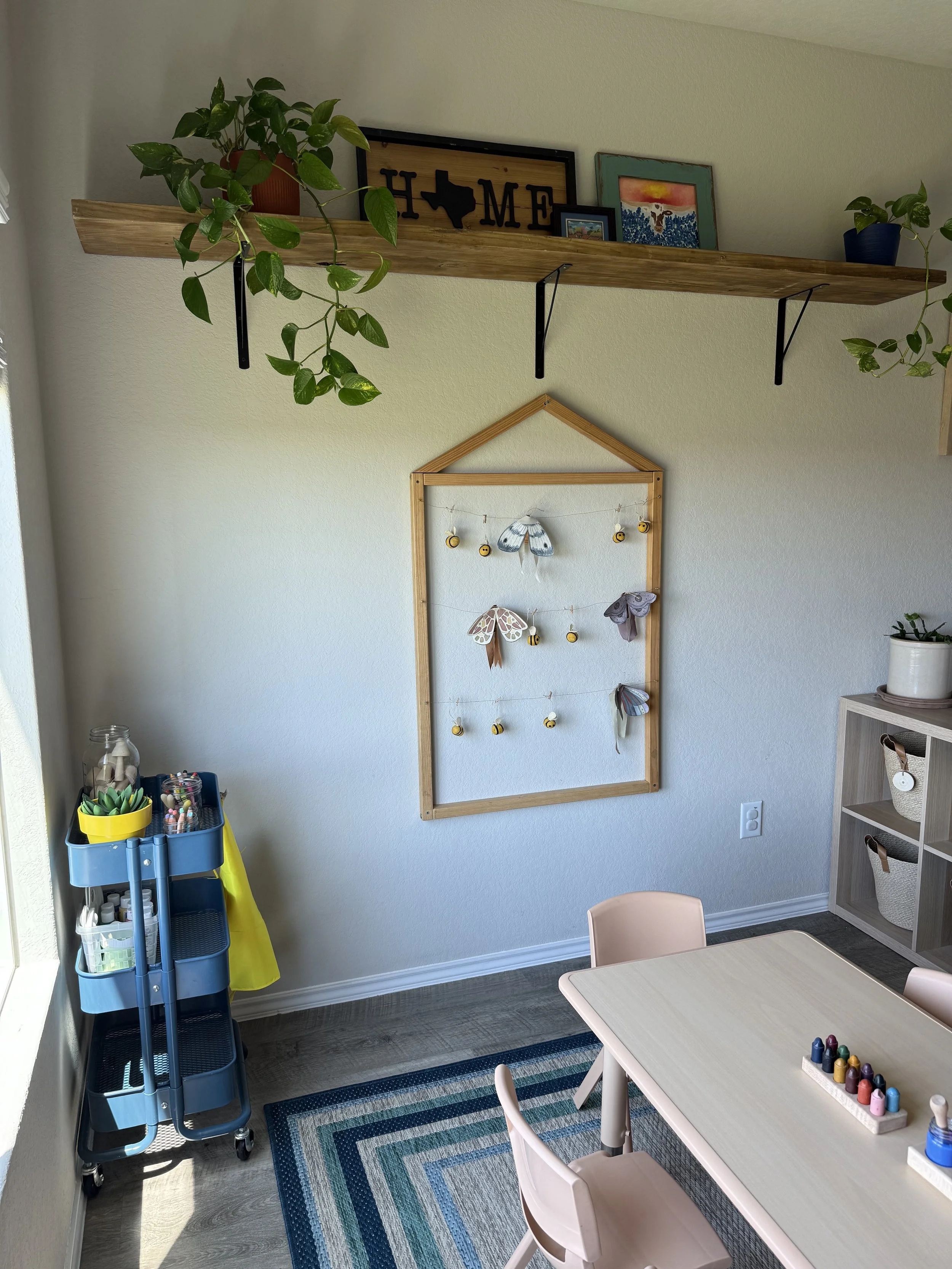
Even with limited wall and shelf space, there are ways to show off and document what the kids have been working on. A clothesline with clips, a cork board, a shelf ledge — it doesn't take much. Rotating what's on display keeps the space feeling fresh and lets kids (and parents) see that their work matters.
4. Designate a single, accessible storage space
Think a cabinet or a closet nearby where you can pull tools and supplies out as activities get rolled out — and put them right back when you're done. It keeps your sanity intact. If you have room to tuck your toy rotation stash in there too, even better. One centralized spot means you're not hunting through three different rooms mid-activity.
If you want to learn how you can implement toy rotation, I wrote a full blog post you can check out here!
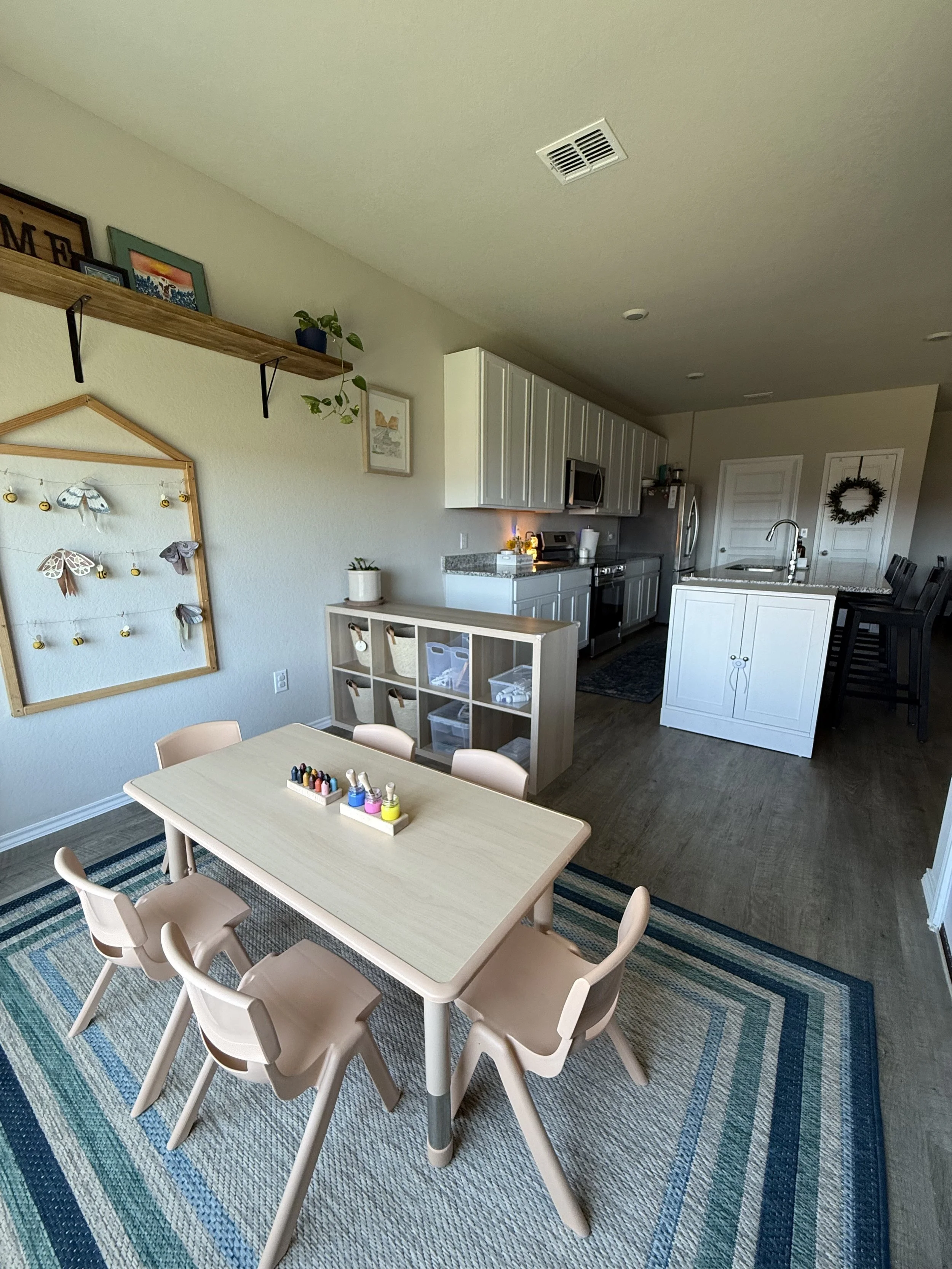
5. Everything at their level
Baskets, shelves, tables, chairs, tools, and materials they can get to — and clean up — on their own. Independent access is independent play. If a child has to ask you for everything, the space isn't really working for them yet.
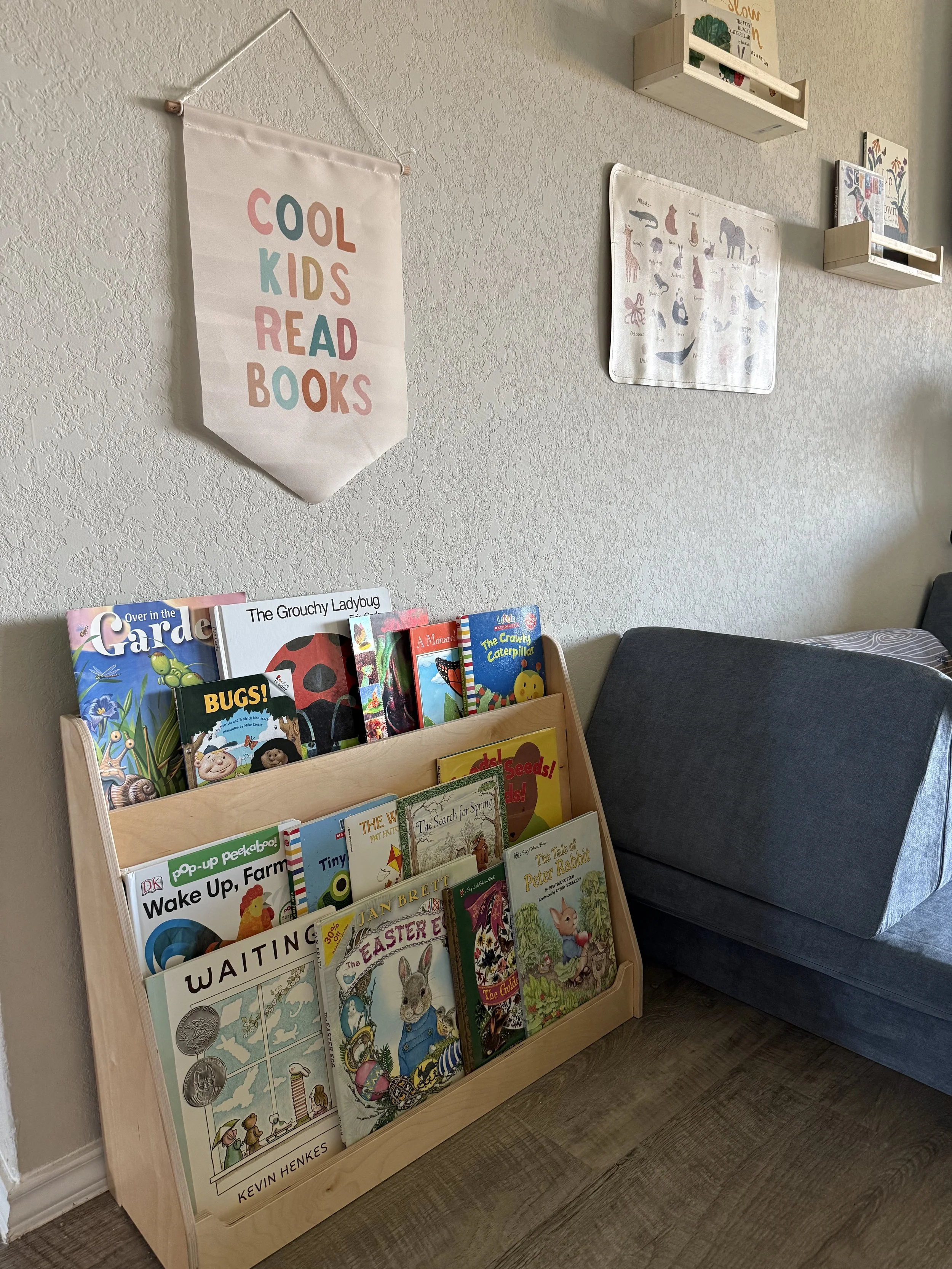
6. Safety, safety, safety
This one doesn't get to be an afterthought. Childproof locks, bumpers on sharp-edged furniture, anchoring anything that could tip — walk the room like a toddler would and eliminate every hazard you find. A beautiful space means nothing if it isn't a safe one first.
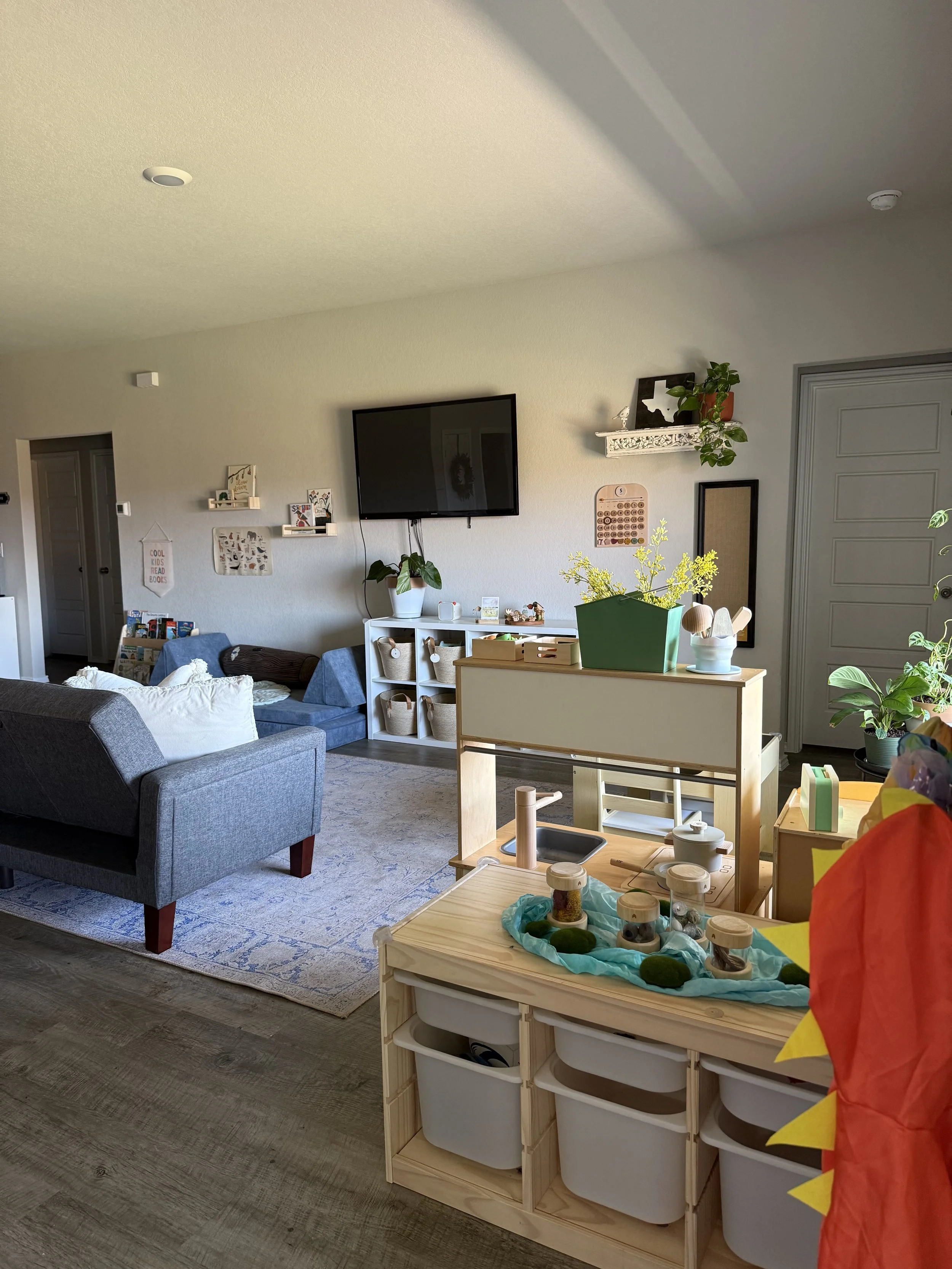
7. Bring the outdoors in
There's no better teacher than nature. 🌿 Natural light, plants, wood textures, pinecones, rocks, anything that brings a little of the outside world into your indoor space. It’s so great for sensory play, crafting, and exploration, but also calming for the kids, and honestly, for you too.
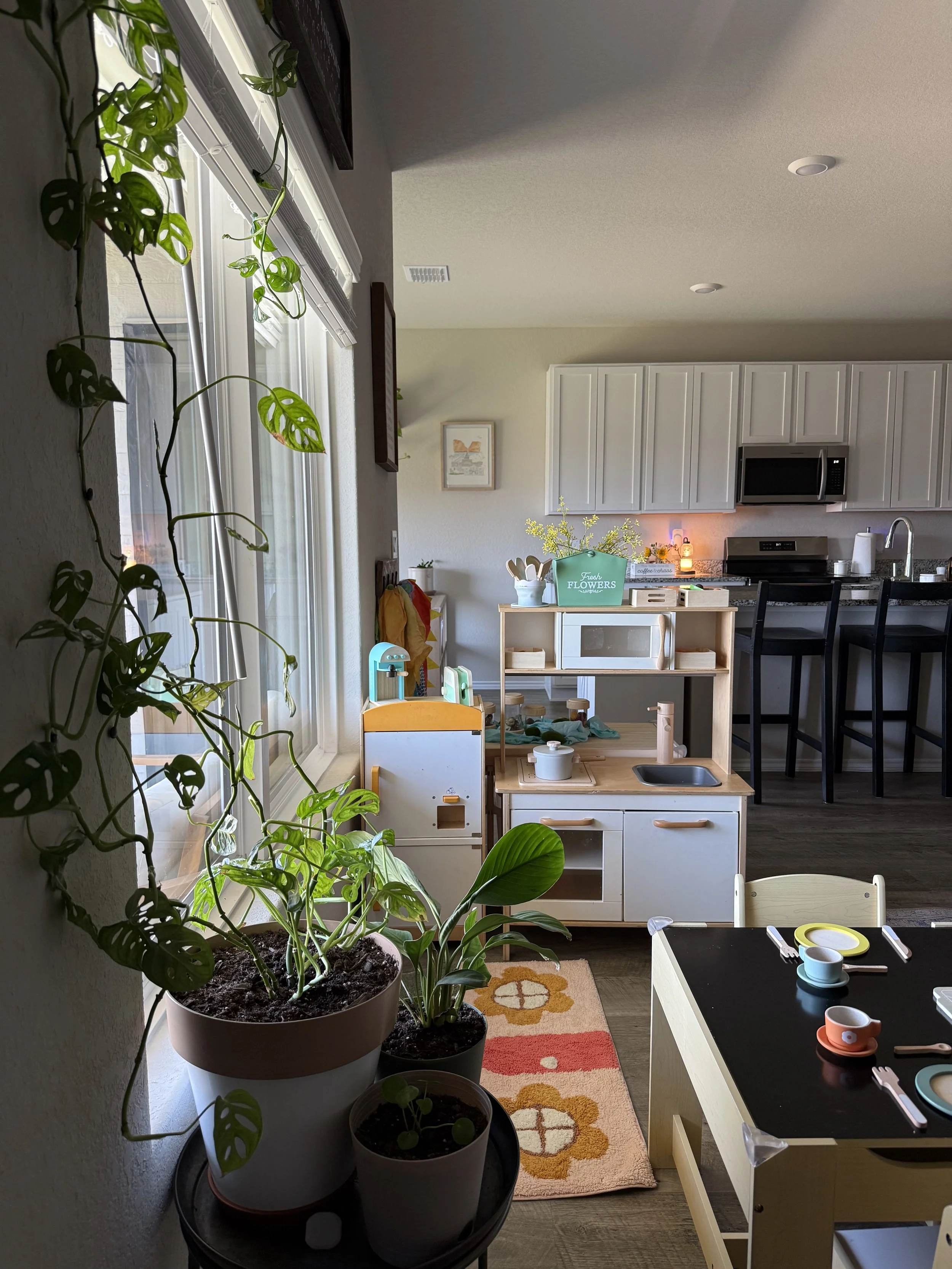
8. Introduce "the parent board"
There needs to be a spot that says "come on in" — without inviting a 20-minute chat at drop-off. 🙃 A parent board with the day's schedule, reminders, or a quick photo update gives families a warm touch point without pulling you (or your flow) into a long conversation right when you need to be present for the kids.
9. Make room for music and movement
Not every part of learning happens sitting down at a table. Leave space — even a small cleared patch of floor — for dancing, stretching, and moving bodies. Music and movement regulate kids in a way that's easy to overlook when you're focused on activities and materials.
10. Leave room for you
Somewhere in that daycare, carve out a small corner that's just for you. ✨ A chair, a shelf with your own things, a coffee spot to breathe for a second. You're in this space all day, every day — it should hold a piece of you too.
From early years educator to educator, this is the guide you’ll need next. For real.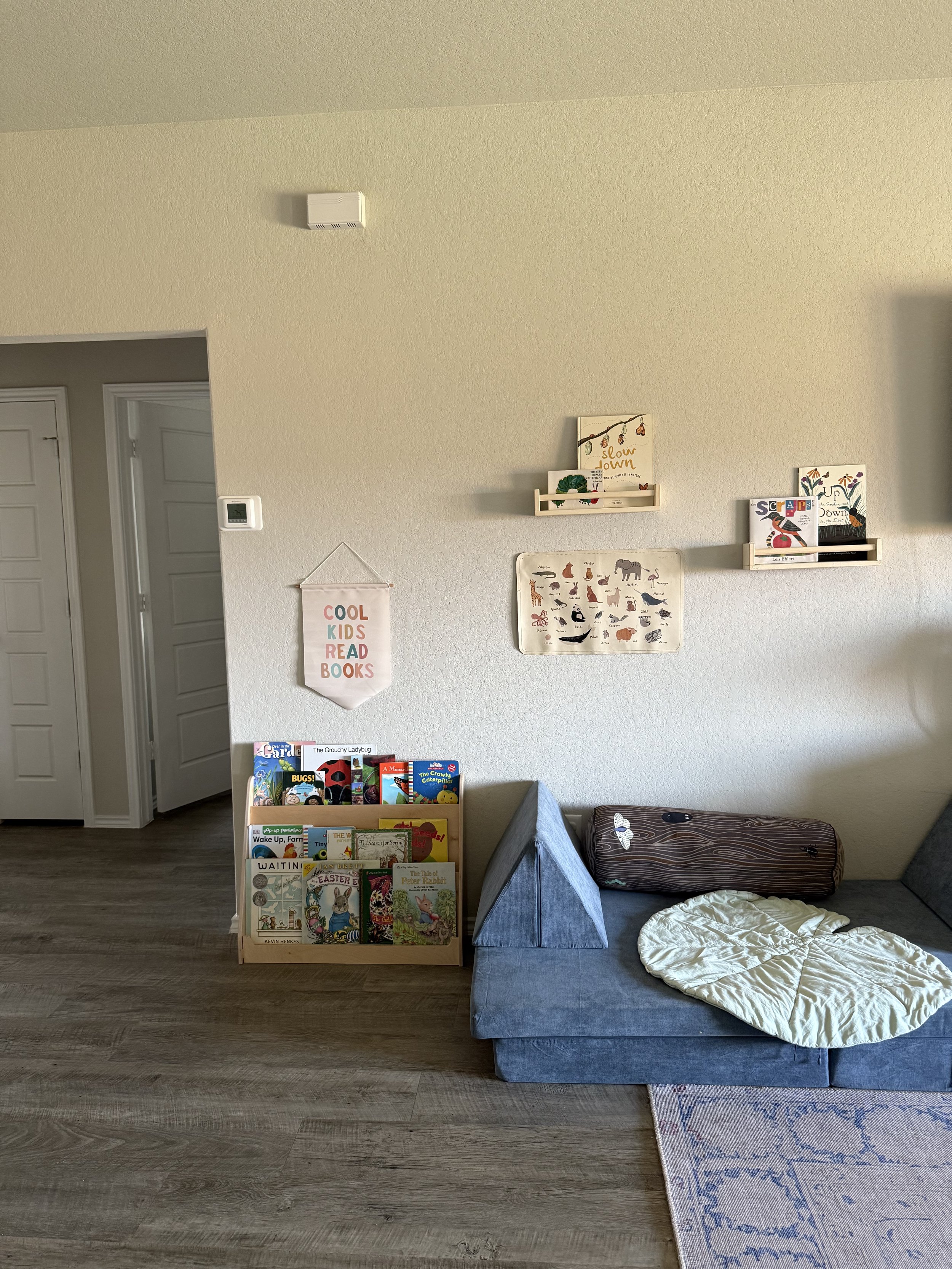
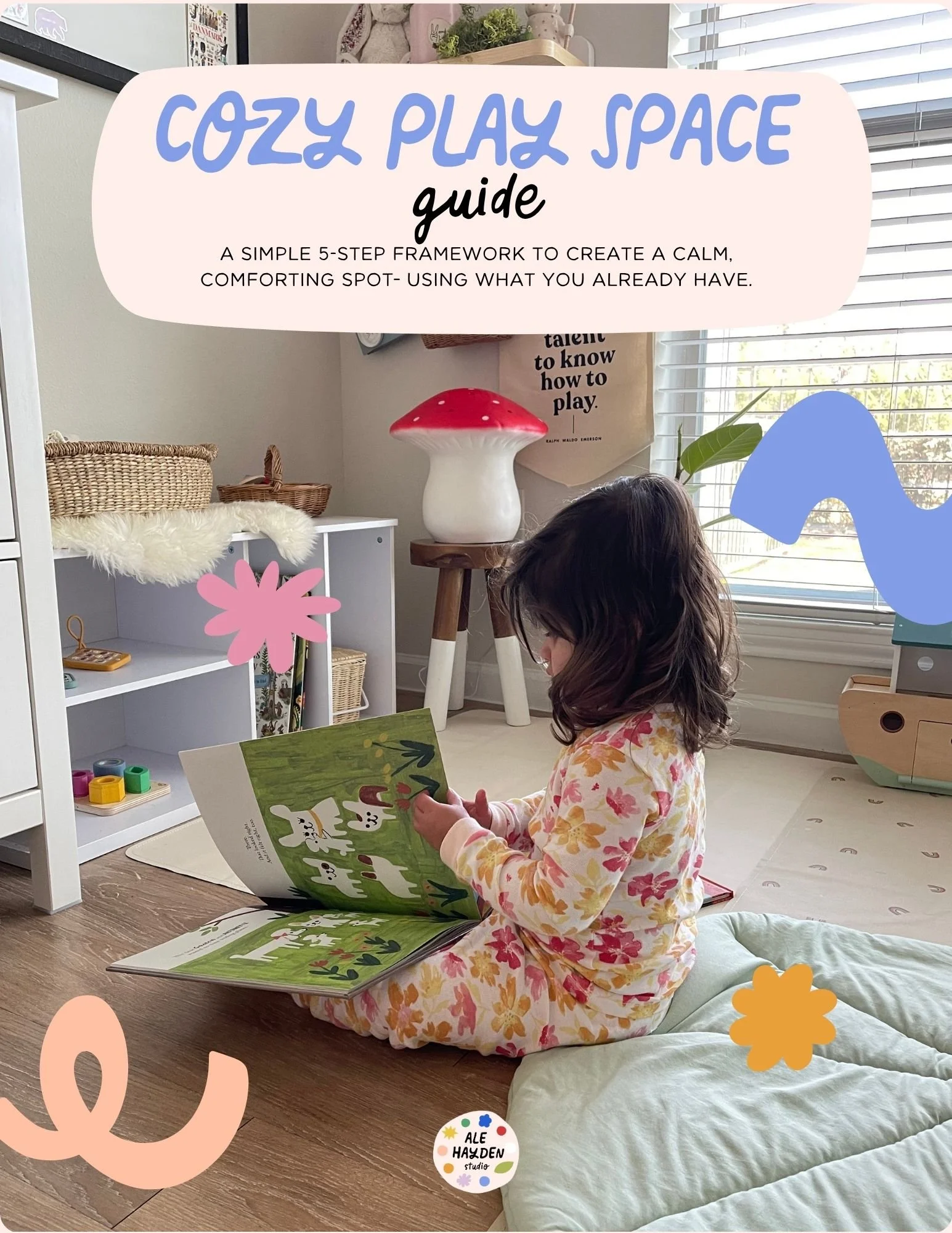
If you've got little ones who've outgrown naptime (or never napped to begin with), you know quiet time can be its own challenge. I put together a free Cozy Play Space Guide that walks through how to build a calm, quiet corner just for that — somewhere kids can decompress on their own without it turning into a fight.