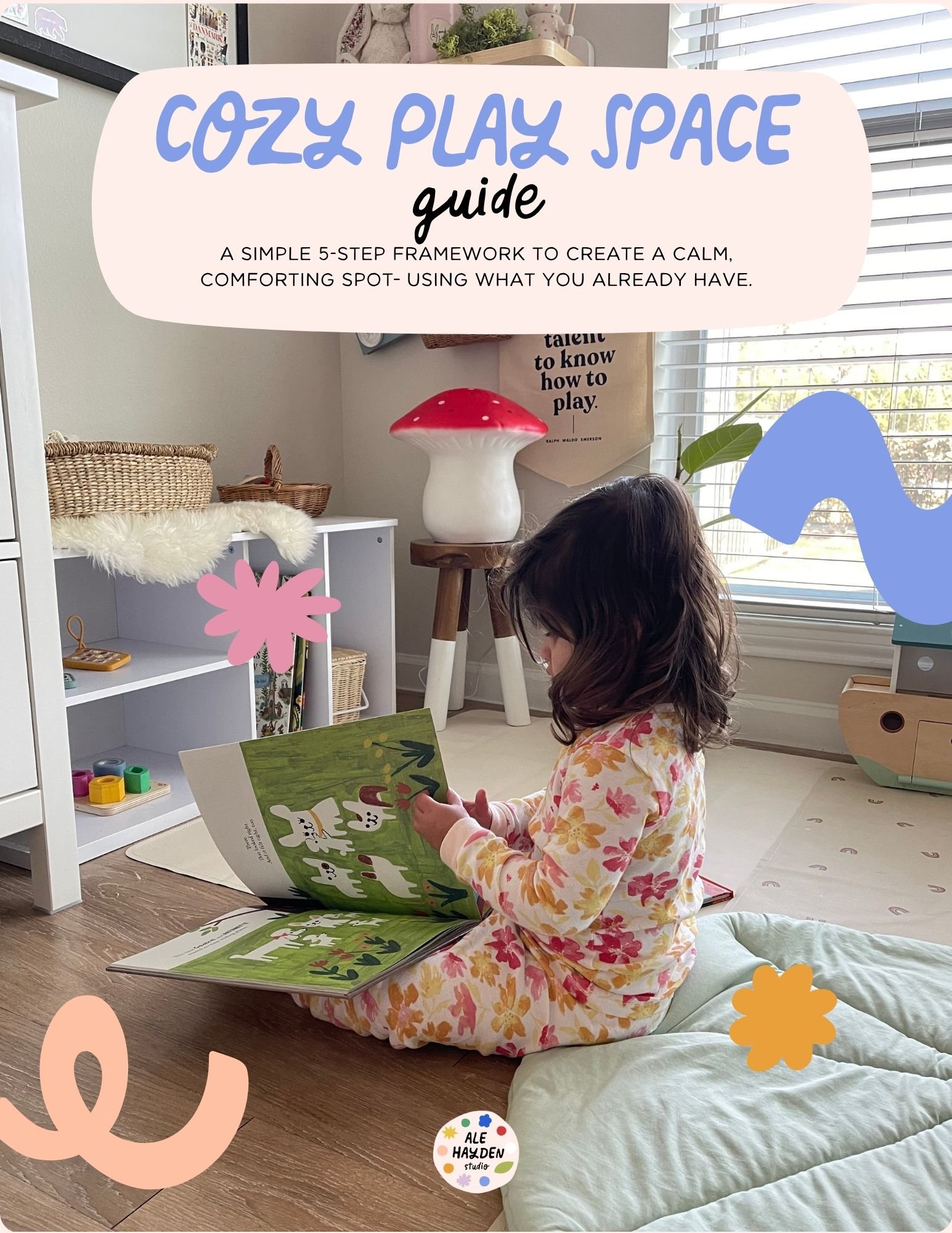
Inside My Toddler's Montessori-Inspired Room: Designed to Help Her Reset
If you've followed along for a while, you know I don't design spaces just to make them pretty. Every corner of my child's room exists for a reason — and this room in particular has a very specific job: help my toddler daughter move, settle, and reset without a lot of pressure.
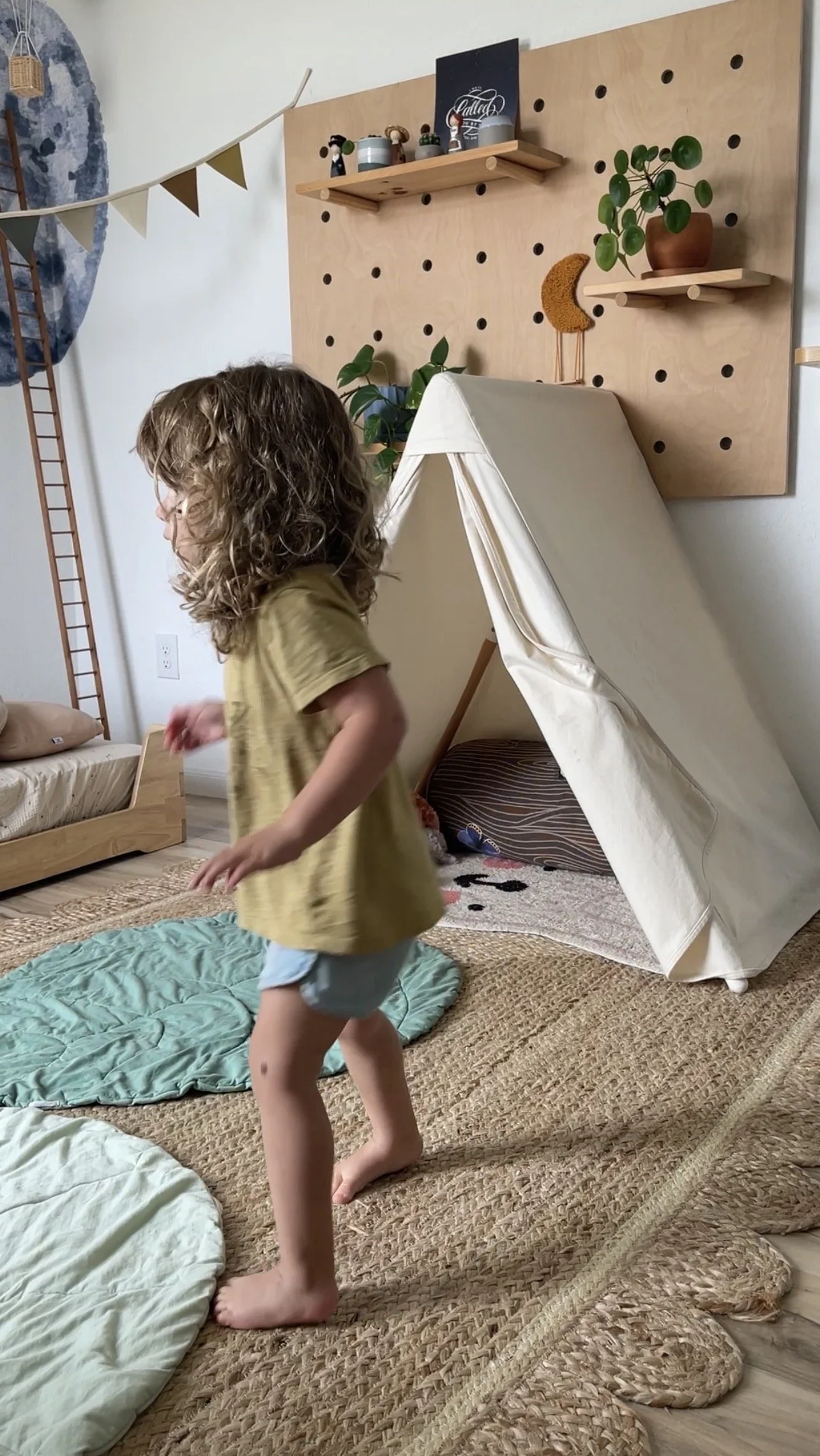
My daughter is a child who needs a lot of calm built into her day. Some of that is just her personality. Some of it comes from physical therapy she's done — movement itself hasn't always felt easy or automatic for her, and the last thing I wanted was for her own room to make movement feel like one more thing she had to "do right." So when we put this space together, the goal wasn't to entertain her. It was to give her permission to move at her own pace, in her own way, with zero performance pressure attached.
A little bit of where that instinct comes from: I spent years as a behavior interventionist before I was ever designing play spaces for a living, and one thing that's stuck with me through every role since — nanny, preschool teacher, homeschool mom, now running my own homeschool preschool — is that you can't ask a child to regulate herself in a space that's working against her. The environment has to do some of that work first.
The Philosophy, in One Paragraph
This room leans Montessori and Reggio-inspired — nothing complicated, just everything at her height, everything she can reach, choose, and put back herself. For a child who needs low-pressure movement, that independence is the whole point. She's not waiting on me to set something up or hover while she does it "right." She just moves through the room the way she needs to, and the space lets her.
The Reading Corner — Where She Settles
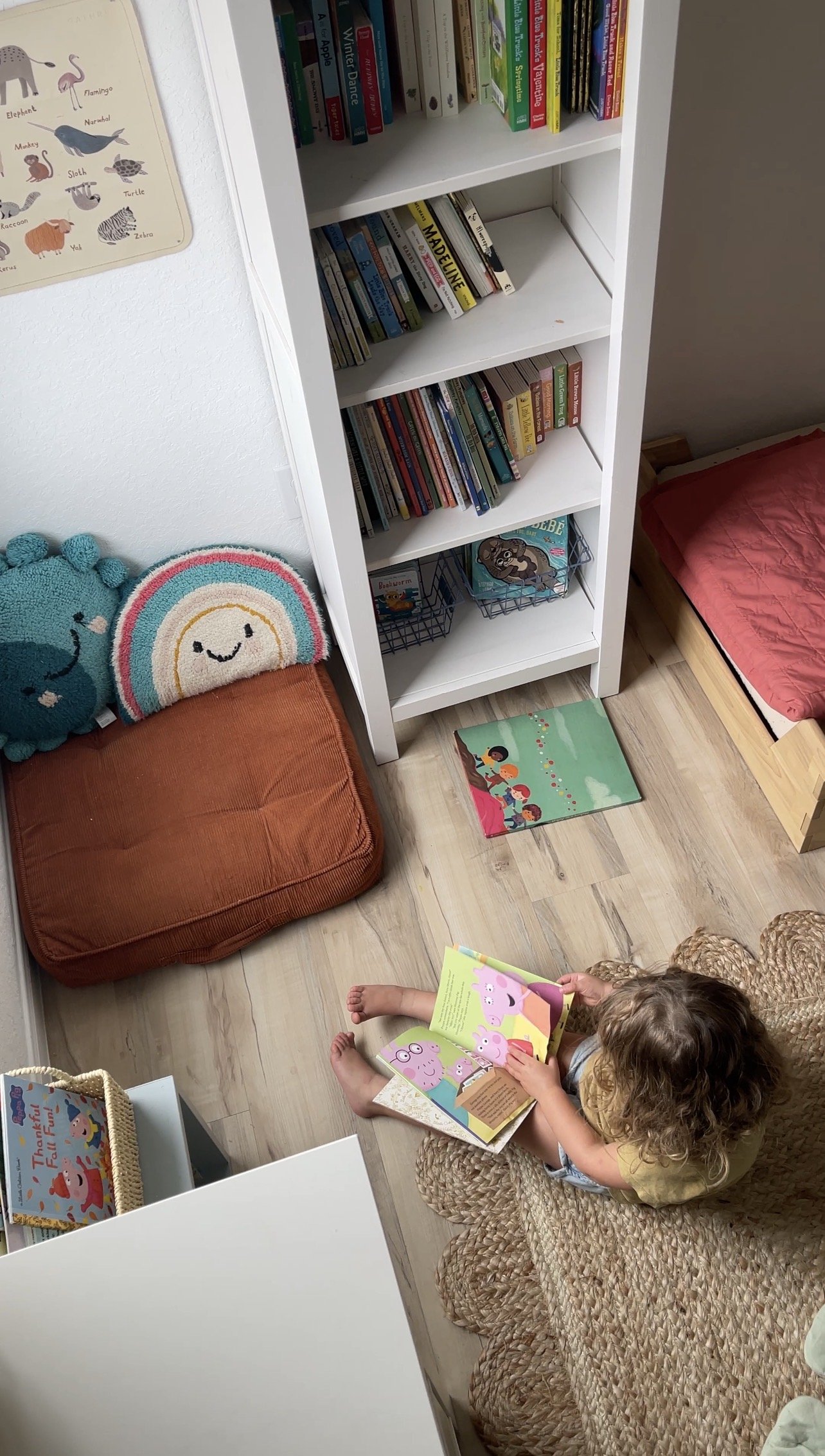
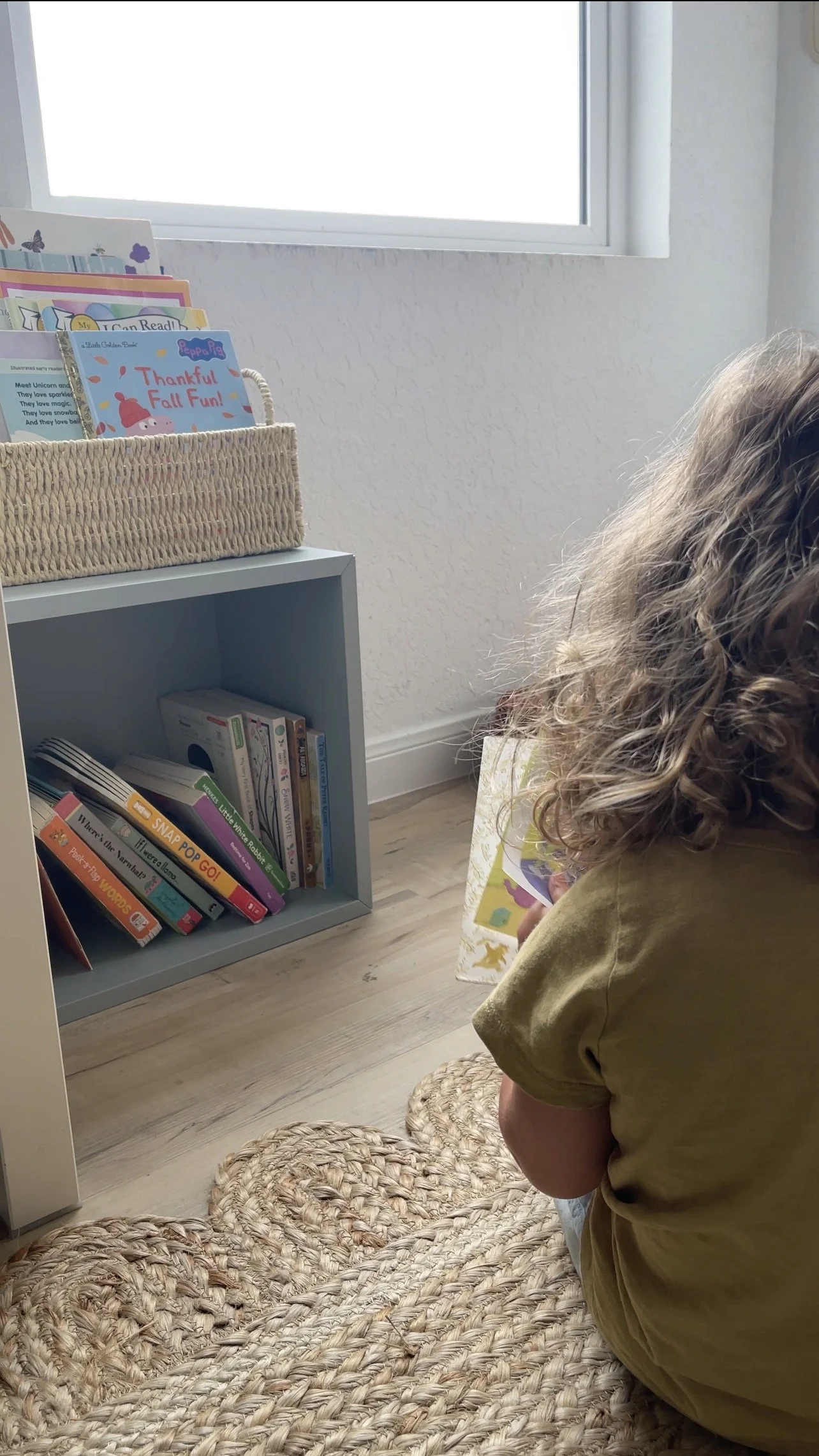
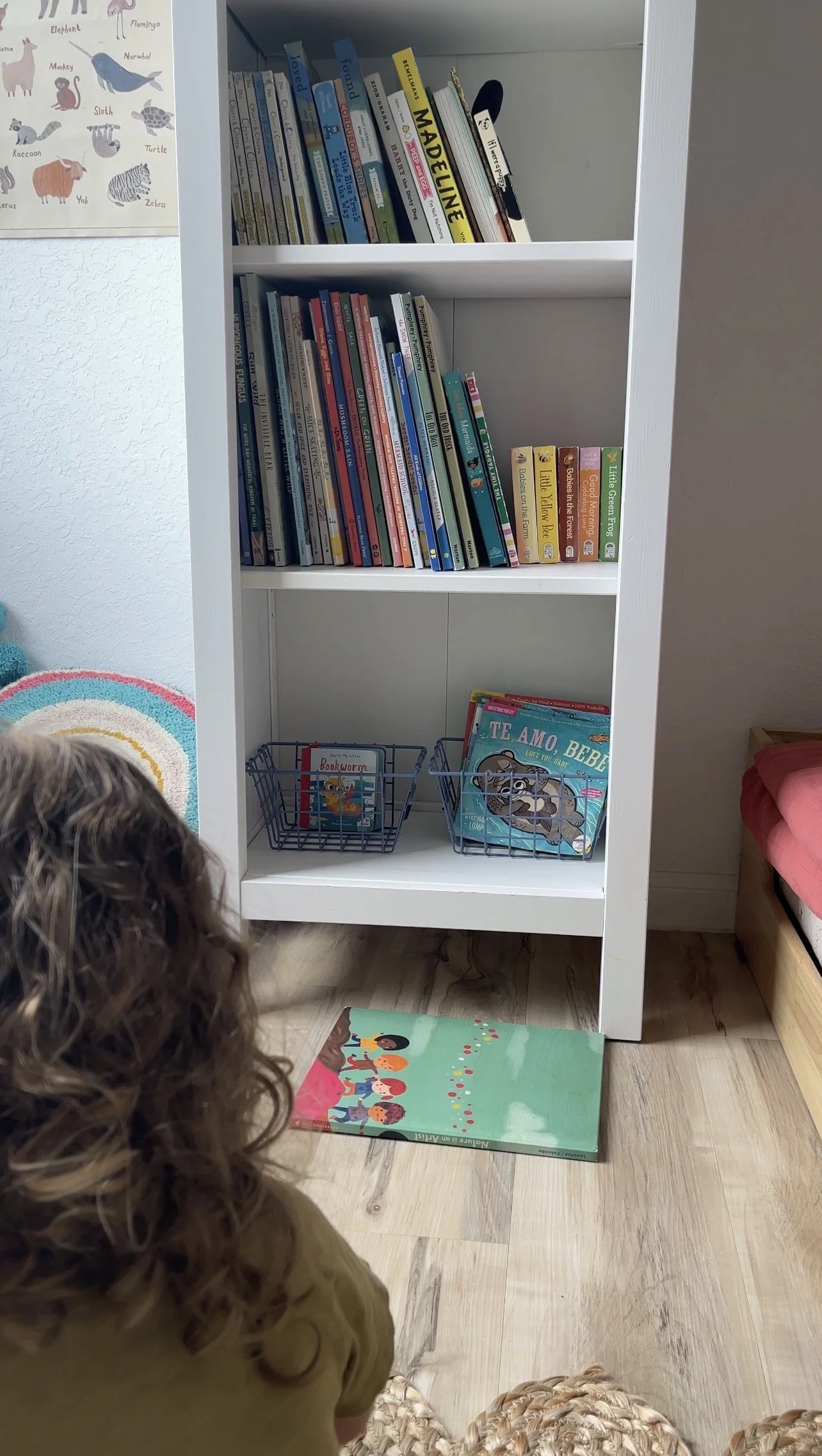
This is honestly the part of the room I'm proudest of, because it's the part that actually works. More often than not, I'll turn around and she's already sitting on the rug with a book she pulled herself — no prompting, no setup, no me involved at all.
We run a simple two-shelf system. The taller white shelf holds her current rotation — the books she's loving right now, spine-out at her eye level so she can scan and choose. The smaller gray cube down low is stacked with board books and a few paperback favorites on a basket she can grab without any help reaching. Wire baskets hold the "tiny book" picks separate from what's shelved, which keeps the whole thing feeling manageable instead of like a wall of choices she has to sort through.
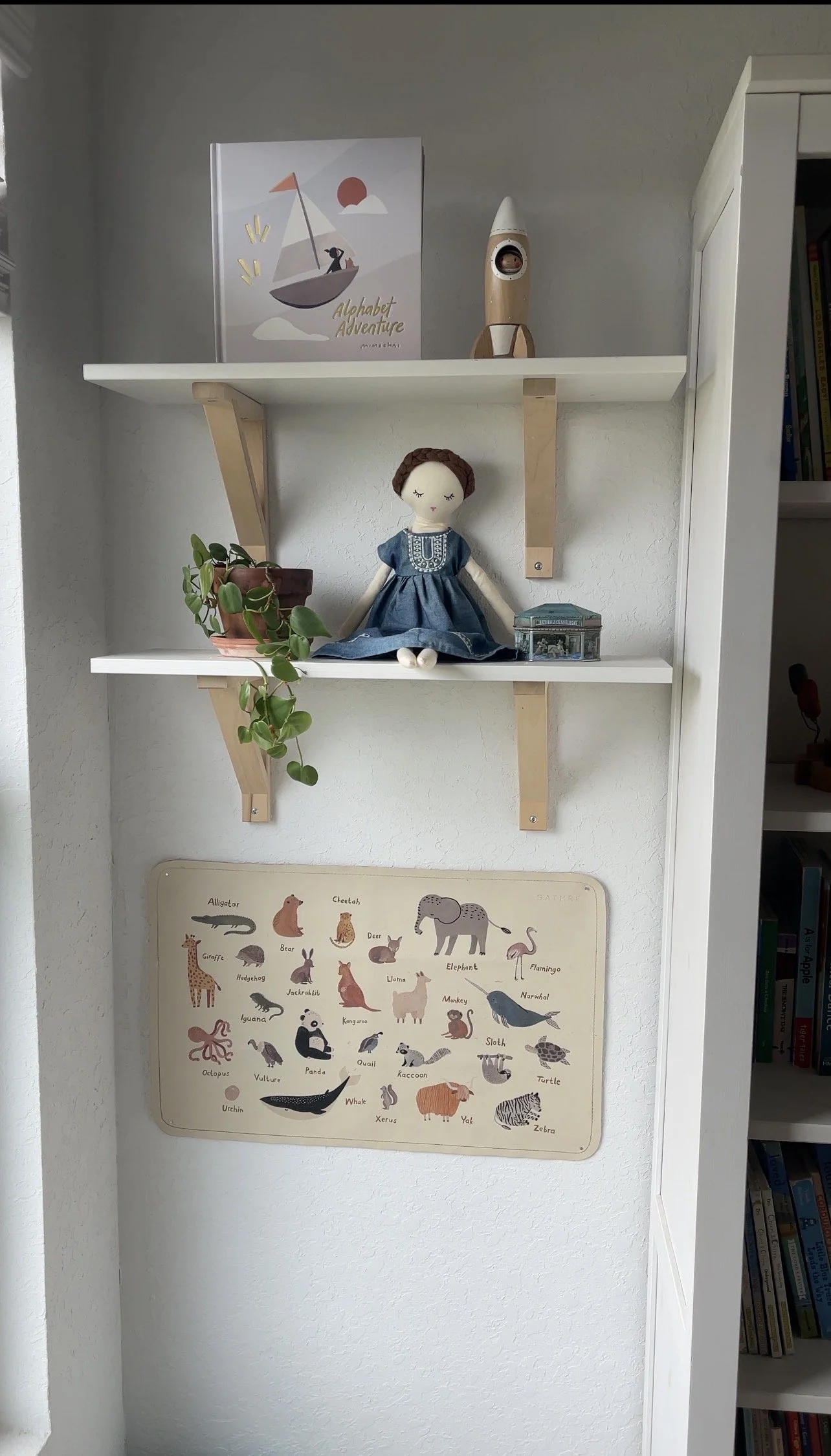
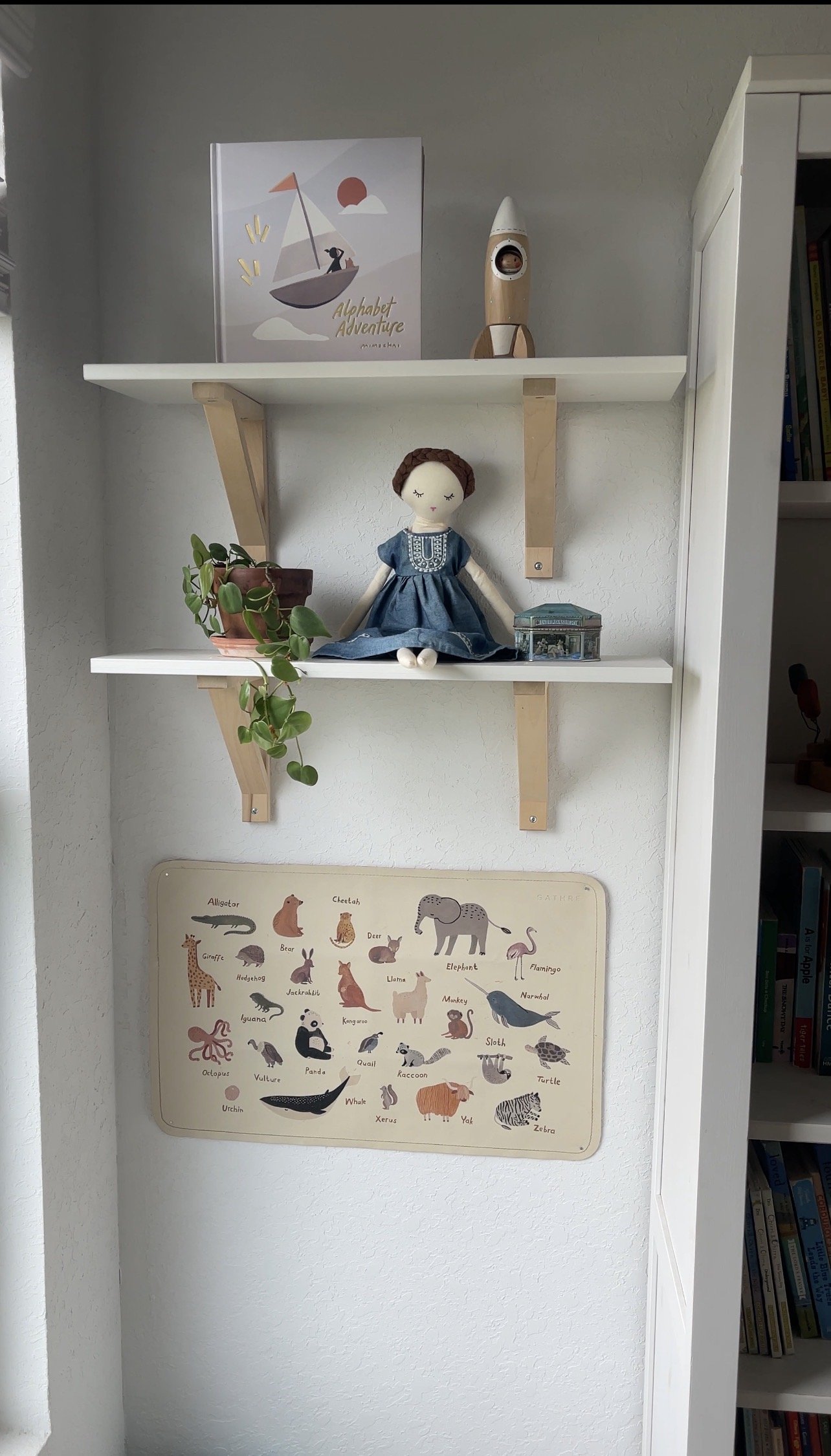
None of this is about hitting reading milestones. It's a self-soothing activity that happens to also be a book. The animal alphabet poster next to the shelf works the same way — it's just there, low-pressure, no flashcards, no quizzing, just something to look at while she settles in.
The Tent — Her Reset Spot
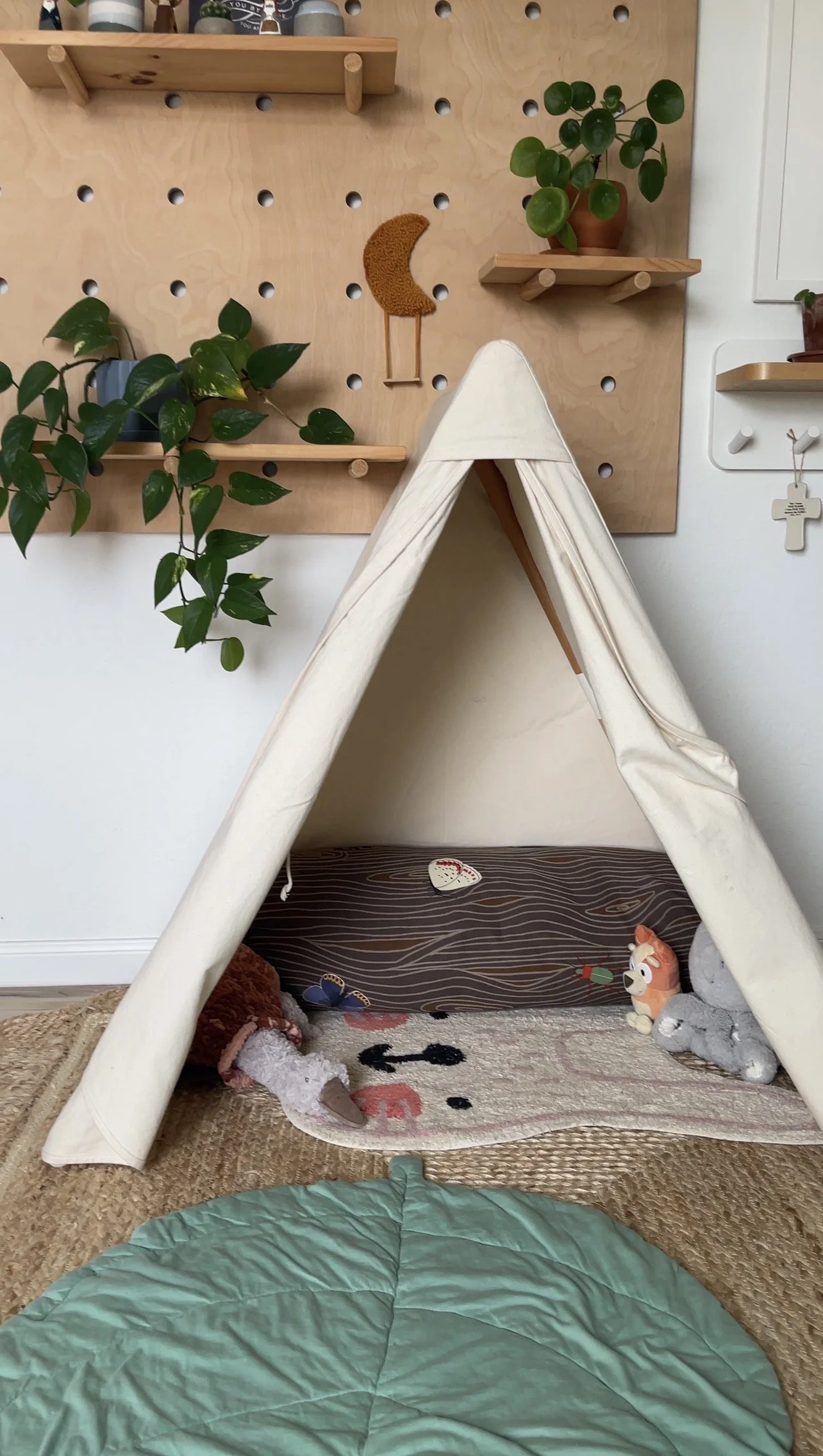
Tucked against our pegboard wall, the little canvas A-frame tent is her retreat. It's enclosed, it's soft, and there's nothing in there she has to "perform" — no puzzle to solve, no activity to complete. Inside, we kept it minimal on purpose: a playful log cushion, a couple of stuffed animals. That's it. A retreat spot only works if it doesn't ask anything of the kid using it.
The wall behind the tent stays quiet too — plants, a little tufted moon on a wooden swing, a shelf styled with just a few things. Nothing visually loud competing for her attention while she's trying to wind down.
The Floor Bed — Movement Without Pressure
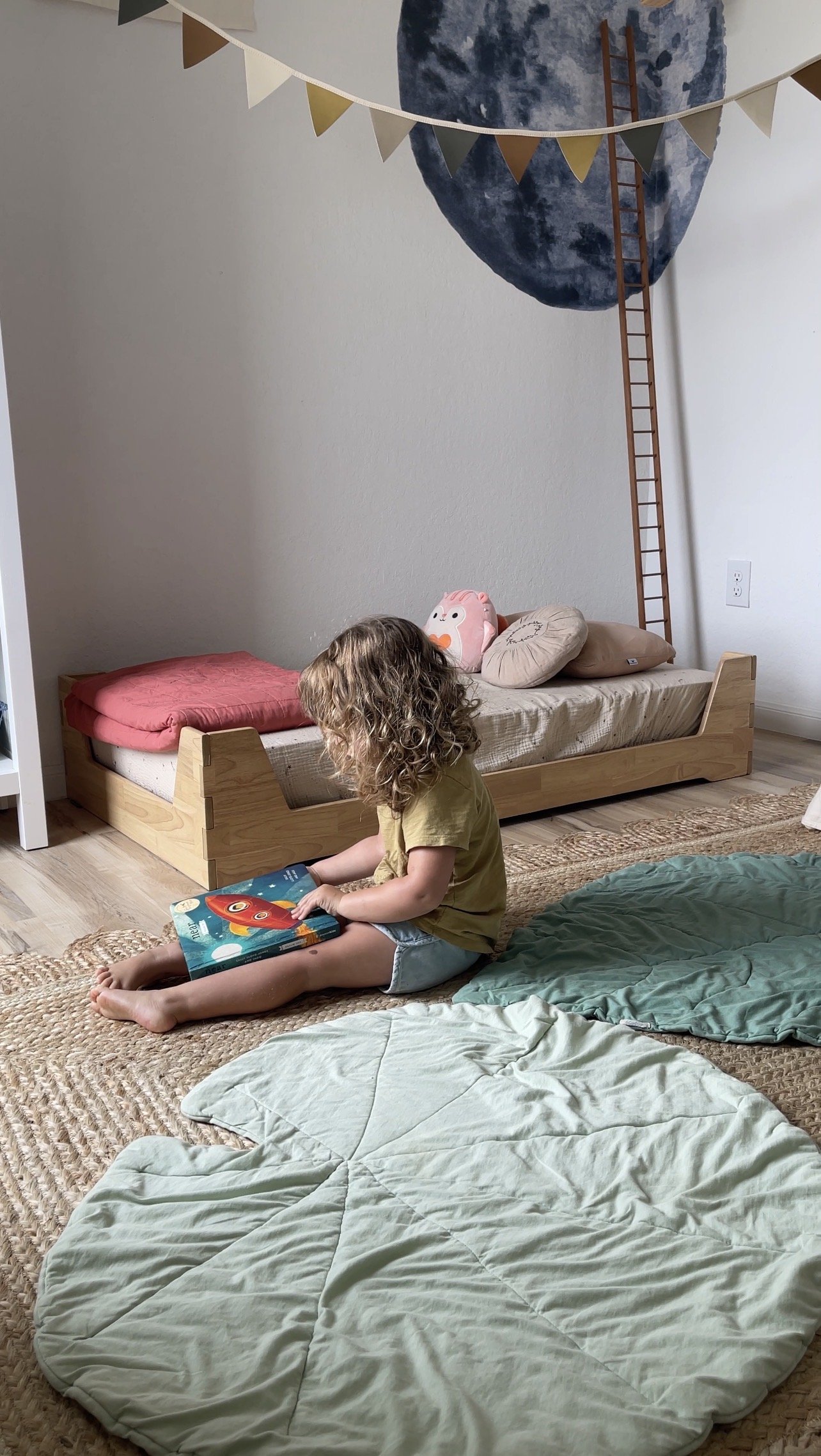
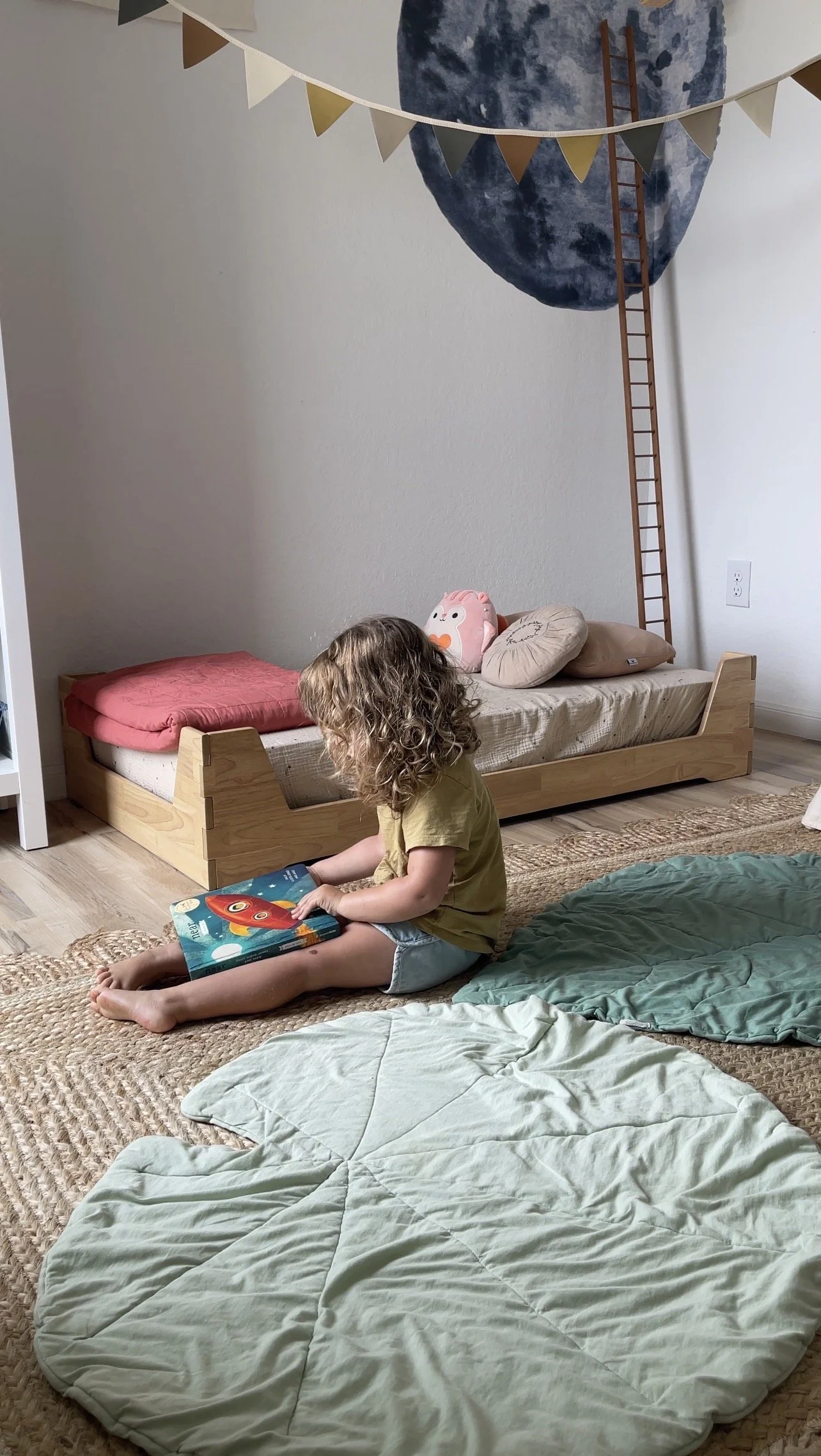
Her bed sits low to the ground under a beautifully watercolored, moon wall decal with a little wooden ladder "climbing" up to it and a strand of muted bunting overhead. The floor bed lets her get in and out entirely on her own terms — which, given everything her body has had to work through in PT, matters more here than it might in another child's room. This is movement she initiates herself, at her own pace, not movement being watched or corrected. The soft, muted decor around it keeps that freedom from tipping into overstimulation right before rest.
The Quiet Materials Doing the Heavy Lifting
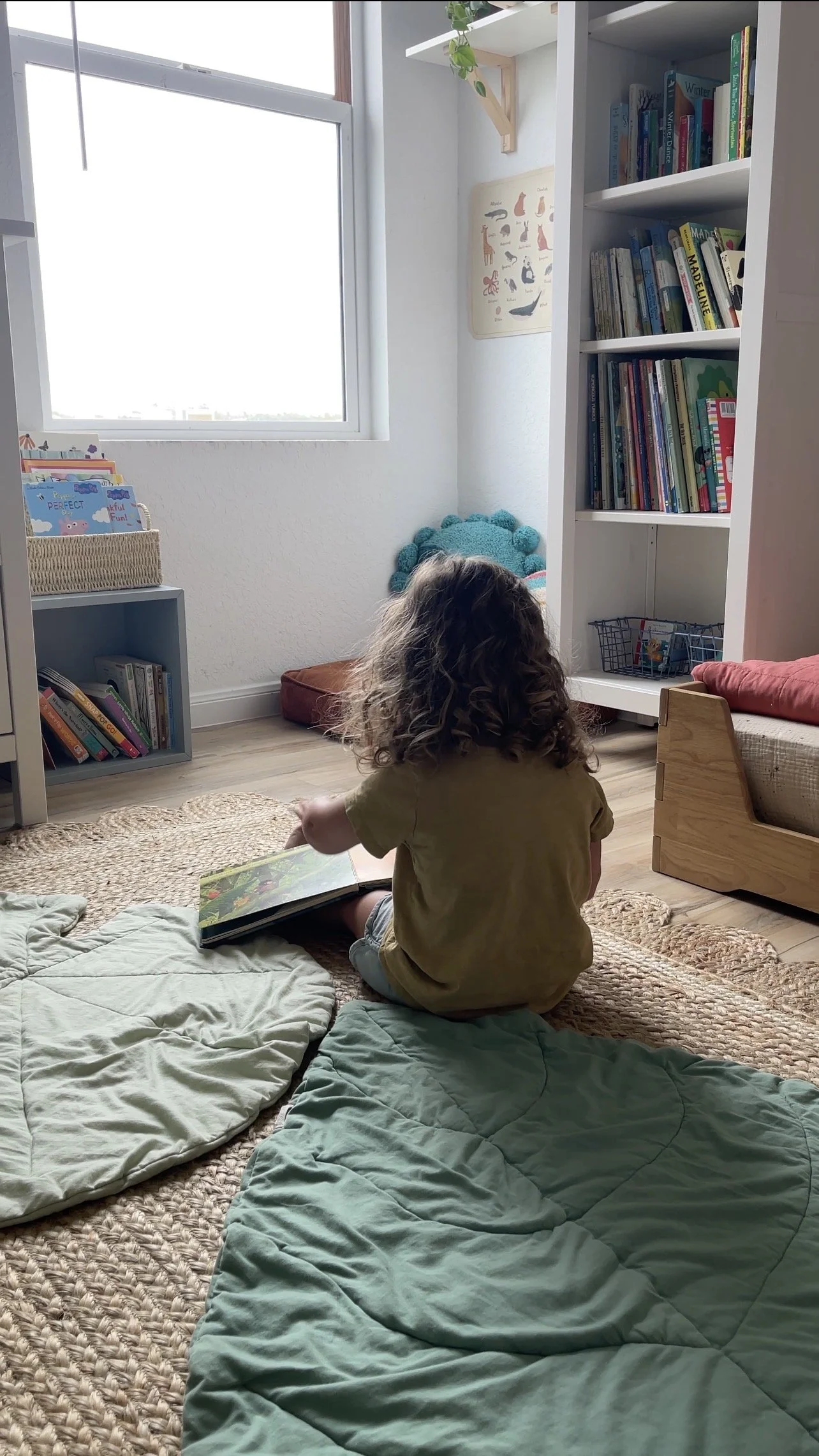
None of this calm comes from having less stuff in the room — it comes from everything being in the same quiet register. Jute rug, unfinished wood, canvas, a couple of sage and mint quilted play mats. Simple materials, intentional spaces. When the palette stays consistent, nothing in the room is shouting for attention, which leaves more room for her to actually settle into whatever she's doing.
What This Actually Looks Like Day to Day
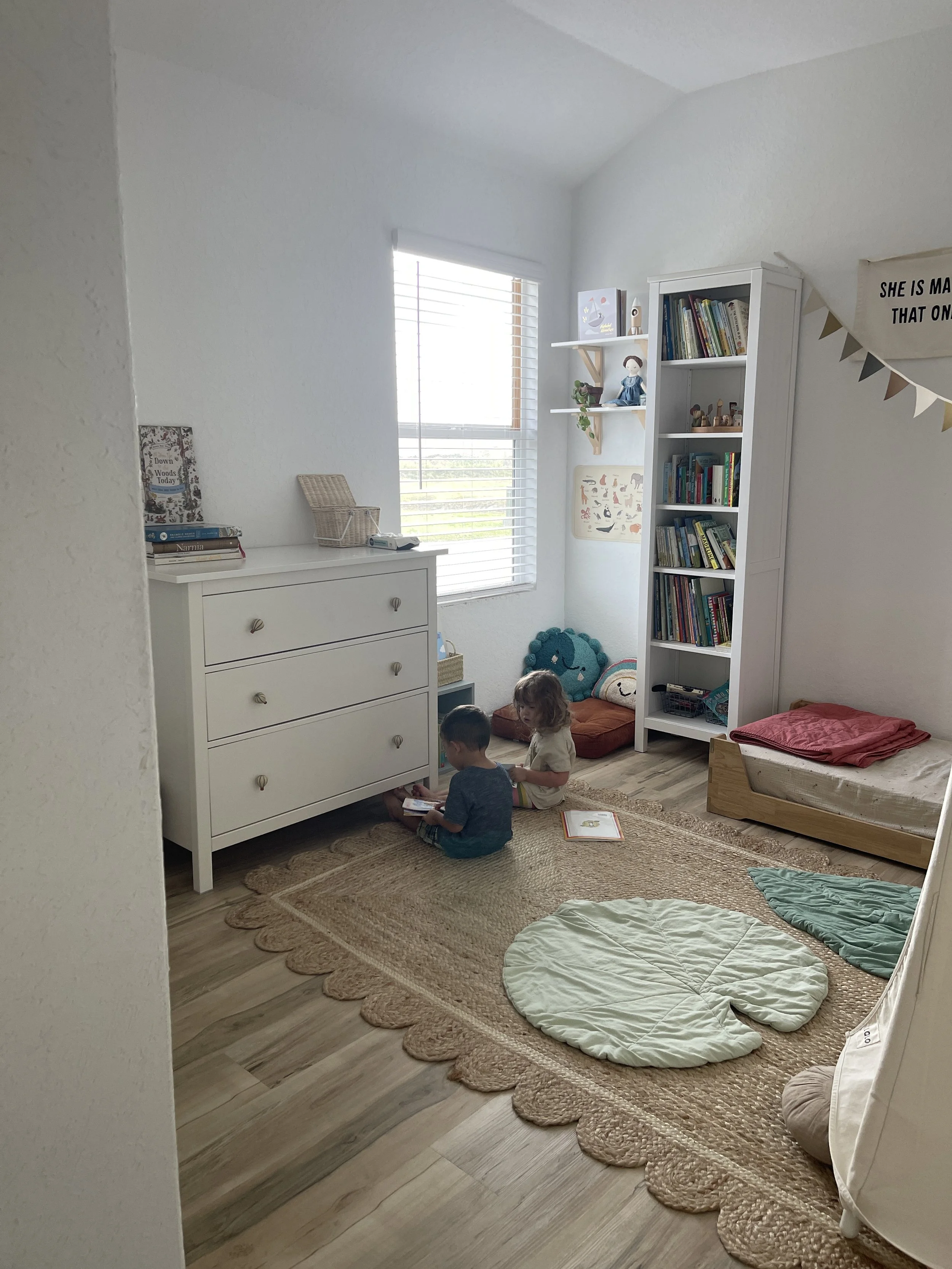
She still moves through this room a lot — tent, then a book, then the bed, then back to the books again. That hasn't changed, and it was never the goal for it to. What's changed is that every one of those stops is low-pressure and entirely hers to choose. Nothing in here asks her to get it "right."
This room was never built to calm her down. It was built to get out of the way enough that she can calm herself down.
If You Want to Recreate This At Home
Kid-height, self-serve books. Even one low shelf with a small, rotating selection makes a difference.
One enclosed, low-pressure retreat spot. A tent, a canopy, even a cushion tucked into a corner — somewhere nothing is expected of them.
A low bed that supports movement on their own terms. Getting in and out without help matters more than it seems.
One consistent, muted material palette. Calm comes from repetition, not from having less.
If you want our furniture and decor, click below for the full bedroom shopping list:
You don't need to overhaul a whole room to borrow from this. Start with the one corner your child already gravitates toward, and build the calm out from there.
GRAB THE FREE GUIDE THAT STARTED IT ALL ✨If this kind of intentional, low-pressure space is something you want in your own home, I put everything I use to design rooms like this into my free Cozy Play Space Guide — the exact step-by-step behind the reading corner, the reset spots, and the calm palette choices in this post. No overwhelm, no big shopping list. Just the framework.