

11 Open-Ended Toys We'd Never Leave Behind (Our Most-Played-With Picks)
If our house was on fire (dramatic, I know, but stay with me) and I could only grab a set of toys on the way out — these are it. These are the eleven toys that get played with every single day, the ones that never end up forgotten in the back of a closet, and the ones I'd replace immediately if we ever moved and had to leave everything behind.
What they all have in common: they're open-ended. None of them do just one thing. A silk is a cape today and a picnic blanket tomorrow. A basket of play food is breakfast this morning and soup by afternoon. That's exactly why they grow with a child instead of getting outgrown — a toddler and a six-year-old can pick up the same bin of magnetic tiles and use it in completely different ways. No single "right" way to play, just materials that meet kids wherever they are developmentally.
Here are our top 11, in no particular order.
1. Magnetic Tiles (mini and regular ones)
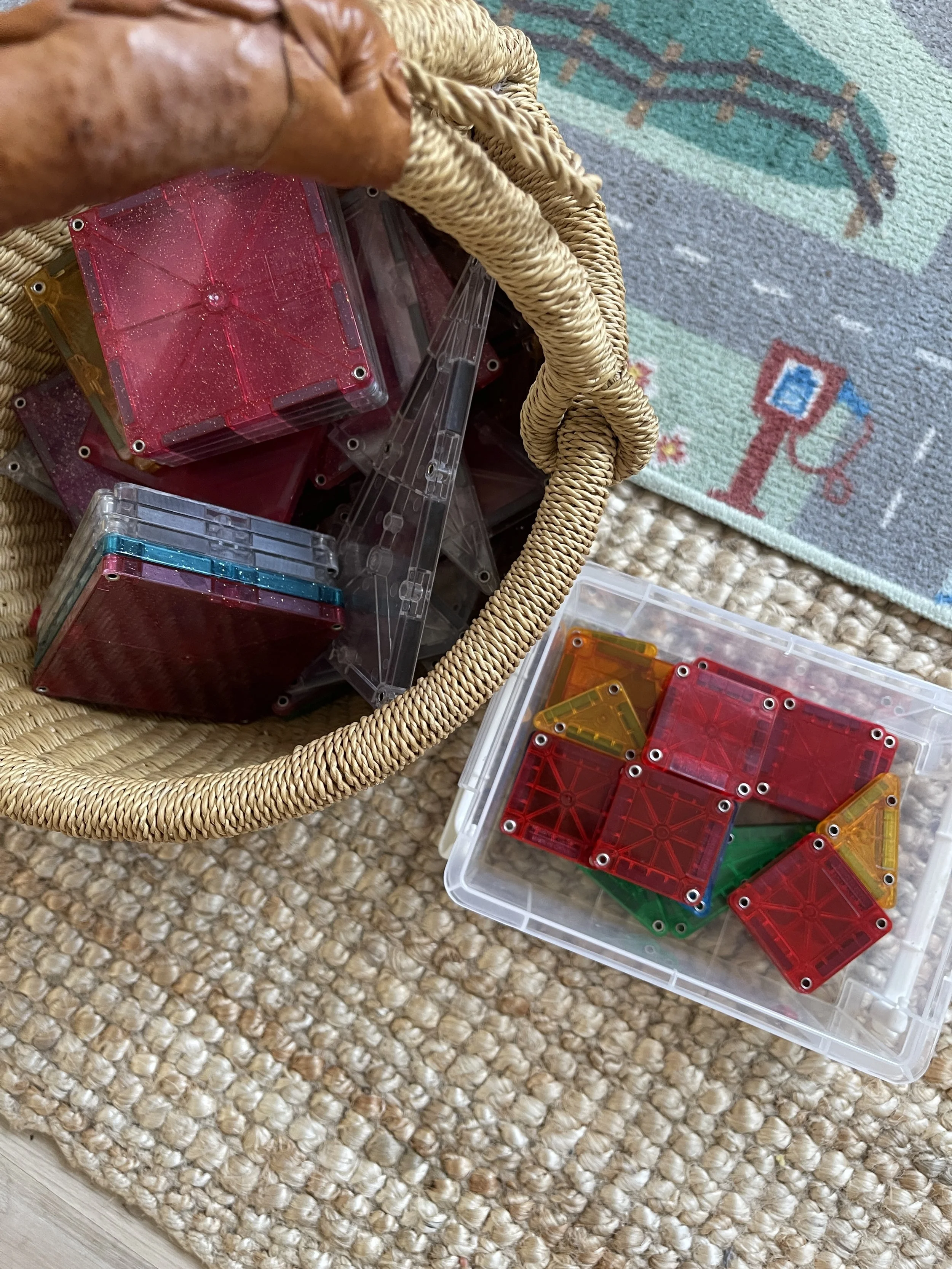
Magnetic tiles are one of the most versatile toys you can own, and they're a natural partner for loose parts play — a flat tile becomes a roof, a wall, or a floor the moment you add figurines, fabric, or nature items on top. We keep both small and large sizes on hand: large tiles are easier for little hands to connect and build big structures fast, while small tiles let older kids get more detailed with smaller-scale builds. A basket of assorted colors is really all you need to get started.
2. Blocks
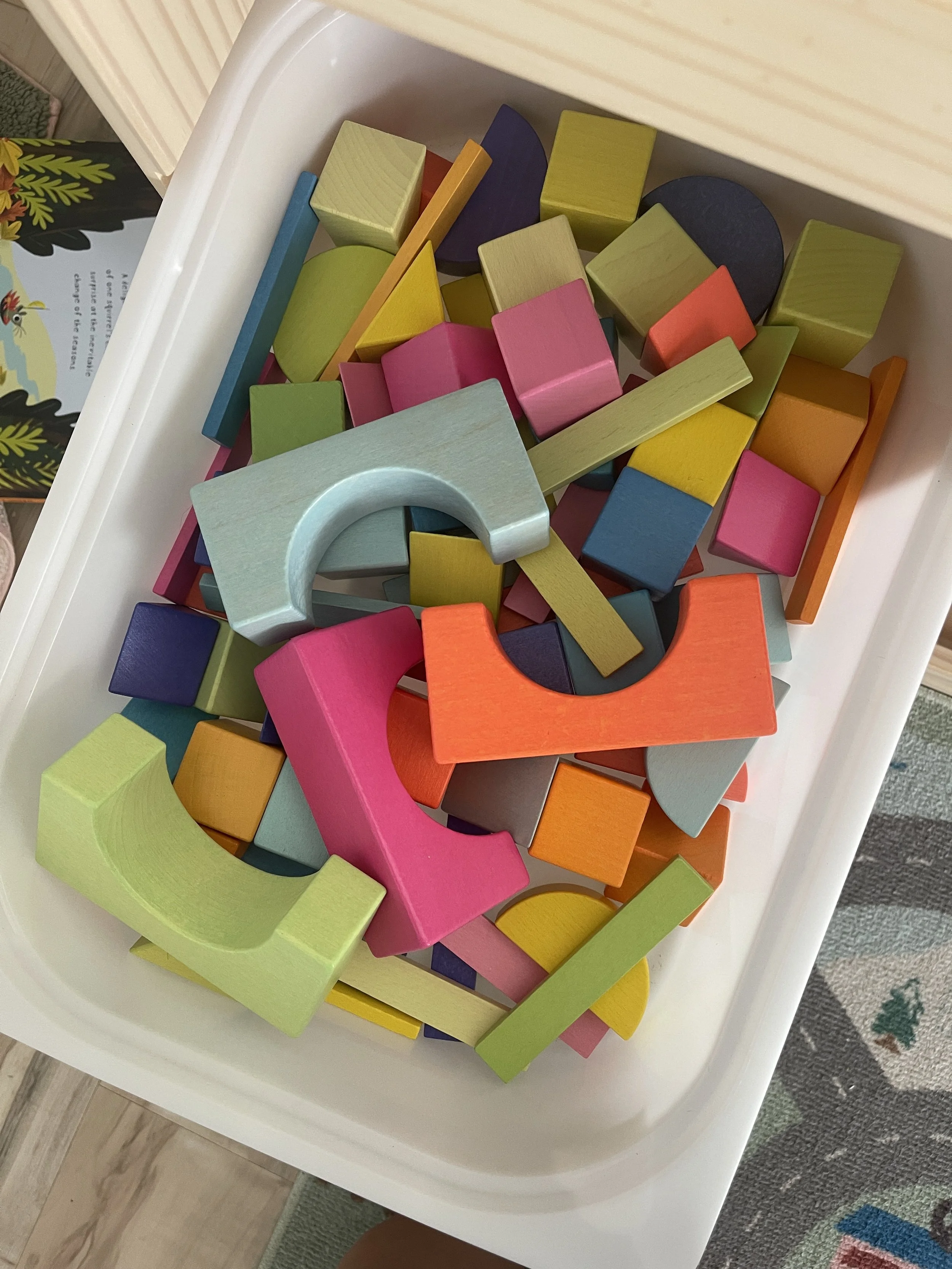
You don't need a massive block set to get real value here — we have a small box of wooden puzzle piece blocks and a handful of wood slices, and it covers everything from towers to sensory play to number and shape learning. Unless you're building elaborate architectural structures, a modest collection in a range of shapes (not just rectangles) will do more for open-ended play than a giant matching set. Pair them with any loose parts basket and they instantly become the "base" for whatever gets built on top.
3. Figurines
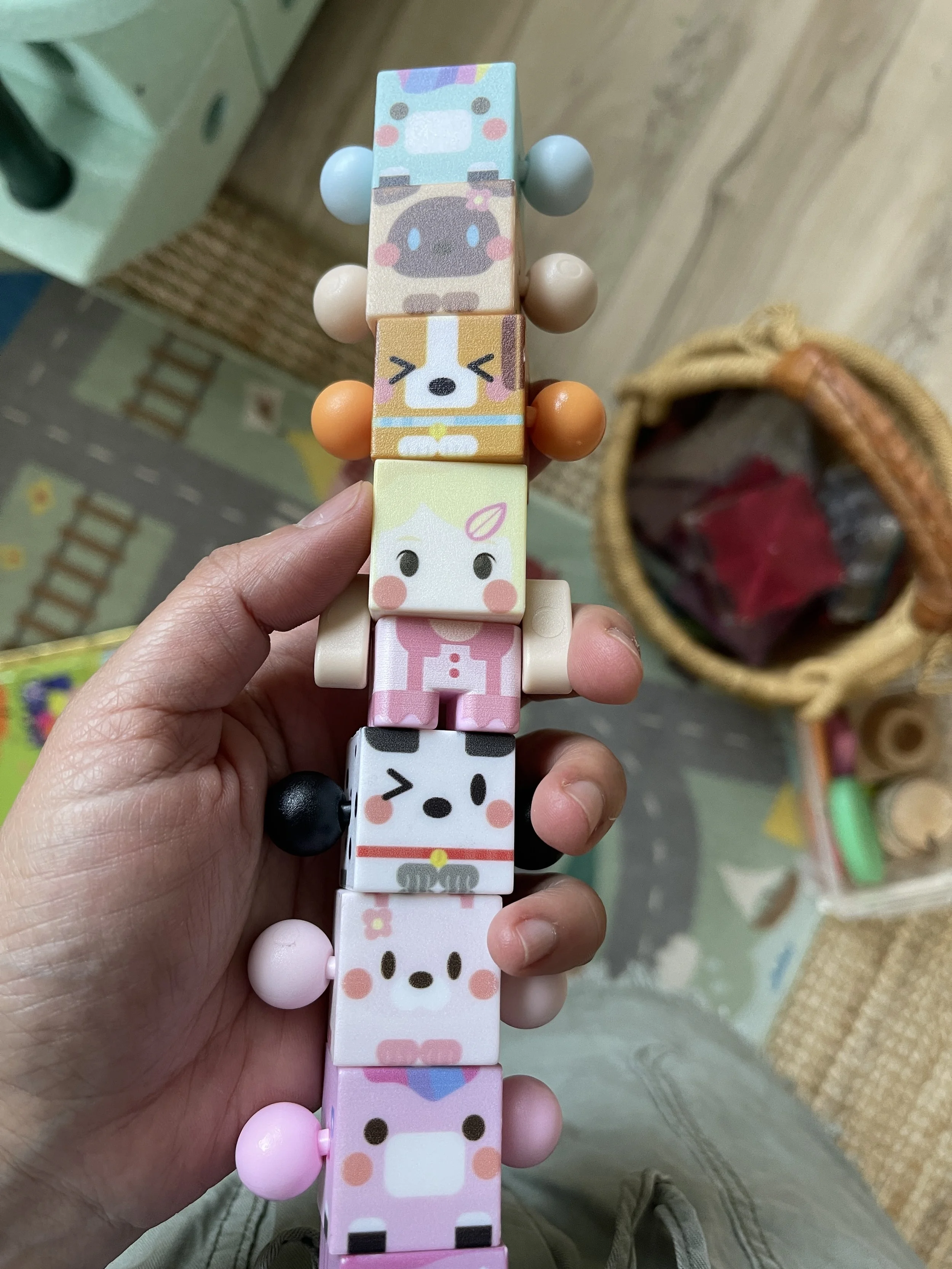
Small figurines add a whole layer of storytelling to loose parts, building, and sensory play alike. The figurines above happen to be magnetic, which makes them satisfying to stand up and move around on magnetic tiles, but any small figures work. Use your child's already-favorite animals or characters rather than buying something new — familiarity actually deepens the pretend play instead of limiting it. These are also one of the few toys that genuinely span every age, from toddlers moving them in and out of cups to older kids building entire worlds around them.
4. Legos
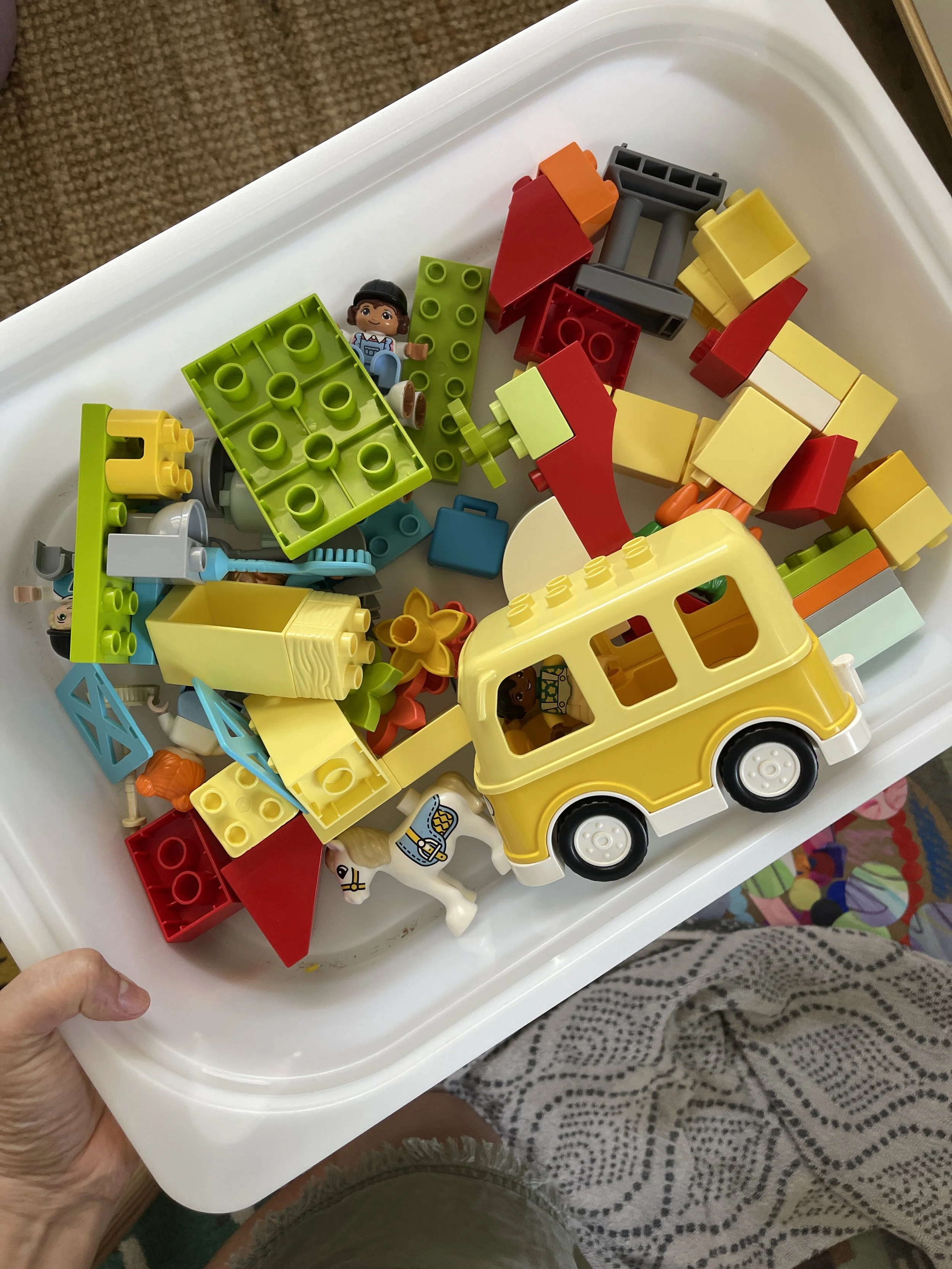
Legos bring a different kind of building challenge than blocks or magnetic tiles — smaller pieces, tighter connections, and often a bit more planning before something takes shape. They're a great next step once a child has spent time with looser, larger-scale building materials and is ready for more precision. Loose parts still have a place here too — a few figurines or fabric scraps can turn a finished Lego structure into the start of a whole pretend scene.
5. Roads and Cars
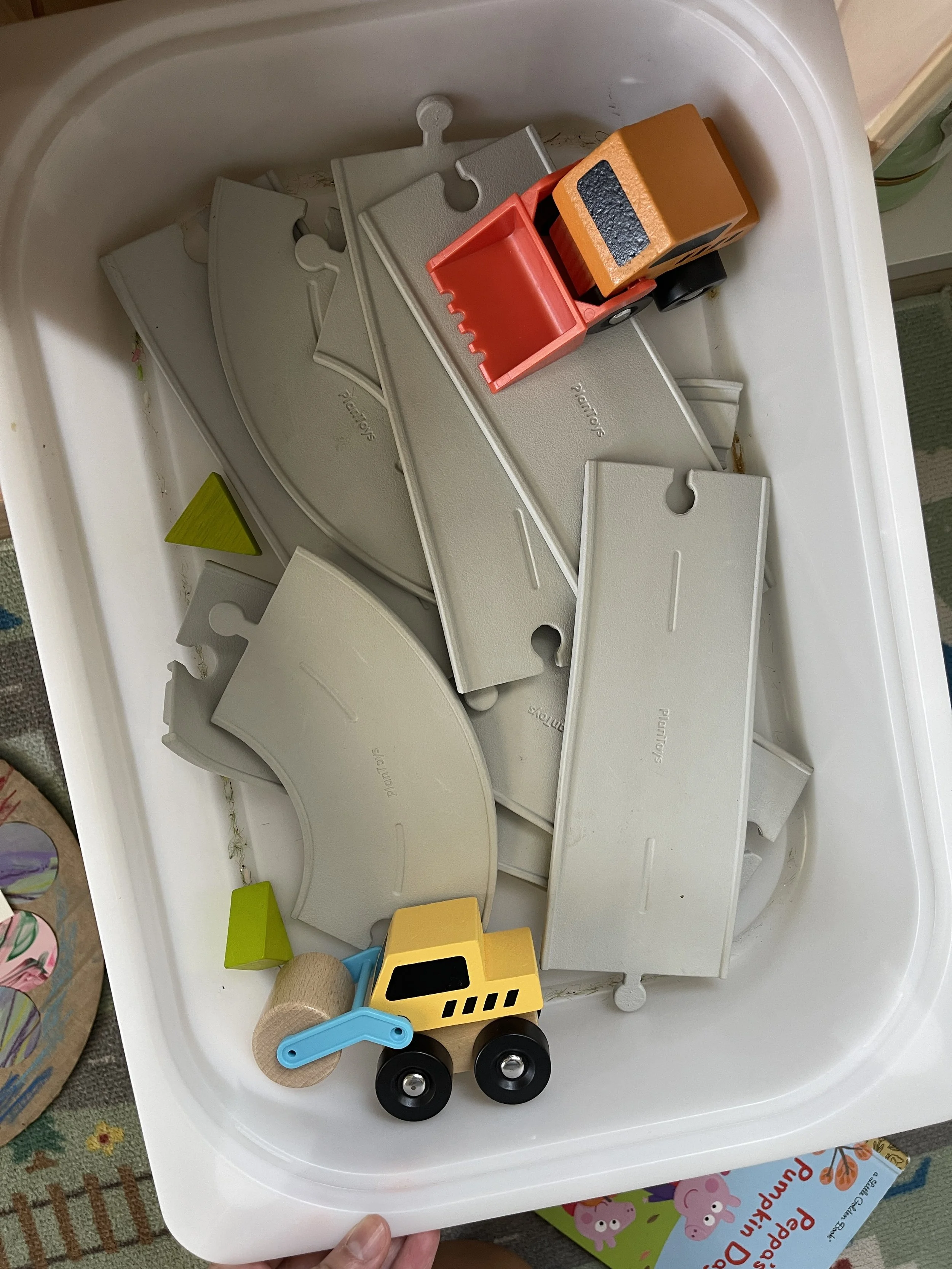
Roads and cars are an easy way to bring construction and small-world play together, especially for kids who love vehicles more than buildings. These Plan Toys rubber road pieces can get wet and be played with outside! They’re also double-sided with a train track surface on the back. Paired with cars gives structure, while loose parts like pebbles, blocks, or fabric scraps let kids build the surrounding town, bridges, or "construction zones" themselves. This also pairs beautifully with a building and construction loose parts basket for kids who love cars in the mix to stay engaged.
6. Play Food
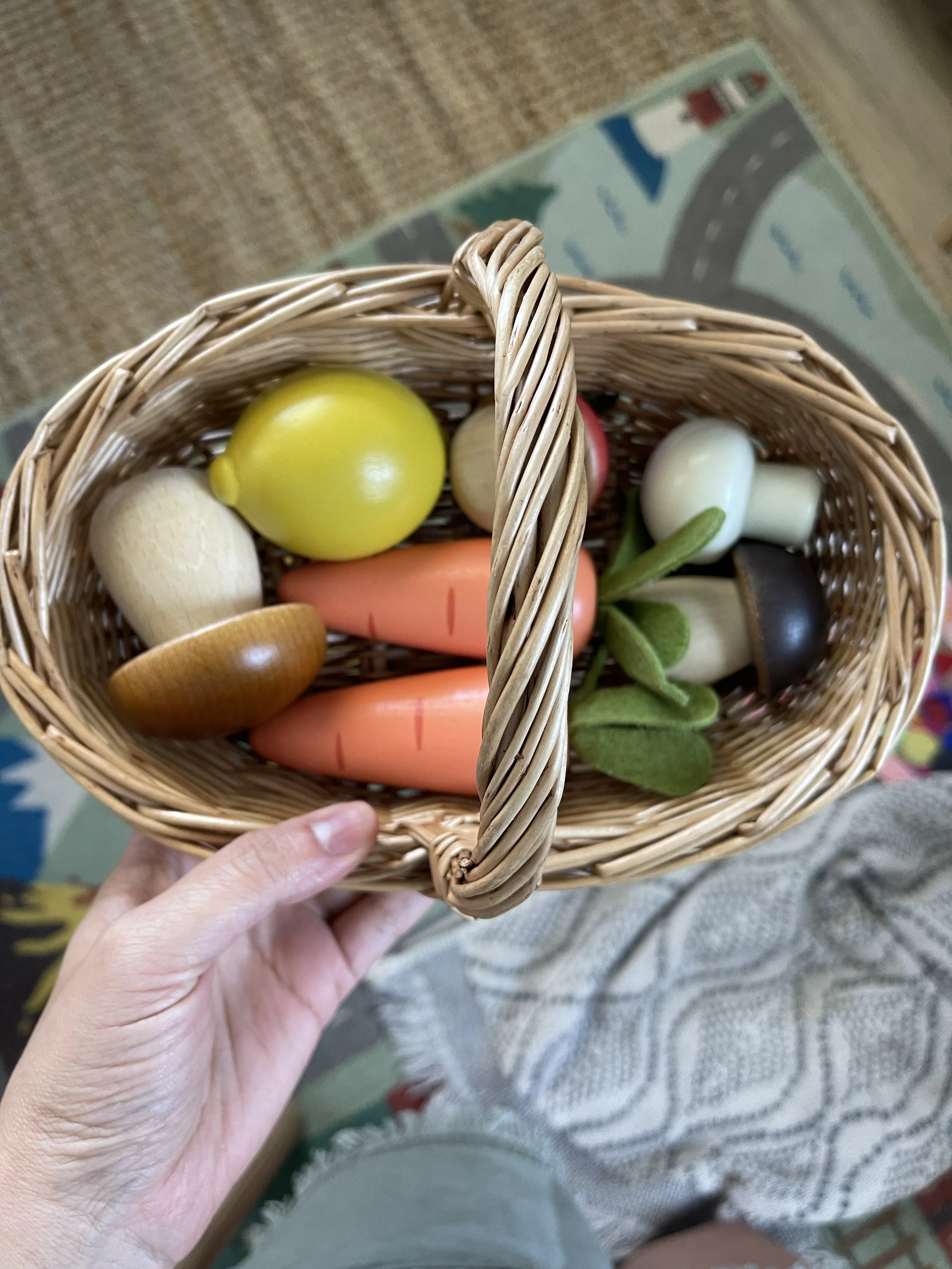
Open-ended play food (rather than sets tied to one specific meal or brand) lasts far longer developmentally, since it can work from breakfast to a full restaurant order to a pretend potion depending on the day. We like it best paired with loose parts like lids, pom poms, and fabric scraps, which let kids extend beyond whatever's in the set — a button can become a coin, a pom pom a berry. It's one of the simplest ways to keep dramatic play from going stale. Having everything in a cute thrifted basket is a favorite around our house.
7. Open-Ended Dress-Up Clothes and Silks
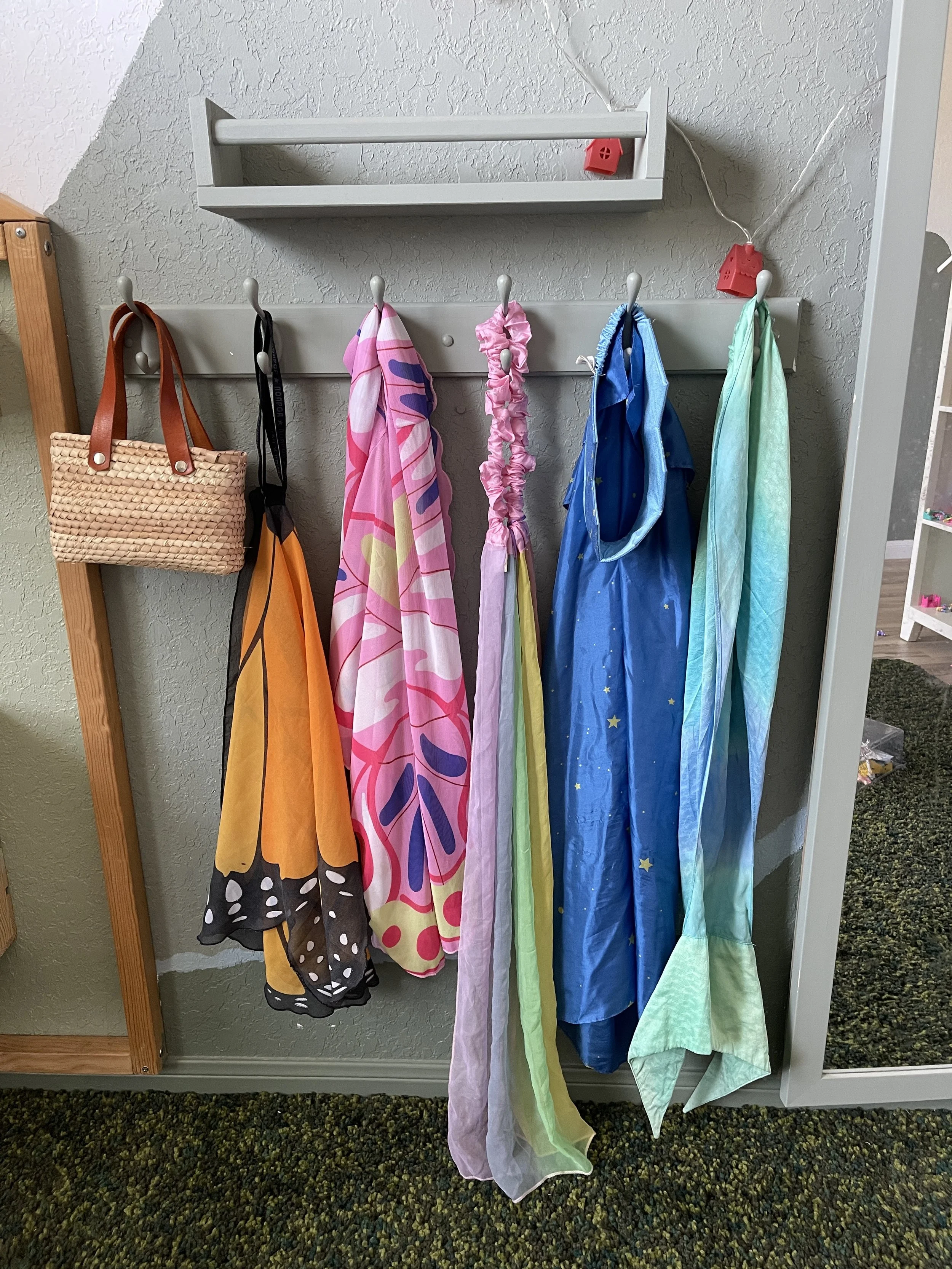
Play silks, capes, and simple dress-up pieces let kids decide who or what they're becoming instead of being handed the answer. A silk can be a cape one day and a picnic blanket, a river, or a baby's blanket the next — exactly the kind of flexible, open-ended thinking loose parts play is built on. These pair beautifully with figurines and pretend play props, since one silk can outfit an entire pretend scenario on its own. We like keeping these available on hooks so kids can grab them independently.
Check out our favorite Amazon pretend play and dress up toys here.
8. Yoto Player and Cards
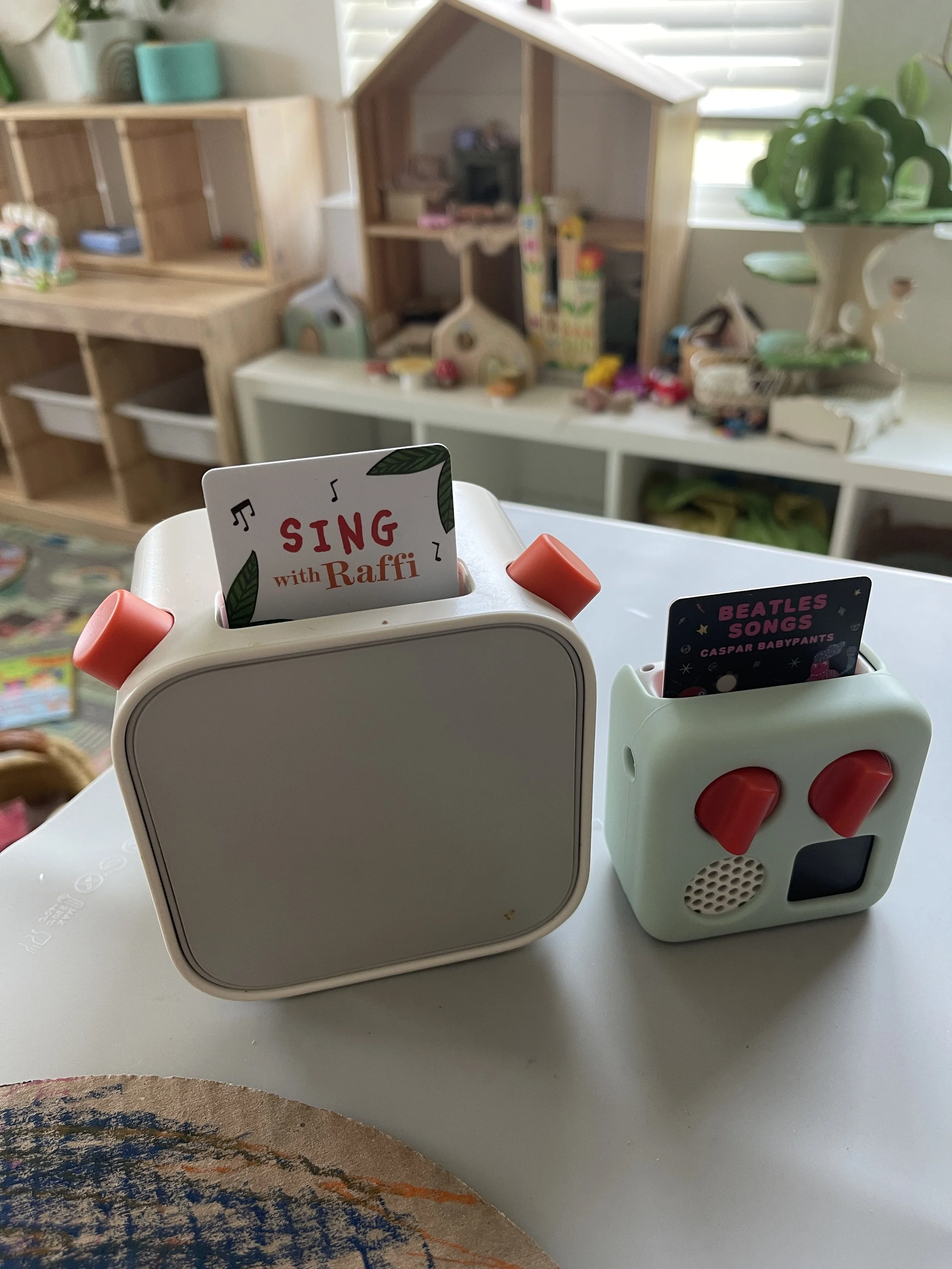
The Yoto player gives kids independent control over their own music and stories without a screen in sight, which makes it one of our most-used tools for winding down or filling quiet moments. It pairs surprisingly well with loose parts and sensory play — a Yoto card playing in the background while a child works through a tinker tray or sensory bin gives just enough auditory engagement without pulling focus from their hands. It's also genuinely useful for building independence, since kids can pick and play their own cards without needing an adult to press play.
9. Stapelsteins
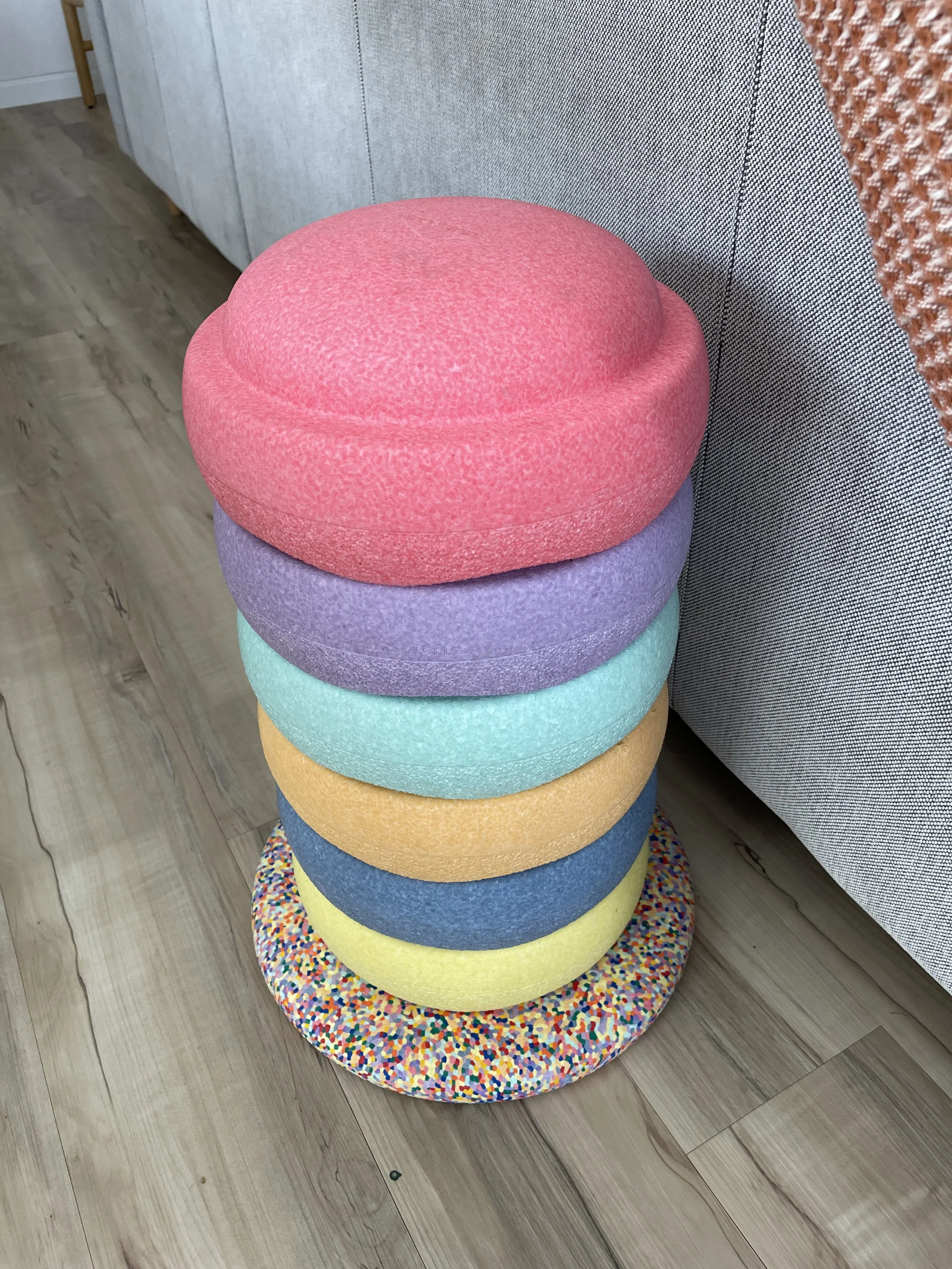
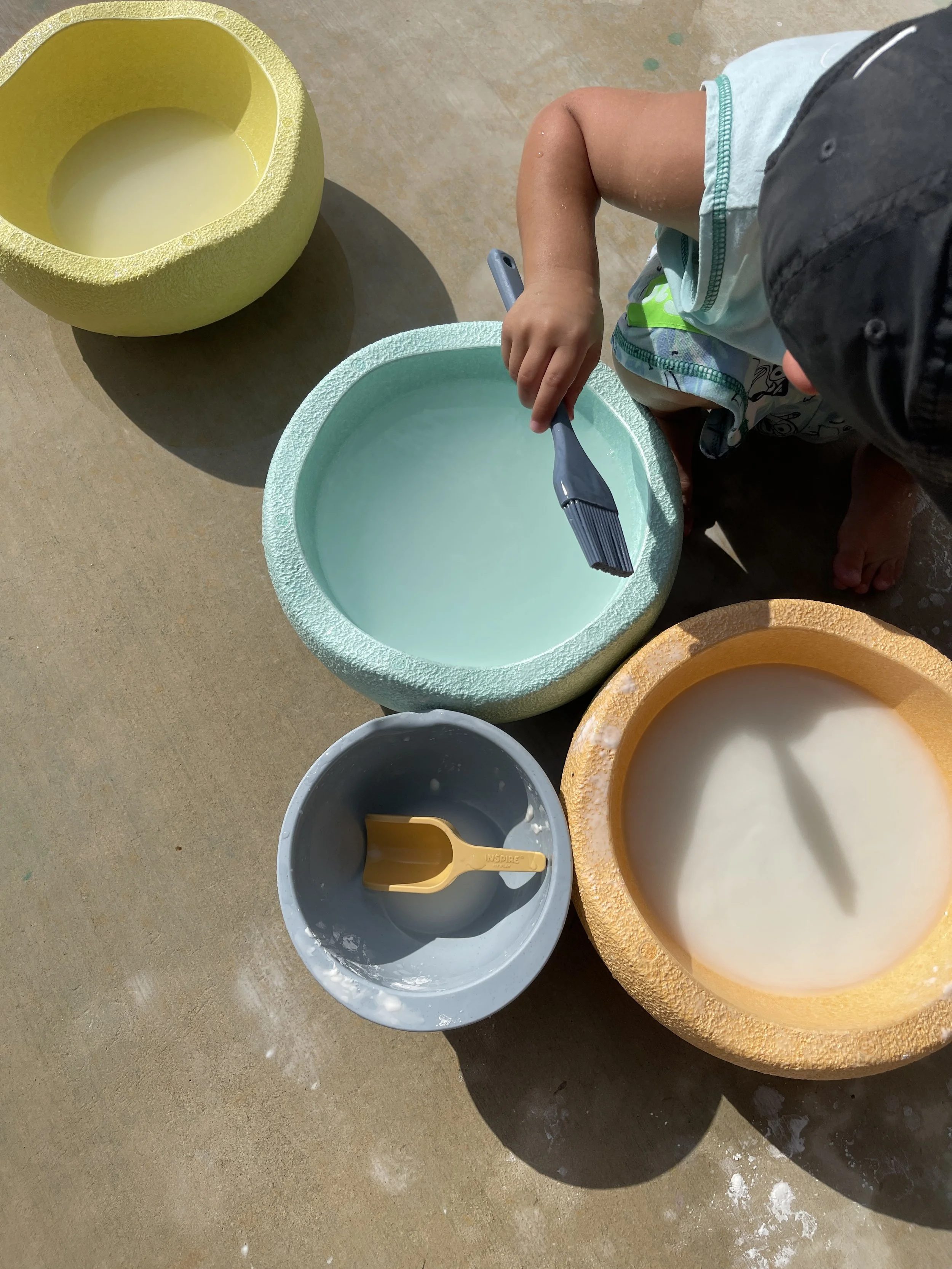
Stapelsteins are stackable, sturdy foam stones that start out as balance stones and grow into something new practically every day — steppingstones, building blocks, seats, obstacle course, even bowls for outdoor water play. Whatever the day calls for. They're one of those rare toys that genuinely spans toddlerhood through the early grade-school years without ever feeling like it's "for babies." A simple stack of them by the couch invites gross motor play and creative building in equal measure, with zero setup required.
10. Library Books on a Montessori Shelf
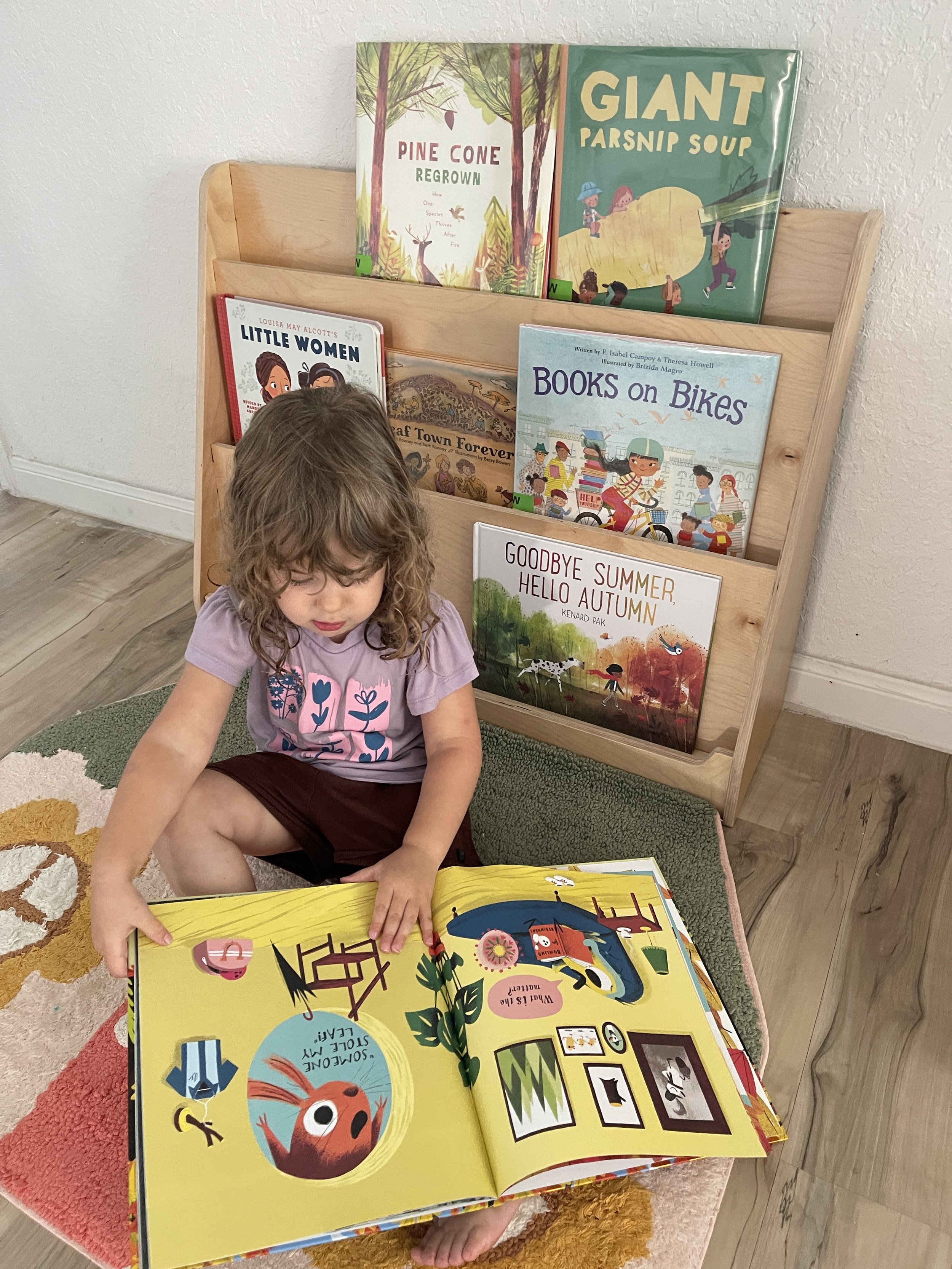
A low, front-facing shelf that displays a small, rotating selection of library books makes reading feel like an invitation rather than a chore — kids can see the covers and choose for themselves instead of digging through a bin. We keep this rotating alongside our curriculum book pairings, since a book sitting out at eye level naturally gets picked up and revisited far more than one tucked away on a regular shelf. It's a small, low-cost habit that does a lot to build independent interest in reading.
4. Sensory Bin Table
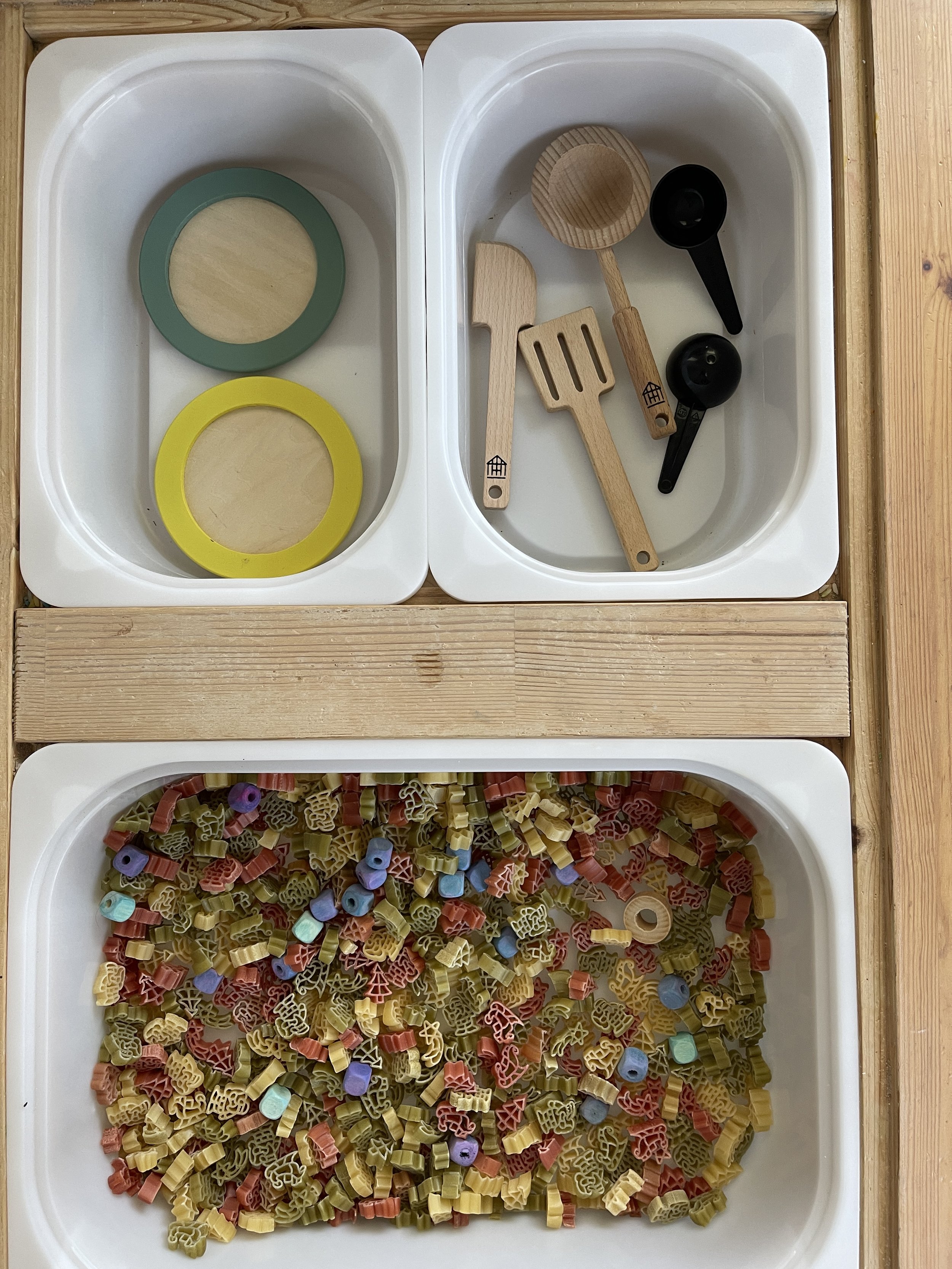
A dedicated sensory bin table takes the guesswork (and the "not on the rug, please") out of sensory play, giving kids a defined space that's expected to get messy. Ours holds separate bins for different bases and tools, so we can rotate between things like dried pasta, kinetic sand, or rice without a full setup each time. It's especially useful paired with small tool bins (scoops, tongs, measuring cups) that turn a sensory base into a real fine-motor activity. Also doubles as an art table with the insert.
BUILD A SPACE FOR CALM, INDEPENDENT PLAYIf independent, open-ended play like this is something you want more of in your own space, my Cozy Play Space Guide is the best place to start. It walks you through setting up a space that invites kids to play on their own, with the materials you likely already have.