

8 Sensory Invitations Using Loose Parts and Everyday Materials
If you've already started collecting loose parts, recycled materials, and simple art supplies, you might be wondering what to actually do with them.
The good news is that creating engaging invitations to create doesn't require expensive toys or complicated setups. Some of our favorite sensory and art experiences use everyday materials we already have at home, along with a small collection of loose parts for exploration and creativity.
These invitations have been enjoyed by toddlers, preschoolers, and mixed-age groups in our home and workshops. They encourage creativity, problem-solving, sensory exploration, and fine motor development while remaining wonderfully open-ended.
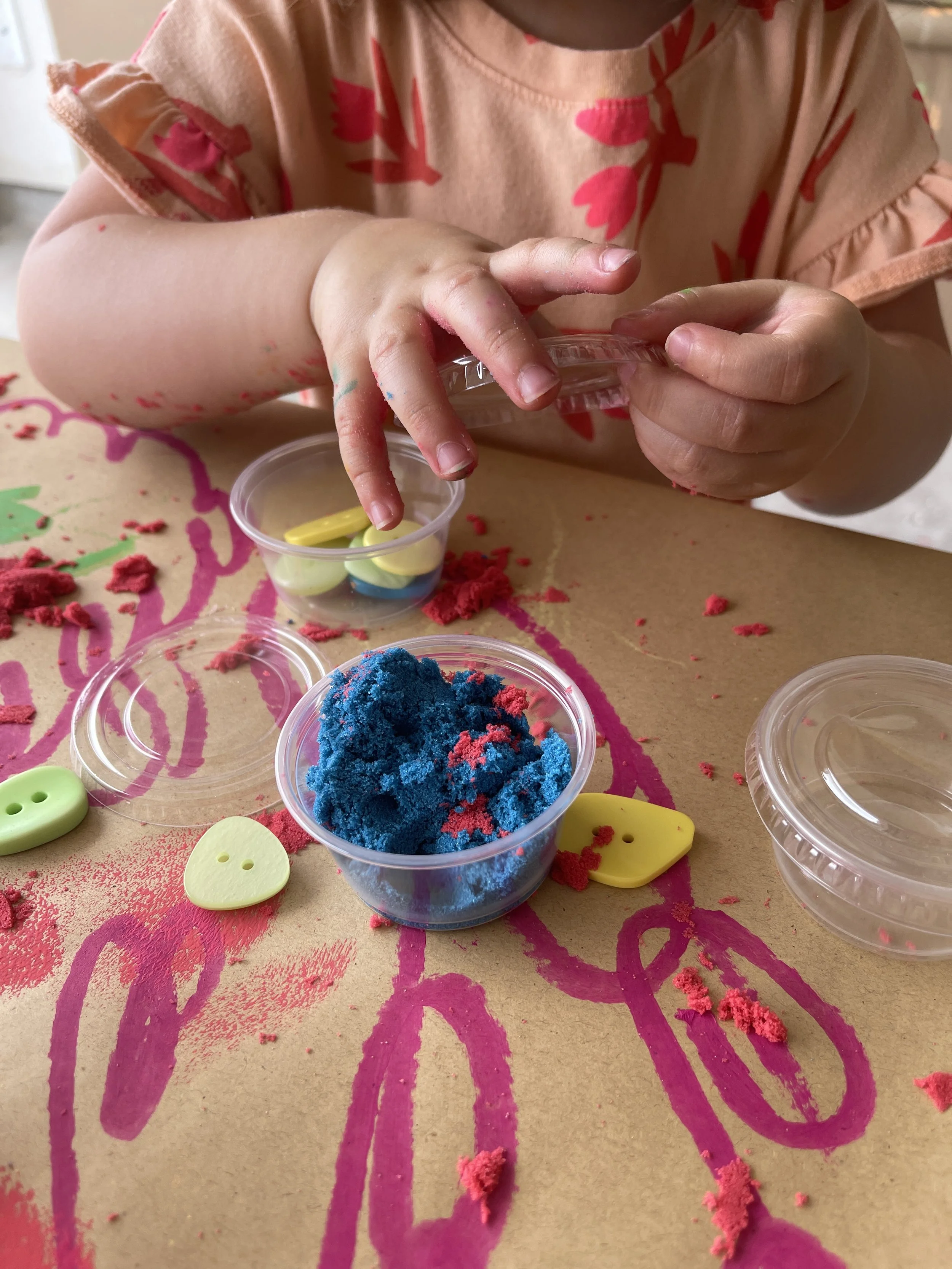
QUICK RECAP! What Are Loose Parts?
Loose parts are open-ended materials that children can move, combine, redesign, stack, sort, arrange, and transform during play.
Some examples include:
Pom poms
Pipe cleaners
Popsicle sticks
Fabric scraps
Bottle caps and other recyclables
Nature treasures
When combined with sensory materials like play dough, water, kinetic sand, or collage materials, they create endless opportunities for creativity!
LET’S GET STARTED!
1. Loose Parts Collage Invitation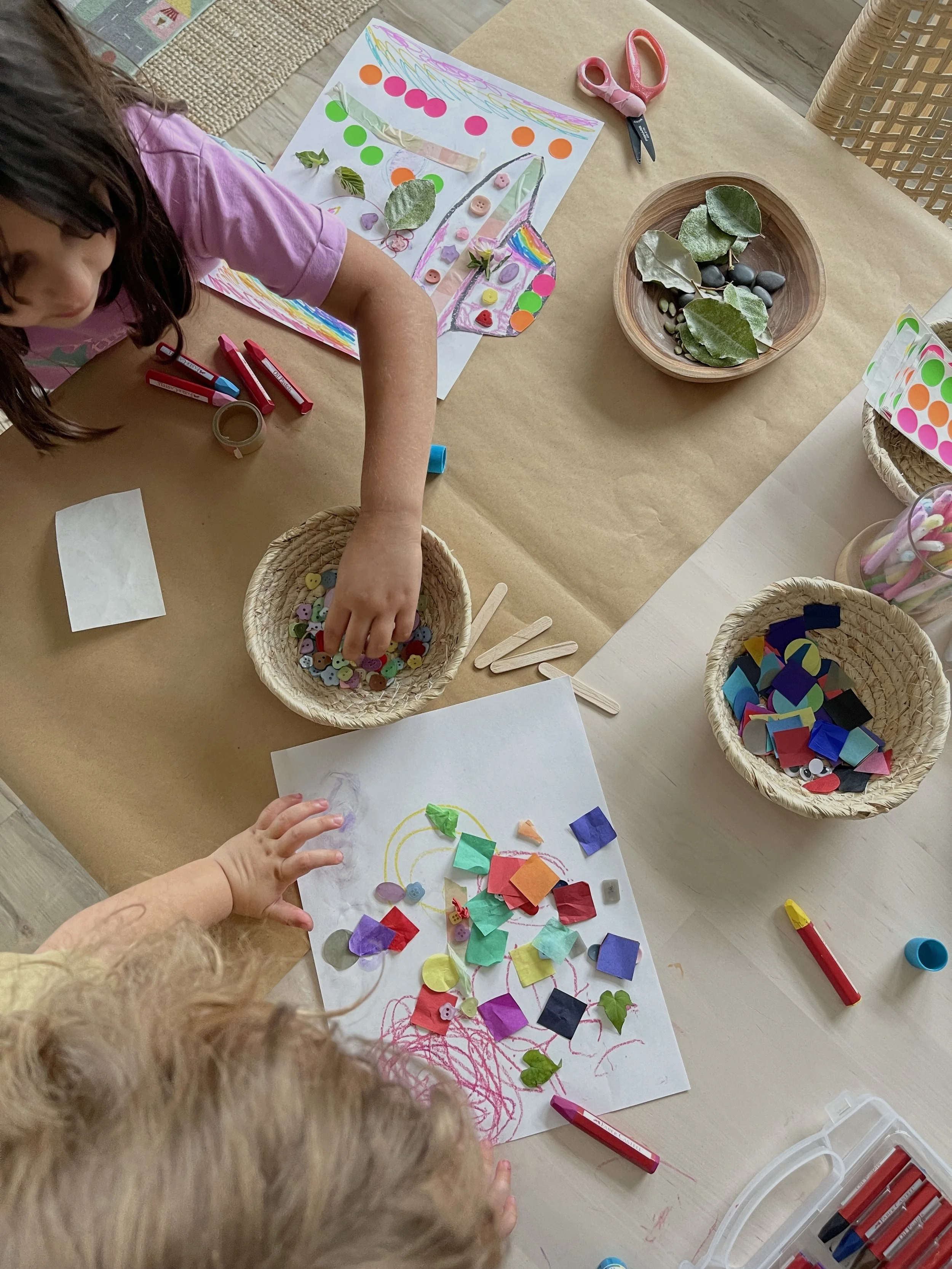
Materials:
Buttons
Tissue paper squares
Leaves
Stickers
Glue
Markers or crayons
Instructions: Set out a variety of loose parts in shallow baskets or trays and invite children to create freely on paper.
This simple invitation encourages children to experiment with color, shape, and composition while making independent creative choices.
2. Kinetic Sand Bug Tray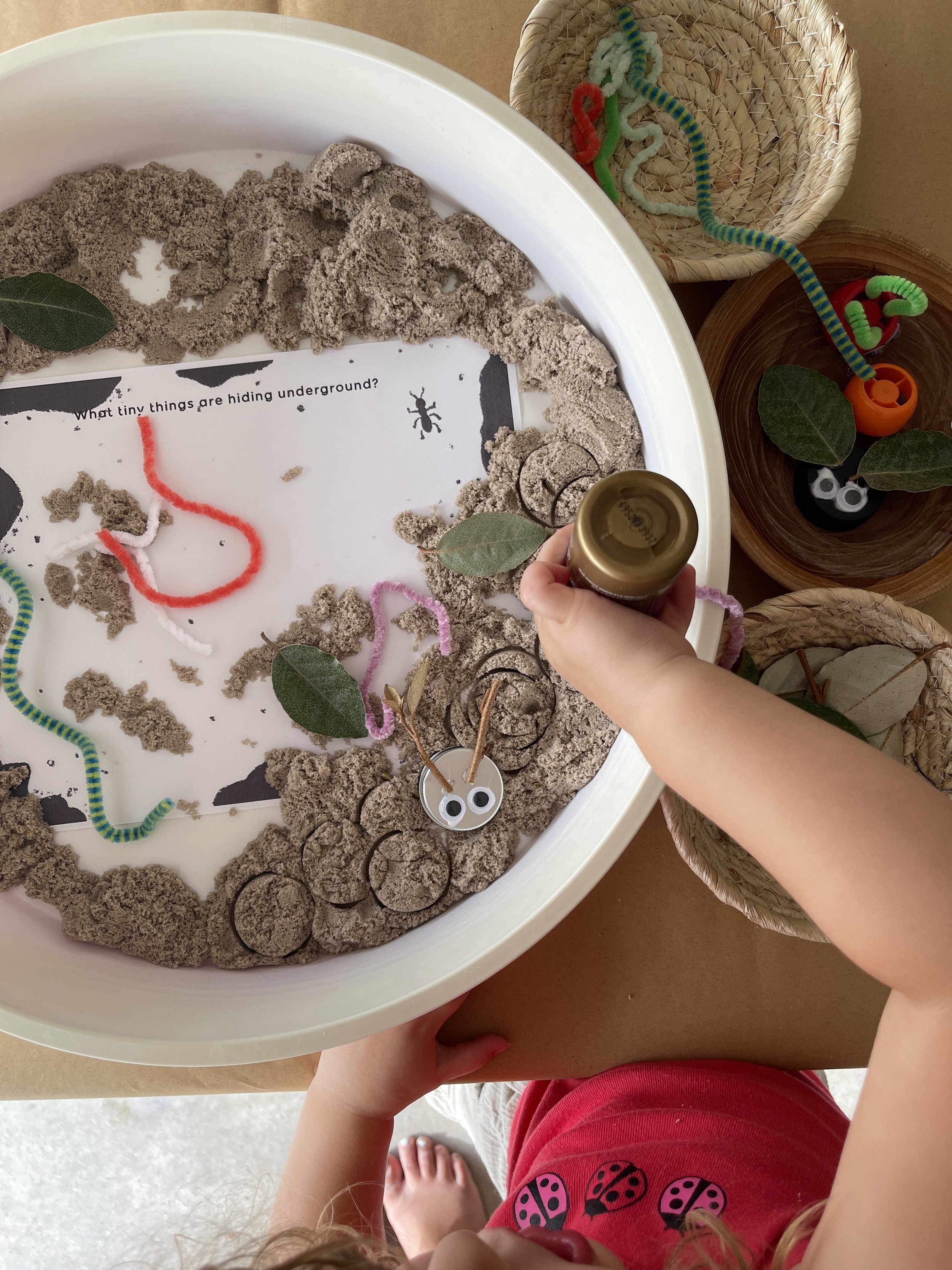
Materials:
Kinetic sand
Pipe cleaners
Leaves
Twigs
Yarn
Small bottle cap bugs made with goggly eyes and materials above.
Instructions: Create a bug-themed sensory tray and invite children to build insects, tunnels, habitats, and imaginary creatures.
Children naturally engage in storytelling while strengthening fine motor skills through scooping, molding, and arranging materials.
3. Play Dough Party Invitation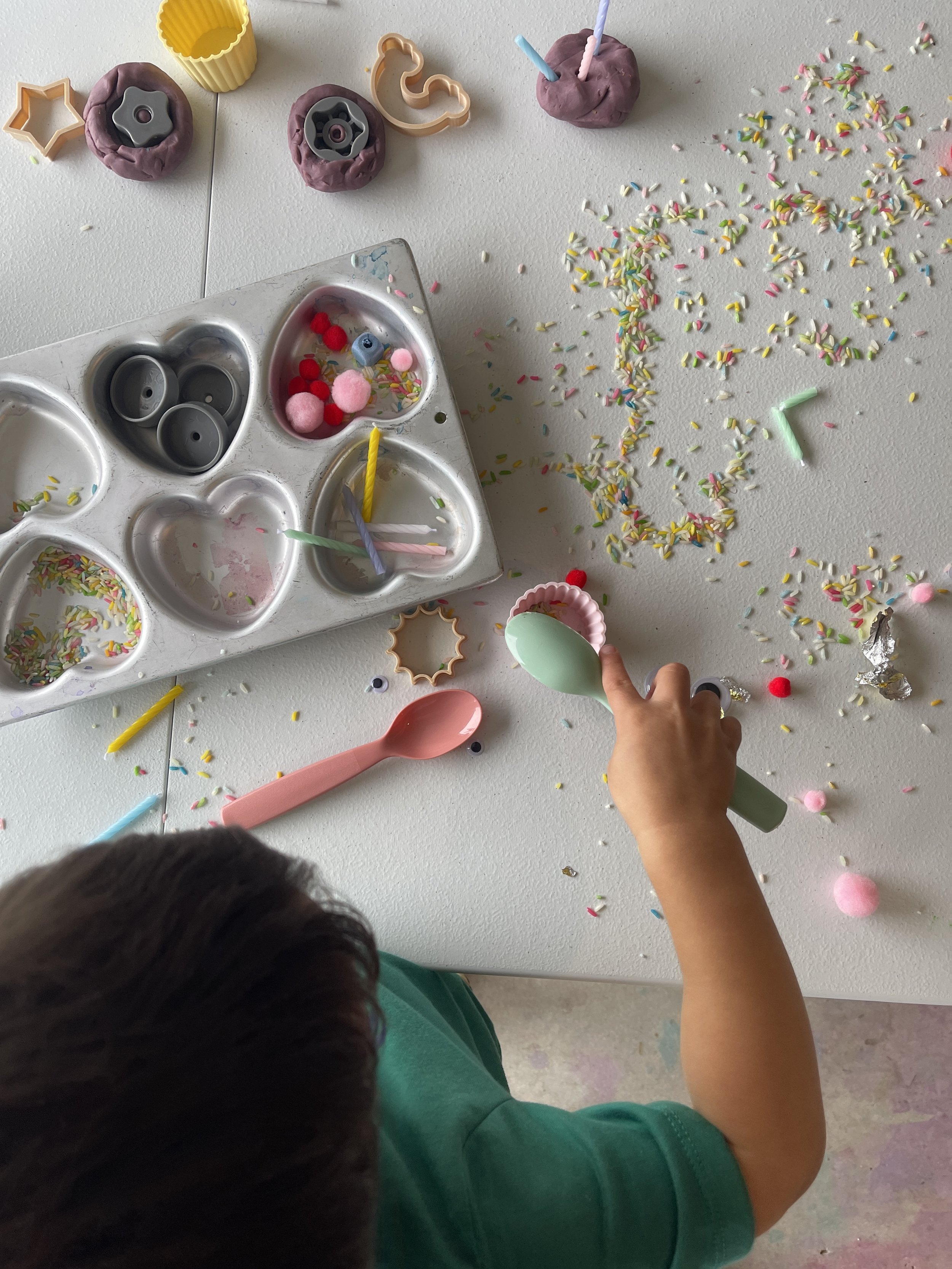
Materials:
Play dough
Colored rice (place white rice in a snack-sized sealed bag with 4-5 drops of food coloring. Let it dry for a couple of hours and voila!)
Cookie cutters
Candles
Pom poms
Cupcake molds
Cookie tin
Spoons
Instructions: Place a palm-sized amount of play dough for each child and invite them to create with the materials. This is a classic in our workshop. Older kids will make cakes, ice cream sundaes, party desserts, while toddlers enjoy squishing, poking, and making shapes.
The contrasting textures create a rich sensory experience while supporting open-ended creativity for all ages.
4. Cardboard Lollipop Process Art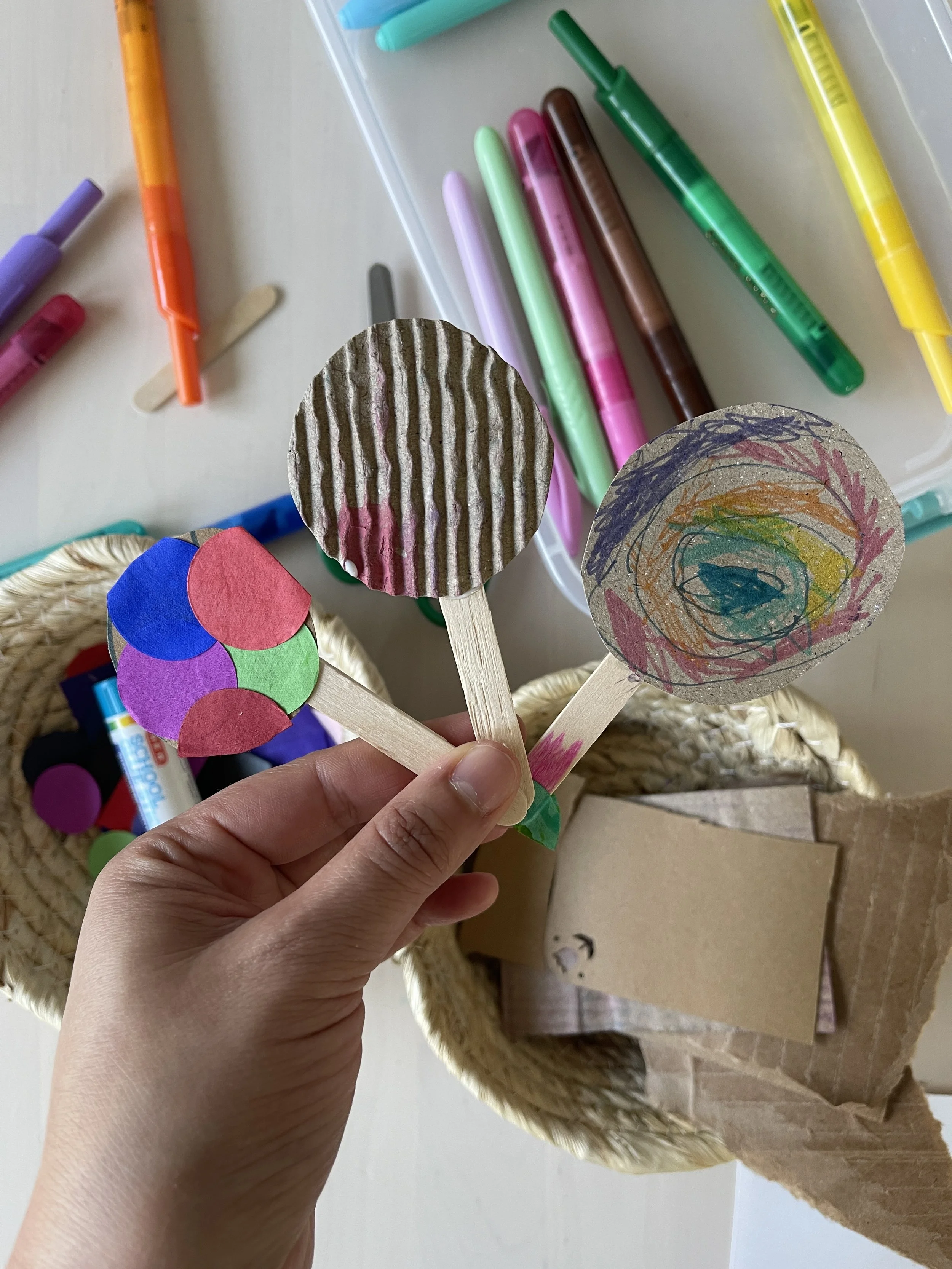
Materials:
Recycled cardboard
Popsicle sticks
Markers
Paper scraps
Glue
Instructions: Cut simple circles from cardboard and attach popsicle sticks to create oversized pretend lollipops.
Children can decorate them using whatever materials appeal to them, creating unique designs and experimenting with different patterns.
5. Plasticine Clay and Loose Parts Invitation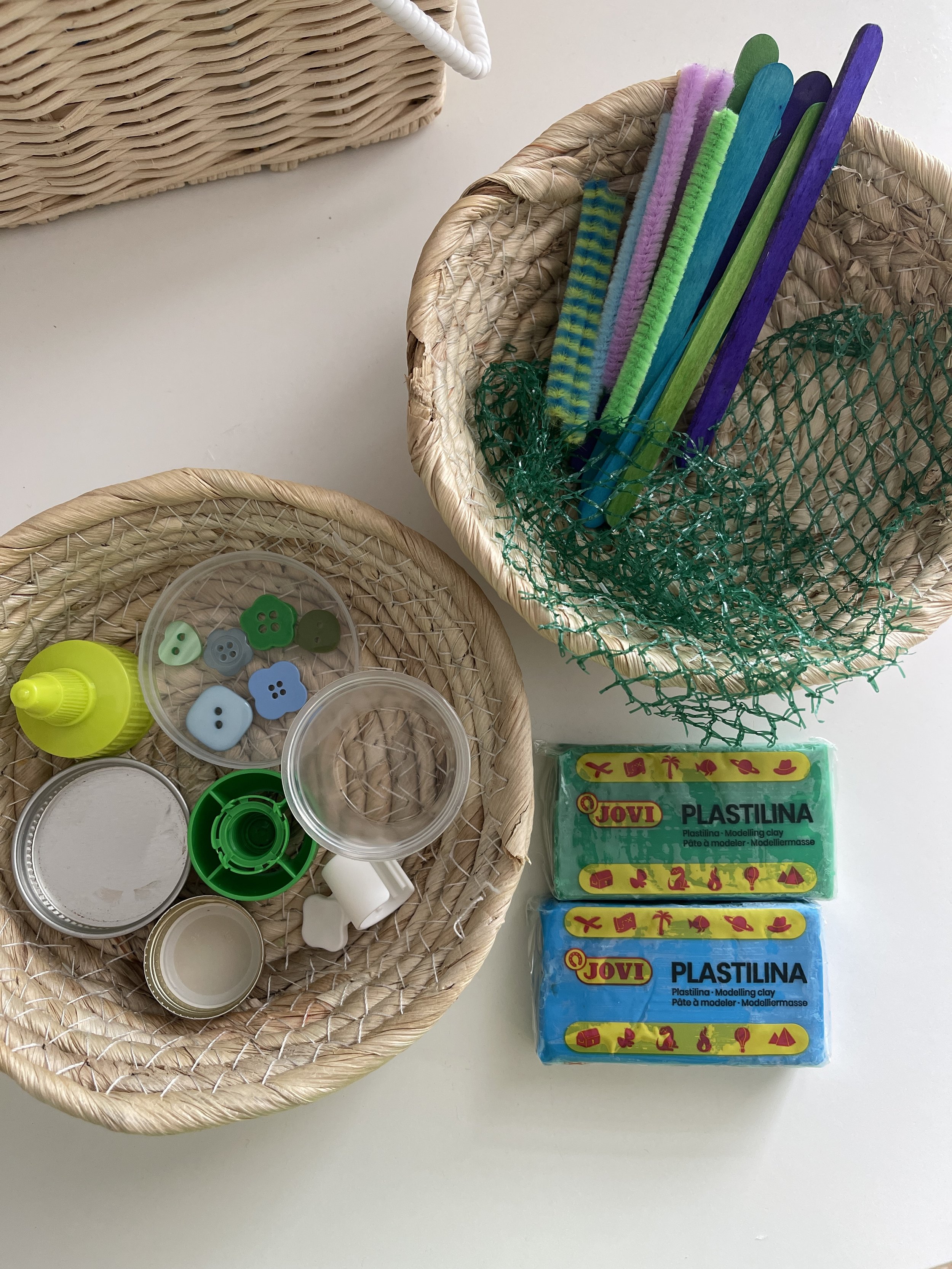
Materials:
Plasticine or modeling clay
Buttons
Popsicle sticks
Pipe cleaners
Assortment of bottle caps
Recycled net from produce
Small containers
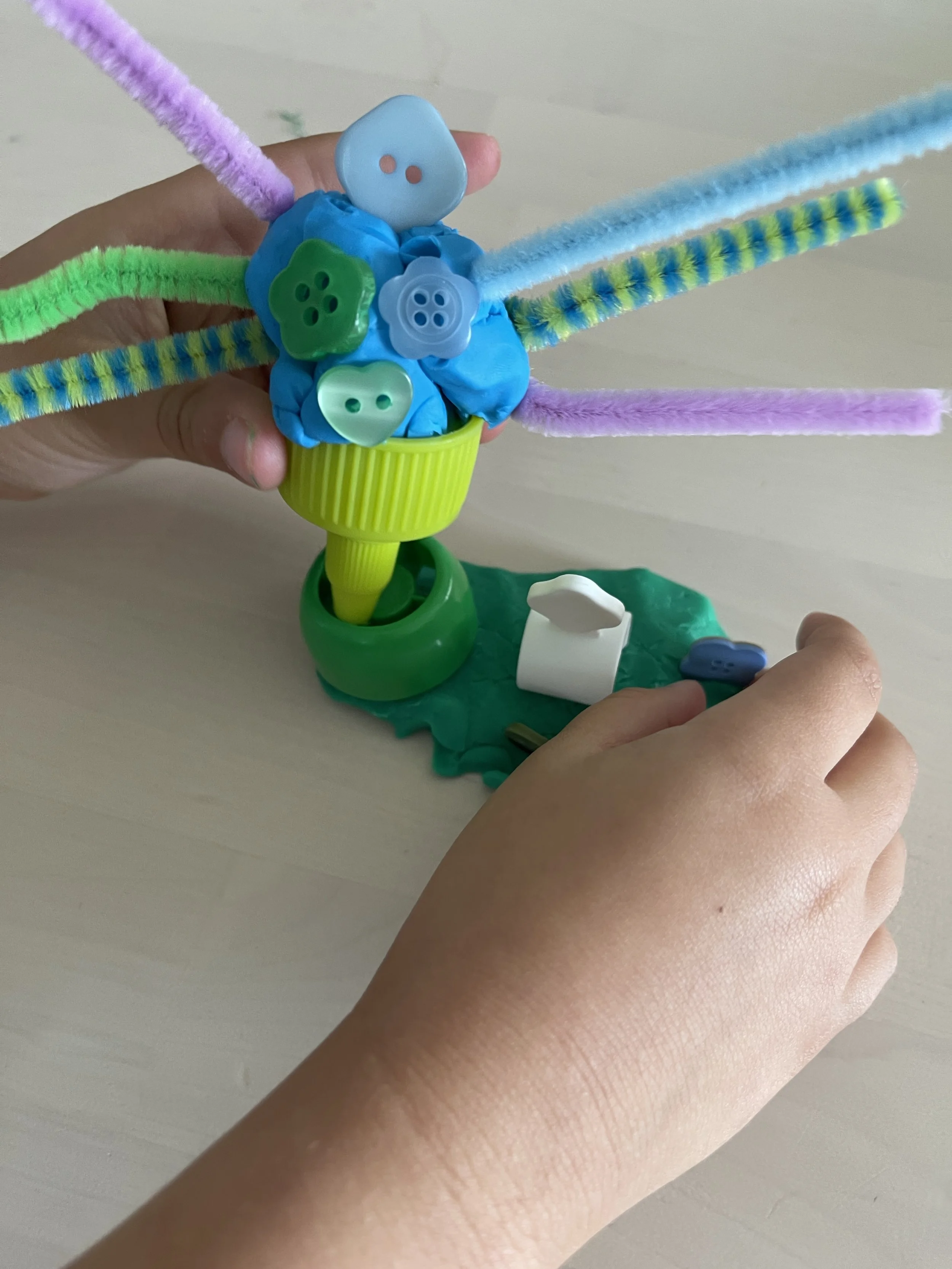
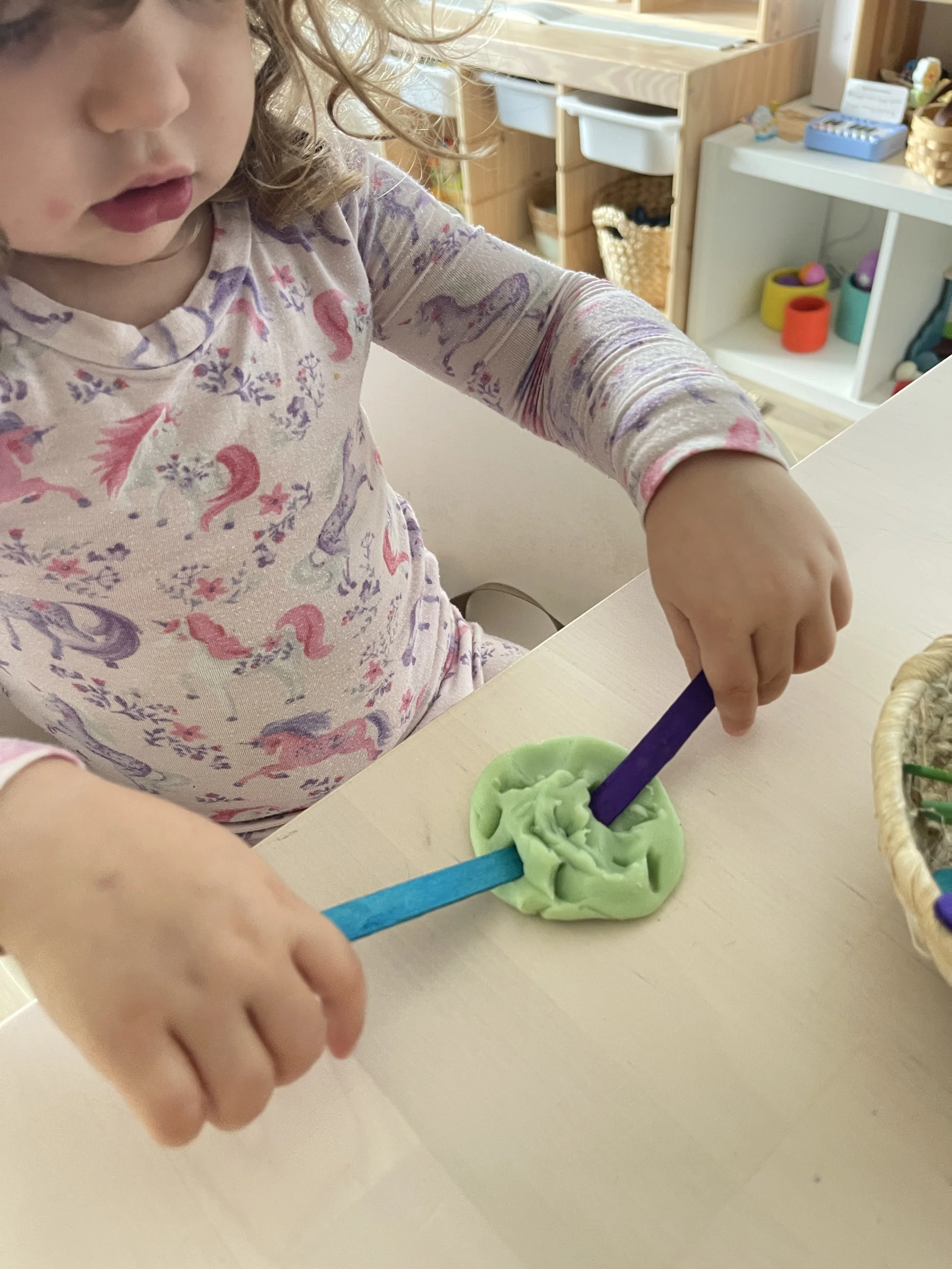
Children can build creatures, sculptures, flowers, landscapes, and imaginative creations while exploring three-dimensional design. Encourage children to use the popsicle sticks and other materials to shape, cut, and mold.
Because plasticine holds its shape so well, children can revisit and extend their creations over time.
6. Outdoor Water Exploration Station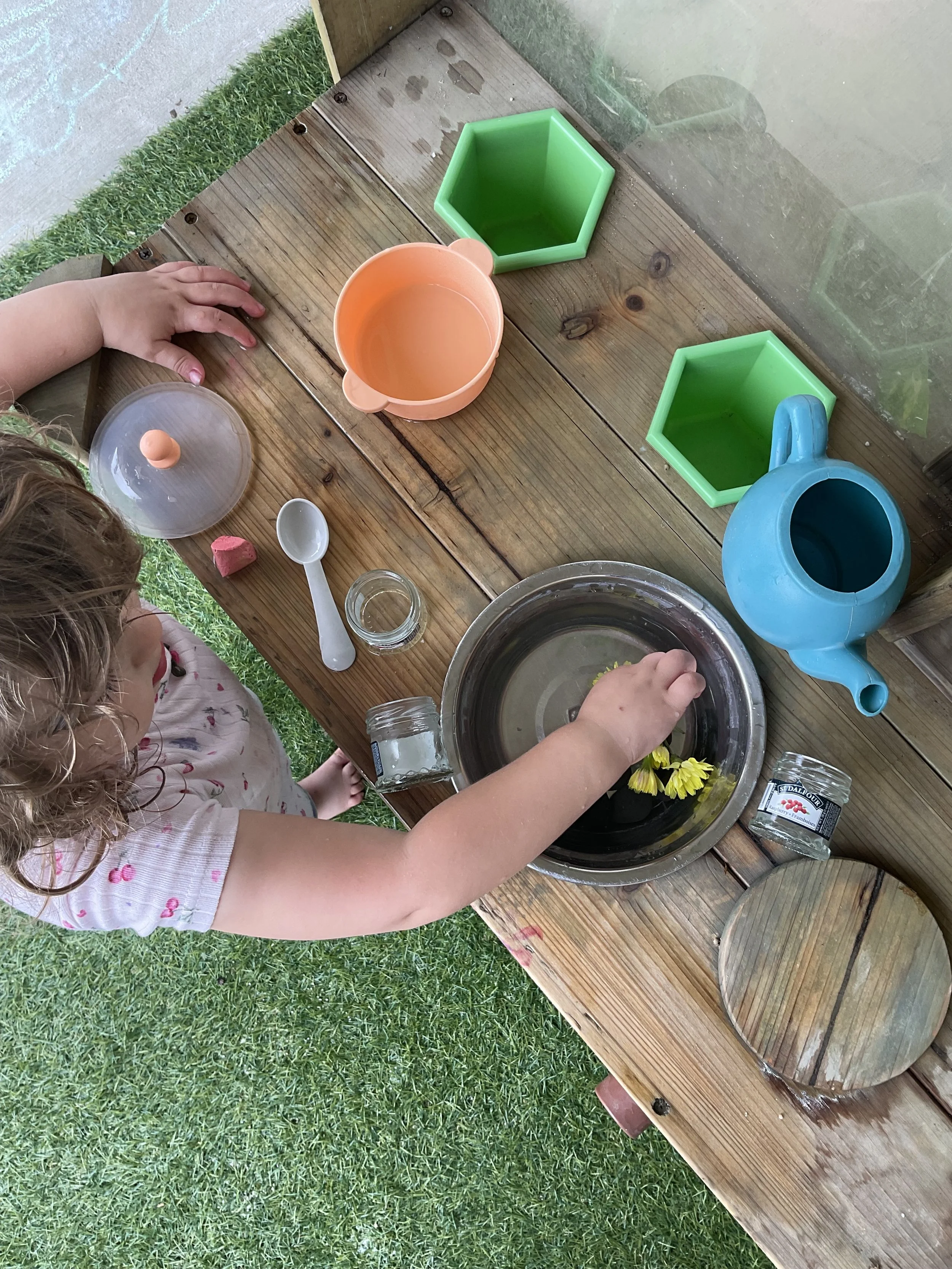
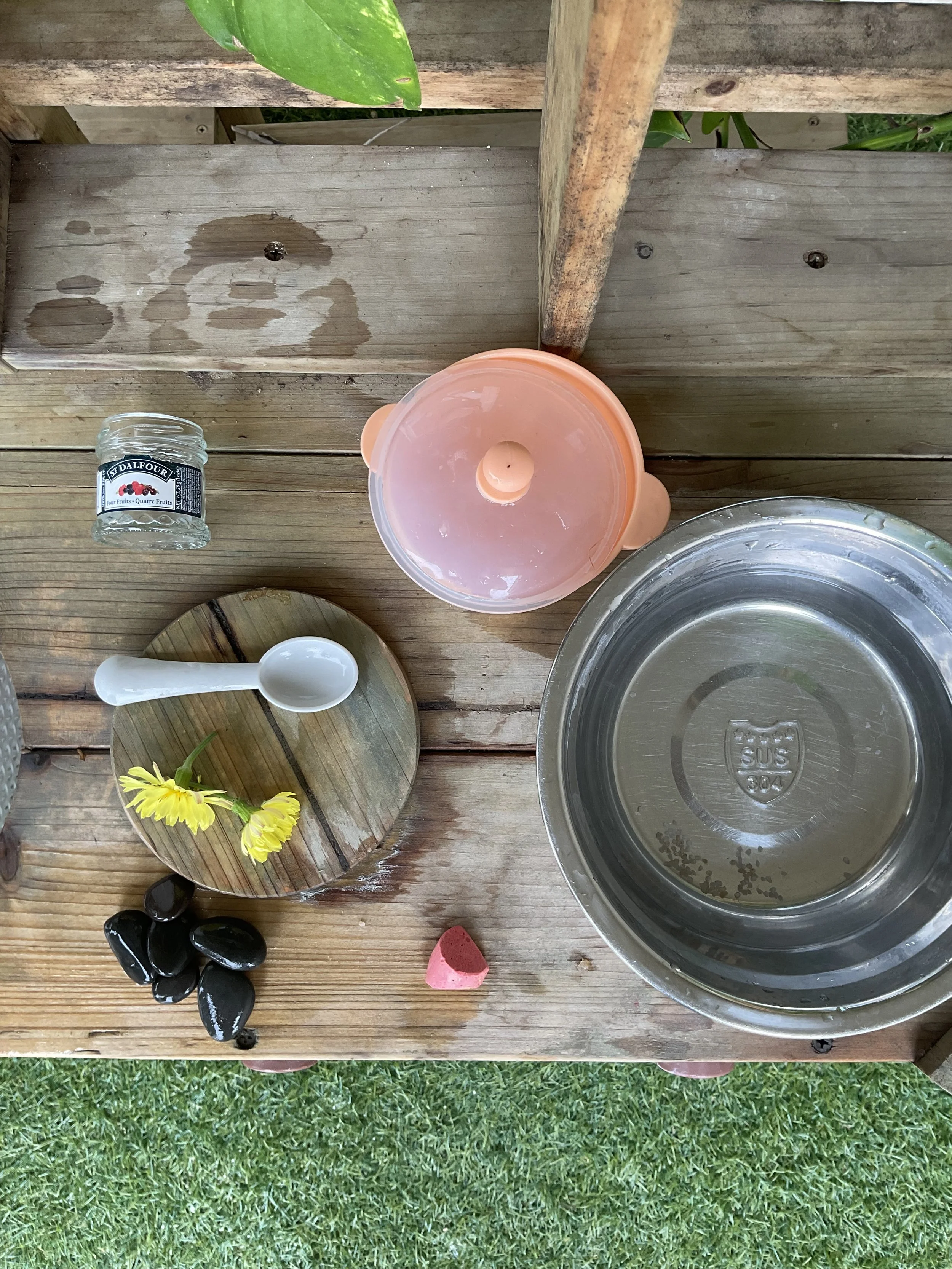
Materials:
Water
Containers
Spoons
Flowers
Stones
Chalk
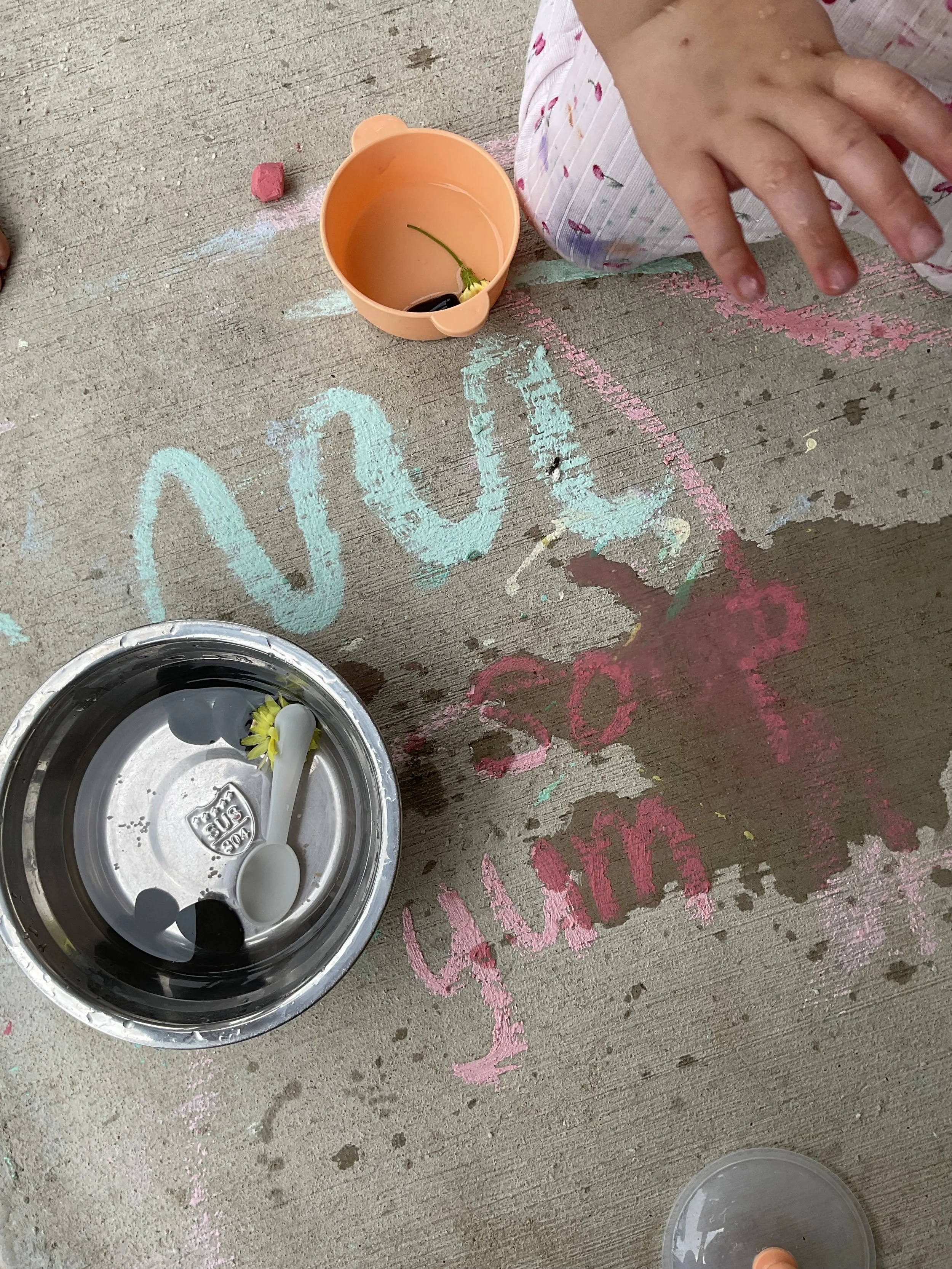
Instructions: Simple water invitations encourage children to pour, transfer, mix, observe, and experiment. Adding natural materials creates opportunities for sensory discovery and scientific thinking.
My daughters love to use chalk and water to make their own colorful concoctions. Dipping chalk in water and then drawing makes for a smooth, and bold-colored sensory experience!
7. Color-Filled Kinetic Sand Tinker Tray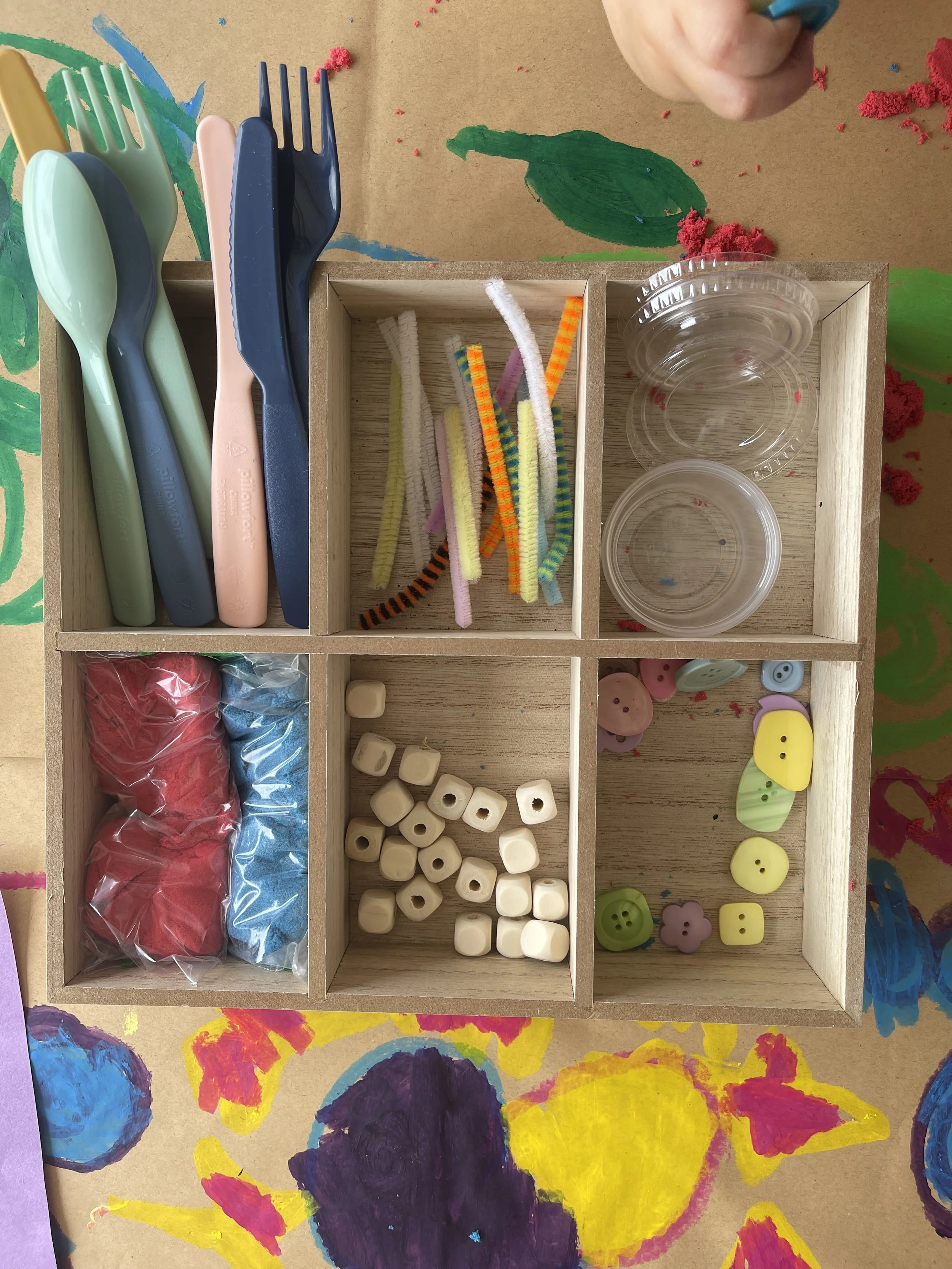
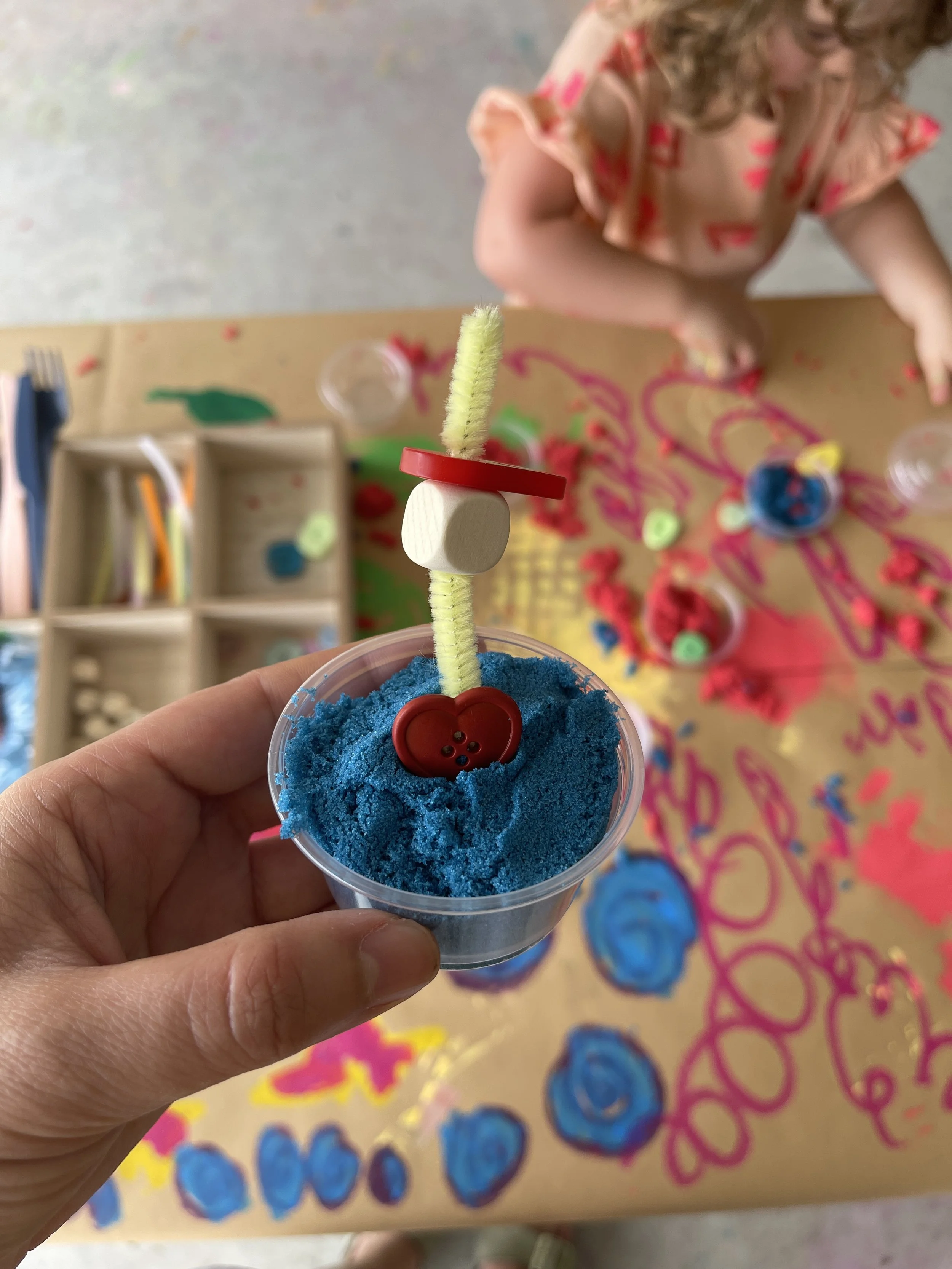
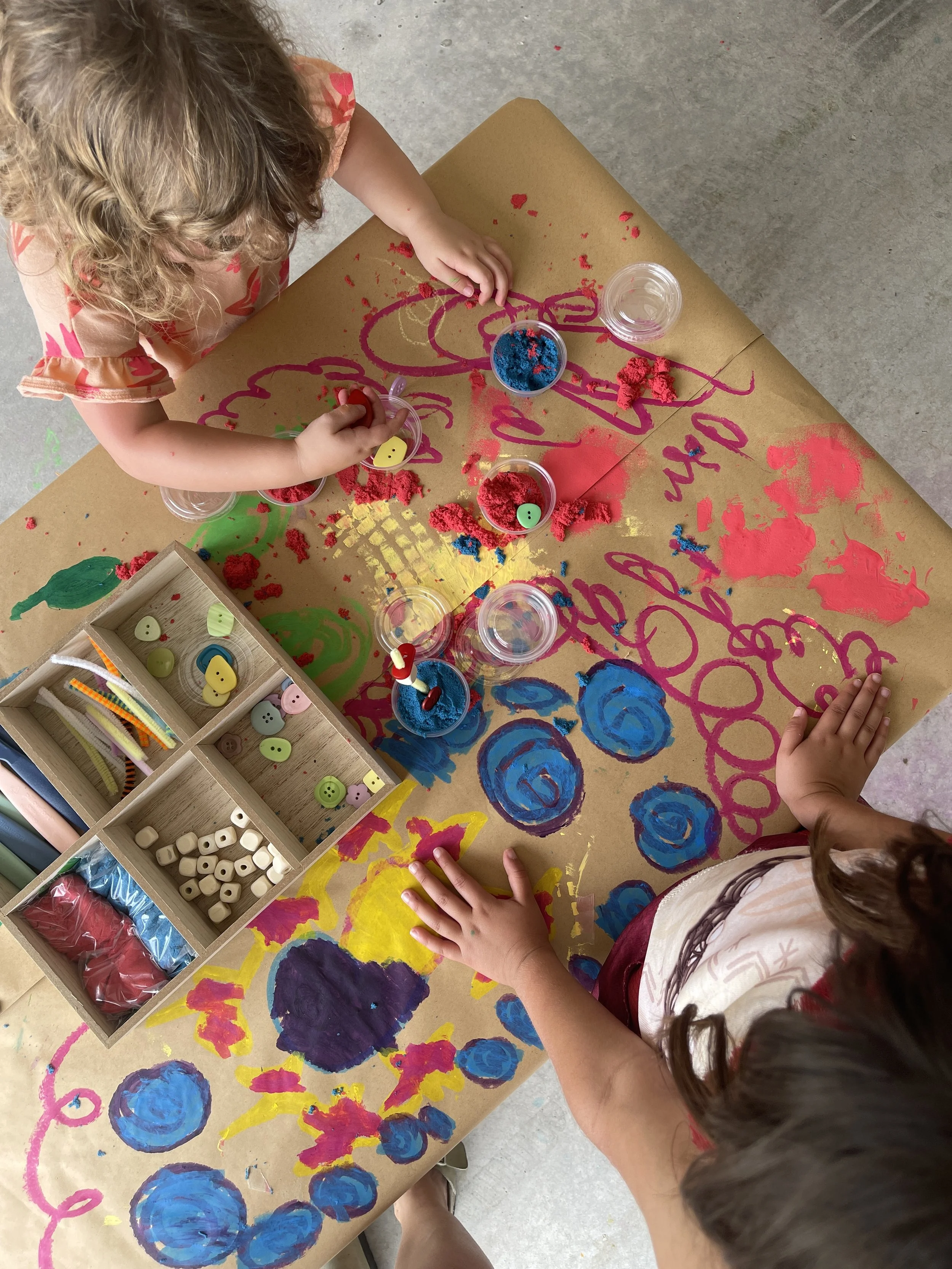
Materials:
Kinetic sand
Tray with compartments
Utensils
Small cups with lids
Wooden beads
Pipe cleaners
Buttons
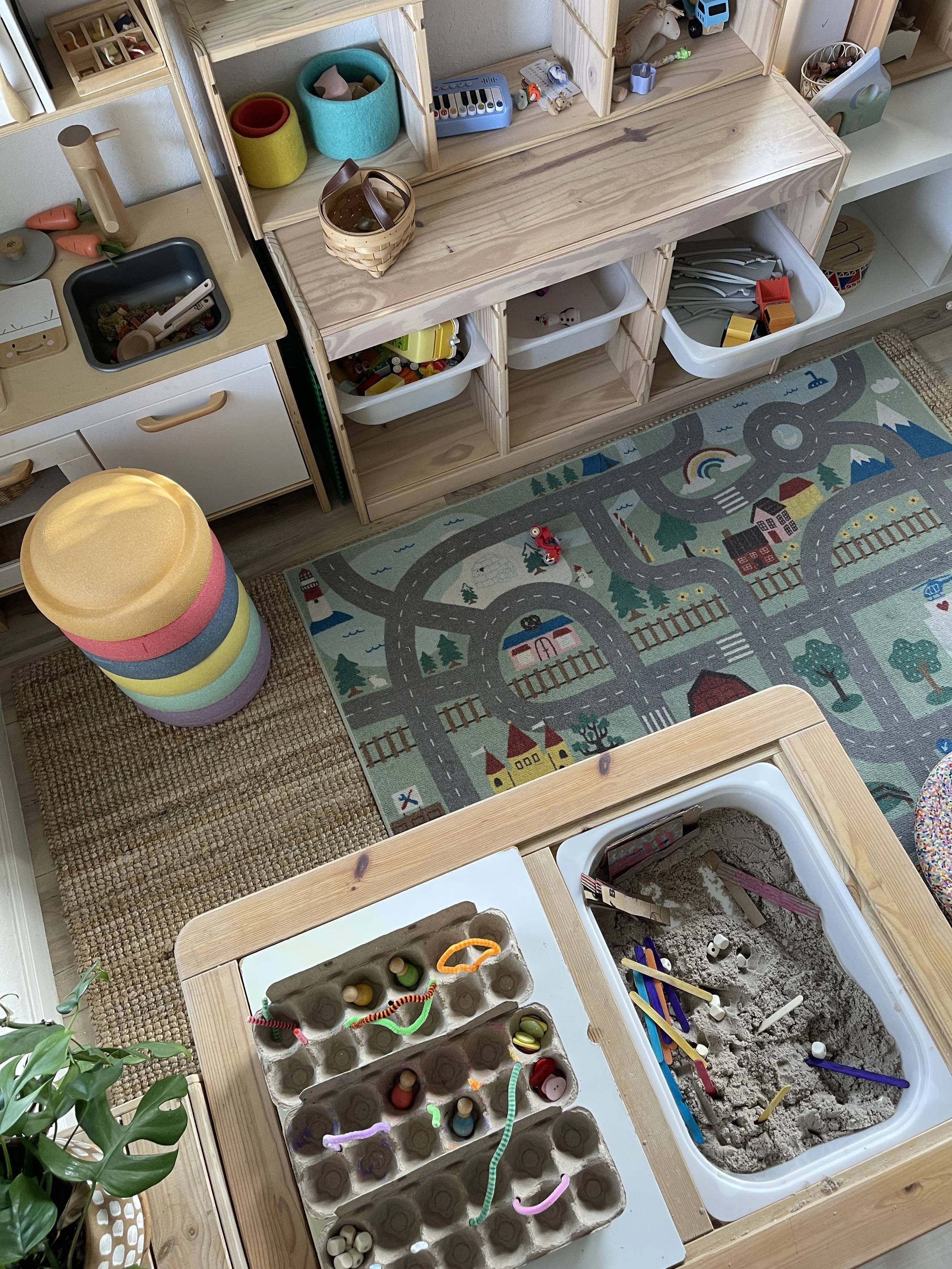
A tinker tray is one of the easiest invitations to create because there is no expected outcome. Children may sort, build, arrange, invent, or simply explore.
This invitation led older children to thread the buttons and beads into the pipe cleaners, mix colors, sort, and toddlers loved placing the sand in the small cups and opening and closing the lids!
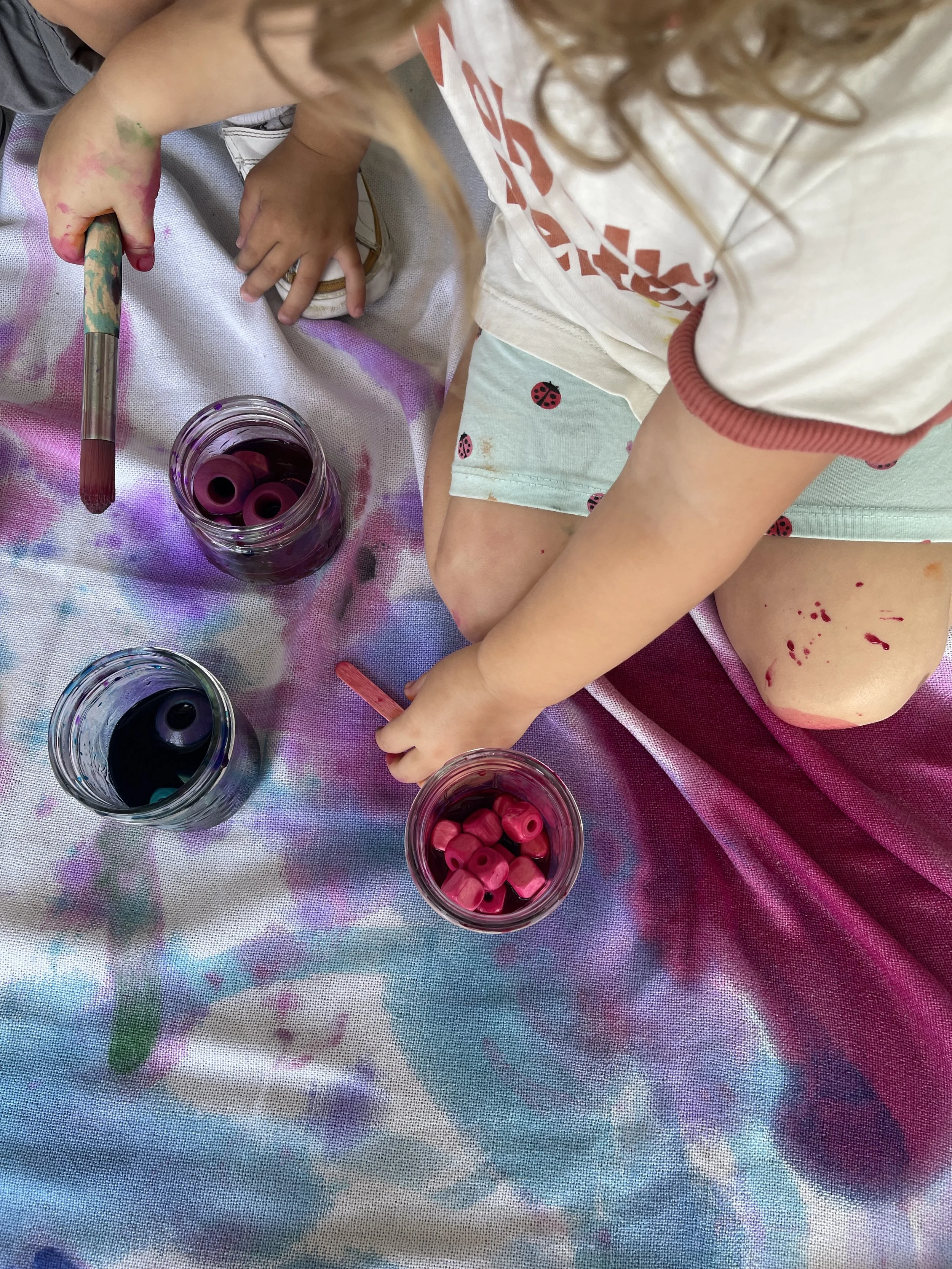
8. Collaborative Watercolor and Loose Parts Invitation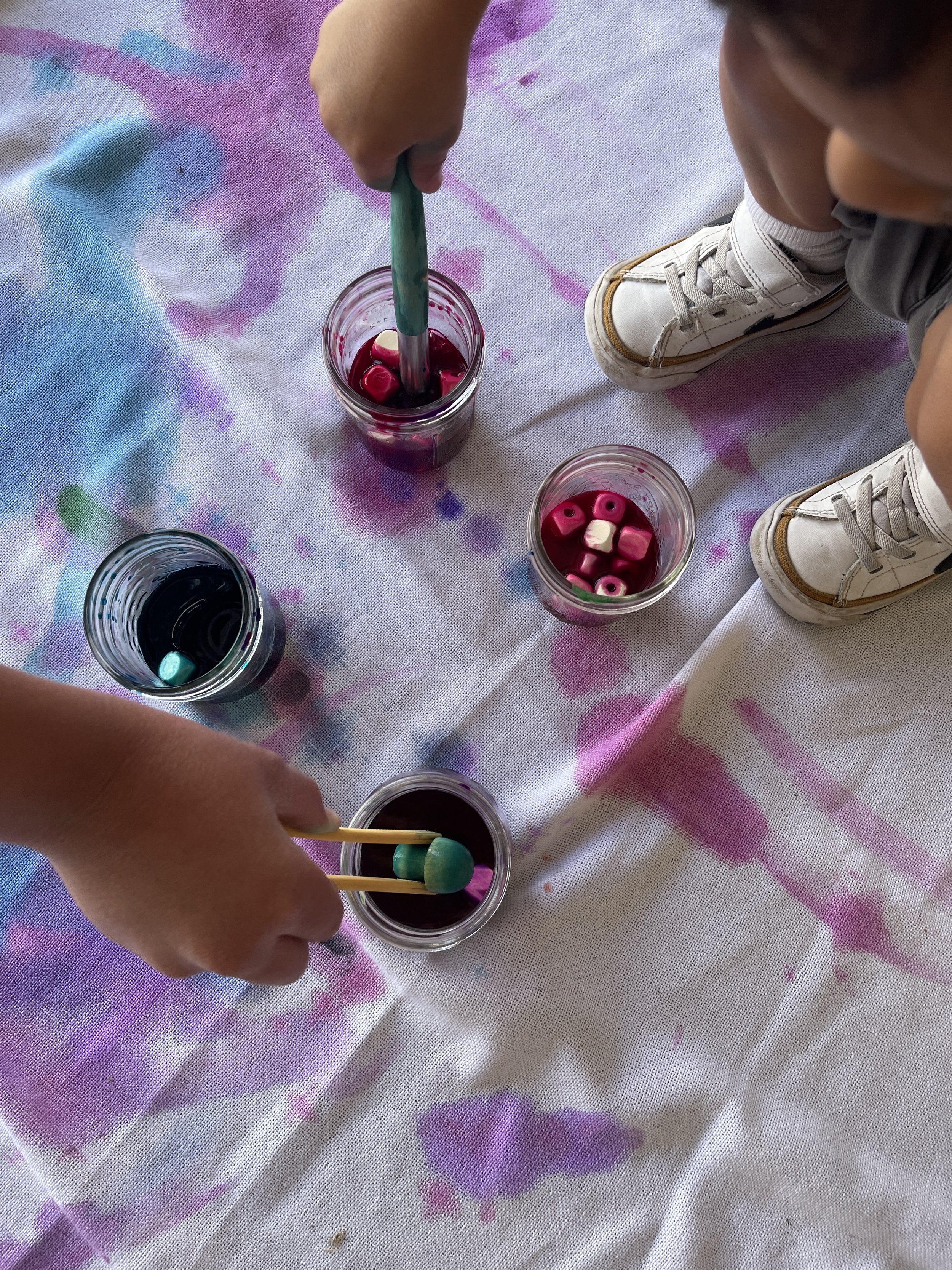
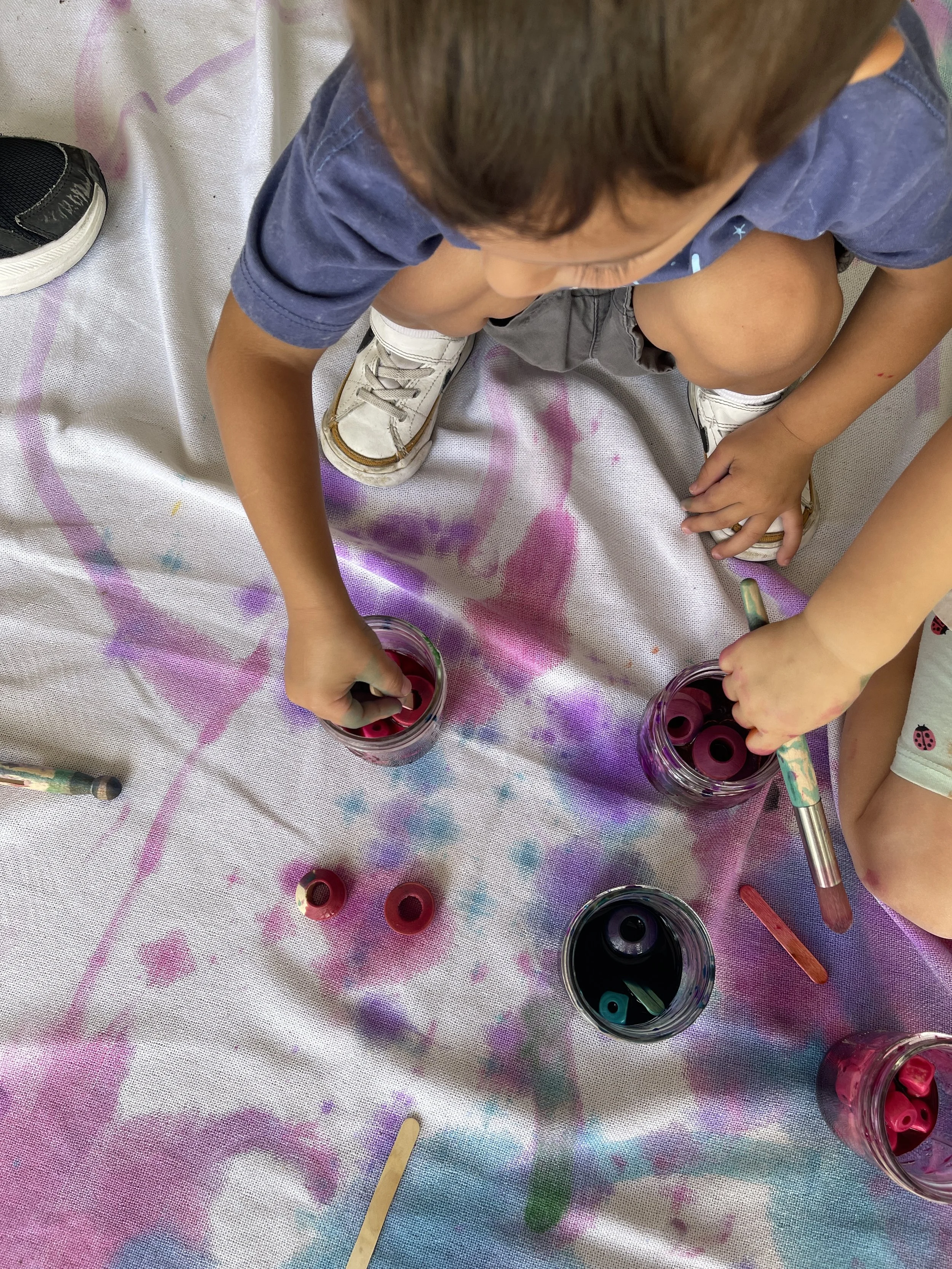
Materials:
An old curtain, sheet, or drop cloth (make sure it absorbs paint)
Liquid watercolors
Jars
Paint brushes
Tongs
Wooden loose parts (beads, mini popsicle sticks, clothespins)
Instructions: This messy and crazy fun invitation encourages children to paint and dip the loose parts inside the watercolor jars. Kids can use their paint brushes on the large painting surface, or make marks with their loose parts. The tongs add a fine motor component, which children love because it makes them feel like scientists experimenting!
We did this activity in a mixed-age workshop with children from 2-12 years old!
Once the wooden loose parts dry, you can also reuse them for a fun and colorful craft.
Bonus! Free Loose Parts Starter Guide!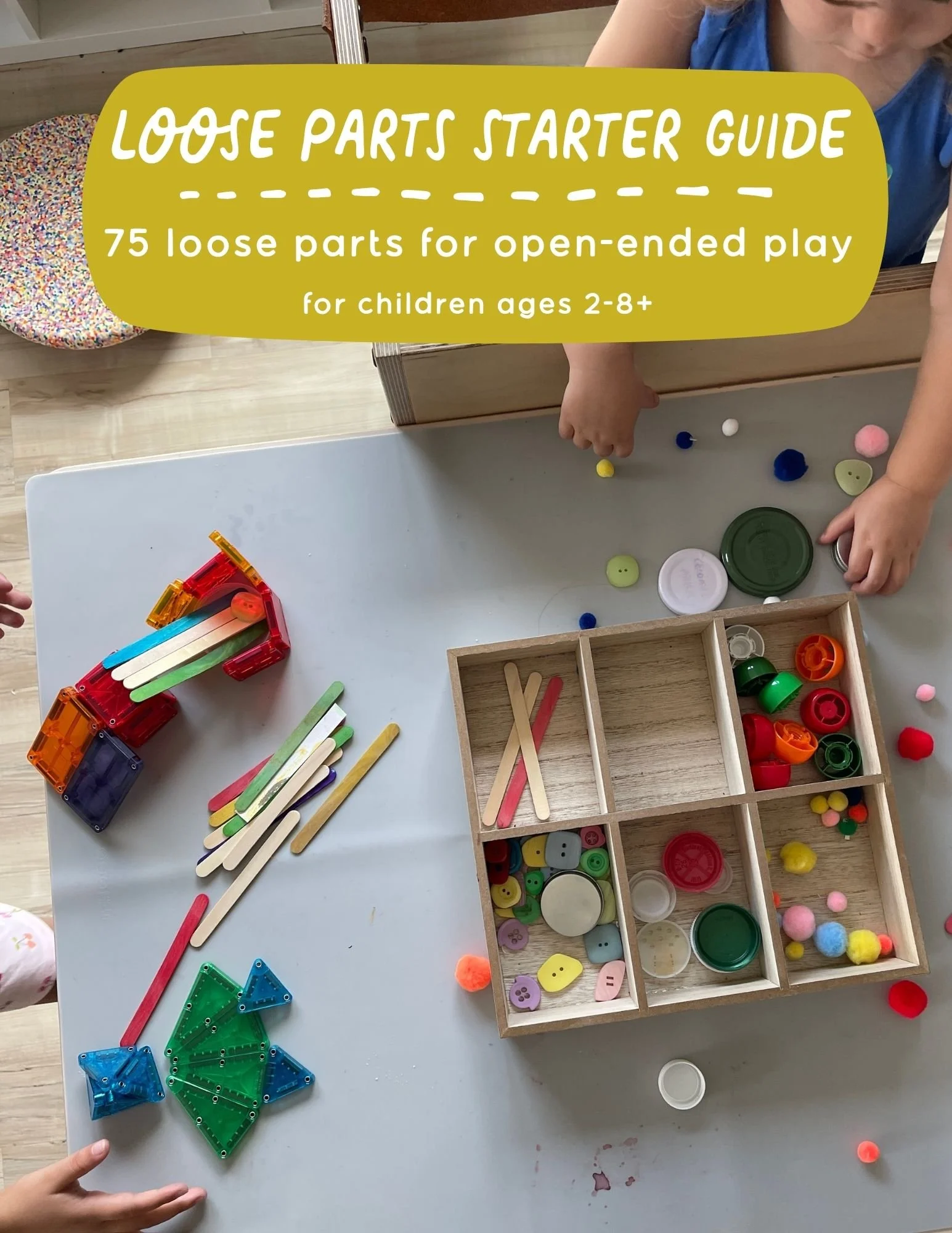
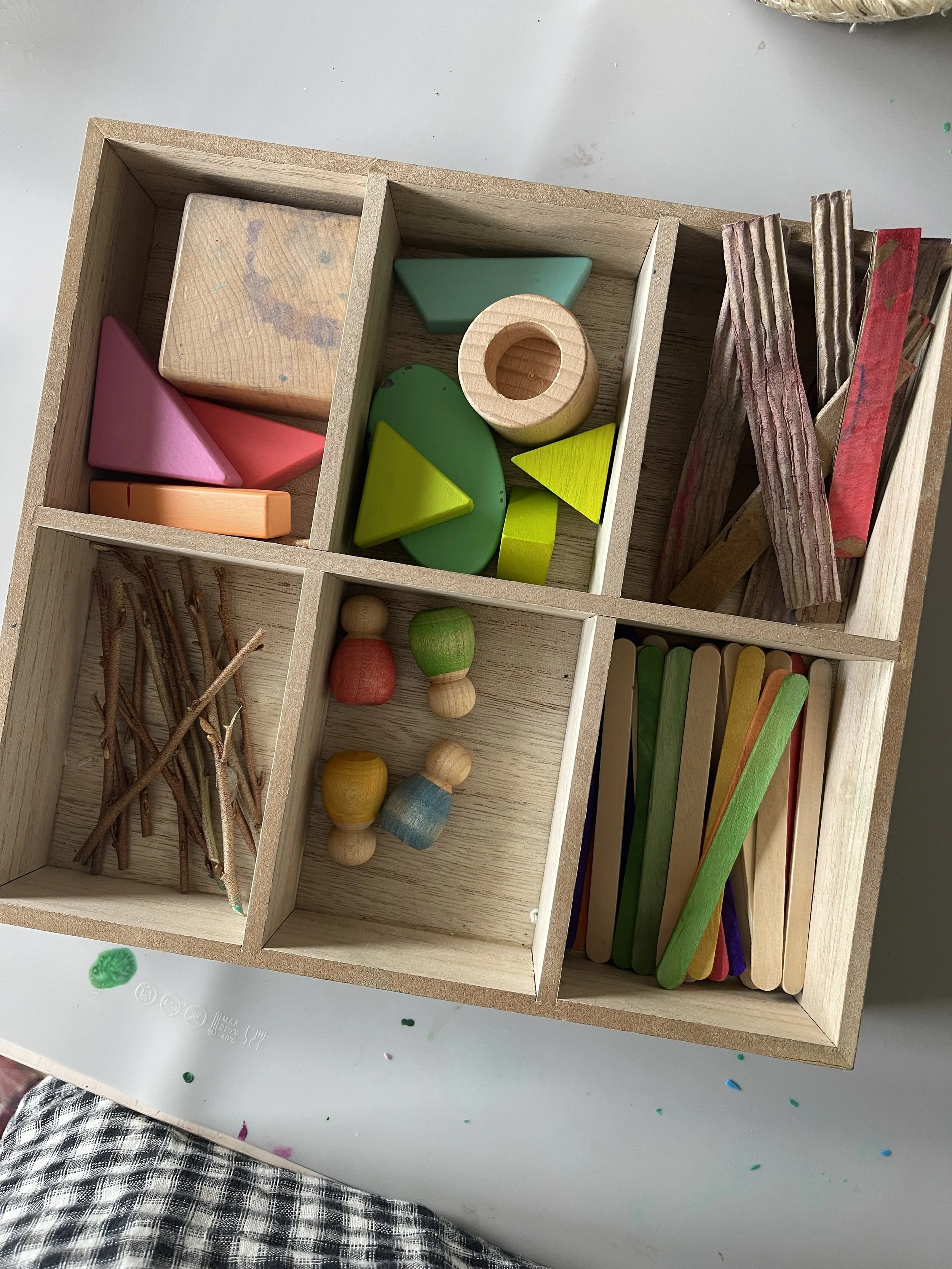
Looking for a ready-to-use library?
Download our free Loose Parts Starter Guide which includes over 75 loose part ideas, an introduction to loose parts, and insightful age ideas for building and creating.
It's a playful introduction to the materials used throughout all the activities on this blog post!