Inside Our Art Cabinet: How We Raise Creative Kids Without Expensive Toys or Screens
For this post I wanted to share what is behind our home. The area in our kitchen/dining area where the creativity and magic happens. People are always surprised when they see our kitchen cabinet and counter filled with art supplies, because it is FULL. But it is what engages and fuels my daughters creativity the most. Sure, we have toy rotations and play areas (which I share about too). But what gets used the most is the paper, stickers, paints, and you get the point. They can also access these independently for the most part, which I will get into later in this post.
the secret to raising creative kids
After years in the classroom, and homeschooling my eldest, I promise you: the secret to raising creative kids isn't more stuff. It's the right stuff, stored the right way, so it's actually within reach every single day.
So today I'm opening the doors (literally) and giving you a full tour of our art cabinet — every drawer, every bin, every "why do you even have that" item — so you can build your own version at home. You don't need to be an artist to do this. You just need a system. You also don’t need to be a homeschool super parent. I implemented this when my daughter was a toddler in a tiny rental apartment, because I wanted less screen-time. And yes, it worked.
It worked because it was something we both looked forward to. So let’s get to some basics!
Why a Cabinet, Not a Toy Box
I have found that toy boxes get dumped and forgotten. A cabinet — organized, visible, categorized — turns into a resource. When materials are sorted and labeled, kids (and grown-ups) can actually see what's available, which means more independent creating and a lot less "I'm bored" wandering around during those next-show-please moments.
Everything I will show you below lives in repurposed kitchen cabinets and drawers, organized into these eight simple categories:
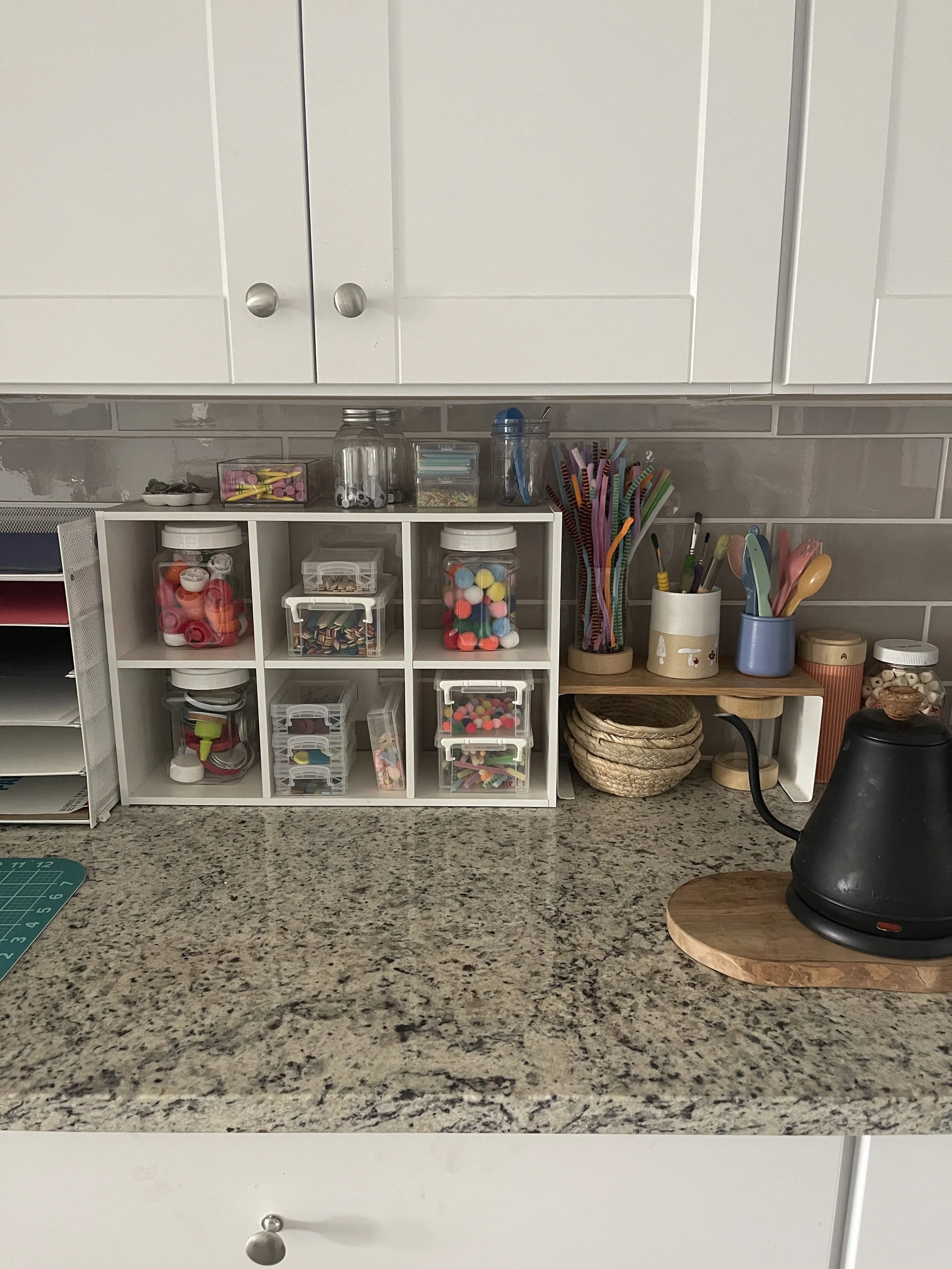
1. Loose PartsThis is the heart of open-ended play. Loose parts have no fixed use — a golf tee can be a person, a tool, a connecting piece for building, a candle in a cake. That ambiguity is exactly what builds creative thinking.
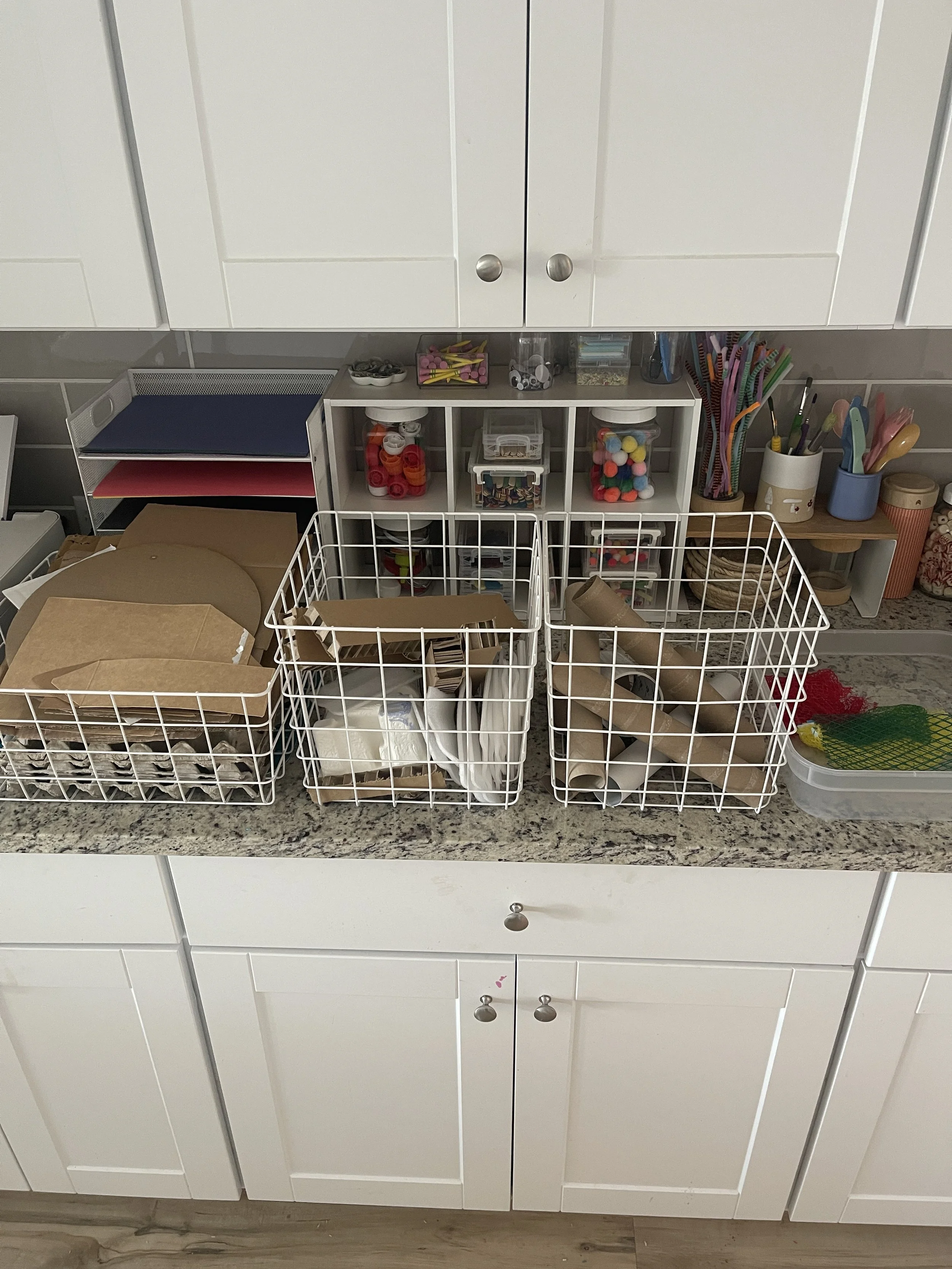
What's in ours: shells, paper scraps, googly eyes, gems, rice, tools, pipe cleaners (long and short), brushes, popsicle sticks, large and small pompoms, bottle caps and lids, buttons, charms, translucent coins, baskets, marbles, wooden beads, utensils, yogurt pouch caps, golf tees, shallow baskets (for presenting the loose parts). I also keep brushes, plastic utensils, and interesting tools out on this counter for easy access.
Storage options: we use recycled glass jars, dollar store plastic jars, and small plastic boxes with latched lids for storing these loose parts.
I rotate different loose parts in as we run out, and I store seasonal ones — like acorns in fall — separately until it's their time to shine.
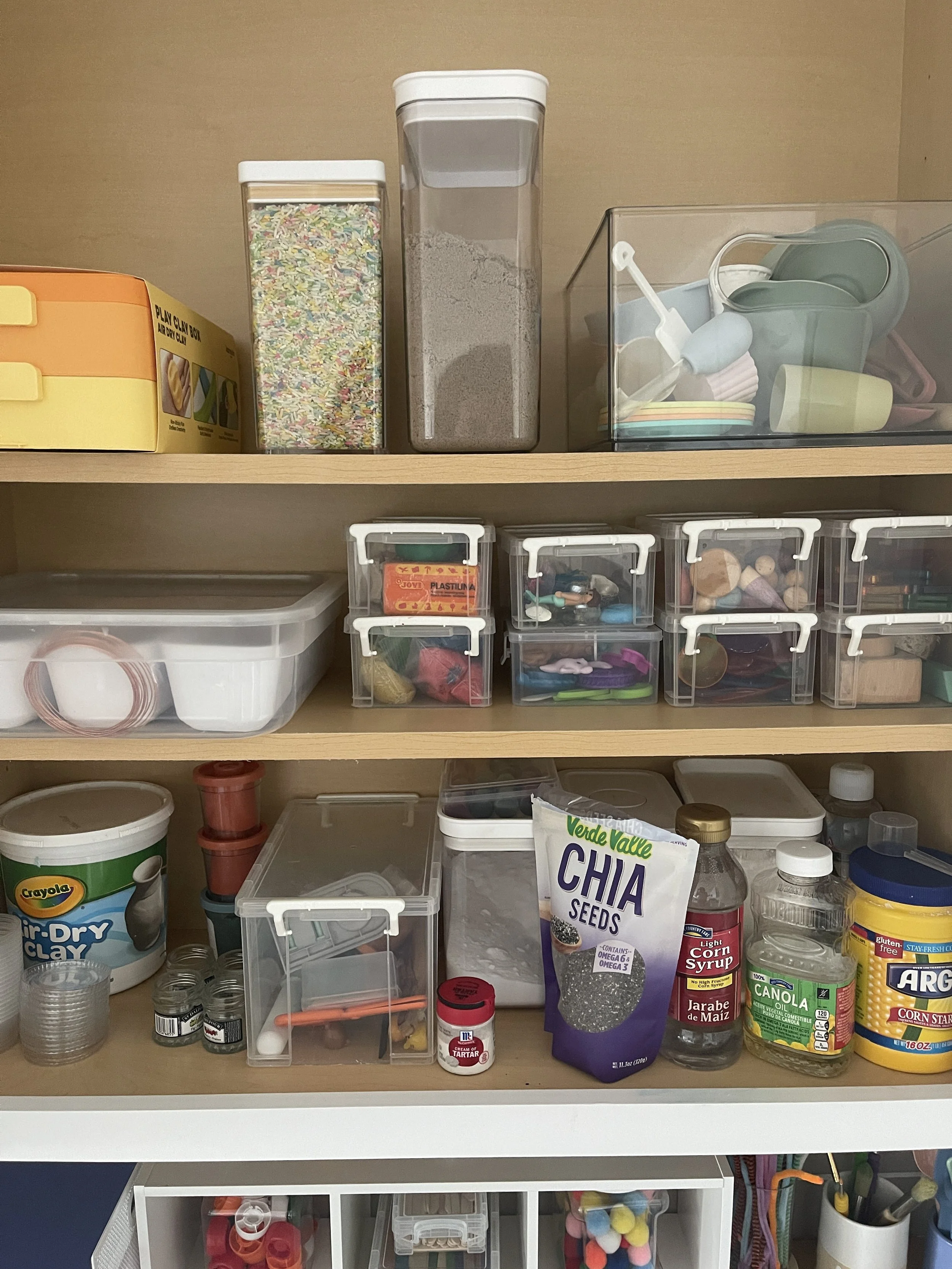
2. Sensory PlayThis shelf is all about texture and process over product. Nothing here needs to turn into a finished piece of art — the sensory experience is the point.
What's in ours: soft modeling clay, air-dry clay, plasticine clay, play dough + play dough tools, kinetic sand, rice, cups/spoons/plates/droppers/funnels, magnetic tiles, clay tools + wire, animal resin figures, wooden figures, translucent pebbles, small blocks, plastic + glass jars, and pantry staples for DIY sensory bins — oil, cornstarch, flour, citric acid, baking soda, baby oil, chia seeds, food coloring.
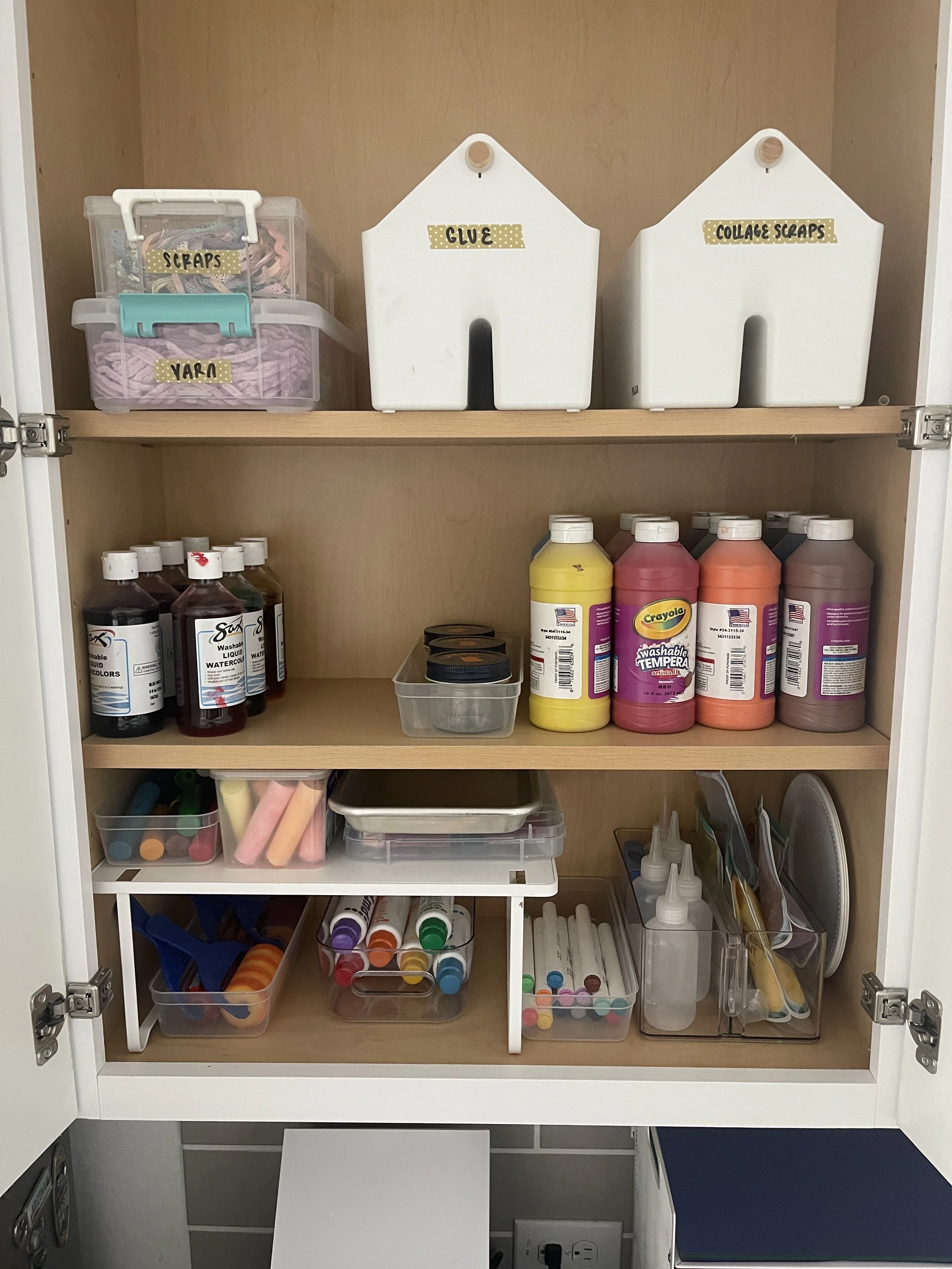
3. Mark-Making + FabricThis is where color happens — paint, pastels, chalk, and the fabric extras that turn a painting station into a full process-art setup. These are items I pour, mix, and introduce to the kids myself, so I have stored them in this cabinet.
What's in ours: liquid watercolors, washable paint, jars, chalk, paint sticks, oil pastels, dot markers, paint markers, foam rollers, squeeze bottles, veggie paint, baking tray, plates, liquid glue, ribbon trim, yarn, fabric scraps.
4. CollageThe junk drawer of joy — this is where "trash" becomes treasure.
What's in ours: stamps + ink pads, washi tape, stickers, paper scraps, tissue paper shapes, paper ephemera, paper straws, glue, cupcake liners, coffee filters, scissors.
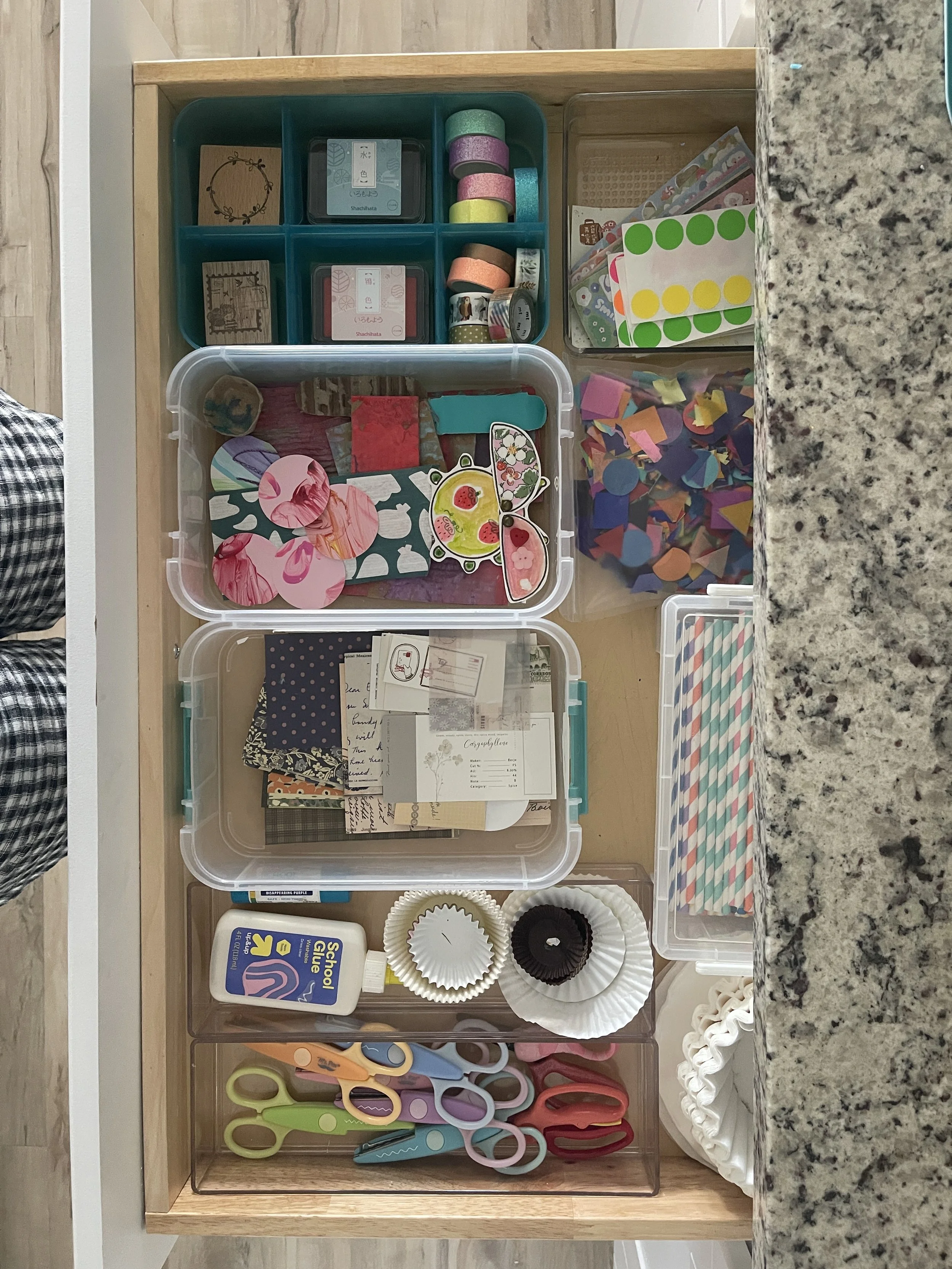
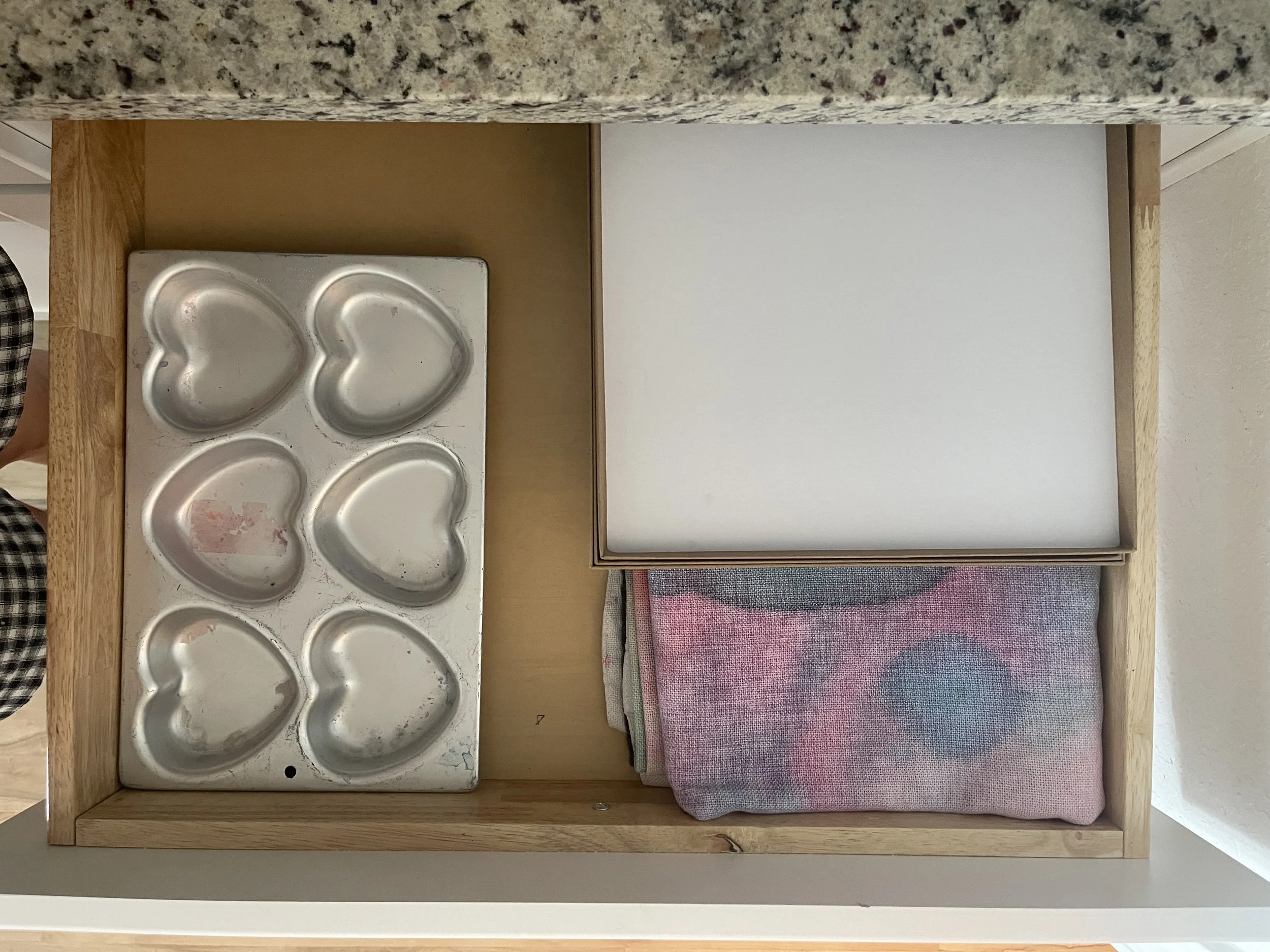
5. Trays and Surface CoversSmall but mighty — these make mess containment (and cleanup) painless, which matters a lot if mess-anxiety is what's holding you back from saying yes to more art.
What's in ours: a vintage heart-shaped muffin tin (repurposed for paint or loose parts sorting), trays, and a fabric surface cover for wet or messy work.
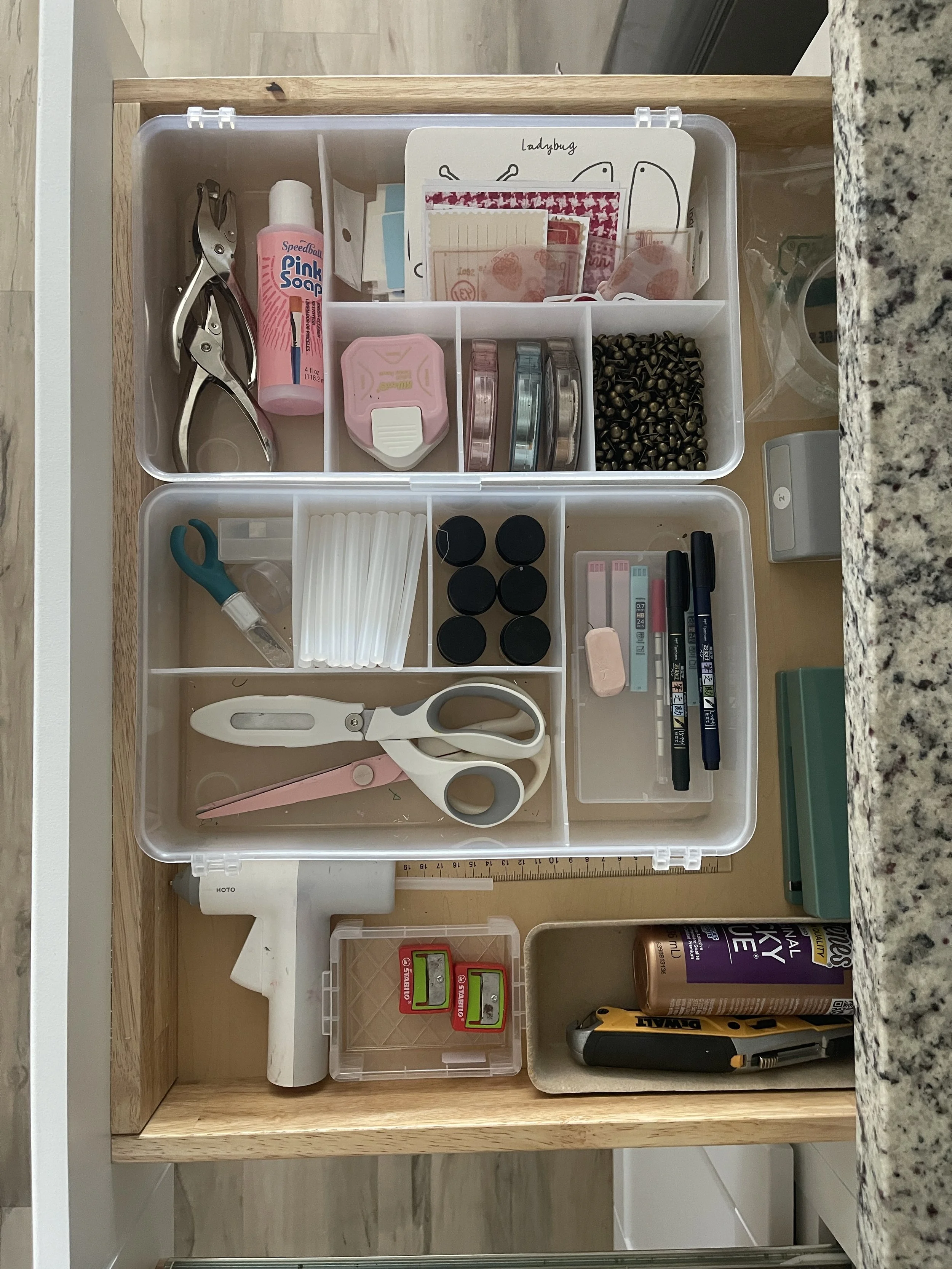
6. Grown-Up ToolsNot everything needs to be kid-accessible — some tools just need to be nearby for the grown-up running the activity.
What's in ours: hole punches, stapler, scissors, hot glue gun, pencil sharpeners, tapes, box cutter, craft knife, pens, glitter jars, glue, paper brads.
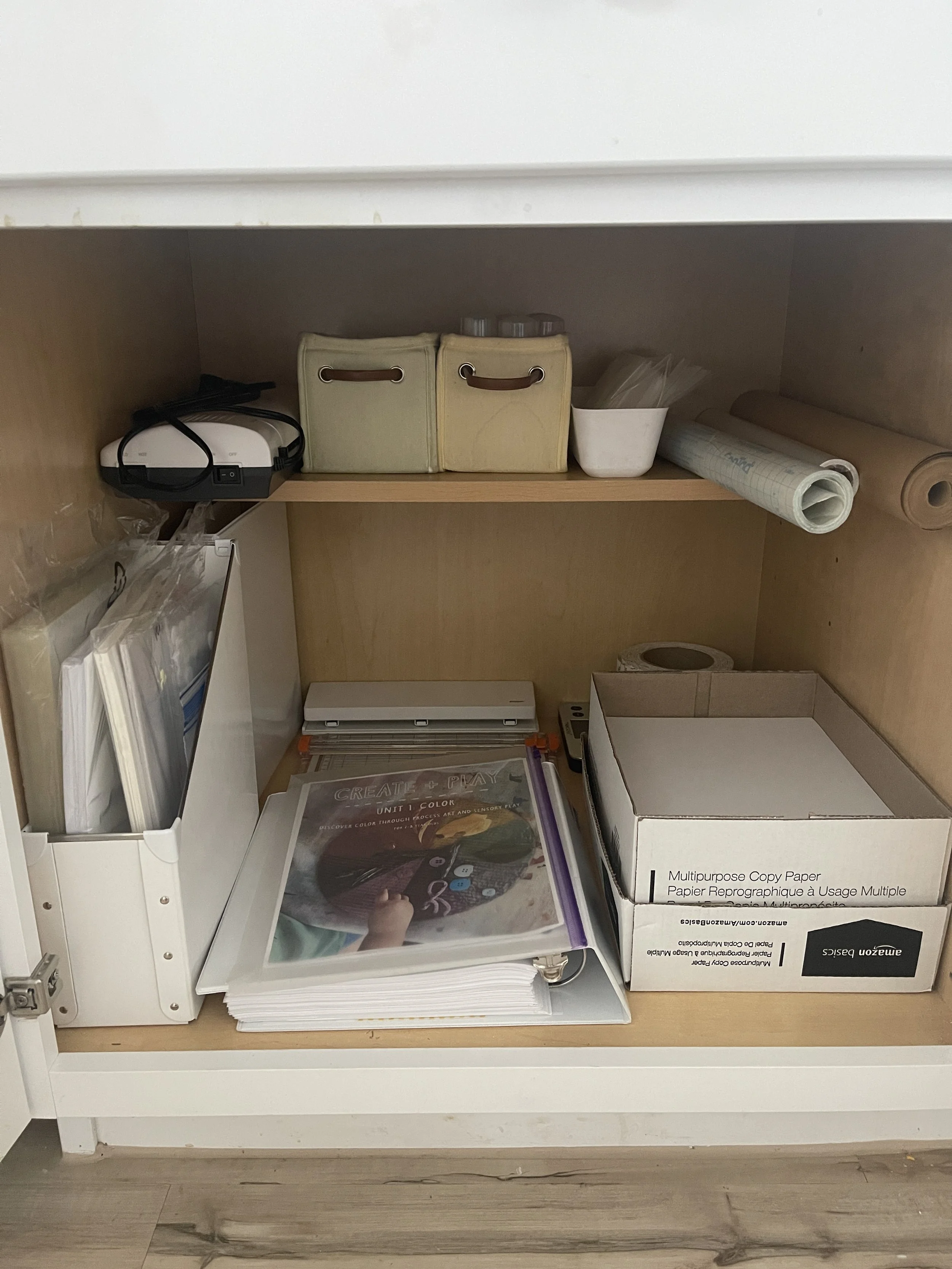
7. Paper + ToolsThe behind-the-scenes shelf that keeps the whole operation running — this is more "office" than "art," but it's essential for prepping materials and printing our curriculum pages.
What's in ours: laminator, printer ink, kraft paper roll, contact paper, hole punch, vellum + watercolor paper, curricula binders, copy paper
8. RecyclablesI keep this basket system in my food pantry rather than the art cabinet, but it's just as essential. Before anything hits the recycling bin, it gets a second look.
What's in ours: bubble wrap + PE foam, fruit and veggie netting, cardboard + paperboard + egg cartons, toilet and paper towel rolls
Where to Start If You're Building Yours From Scratch
You don't need all of this on day one. If I were starting over, here's the short list I'd buy first:
Washable tempera paint (a few core colors), paint brush, jars or baking tray for paint (tray also works for sensory play containment!)
Glue, scissors, and washi tape
Thick paper (construction, kraft or cardstock works)
A bin of paper scraps and 3-5 "loose parts" (buttons, pompoms, bottle caps — whatever you already have)
A stash of cardboard and paper tubes from your own recycling
Playdough or air-dry clay
A few play dough tools (like plastic utensils, roller, stamps, scissors count here too!)
Surface cover to protect your tables and floor.
Everything else can grow over time, the same way ours did. I have added a few helpful affiliate links above of products we use and recommend. I receive a small commission at no extra cost to you 😊
One Small Habit, One Big Shift
The real magic isn't the supplies — it's that they're sorted, visible, and easy to reach. That's what makes hands-on creativity a real alternative to screens, instead of one more thing that requires a grown-up to set up for hours and a child who doesn’t engage with it.
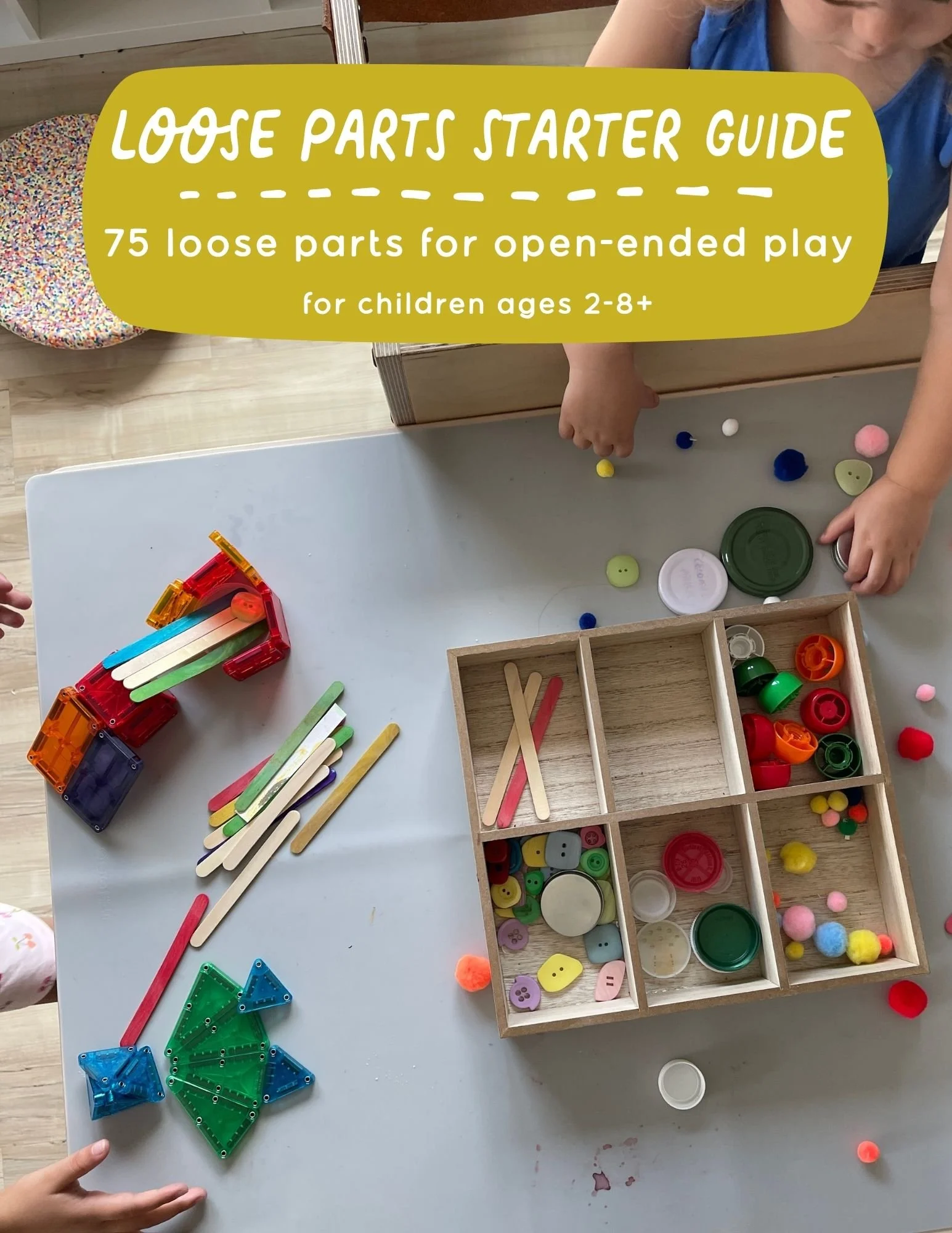
If you want a simple, screen-free swap to try this week, grab my free guide, The Loose Parts Starter Guide — it walks you through 75 materials you probably have at home already and how to create a system for using just a few of them for long independent play.
No worksheets. No screens. Just hands-on creativity.