

Our Homeschool Preschool Daily Rhythm (Fall and Winter)
After doing some popular vlogs on Instagram about our homeschool preschool, I want to show you what my planned (but flexible!) rhythm for the fall and winter seasons actually look like. And I really do mean rhythm, not schedule.
The times you'll see below are loose and flexible. If the kids are deep in play outside and nobody's ready to come in, we stay out longer. If the art table is a no-go that day, we move on. I just keep one eye on the clock so the big anchors (meals, snack, and nap) stay steady, and everything else gets to breathe.
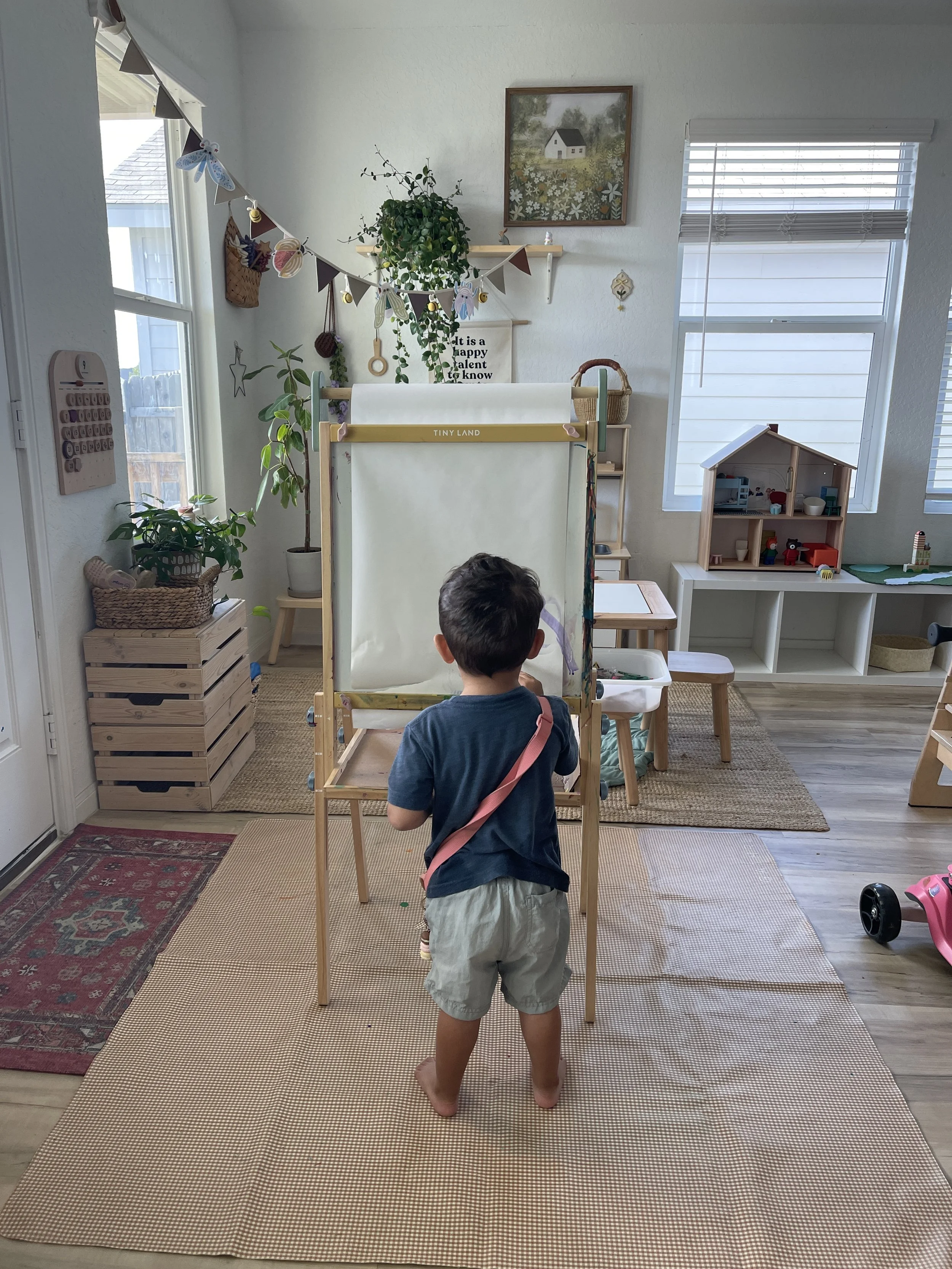
What I've learned from years of teaching preschool is that little ones don't need a packed day. They need a predictable flow they can feel in their bodies: play, eat, move, create, rest. When they know what's coming next, transitions get so much easier, for them and for you.
You also won't see a formal curriculum in our day, at least not yet. The kids are barely three, and at this age, play is the curriculum. Digging in the dirt, pouring water, smearing paint, building towers and knocking them down, helping load the laundry: that's where the real learning happens! They're building language, problem-solving, fine motor skills, and confidence, all without a single worksheet. There will be time for more structured learning later. Right now, my job is to set up a rich environment and protect lots of time to play!
Here's how our day flows.
Morning: Play, Breakfast, and Fresh Air
8:00–8:15 | Free Play + Making Breakfast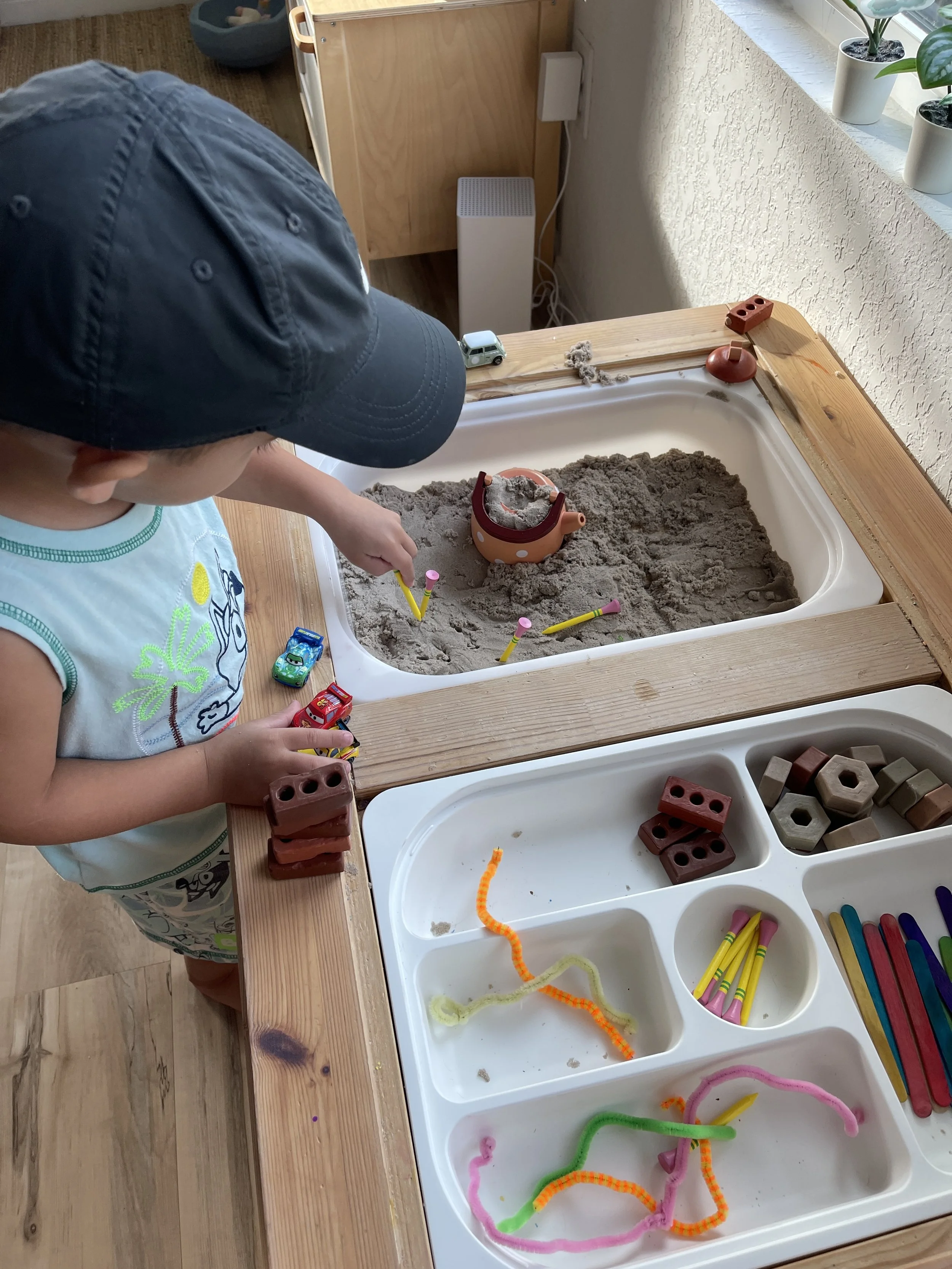
The kids arrive (or wake up) and head straight to the play shelves while I make breakfast. This is a gentle, low-key start. No big plans, no setting anything up. Just whatever invites them in that morning. It gives everyone a few minutes to settle in, and it lets me get food on the table and my coffee ready.
8:15–9:00 | Eat Breakfast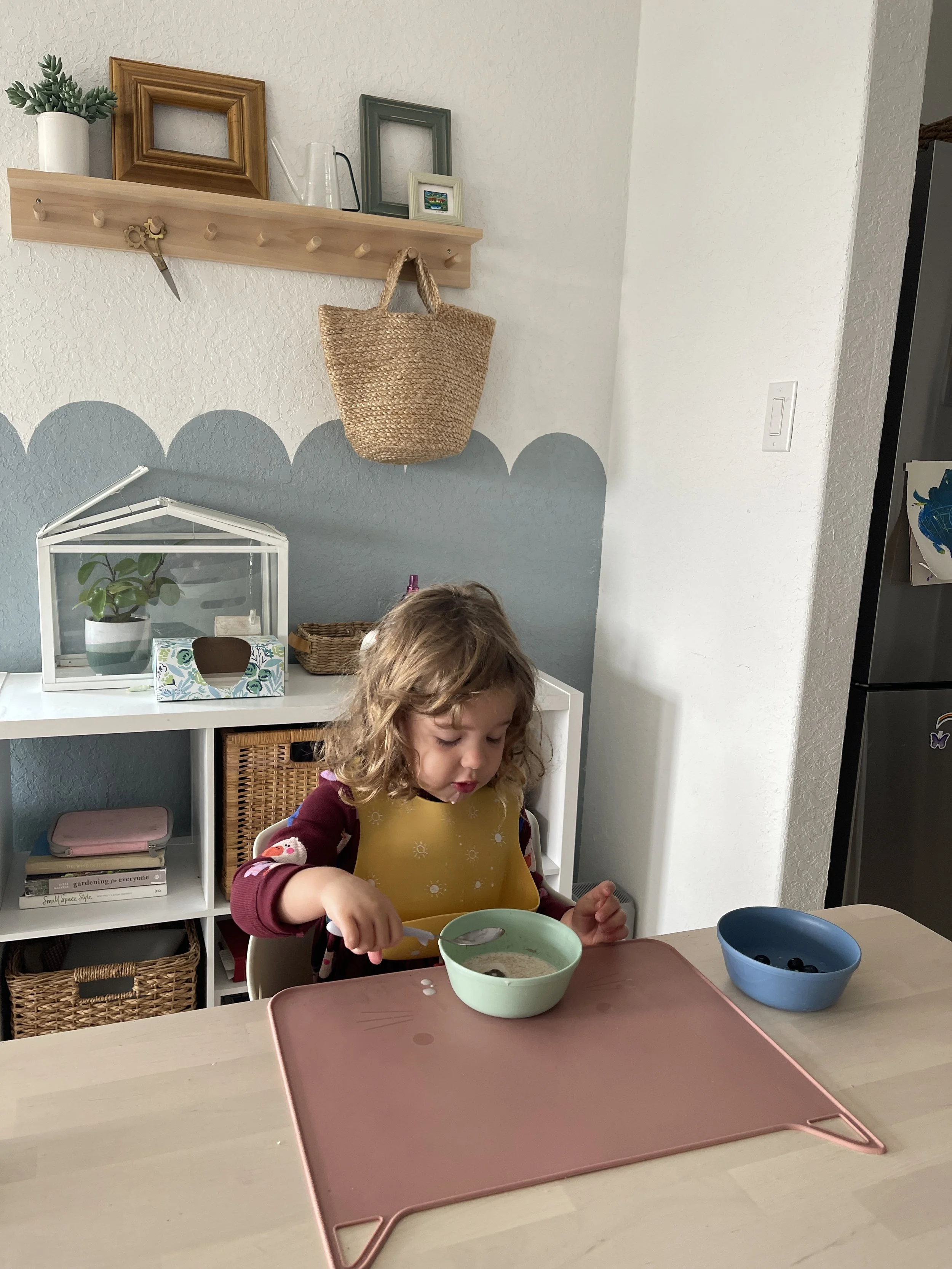
We sit down together and eat. I keep this slow on purpose. It's a lot of chatting about what we see out the window, what we dreamed about, or what we want to play later. Kids help clear their own plates when they're done, which is a tiny bit of independence built right into the morning.
9:00–9:30 | Free Play Outside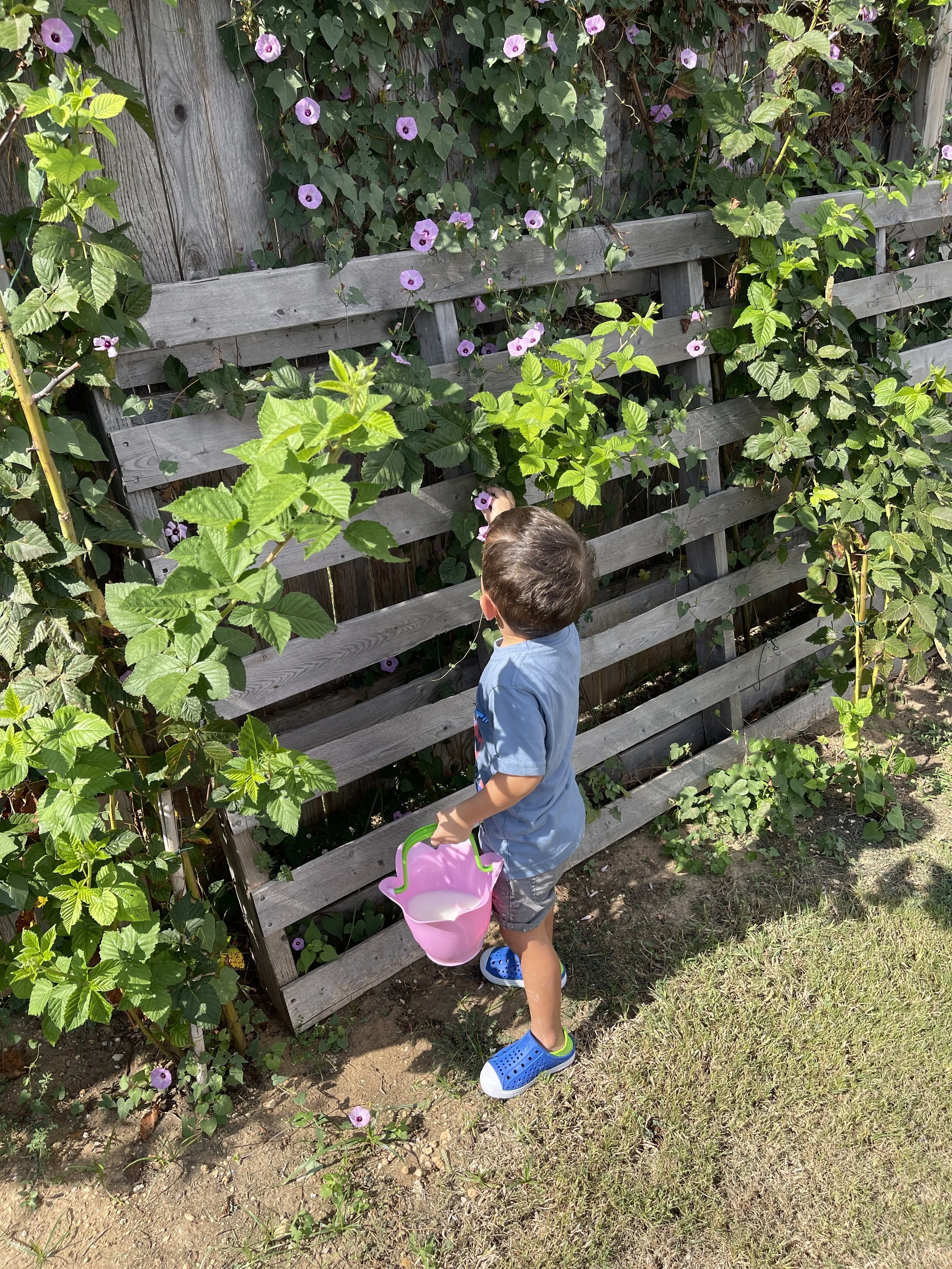
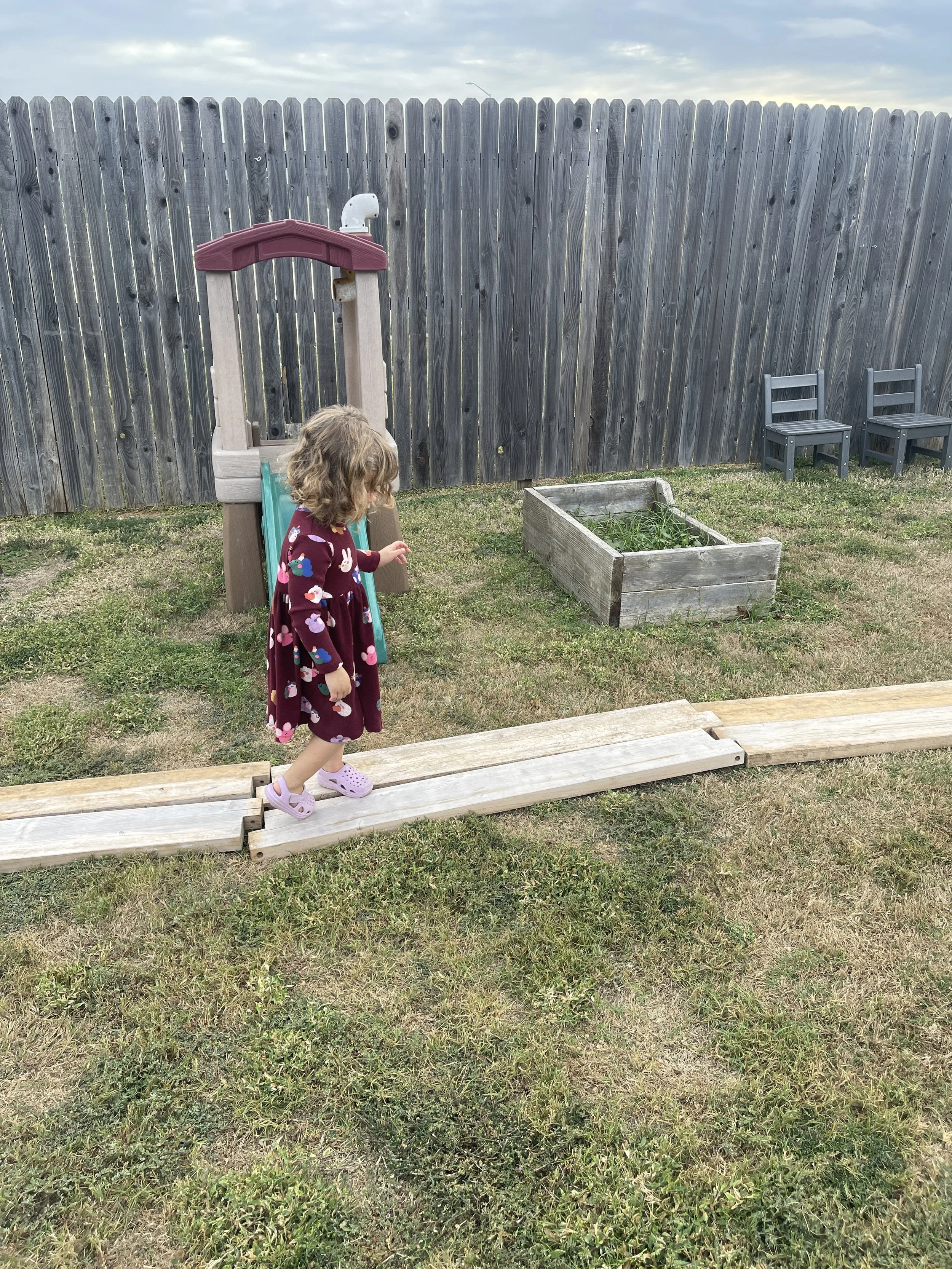
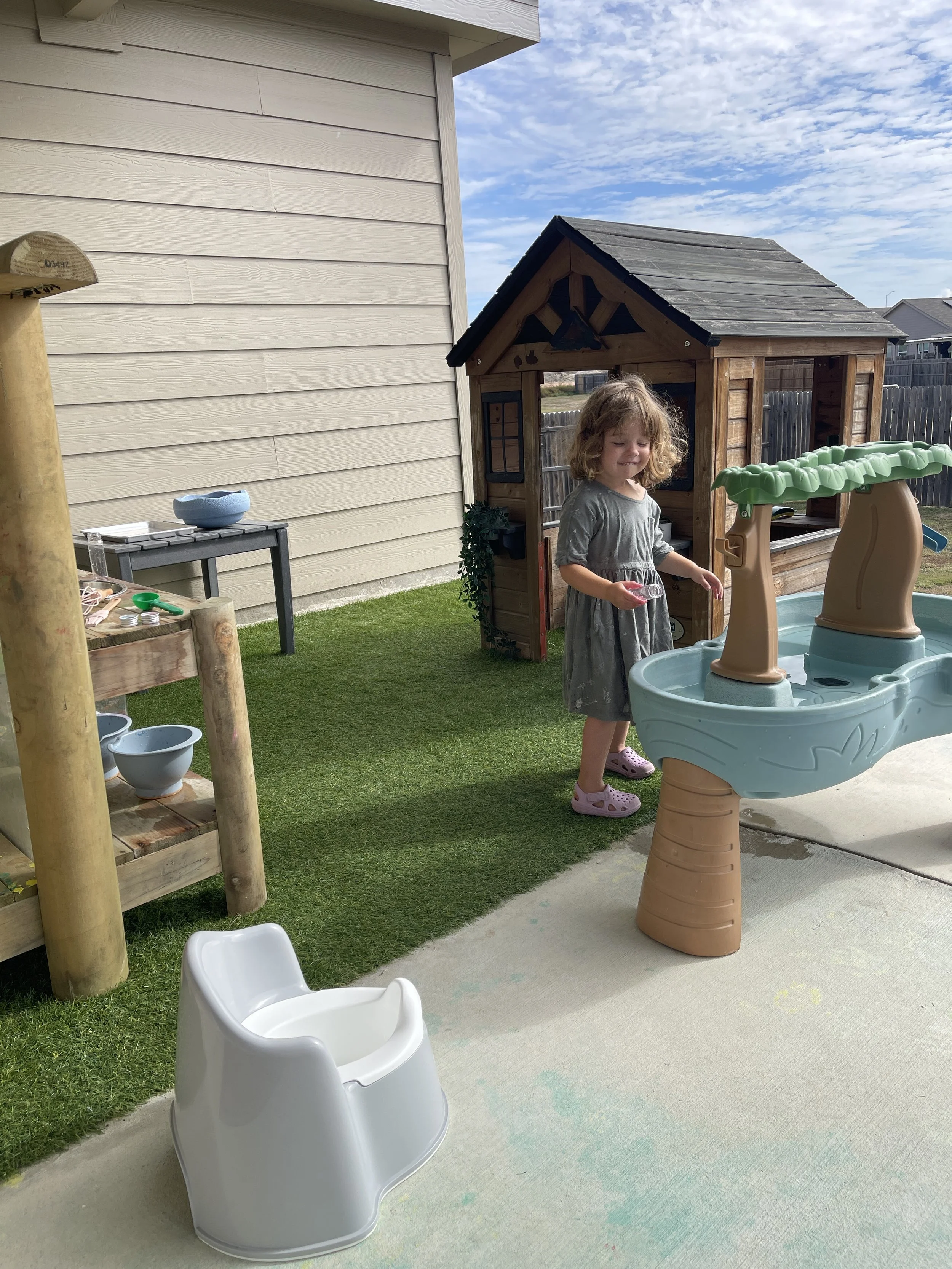
Shoes on, out the door. This is open-ended outdoor time: running, digging, collecting, sliding, playing ball, collecting sticks and rocks. I don't direct it. This is the block that most often stretches longer, because if they're happily busy, I'm not going to interrupt that.
9:30–10:00 | Outdoor Sensory Activity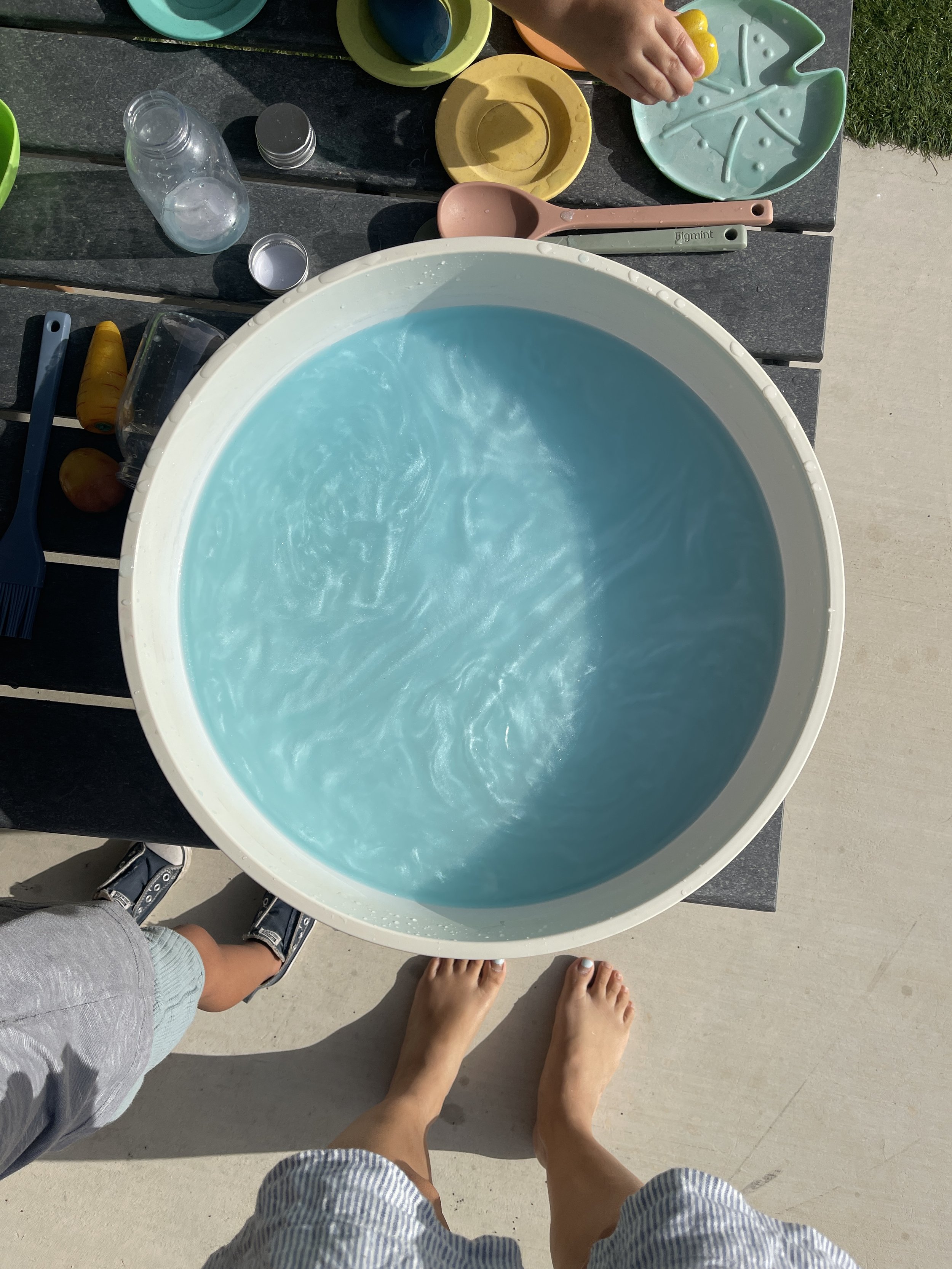
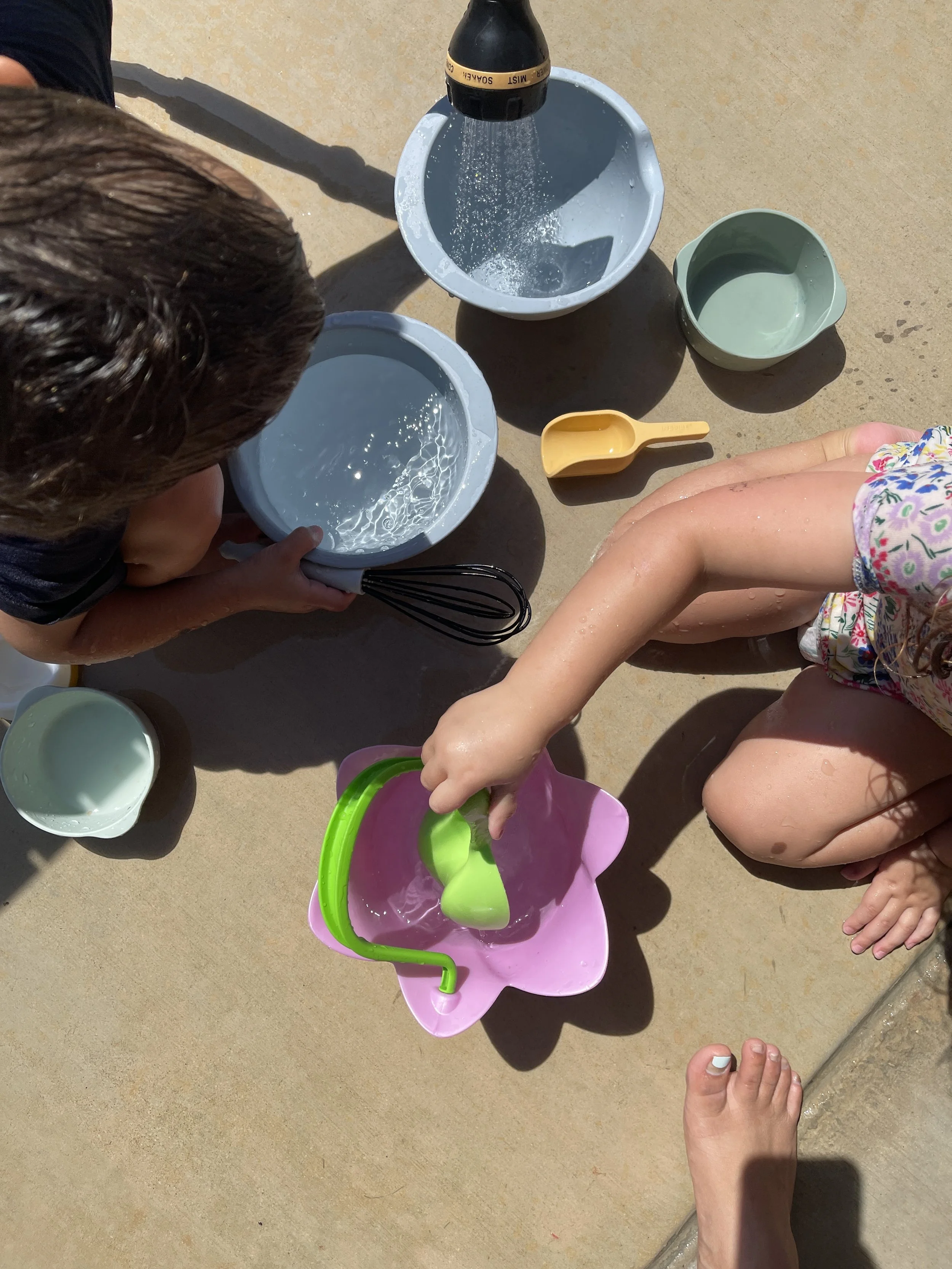
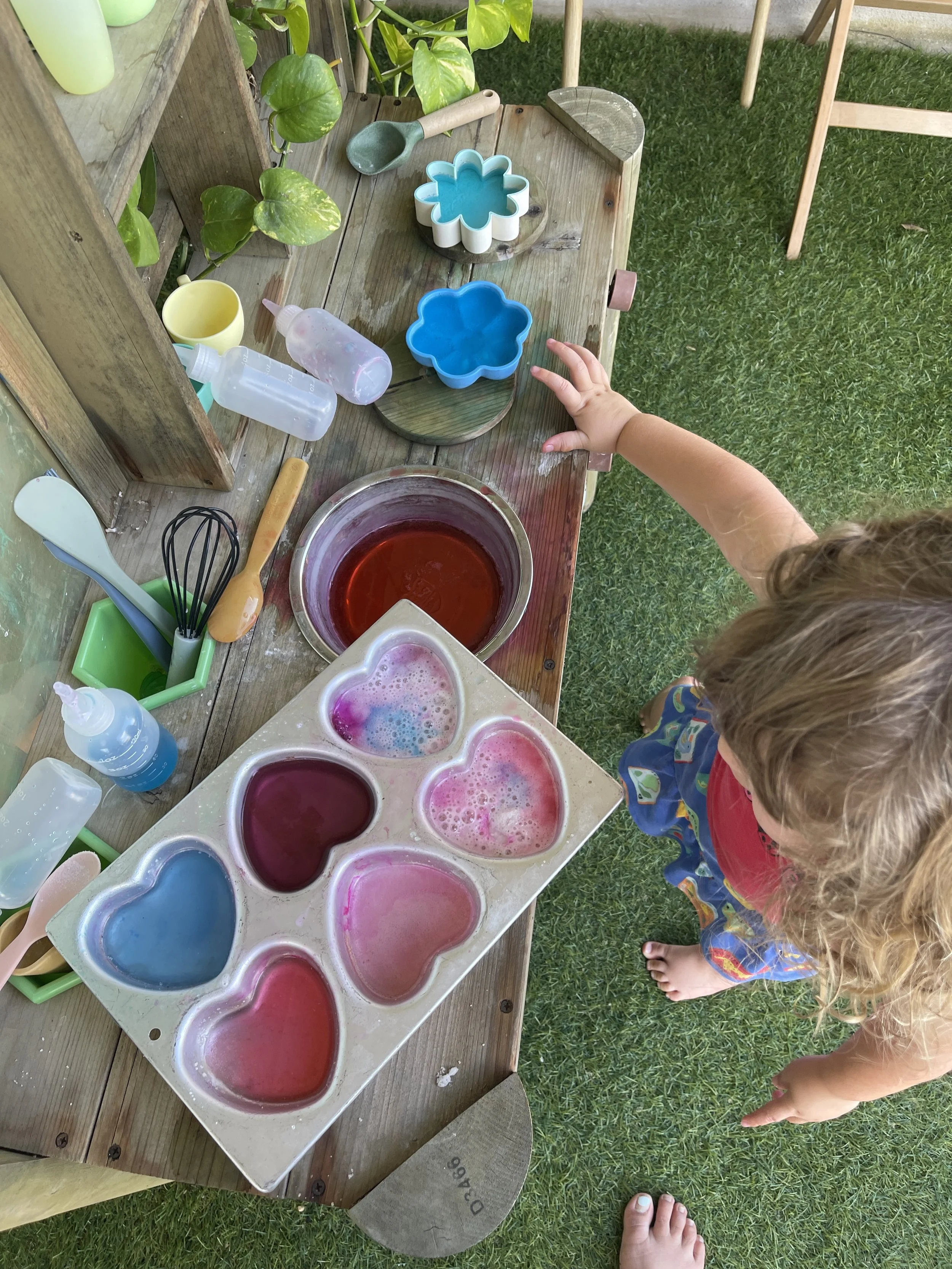
While we're already outside, I set out one simple sensory invitation. It might be a water bin with scoops and cups, a tray of sand and loose parts, fizzy play (equal parts citric acid and baking soda with water for that fizzy chemical reaction), or ice with some droppers and colored water. Doing sensory play outside means I can say yes to the mess, and cleanup is basically a hose.
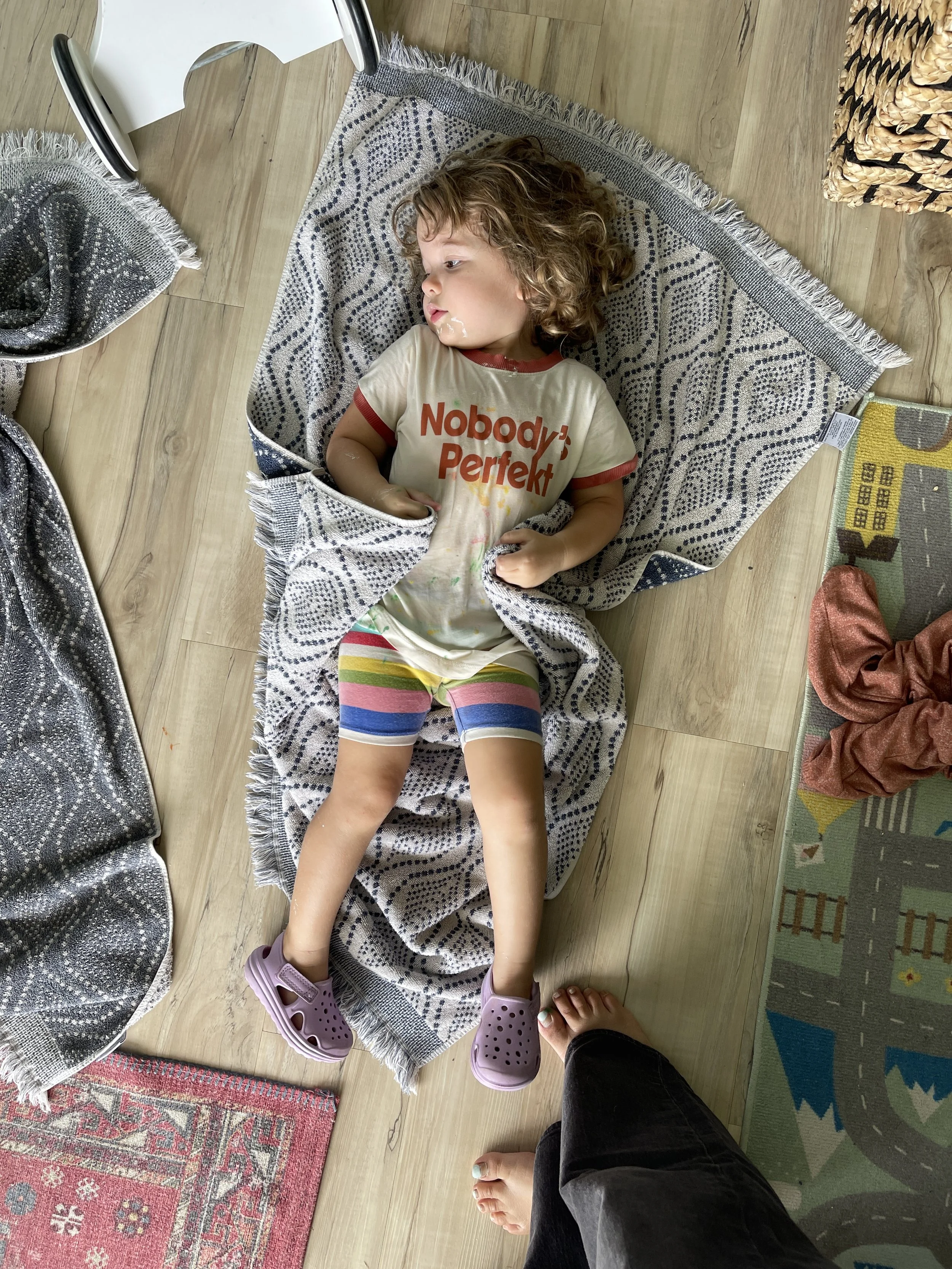
10:00–10:30 | Clean Up + Morning SnackWe tidy up together and then head in for snack. Most days I have to change their clothes for dry ones and bring out the towels, other days it’s a quick hand wash. By this point they're hungry, and a calm snack is a nice reset before we move into our indoor table work.
Late Morning: Art, Stories, and Real Work
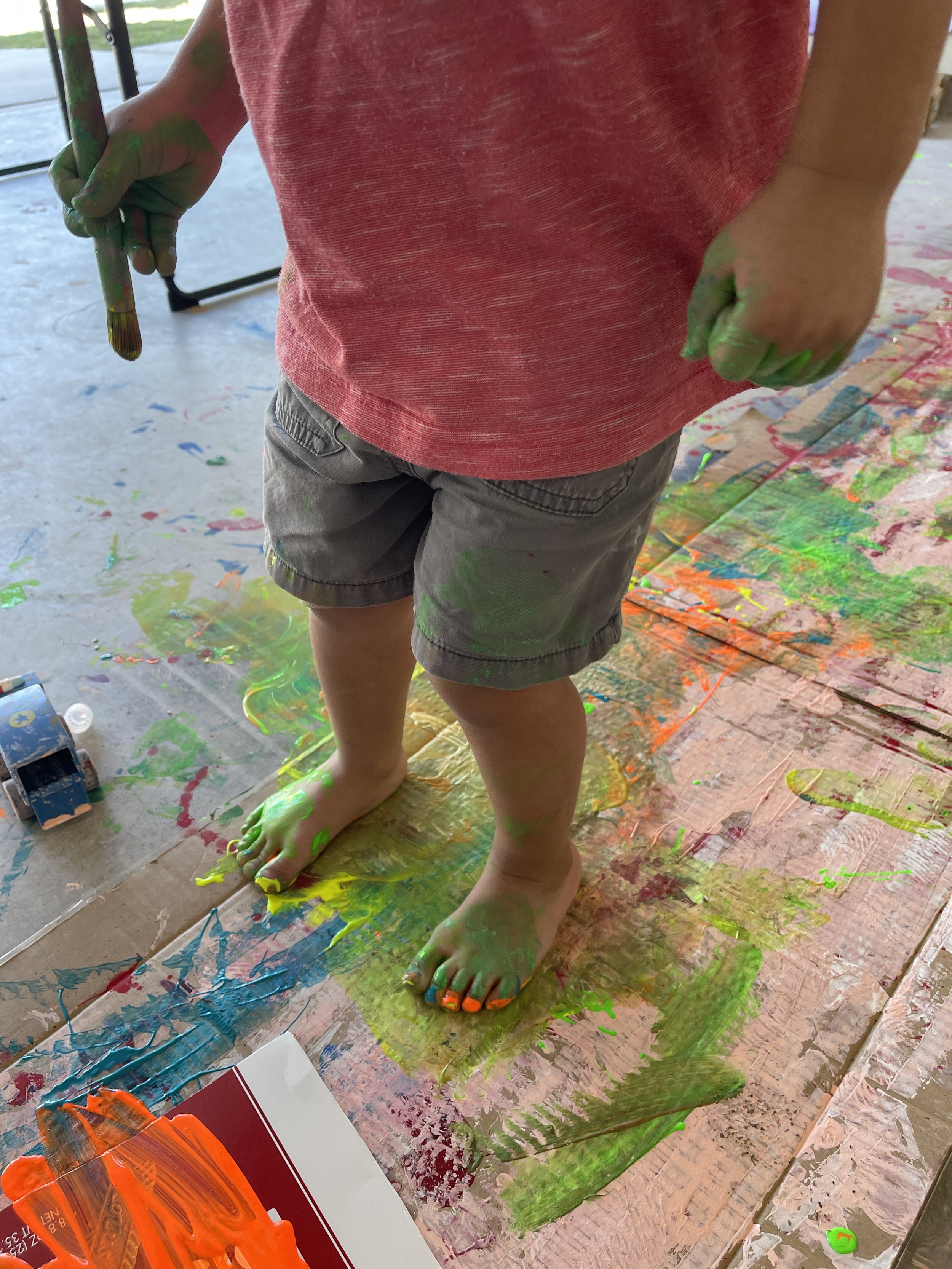
10:30–11:00 | Art Table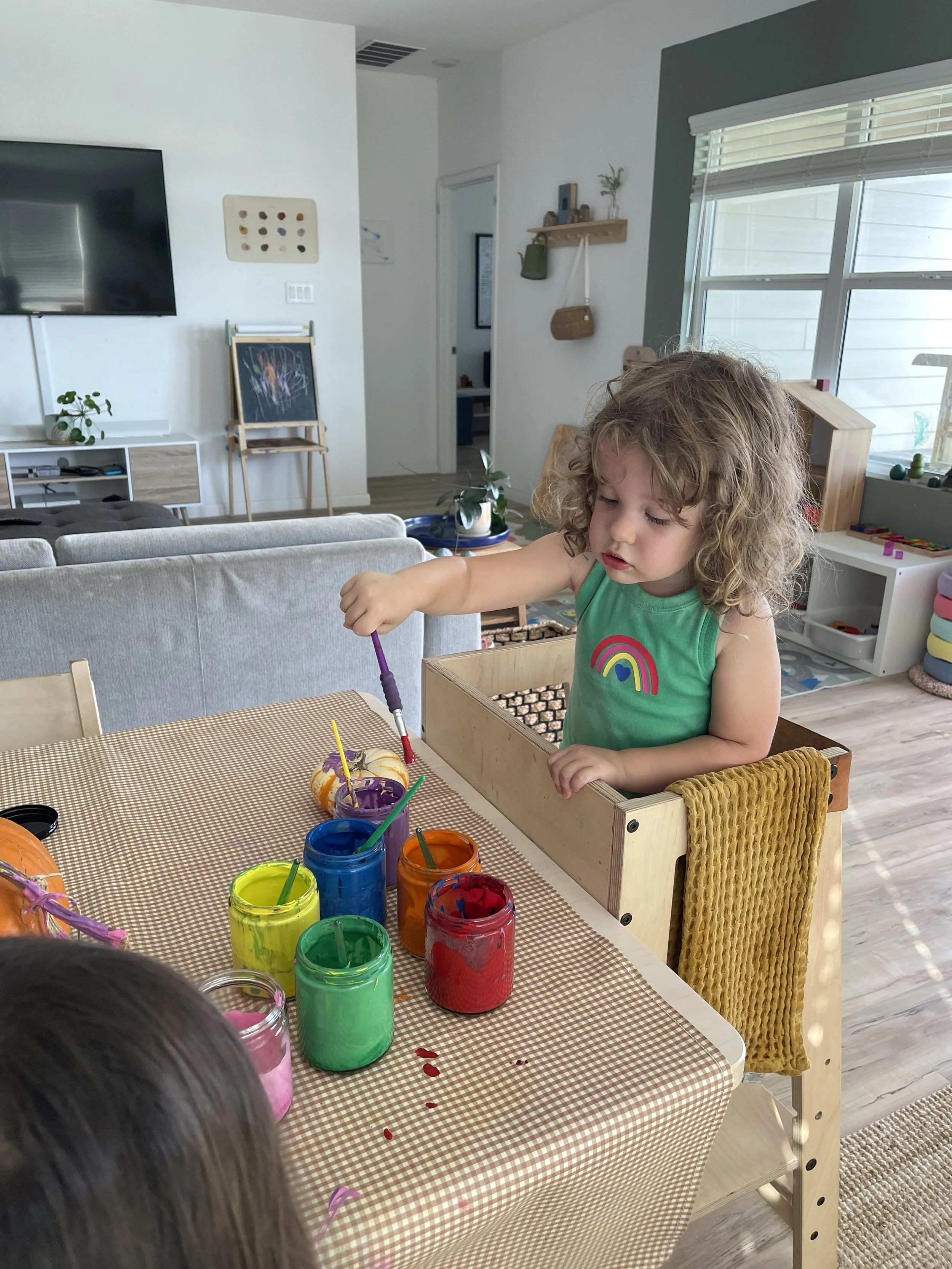
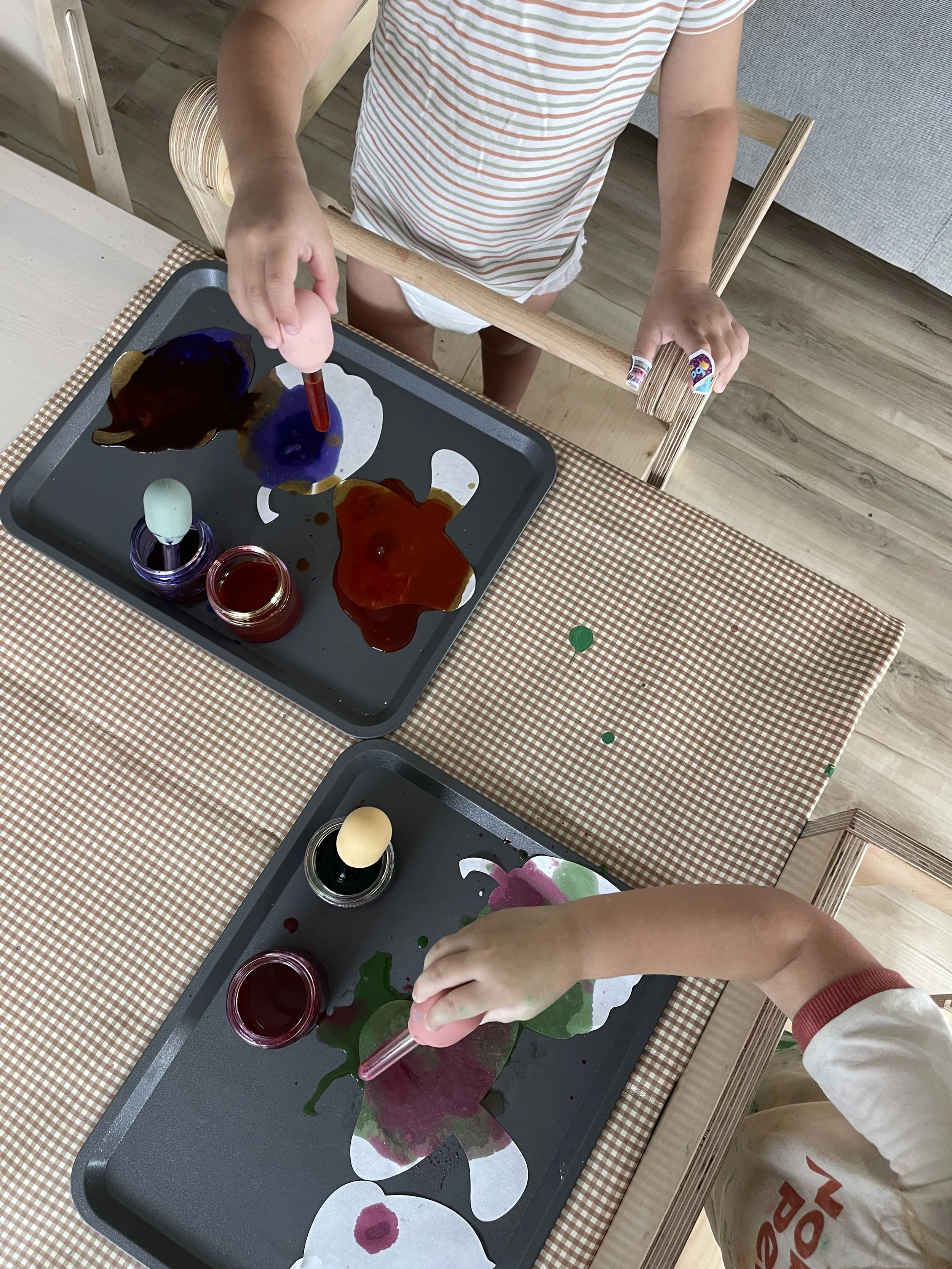
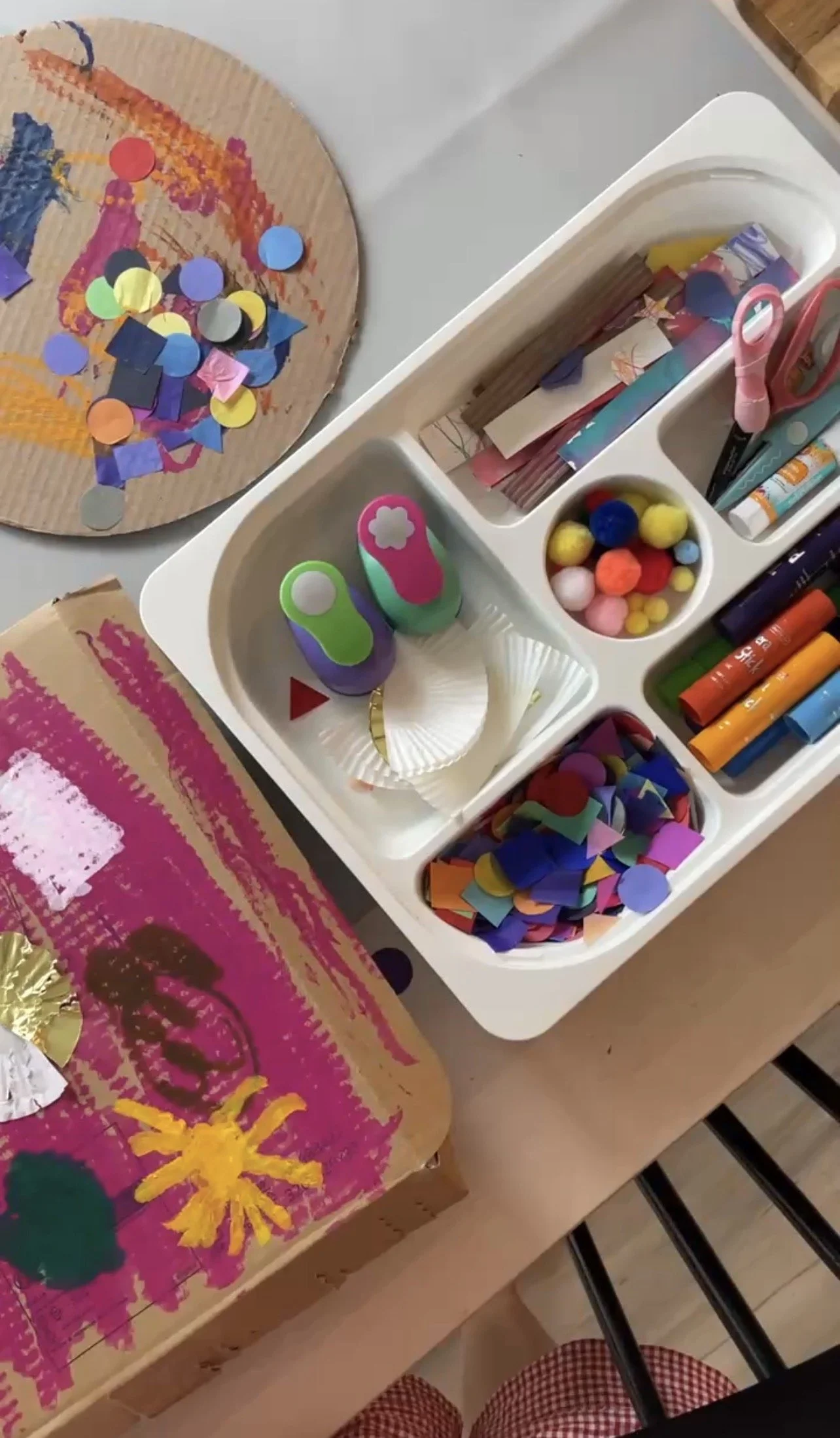
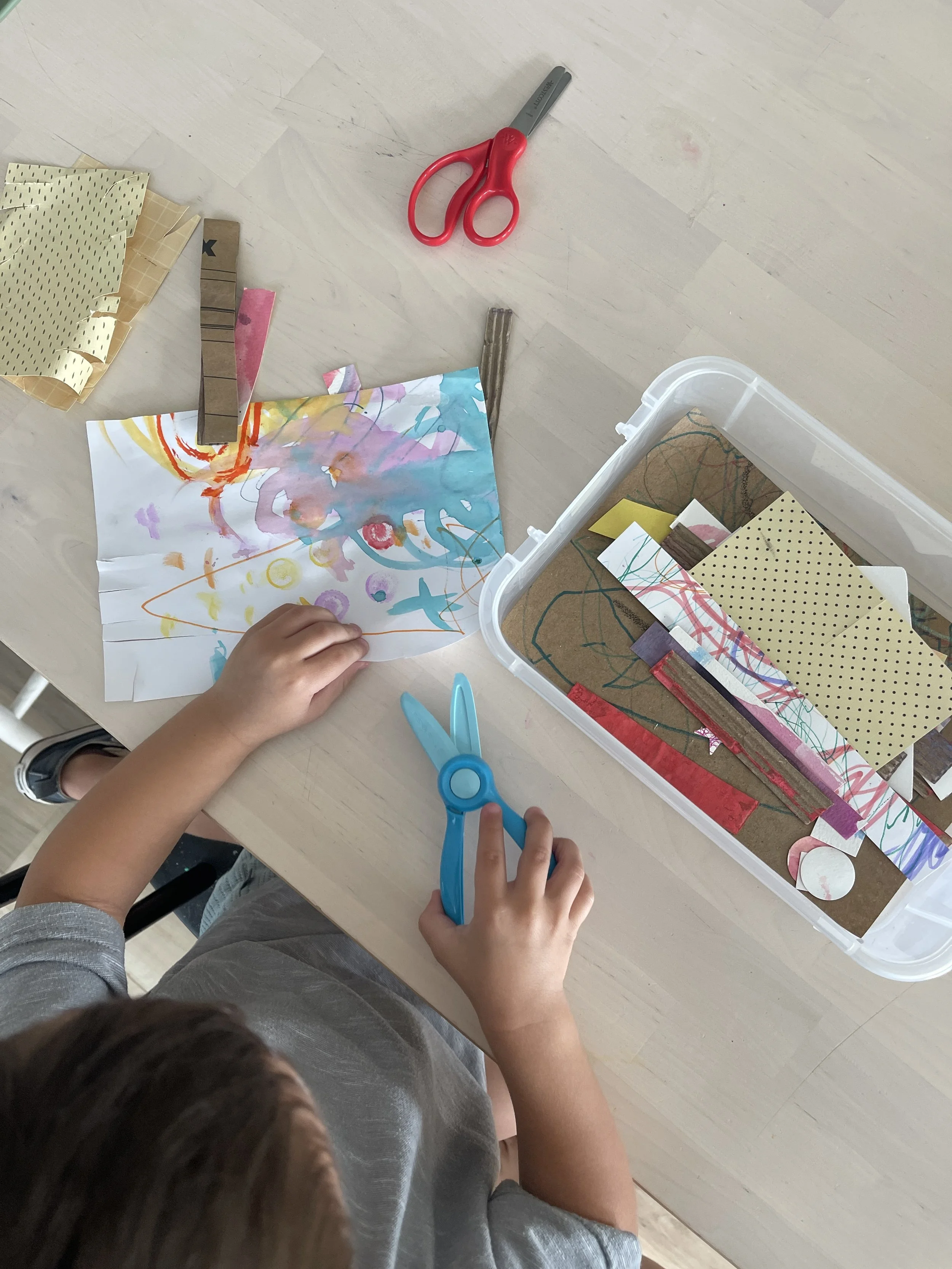
This is my favorite part of the day. I set out a simple process art invitation, usually just three or four materials, and let the kids take it wherever they want. Paint and foam rollers, collage scraps and glue, crayons on big paper taped to the table. No worksheets, no "make it look like mine." The point is the doing, not the finished product.
11:00–11:15 | Circle Time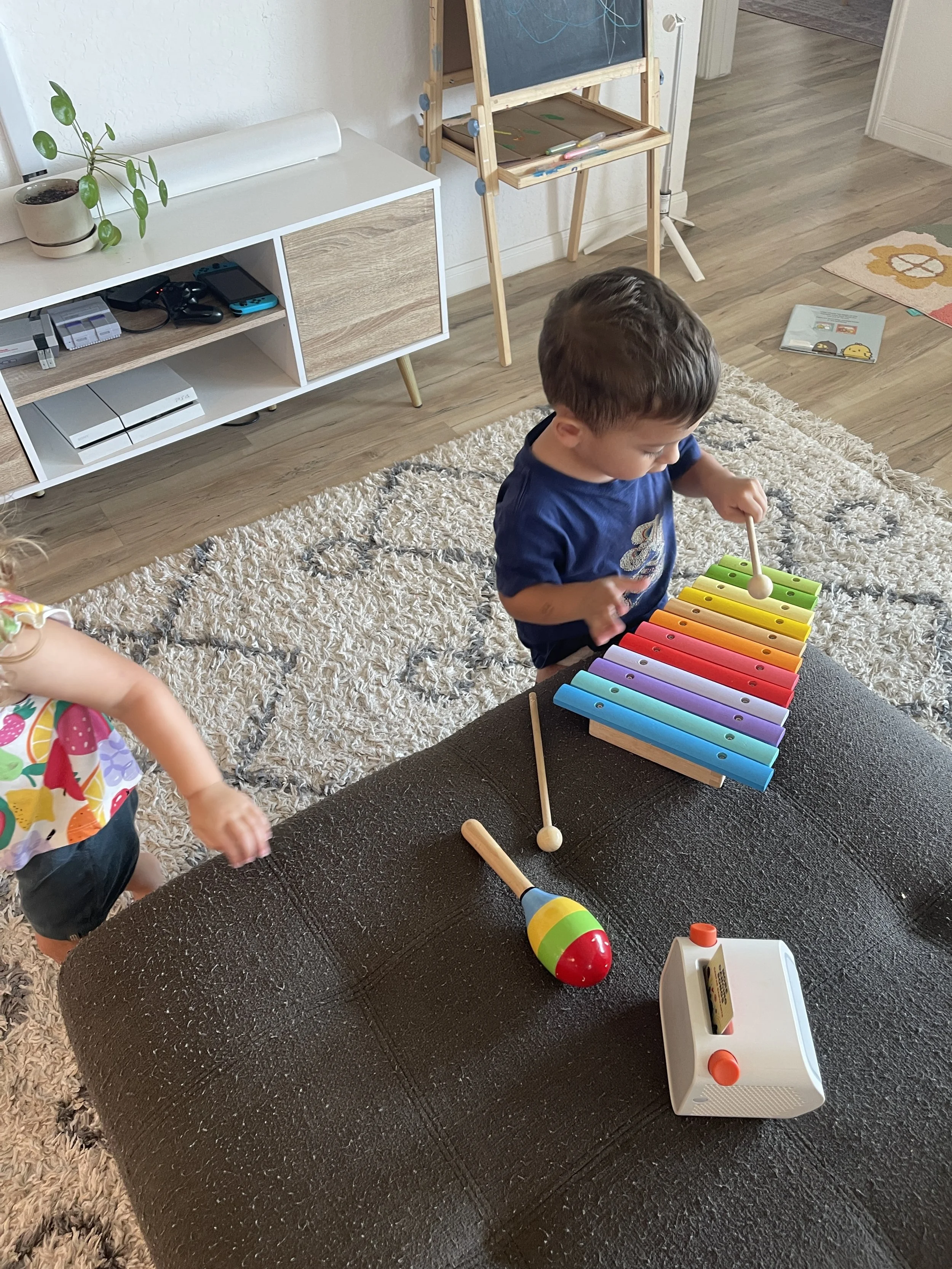
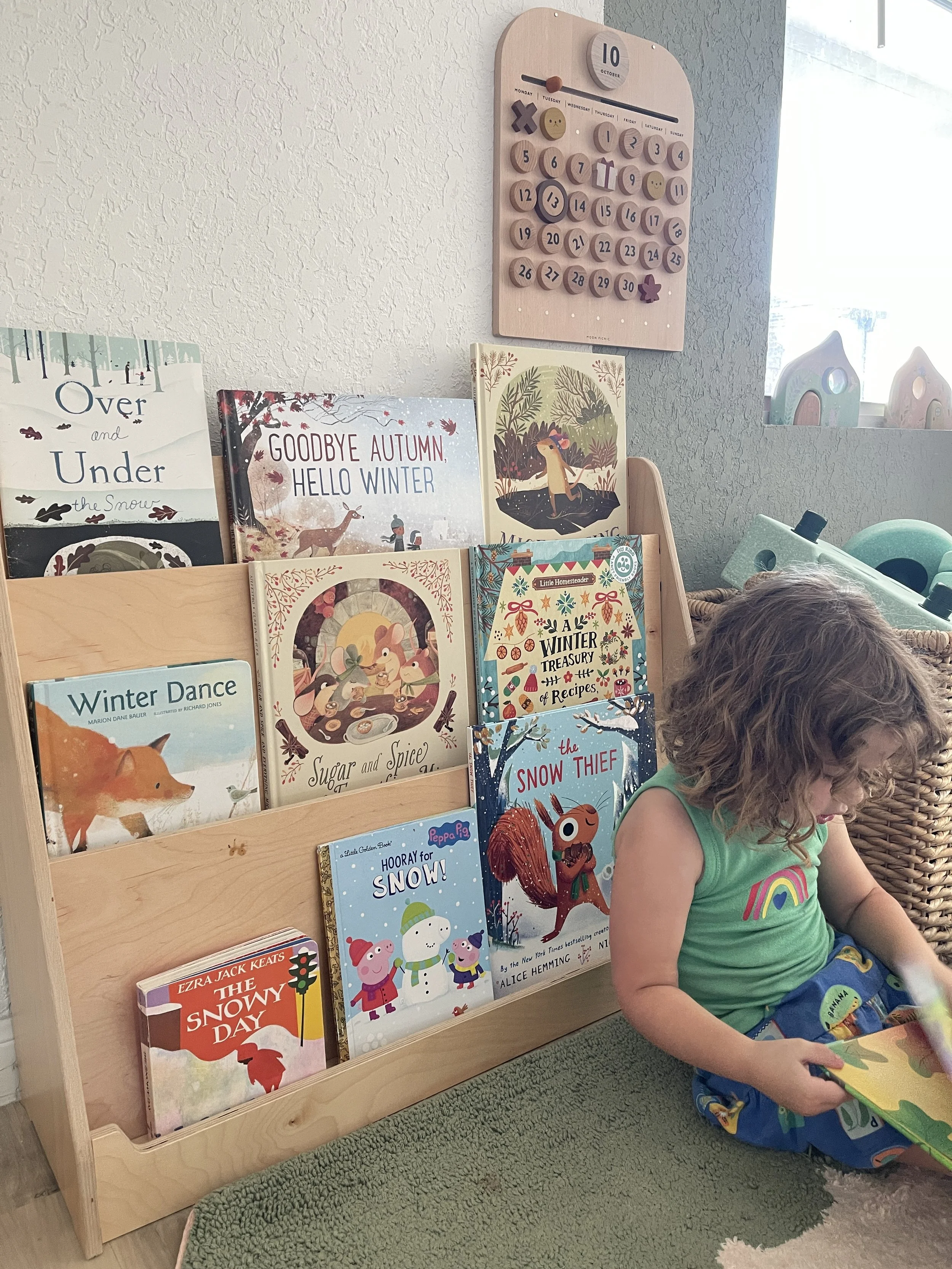
We gather on the rug for a story, two songs with lots of movement and instruments. That's it. I keep circle time short and sweet because toddlers and preschoolers have tiny attention spans, and that's completely normal. Ten to fifteen minutes of cozy, connected time is so much better than thirty minutes of me begging everyone to sit down.
11:15–11:45 | Indoor Free Play or Outdoor Play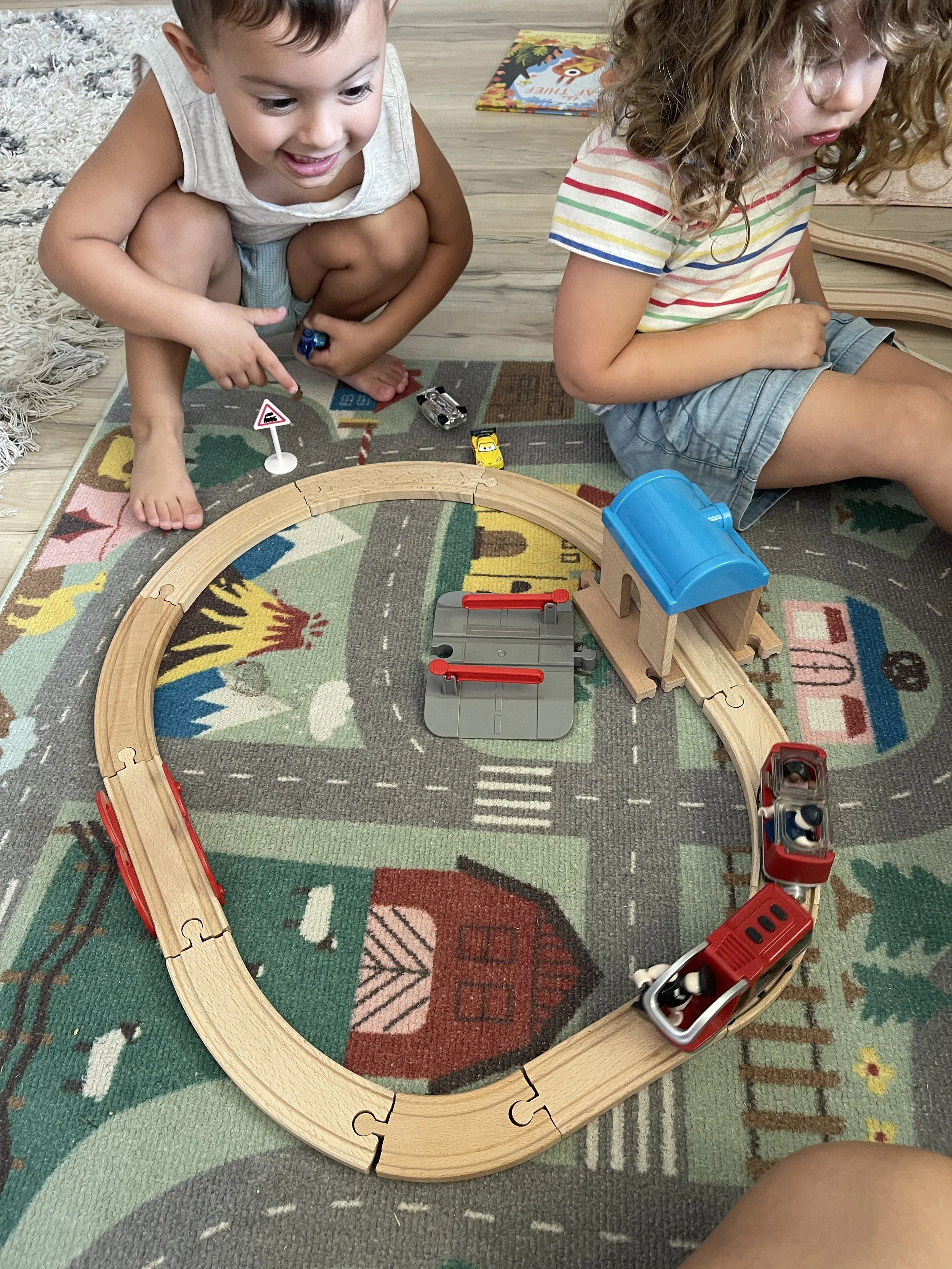
This one depends on the day: the weather, the kids' energy, and what they're into. If they need to move, we head back outside. If they're craving some quiet, they play inside with blocks, loose parts, or pretend play. Following their lead here keeps the whole day feeling smoother.
11:45–12:00 | Purposeful Work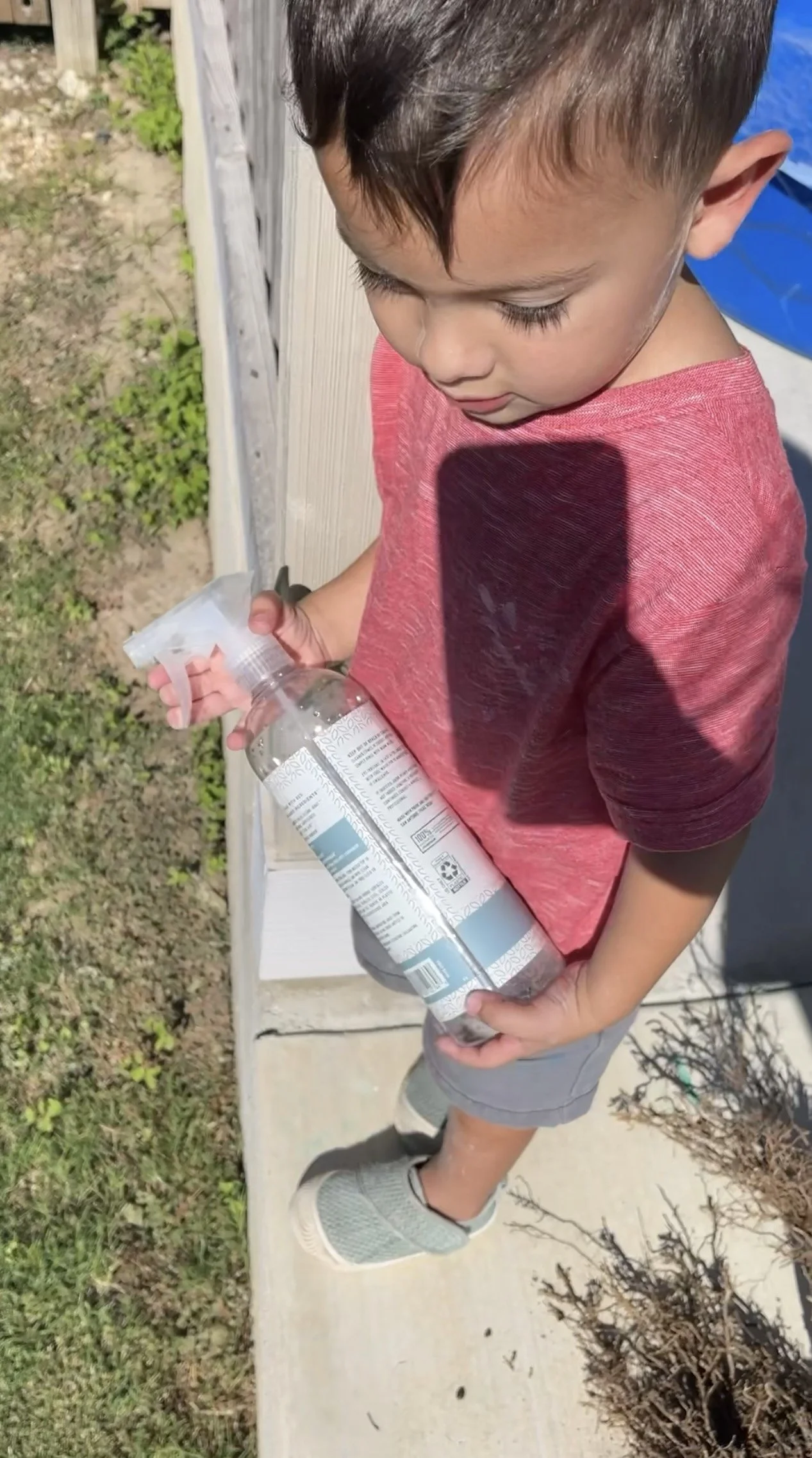
This is real, meaningful work around the house. Kids helping with laundry, wiping down the dining room table, sweeping, or cleaning the windows outside with a spray bottle and a cloth. Little ones love real jobs. It builds independence and confidence, and it shows them they're a capable, contributing part of our home (not just little ones being kept busy).
Midday: Lunch and Rest
12:00–12:30 | TV Time + Making LunchYes, there's a little TV in our day, and I'm not sorry about it. After a full morning of play, art, and work, a short show gives the kids a chance to wind down while I make lunch. I pick something calm and slow-paced, and it's one predictable spot in the day instead of a go-to whenever things get hard.
12:30–1:00 | Eat LunchWe sit together again, just like breakfast. Lunch is usually quieter, so we play songs on our Yoto player. Everyone's a little tired, and that's okay. Kids clear their plates when they're finished.
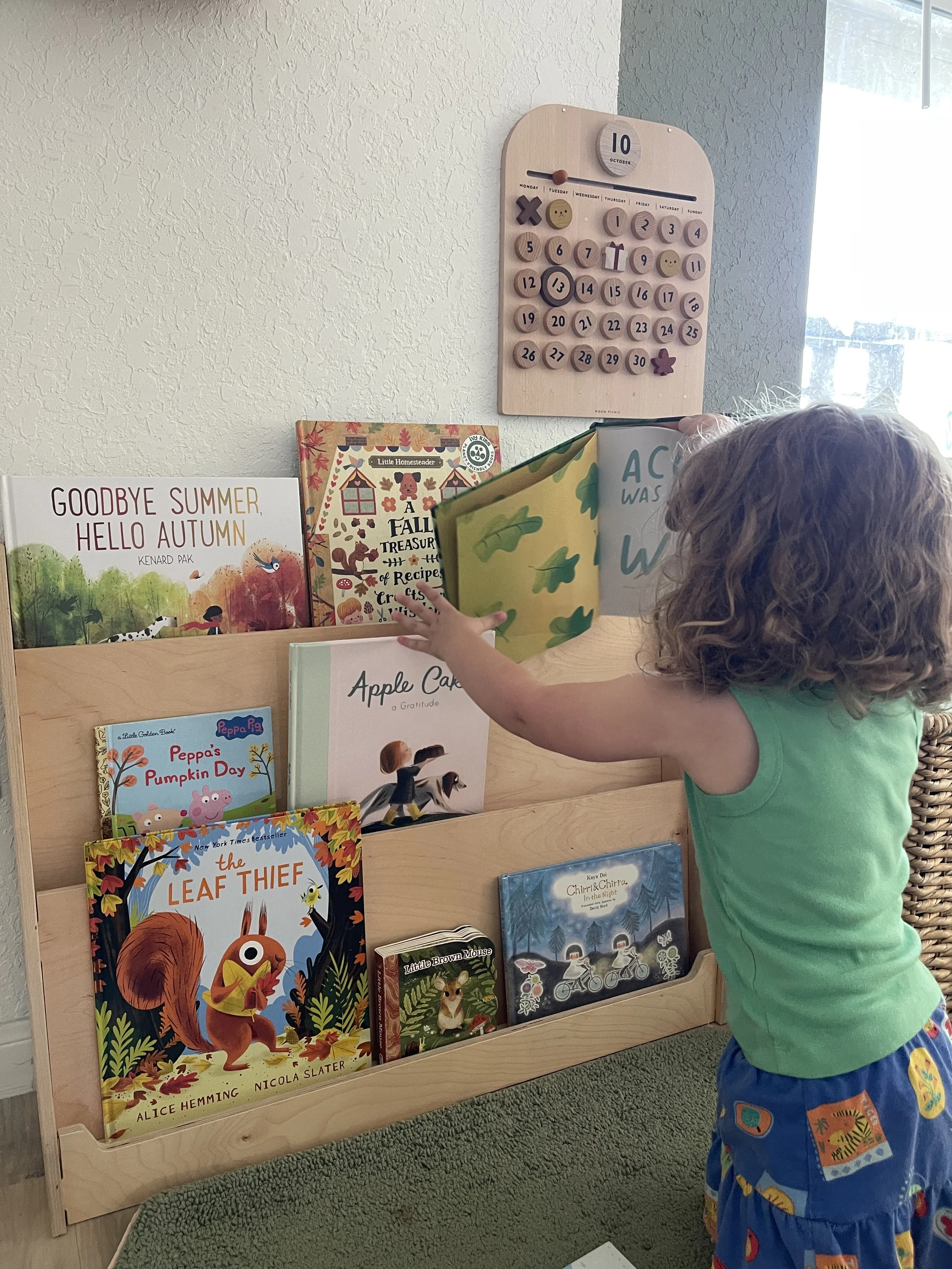
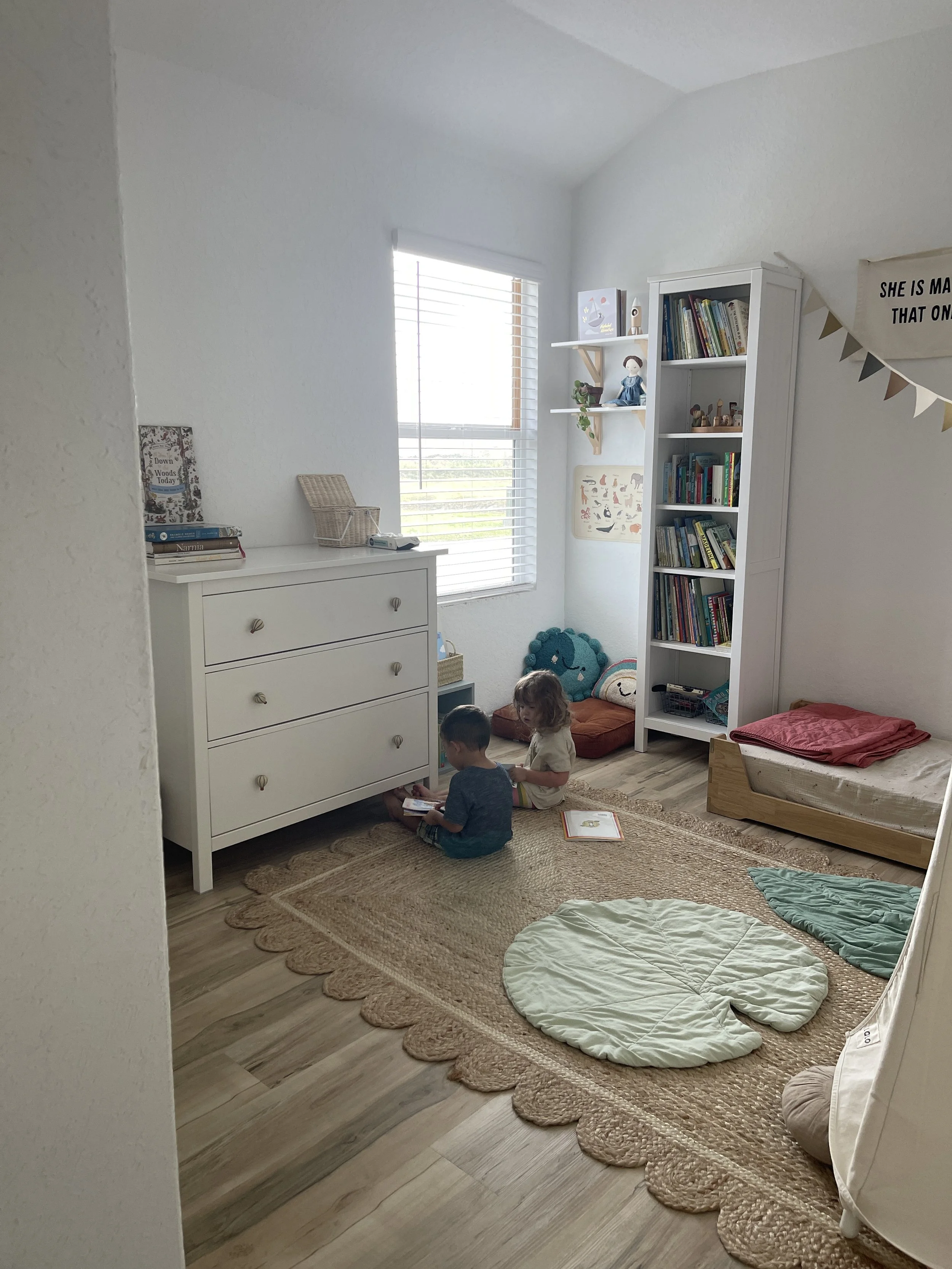
1:00–1:30 | Clean Up + Get Ready for NaptimeWe tidy the kitchen and play space, use the bathroom, wash hands, and start slowing everything down. They already know to head to my daughters room to pick out a book and read quietly. I close the blinds, lower my voice, and keep things predictable. This in-between time is what makes naptime actually work, so I try not to rush it.
1:30–3:30 | NaptimeRest time. The house goes quiet, little bodies recharge, and honestly, so do I. This is the time my nephew heads home and our homeschool day ends.
Make It Your Own
Simple, slow, and full of play. If you're thinking about creating a rhythm at home, start with your anchors (meals and nap) and build loosely around them. Some days you'll follow it closely, and some days you'll toss half of it out the window. Both are good days.
new to homeschool preschool?
Mindful toy rotation: Just getting started? Set up your play space first. Here's how we do our mindful toy rotation to keep play fresh without buying more toys.
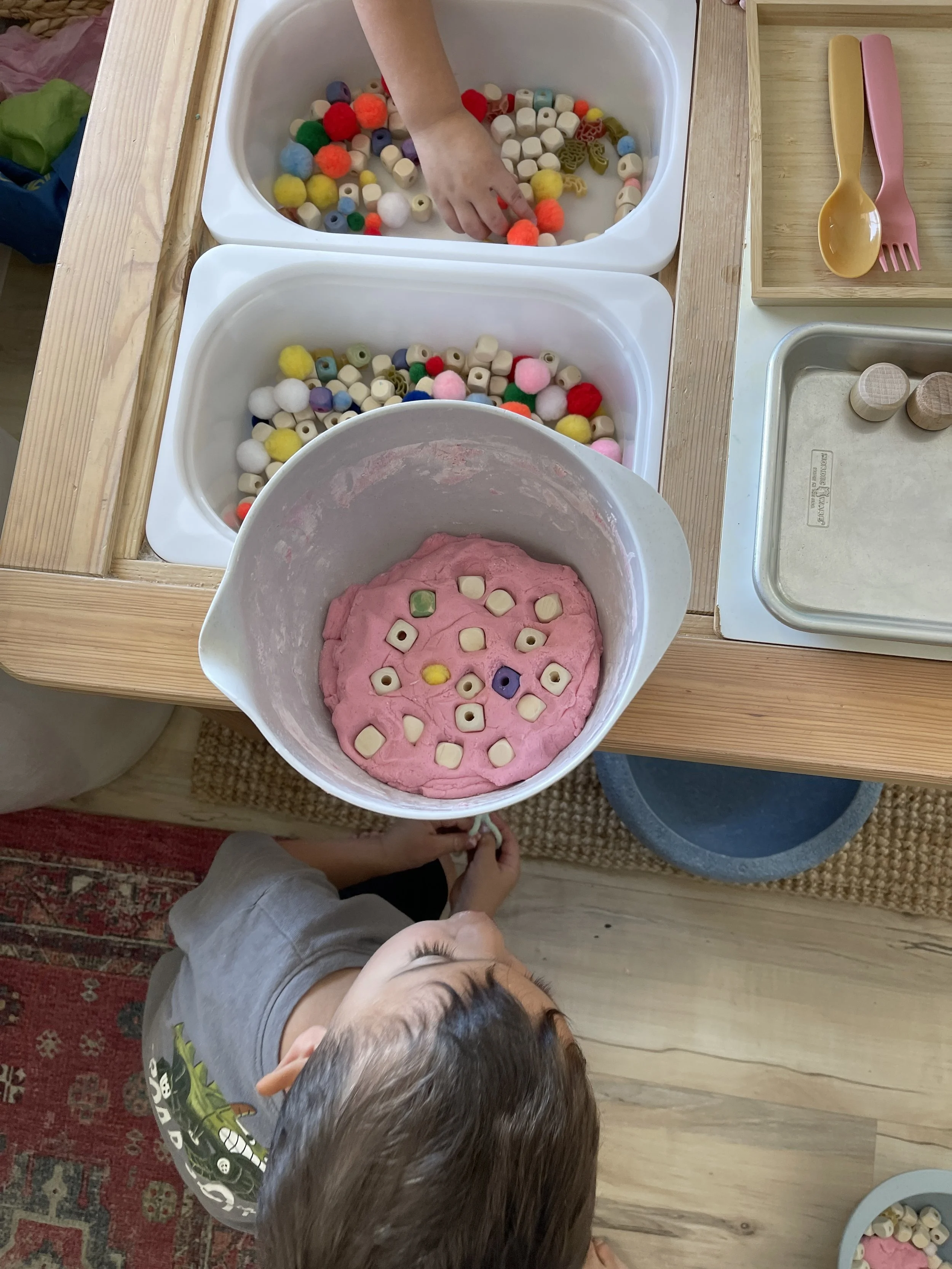
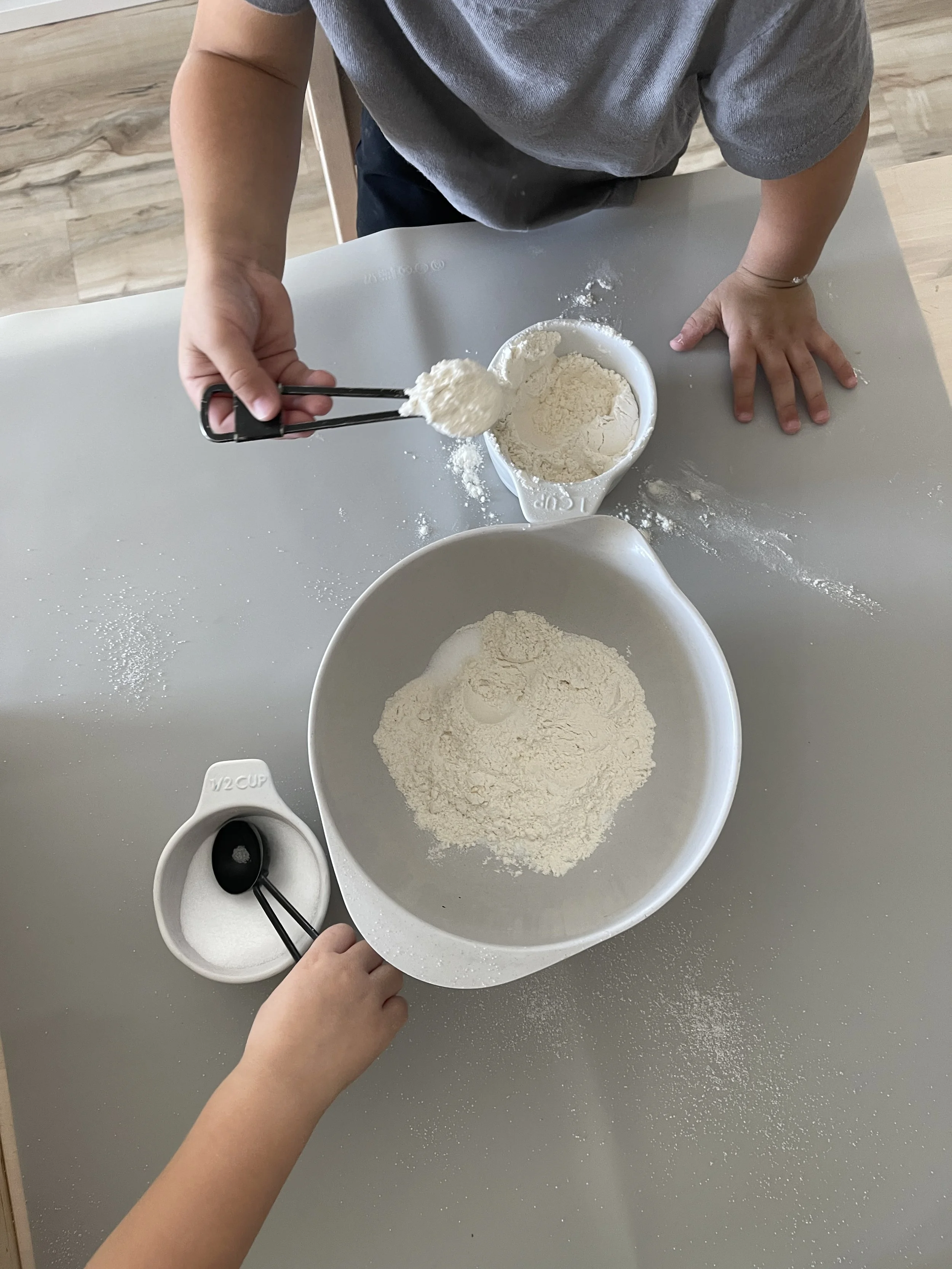
Play dough: New to sensory play? Start here: how we make play dough together. The kids help with every step, and that's half the fun.
Art activities: Looking for easy art table ideas? Here are 10 low-mess process art activities using simple materials, very minimal prep, and multi-age approved.